
AI Plant Care Assistant: A Complete Guide to Smarter Plant Care
Taking care of plants can seem simple, but every plant has different requirements. One plant may prefer bright sunlight and frequent watering, while another may grow better in indirect light with less frequent watering. Remembering the needs of several plants can quickly become difficult.
An AI plant care assistant can make plant care more manageable by using artificial intelligence to provide personalized guidance. Depending on the system, it can help identify plants, understand their requirements, create watering routines, monitor visible health changes, and provide recommendations based on the plant and its growing environment.
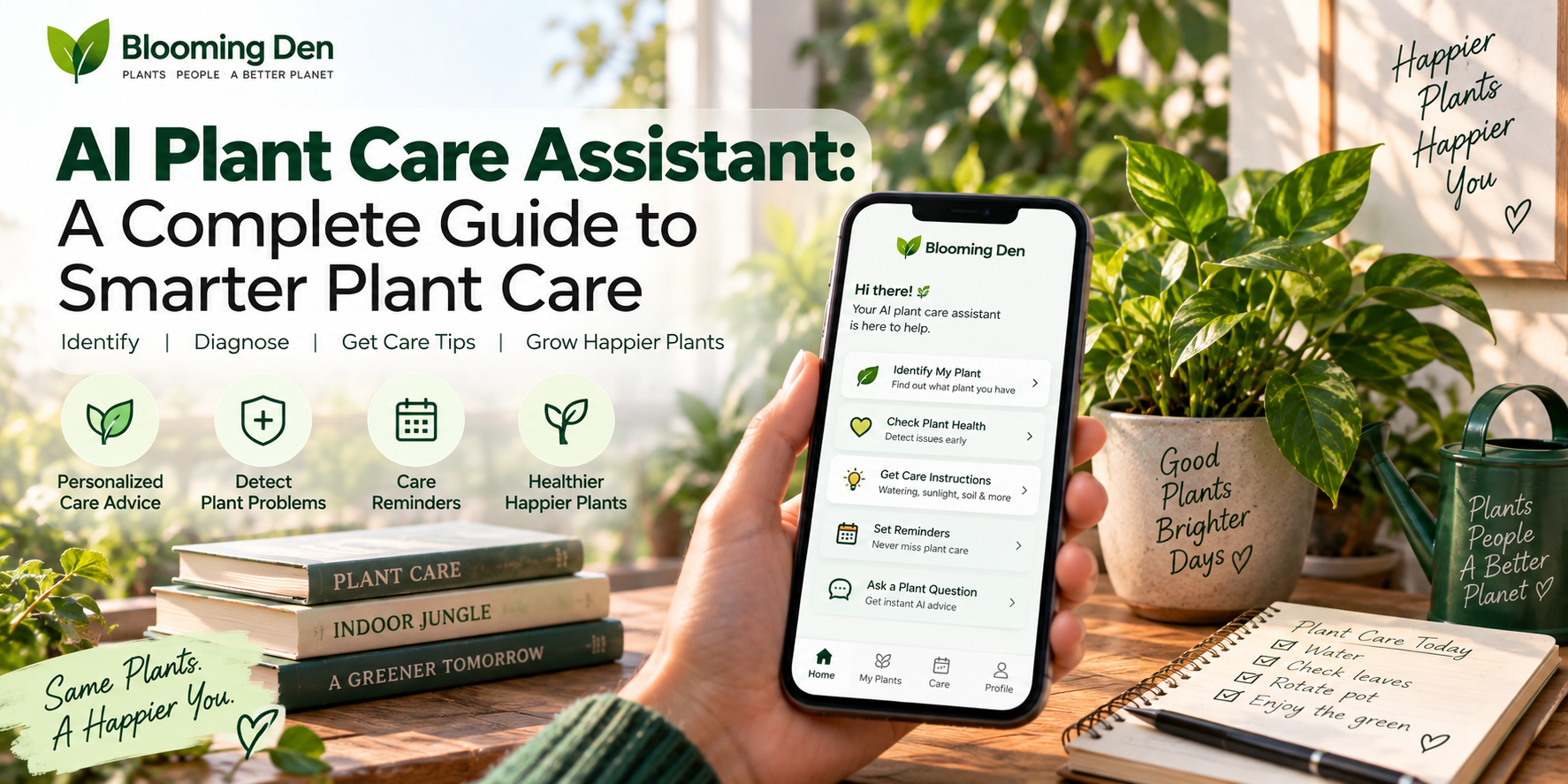
What Is an AI Plant Care Assistant?
An AI plant care assistant is a technology-powered gardening tool that helps users understand and manage the care requirements of their plants. It can combine information about plant type, growing conditions, user inputs, and available environmental data to provide personalized recommendations.
Instead of searching separately for information about sunlight, watering, soil, pruning, and plant health, gardeners can use an AI assistant as a central place for everyday plant-care guidance.
In Simple Terms
An AI plant care assistant acts like a digital gardening helper. You provide information about your plant and its environment, and the AI uses that information to provide useful care guidance.
Why Do Gardeners Need a Plant Care Assistant?
Many plant problems happen because gardeners do not know exactly what a particular plant needs. A generic care routine may not work for every plant, especially when plants are growing in different locations, containers, or environmental conditions.
| Common Gardening Challenge | How an AI Assistant Can Help |
|---|---|
| Forgetting when to check plants | Can help organize care routines and reminders. |
| Not knowing plant requirements | Can provide plant-specific care information. |
| Difficulty identifying plants | Can use plant photographs to suggest an identification. |
| Unsure why a plant looks unhealthy | Can help analyze visible symptoms and suggest possible causes to investigate. |
| Managing many plants | Can help organize care information for different plants. |
What Can an AI Plant Care Assistant Do?
The capabilities of an AI plant care assistant depend on the application, but modern systems can support several common gardening tasks.
Plant Identification
AI can analyze a plant photograph and suggest a likely identification, helping gardeners learn about unfamiliar plants.
Watering Guidance
The assistant can help estimate watering requirements based on plant type and available information about the growing environment.
Sunlight Guidance
It can help gardeners understand whether a plant generally prefers full sun, partial light, or lower-light conditions.
Plant Health Analysis
AI can examine visible symptoms such as discoloration, wilting, or damaged foliage and suggest areas that may require attention.
Care Recommendations
Recommendations can cover general watering, sunlight, soil, maintenance, and other plant-care considerations.
Gardening Questions
Users can ask questions about their plants and receive contextual guidance based on the information provided to the system.
How Does an AI Plant Care Assistant Work?
An AI plant care system generally combines plant information with user inputs and, in some cases, image or environmental data. The assistant then processes this information to generate relevant recommendations.
Collect
Gather plant and environment information.
Analyze
AI processes the available information.
Personalize
Recommendations are adapted to the available context.
Recommend
The assistant provides practical care guidance.
Benefits of Using an AI Plant Care Assistant
- Provides convenient access to plant-care information.
- Can personalize recommendations for individual plants.
- Helps beginners understand basic plant requirements.
- Can simplify watering and maintenance planning.
- Helps gardeners investigate visible plant-health problems.
- Can make managing multiple plants more organized.
- Can reduce reliance on generic care schedules.
The Goal of Smart Plant Care
The goal is not to automate every gardening decision. Instead, AI can help gardeners understand their plants faster, organize important information, and make better-informed care decisions.
Personalized Plant Care with AI
One of the biggest advantages of an AI plant care assistant is personalization. A generic plant-care guide may explain how a plant typically grows, but your plant may be growing in a completely different environment.
For example, two plants of the same species can have different watering needs if one is kept indoors in indirect light and the other is placed outdoors in strong sunlight. An AI assistant can use available information about these conditions to make its recommendations more relevant.
| Factor | How It Can Affect Plant Care |
|---|---|
| Plant Type | Different plants have different sunlight, watering, soil, and maintenance preferences. |
| Location | Indoor, balcony, terrace, and garden environments can have different growing conditions. |
| Sunlight | Light exposure can influence plant growth and moisture loss. |
| Pot Size | Container size can affect soil volume, drainage, and moisture retention. |
| Weather | Temperature, humidity, rain, and seasonal changes can affect outdoor plant care. |
AI Plant Care Assistant for Watering
Watering is one of the most common areas where gardeners need guidance. Overwatering and underwatering can both create plant-health problems, and the correct routine varies between plants and environments.
An AI plant care assistant can help estimate when a plant may need water by considering information such as plant type, pot size, soil, sunlight, temperature, humidity, and recent weather when available.
Avoid Fixed Schedules
Watering every plant on the same schedule may ignore differences in plant requirements and growing conditions.
Check the Soil
AI recommendations should be combined with checking the actual moisture condition of the growing medium.
AI Plant Care Assistant for Sunlight Management
Light is another essential part of plant care. Plants can respond differently to direct sunlight, partial sunlight, and indirect light. Placing a plant in an unsuitable location can affect its growth and appearance.
An AI assistant can provide general guidance about a plant's typical light preference. When combined with information about the plant's current location, this can help gardeners decide whether its position may be suitable.
| Light Condition | What to Consider |
|---|---|
| Full Sun | Suitable for plants that are adapted to strong direct sunlight. |
| Partial Sun | Useful for plants that prefer a balance of sunlight and shade. |
| Bright Indirect Light | Commonly preferred by many indoor plants that can be sensitive to intense direct sunlight. |
| Low Light | Some plants tolerate lower-light environments, although low light does not necessarily mean no light. |
AI Plant Care and Plant Health Monitoring
An AI plant care assistant can also help gardeners pay attention to visible changes in plant health. With photographs taken over time, users may be able to compare changes in foliage, growth, or other visible characteristics.
AI can recognize visible signs such as wilting, discoloration, damaged leaves, or unusual changes in appearance. These observations can help gardeners decide when a plant needs closer attention.
AI Is Not a Perfect Diagnosis
A visible symptom can have multiple possible causes. For example, yellowing leaves may be related to watering, light, nutrients, pests, environmental stress, or natural aging. AI can help identify visible patterns, but determining the exact cause may require additional information or physical inspection.
Managing Multiple Plants with AI
Caring for one or two plants can be relatively simple. Managing ten, twenty, or more plants can become much more difficult because each plant may have different requirements.
An AI plant care assistant can help organize information about individual plants and create a more structured approach to plant maintenance.
Plant Profiles
Keep important information about each plant in one place.
Care Routines
Organize watering, maintenance, and observation activities.
Health Tracking
Compare observations over time and identify changes that may need attention.
AI Plant Care for Beginners
Beginners often make plant-care decisions based on assumptions such as "plants need water every day" or "more sunlight is always better." In reality, plant requirements vary considerably.
An AI assistant can explain plant-care concepts in a more accessible way and help beginners understand why different plants require different routines.
A Simple Beginner Approach
- Identify the plant.
- Learn its basic sunlight requirements.
- Understand its general watering preferences.
- Check whether the pot and soil are suitable.
- Observe the plant regularly.
- Use AI guidance when you are unsure what to investigate.
Creating a Personalized Plant Care Plan with AI
A good plant care routine should be based on the individual needs of a plant rather than a generic schedule. An AI plant care assistant can organize information about your plant and its environment to help create a more personalized care plan.
The plan can include everyday activities such as watering and observation, as well as longer-term tasks such as pruning, repotting, fertilizing, and seasonal adjustments.
| Care Area | How AI Can Help |
|---|---|
| Watering | Estimate watering needs and help organize watering checks. |
| Sunlight | Explain the plant's typical light requirements. |
| Soil | Provide general guidance about suitable soil and drainage. |
| Fertilization | Provide general information about feeding requirements. |
| Pruning | Explain when pruning may be appropriate for the plant. |
| Repotting | Help identify signs that may indicate the plant needs more space. |
AI Plant Care Assistant for Fertilizing
Fertilization can support plant growth, but adding fertilizer without understanding a plant's requirements can create problems. Different plants have different nutritional needs, and the appropriate approach can also depend on soil, season, plant growth, and the type of fertilizer being used.
An AI plant care assistant can help explain general fertilization principles and provide reminders or guidance based on the plant information available to it.
Avoid Over-Fertilizing
More fertilizer does not necessarily mean faster or healthier growth. Always follow the product label and consider the plant's specific needs. AI-generated guidance should be treated as general information rather than a replacement for product instructions or professional advice.
AI Plant Care Assistant for Pruning
Pruning can help maintain the shape and growth of many plants, but the correct approach depends on the species and its growth habit. Removing healthy growth unnecessarily can sometimes be harmful.
An AI assistant can explain general pruning principles and help gardeners understand what types of growth may require attention. Before performing significant pruning, it is still important to verify the correct technique for the specific plant.
AI Plant Care Assistant for Repotting
Plants growing in containers may eventually outgrow their pots. Signs such as roots emerging from drainage holes, very rapid drying, restricted growth, or a visibly crowded root system can indicate that repotting may need to be considered.
An AI assistant can help gardeners understand possible signs of container-related stress and explain general repotting considerations. However, the actual condition of the root system may require physically inspecting the plant.
Possible Signs
- Roots visible around drainage holes
- Plant becoming crowded in its container
- Growing medium drying unusually quickly
- Restricted or declining growth
Before Repotting
- Check the plant's current condition.
- Choose an appropriate container size.
- Use suitable growing medium.
- Ensure appropriate drainage.
Using Plant Photos with an AI Care Assistant
Images can provide useful information that text alone cannot. A clear photograph can help an AI system examine visible characteristics such as leaf color, foliage condition, growth patterns, and other changes in appearance.
Taking photographs regularly can also help you keep a visual record of your plants. Comparing images over time may make gradual changes easier to notice.
Tips for Plant Photos
- Use clear and focused photographs.
- Use natural lighting when possible.
- Capture the whole plant for overall context.
- Take close-ups of unusual or damaged leaves.
- Use similar angles when tracking changes over time.
AI Plant Health Monitoring
Regular monitoring can help gardeners notice changes before they become more serious. An AI plant care assistant can help analyze visible symptoms and organize observations, making it easier to decide when a plant deserves closer attention.
| Visible Change | What to Investigate |
|---|---|
| Wilting | Soil moisture, temperature, light, roots, and other environmental conditions. |
| Yellowing Leaves | Watering, light, nutrition, pests, natural aging, and other possible causes. |
| Brown Leaf Edges | Moisture, humidity, environmental stress, and other conditions. |
| Damaged Foliage | Physical damage, pests, environmental factors, or plant health issues. |
AI Helps You Investigate, Not Guess
A visible symptom does not always have a single cause. An AI assistant can help identify what to investigate, but gardeners should consider the complete growing environment before taking corrective action.
Seasonal Plant Care with AI
Plant requirements can change with the seasons. Changes in temperature, sunlight, rainfall, humidity, and plant growth can affect watering and maintenance routines.
Spring
Monitor new growth and adjust care as plants become more active.
Summer
Pay closer attention to heat, sunlight, and moisture loss.
Monsoon
Consider rainfall, humidity, drainage, and reduced need for supplemental watering.
Winter
Monitor slower growth, cooler conditions, and changing watering needs.
An AI plant care assistant can help remind gardeners to reconsider their routines as environmental conditions change rather than following the exact same care schedule throughout the year.
How to Get Better Results from an AI Plant Care Assistant
The usefulness of an AI plant care assistant depends on the quality of the information you provide. A system can give more relevant guidance when it understands the plant, its environment, and the specific problem you are trying to solve.
Provide Accurate Plant Information
If you know the plant's name or variety, provide it. If you do not know the plant, a clear photograph can be useful for AI-assisted identification. Correct identification provides a stronger foundation for subsequent care recommendations.
Explain the Growing Environment
Mention whether the plant is indoors, on a balcony, on a terrace, or in a garden. Information about sunlight, pot size, soil, drainage, temperature, and watering habits can also provide important context.
Use Clear Plant Photos
When asking an AI assistant to analyze a plant, use photographs that show the plant clearly. If you are investigating a health problem, include close-up photographs of affected leaves as well as a wider view of the entire plant.
Ask Specific Questions
Specific questions generally provide more useful guidance than very broad questions. Instead of simply asking "What is wrong with my plant?", you can describe the visible symptom, recent watering, light exposure, and other relevant observations.
Common Mistakes When Using an AI Plant Care Assistant
AI can make plant care easier, but it should not replace observation. Gardeners can get better results by avoiding a few common mistakes.
| Mistake | Better Approach |
|---|---|
| Following every recommendation blindly | Compare recommendations with actual plant and soil conditions. |
| Providing very little information | Include relevant details about the plant and growing environment. |
| Using poor-quality images | Use clear, focused, well-lit photographs. |
| Changing several things at once | Make changes carefully and observe the plant's response. |
| Ignoring professional advice for serious problems | Seek qualified horticultural help when the issue is severe, uncertain, or persistent. |
AI Plant Care Assistant for Busy Gardeners
Maintaining several plants can become challenging when you have a busy schedule. It is easy to forget watering checks, pruning tasks, repotting, or other routine maintenance activities.
An AI plant care assistant can help organize these activities by keeping plant information and care recommendations together. Depending on the application, it can also support reminders and regular monitoring.
Daily Care
- Check plant appearance.
- Check soil moisture when appropriate.
- Observe unusual changes.
- Check for visible pests or damage.
Periodic Care
- Pruning
- Repotting assessment
- Fertilization planning
- Seasonal care adjustments
AI Plant Care Assistant for Different Garden Types
The same plant-care approach does not work equally well for every growing environment. An AI assistant can use information about the location to provide more relevant general guidance.
| Garden Type | Important Considerations |
|---|---|
| Indoor Garden | Light exposure, humidity, temperature, pot size, and indoor air circulation. |
| Balcony Garden | Direct sunlight, heat, wind, containers, and available space. |
| Terrace Garden | Strong exposure, temperature changes, containers, rainfall, and drainage. |
| Home Garden | Soil conditions, plant spacing, sunlight, irrigation, and seasonal changes. |
Frequently Asked Questions About AI Plant Care Assistants
What is an AI plant care assistant?
An AI plant care assistant is a digital gardening tool that uses artificial intelligence to provide guidance about plant identification, watering, sunlight, maintenance, visible plant health, and other care requirements.
Can an AI assistant identify my plant?
Many AI-powered gardening systems can analyze plant photographs and suggest a likely identification. Accuracy depends on image quality, visible features, plant variety, and the capabilities of the AI system.
Can AI tell me when to water my plant?
An AI system can estimate watering requirements using factors such as plant type, pot size, soil, sunlight, and environmental conditions. Actual soil moisture should still be checked before watering.
Can AI diagnose plant diseases?
AI can analyze visible symptoms and suggest possible issues to investigate, but image-based analysis cannot reliably reveal every underlying cause. Serious or unclear plant health problems may require professional evaluation.
Can AI create a plant-care schedule?
Depending on the application, AI can help organize watering, maintenance, observation, and other plant-care activities into a structured routine.
Is an AI plant care assistant useful for beginners?
Yes. Beginners can use AI to understand unfamiliar plants, learn basic care requirements, organize routines, and get guidance when they are unsure what to investigate.
Can AI replace a professional gardener?
No. AI can provide useful information and assist with everyday gardening decisions, but it cannot physically inspect soil, roots, drainage, structural conditions, or every environmental factor. Professional assistance may be appropriate for complex or serious problems.
How accurate is an AI plant care assistant?
Accuracy varies depending on the AI system, the quality of the available information, and the complexity of the gardening problem. AI-generated recommendations should be treated as guidance and considered alongside real-world observations.
Important Reminder
AI plant-care advice is intended to assist with gardening decisions, not replace professional horticultural assessment. AI may not be able to detect hidden root problems, soil conditions, drainage issues, pests beneath the soil, or other factors that cannot be observed from the available information.
AI Plant Care Checklist
An AI plant care assistant becomes most useful when it is combined with regular observation and a consistent gardening routine. Use the following checklist to keep your plants healthy and your care process organized.
Smart Plant Care Checklist
- ✓ Identify your plants correctly.
- ✓ Record where each plant is growing.
- ✓ Understand the plant's sunlight requirements.
- ✓ Check soil moisture before watering.
- ✓ Monitor drainage and container conditions.
- ✓ Observe leaves and new growth regularly.
- ✓ Take photographs when you notice unusual changes.
- ✓ Adjust care as weather and seasons change.
- ✓ Keep track of important maintenance activities.
- ✓ Verify uncertain or serious problems with a gardening professional.
Building a Smart Plant Care Routine
The goal of using AI for gardening is not to make every decision automatically. Instead, it can help you build a more organized process for observing plants, understanding their requirements, and responding to changes.
| Step | Action | Benefit |
|---|---|---|
| 1 | Identify the plant | Understand its basic requirements. |
| 2 | Record its environment | Make recommendations more relevant. |
| 3 | Monitor regularly | Detect changes earlier. |
| 4 | Ask AI for guidance | Understand possible causes and next steps. |
| 5 | Observe the response | Determine whether the change is helping. |
Benefits of Using AI for Long-Term Plant Care
Plant care is an ongoing process. A plant may look healthy today and show signs of stress several weeks later because its environment has changed. Using AI as part of a long-term routine can help gardeners organize information and respond more systematically.
Better Organization
Keep plant information, observations, care requirements, and maintenance activities organized in one workflow.
Faster Problem Investigation
AI can help you identify visible symptoms and suggest factors worth investigating when a plant starts looking unhealthy.
Personalized Guidance
Recommendations can become more relevant when they consider the plant, location, sunlight, watering habits, and growing environment.
AI Plant Care for Indoor and Outdoor Gardening
AI plant care tools can be useful across different types of home gardening. Whether you maintain a few indoor plants or a larger terrace or home garden, the basic principle remains the same: understand the plant, observe its environment, and adjust care when conditions change.
| Environment | Useful AI Support |
|---|---|
| Indoor Plants | Light guidance, watering support, plant identification, and health observations. |
| Balcony Plants | Sunlight, watering, heat, wind, container, and maintenance guidance. |
| Terrace Gardens | Plant monitoring, watering planning, seasonal care, and garden maintenance. |
| Home Gardens | Plant care, garden observations, maintenance planning, and troubleshooting. |
The Future of AI Plant Care
AI-powered gardening is moving toward more personalized and continuous plant-care experiences. Instead of providing only generic information, future systems can combine plant identification, image analysis, environmental information, care history, and user preferences to provide more context-aware assistance.
AI plant care systems may increasingly help gardeners track changes over time, understand patterns, organize maintenance, and make better decisions about their plants and growing spaces.
From Reactive to Proactive Gardening
Traditional plant care often becomes reactive: a gardener notices a problem and then searches for a solution. AI can help move toward a more proactive approach by encouraging regular observation, tracking changes, and identifying factors that may require attention earlier.
Final Thoughts
An AI plant care assistant can make gardening easier by bringing plant information, care guidance, health observations, and maintenance planning into a single workflow. It can be especially helpful for beginners who are still learning how different plants respond to water, sunlight, soil, and environmental changes.
However, the best results come from combining AI guidance with real gardening observations. Check the soil, observe the leaves, understand the growing environment, and verify recommendations before making significant changes to your plants.
Whether you have a single houseplant, a balcony garden, or a complete home garden, AI can become a useful assistant for making plant care more organized, informed, and personalized.
Make Plant Care Smarter with BloomingDen
BloomingDen combines gardening knowledge and technology to help homeowners make better decisions about their plants and gardens. Explore smarter ways to understand, maintain, and improve your green space.
Explore BloomingDen