
AI Watering Calculator: A Complete Guide to Smarter Plant Watering
Watering is one of the most important parts of plant care, but knowing exactly when and how much to water can be difficult. Different plants have different moisture requirements, and factors such as pot size, soil, sunlight, temperature, humidity, and weather can significantly affect how quickly a plant uses water.
An AI watering calculator can help make this process easier by considering multiple factors instead of relying on a fixed watering schedule. Rather than simply saying "water every two days," an AI-powered system can estimate watering needs based on the plant and its growing environment.
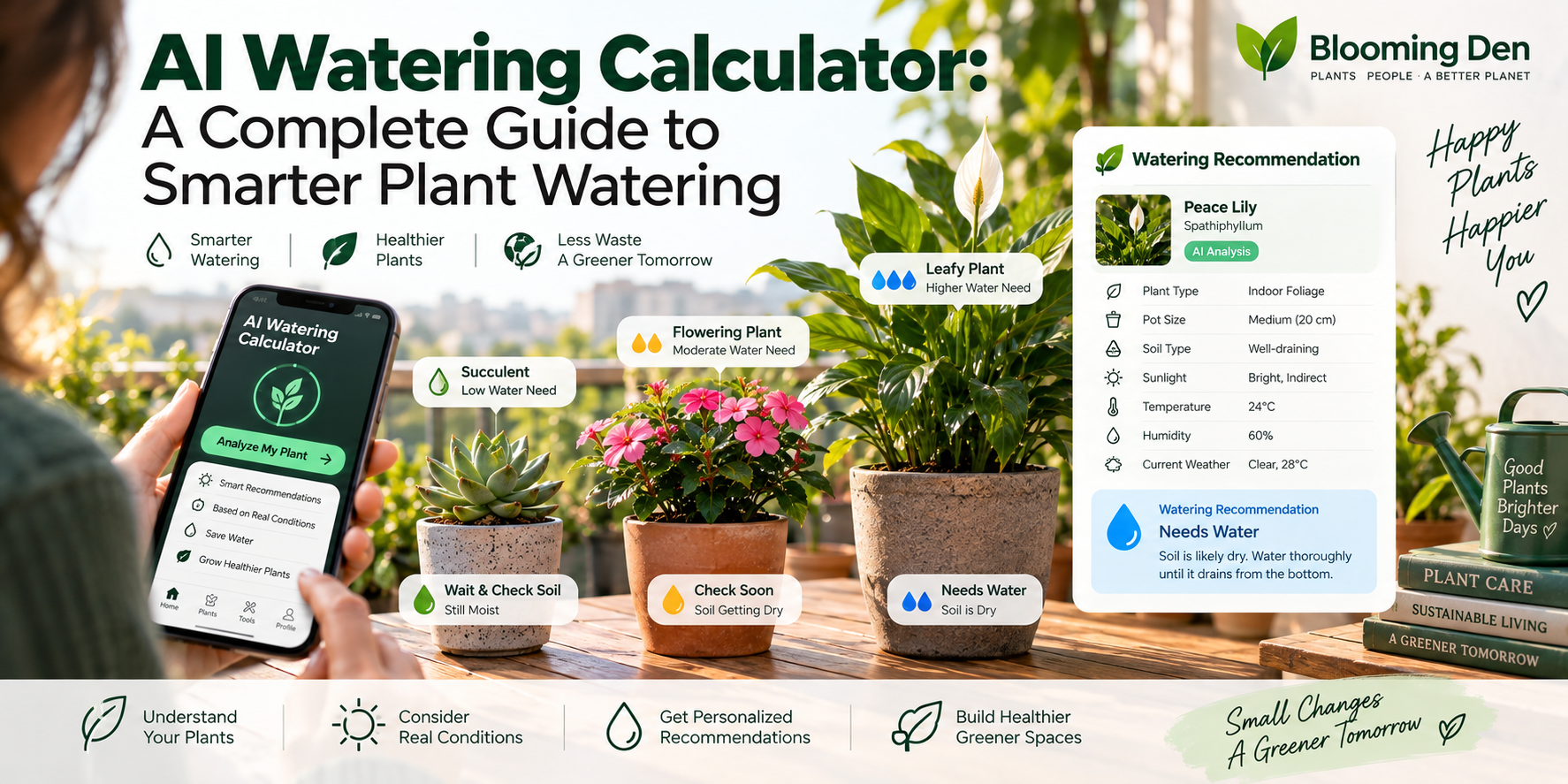
What Is an AI Watering Calculator?
An AI watering calculator is a smart gardening tool designed to estimate how frequently a plant may need water and, depending on the system, how much water may be appropriate. It can use information about the plant, container, soil, sunlight, environment, and other relevant conditions to provide a more personalized watering recommendation.
Traditional watering schedules often use simple rules such as watering every day or every few days. However, plants do not always follow a fixed calendar. A plant may need more water during hot weather and less during cooler or humid conditions.
In Simple Terms
An AI watering calculator combines plant and environmental information to help estimate when a plant may need water, making watering decisions more personalized than using the same schedule for every plant.
Why Is Correct Watering Important?
Both overwatering and underwatering can cause problems. Too little water can lead to wilting, dry soil, and plant stress, while excessive watering can keep soil continuously wet and create conditions that are unfavorable for many plants.
| Watering Problem | Possible Effect |
|---|---|
| Underwatering | Wilting, dry soil, drooping leaves, and reduced plant growth. |
| Overwatering | Persistently wet soil, root stress, and other plant health problems. |
| Inconsistent Watering | Repeated periods of dryness followed by excessive watering. |
| Fixed Schedule | May ignore changing weather, sunlight, soil, and plant conditions. |
How Does an AI Watering Calculator Work?
The exact calculation depends on the AI system, but the general idea is to combine multiple inputs that influence how quickly a plant loses or uses water.
1. Identify the Plant
The plant type provides an important starting point because different species have different watering preferences.
2. Understand the Container
Pot size and container type can influence the amount of soil available and how quickly moisture is lost.
3. Consider Growing Conditions
Sunlight, temperature, humidity, indoor or outdoor placement, and weather conditions can affect watering requirements.
4. Generate a Recommendation
The system combines the available information to estimate a suitable watering frequency or general watering approach.
Factors That Affect Plant Watering
There is no universal amount of water that works for every plant. Several factors can change how frequently a plant needs watering.
- Plant species and variety
- Plant size and maturity
- Pot or container size
- Soil type and drainage
- Sunlight exposure
- Temperature
- Humidity
- Indoor or outdoor location
- Season and local weather
- Recent rainfall for outdoor plants
Important Point
A watering calculator should provide an estimate rather than treating its recommendation as a rigid rule. Always check the actual condition of the soil and plant before watering, because real-world conditions can change from day to day.
Understanding the Main Inputs of an AI Watering Calculator
An AI watering calculator becomes more useful when it considers several factors instead of relying on a single fixed watering interval. Each input provides additional context about how quickly a plant may lose moisture.
| Input | Why It Matters |
|---|---|
| Plant Type | Different plants have different moisture preferences and tolerances. |
| Pot Size | Larger containers generally hold more growing medium and can behave differently from small pots. |
| Soil Type | Different growing media retain and release moisture differently. |
| Sunlight | Higher light and heat can increase moisture loss in some growing situations. |
| Temperature | Warmer conditions can increase evaporation and plant water use. |
| Humidity | Humidity can influence how quickly moisture is lost to the surrounding environment. |
| Weather | Rain, heat, wind, and seasonal changes can affect outdoor watering requirements. |
Plant Type Makes a Big Difference
One of the most important factors in watering is the plant itself. Some plants naturally prefer consistently moist growing conditions, while others are adapted to periods of dryness.
For example, many succulents and drought-tolerant plants generally require less frequent watering than plants that naturally grow in consistently moist environments. Applying the same watering schedule to both can lead to poor results.
Succulents
Often prefer drying periods between watering rather than constantly wet soil.
Flowering Plants
Watering needs vary considerably depending on the species, season, container, and growing conditions.
Herbs & Vegetables
Many edible plants require consistent moisture, particularly during active growth, but requirements still vary by crop and environment.
How Pot Size Affects Watering
The size of a container can significantly affect how quickly its growing medium dries. Small pots contain less growing medium and may lose moisture faster, while larger containers can retain moisture for longer depending on the plant, soil, drainage, and environmental conditions.
Small Pot vs Large Pot
Two identical plants can have different watering needs when they are growing in different-sized containers. This is why an AI watering calculator can be more useful when container size is included as an input rather than relying only on plant type.
Soil and Drainage Matter
Soil affects how much water is retained around plant roots. A growing medium that holds moisture for a long time behaves differently from a fast-draining mix.
Drainage is equally important. Even if a calculator estimates that a plant needs watering, adding more water while the soil is already saturated may not be beneficial. Containers should generally provide appropriate drainage for the plants being grown.
| Condition | Potential Watering Consideration |
|---|---|
| Fast-draining medium | Moisture may be lost more quickly. |
| Moisture-retentive medium | Drying may take longer. |
| Poor drainage | Frequent watering can increase the risk of persistently wet conditions. |
| Hot and dry conditions | Moisture may be lost more rapidly. |
Indoor vs Outdoor Watering
Indoor and outdoor plants can experience very different watering conditions. Outdoor plants may be exposed to direct sunlight, wind, rain, and changing temperatures, while indoor plants are affected by factors such as air conditioning, heating, indoor humidity, and window exposure.
Indoor Plants
- Window location
- Indoor temperature
- Humidity
- Air circulation
- Pot and soil type
- Exposure to direct or indirect light
Outdoor Plants
- Sun exposure
- Outdoor temperature
- Wind
- Rainfall
- Season
- Soil and drainage
Why Weather Should Influence Watering
Outdoor watering should not always follow a fixed calendar. A garden that needs water during a period of intense heat may not need the same amount immediately after substantial rainfall.
An AI-powered watering system can potentially use weather-related information alongside plant and garden data to make recommendations more responsive to changing conditions.
Smart Watering Principle
Instead of asking only, "When did I last water?", consider asking, "Does this plant need water right now?" Plant type, soil moisture, weather, sunlight, and recent rainfall can all help answer that question.
How Much Water Does a Plant Need?
One of the most common gardening questions is how much water a plant actually needs. There is no single quantity that works for every plant because watering requirements depend on the plant, container, soil, climate, season, and growing conditions.
An AI watering calculator can estimate watering requirements by combining these variables. However, the result should be treated as a practical guideline rather than an exact measurement that must be followed every time.
Frequency vs Amount
"How often should I water?" and "How much water should I use?" are two different questions. A good watering recommendation should consider both the frequency of watering and the condition of the growing medium.
Understanding Watering Frequency
Watering frequency refers to how often a plant may need additional water. This can change throughout the year. A plant growing in a hot, sunny location may dry faster than the same plant growing in a cooler or more shaded environment.
| Condition | Possible Effect on Watering |
|---|---|
| Hot weather | Soil may dry faster and plants may require more frequent monitoring. |
| Cool weather | Moisture may remain available for longer. |
| Strong sunlight | Evaporation and plant water use can increase. |
| High humidity | Drying can be slower in some environments. |
| Rainfall | Outdoor plants may require less supplemental watering. |
How to Check Soil Before Watering
Even with an AI watering recommendation, checking the actual soil is an important part of plant care. The surface of the soil can sometimes look dry while moisture remains deeper in the container.
Depending on the plant and container, you can check moisture by feeling the growing medium with a clean finger, observing the plant, or using an appropriate moisture meter. The correct approach depends on the plant's needs and the type of growing medium.
Look
Observe the soil surface and look for obvious signs of excessive dryness or persistent wetness.
Feel
Check the moisture level of the growing medium at an appropriate depth for the plant.
Measure
A suitable moisture meter can provide additional information when manual checking is difficult.
Signs Your Plant May Need Water
Plants can sometimes show visible signs when they are experiencing water stress. These signs should be considered together with soil conditions and the plant's normal appearance rather than used as the only indication for watering.
- Wilting or drooping foliage
- Dry-looking growing medium
- Leaves becoming unusually dry or crisp
- Reduced growth
- Changes in normal plant appearance
Do Not Rely on One Symptom
Wilting, yellowing, or leaf changes can have multiple causes. Watering immediately without checking the soil and growing conditions can sometimes make the problem worse.
Signs of Possible Overwatering
Overwatering is another common problem in home gardening. The issue is not simply the amount of water added on one occasion; repeatedly keeping the growing medium excessively wet can create unfavorable conditions for many plants.
- Soil remaining wet for an unusually long period
- Repeated yellowing or declining foliage
- Soft or deteriorating plant parts
- Unpleasant odors from persistently wet growing media
- Poor drainage from the container
- Recurring plant stress despite frequent watering
Creating a Smarter Watering Schedule
A watering schedule can be useful, but it should be flexible. Instead of treating a schedule as a strict calendar, use it as a reminder to inspect your plants and determine whether watering is actually required.
| Step | Action |
|---|---|
| 1 | Identify the plant and understand its general watering preference. |
| 2 | Consider pot size, soil, drainage, and location. |
| 3 | Check current soil moisture before watering. |
| 4 | Consider recent weather and environmental changes. |
| 5 | Adjust your routine based on what you observe over time. |
Benefits of an AI-Powered Watering Calculator
Personalized Recommendations
Recommendations can consider the specific plant and growing conditions instead of applying one schedule to every plant.
Easier for Beginners
New gardeners can use a structured watering recommendation instead of guessing when their plants need attention.
Better Monitoring
AI can help gardeners think about changing environmental conditions instead of following a rigid calendar.
Smarter Water Use
More informed watering decisions can help reduce unnecessary watering while keeping plant requirements in focus.
The Goal Is Not More Water
Smart watering means providing the right care at the right time. An AI watering calculator should help you understand when watering may be appropriate, not encourage watering simply because a schedule says it is time.
How to Use an AI Watering Calculator Correctly
An AI watering calculator is most useful when you provide accurate information about your plant and its growing environment. The more relevant information the system has, the more useful its watering estimate can be.
1. Identify the Plant
Start by identifying the plant you want to calculate watering requirements for. Different species can have significantly different moisture preferences, so plant identification is an important first step.
2. Enter the Growing Conditions
Provide relevant information such as whether the plant is indoors or outdoors, how much sunlight it receives, the pot size, and the type of growing medium when known.
3. Consider Current Weather
For outdoor plants, recent rainfall, temperature, humidity, and wind can affect how quickly the growing medium loses moisture. Seasonal conditions should also be considered.
4. Check the Soil
Before adding water, inspect the actual growing medium. An AI estimate cannot always know the current moisture level inside a pot or garden bed.
5. Adjust Based on Observation
Use the recommendation as a starting point and observe how your plant and soil respond over time. If the soil remains wet for too long or dries out very quickly, the watering routine may need to be adjusted.
Common Watering Mistakes to Avoid
Even with smart gardening tools, simple watering mistakes can affect plant health. Understanding these mistakes can help you use an AI watering calculator more effectively.
| Mistake | Better Approach |
|---|---|
| Watering every plant on the same schedule | Consider each plant's requirements and growing conditions. |
| Watering because the calendar says so | Check the soil and plant condition before watering. |
| Ignoring pot size | Consider the container size and amount of growing medium. |
| Ignoring drainage | Make sure excess water can drain appropriately. |
| Increasing water whenever leaves wilt | Check soil moisture because wilting can have multiple causes. |
| Ignoring seasonal changes | Reassess watering as temperature, sunlight, and weather change. |
AI Watering Calculator for Indoor Plants
Indoor plants often receive less direct environmental variation than outdoor plants, but their watering needs can still change significantly. The location of the plant inside your home can influence light, temperature, humidity, and evaporation.
For example, a plant placed directly beside a sunny window may dry differently from the same plant positioned farther from the window. Air-conditioning and heating can also change the indoor environment.
Indoor Watering Checklist
- Identify the plant.
- Check its light exposure.
- Consider pot size.
- Check soil moisture.
- Consider indoor humidity.
- Check drainage.
Avoid Automatic Watering
Indoor plants should not automatically be watered simply because a certain number of days has passed. Actual soil conditions and plant requirements should remain important parts of the decision.
AI Watering Calculator for Balcony and Terrace Gardens
Balcony and terrace gardens can experience strong sunlight, heat, wind, and rapid changes in temperature. Containers can also dry differently depending on their size and position.
An AI watering calculator can help organize watering recommendations for different plants, but each container should still be observed individually. A pot positioned in direct afternoon sunlight may have very different moisture conditions from a shaded pot nearby.
Balcony Gardening Tip
Grouping plants with similar watering and sunlight requirements can make garden maintenance easier. However, always consider the individual requirements of each plant before creating a watering routine.
Frequently Asked Questions About AI Watering Calculators
What is an AI watering calculator?
An AI watering calculator is a smart gardening tool that estimates watering requirements using information such as plant type, pot size, soil, sunlight, weather, and other growing conditions.
Can an AI watering calculator tell me exactly how much water to use?
It can provide an estimate, but there is rarely one exact quantity that works in every situation. Actual watering should also consider soil moisture, drainage, plant condition, and changing environmental conditions.
How often should I water my plants?
Watering frequency depends on the plant, soil, pot size, sunlight, temperature, humidity, season, and other conditions. Instead of following one universal schedule, check the plant and growing medium regularly.
Can AI calculate watering for indoor plants?
Yes. An AI watering system can consider indoor plant type, container, light exposure, humidity, and other available information to provide a general watering recommendation.
Can AI calculate watering for outdoor plants?
Yes. Outdoor recommendations can consider factors such as sunlight, temperature, rainfall, humidity, wind, soil, and plant type.
Does pot size affect watering?
Yes. Container size affects the amount of growing medium available and can influence how quickly moisture is lost. This is why pot size can be an important input for a watering calculation.
Can an AI watering calculator prevent overwatering?
It can help you make more informed watering decisions, but it cannot guarantee that overwatering will never occur. Checking actual soil moisture and ensuring appropriate drainage remain important.
Should I water my plant whenever the AI recommends it?
Not automatically. Treat the recommendation as guidance and check the actual condition of the plant and growing medium before watering.
A Practical Reminder
AI watering recommendations are estimates based on the information available to the system. They cannot always measure the actual moisture inside soil or account for every environmental change. Use them as a helpful guide alongside regular observation of your plants and soil.
Building a Better Plant Watering Routine with AI
The biggest advantage of an AI watering calculator is not simply getting a watering reminder. It is creating a more informed routine that considers the individual needs of your plants and the environment in which they are growing.
Instead of treating every plant the same, you can organize plants according to their watering preferences, observe how quickly their soil dries, and adjust your routine as conditions change.
A Simple Smart Watering Routine
- Identify each plant and understand its general watering needs.
- Record the pot size, soil type, and growing location.
- Use an AI watering calculator to estimate a suitable routine.
- Check the soil before each watering session.
- Consider recent weather and seasonal changes.
- Observe how your plants respond to the watering routine.
- Adjust the schedule when growing conditions change.
AI Watering Calculator and Water Conservation
Smart watering is also about avoiding unnecessary water use. Watering more frequently does not automatically mean healthier plants. In many cases, the goal should be to provide appropriate moisture while avoiding unnecessary watering.
By considering plant requirements, soil conditions, weather, and the growing environment, an AI-assisted watering system can help gardeners make more thoughtful decisions about when plants actually need attention.
| Approach | Potential Problem | Smarter Approach |
|---|---|---|
| Water every day | May provide unnecessary water for some plants. | Check plant and soil conditions before watering. |
| Use the same schedule for all plants | Different plants have different moisture requirements. | Group plants according to their watering needs. |
| Ignore rainfall | Outdoor plants may receive additional natural water. | Consider recent rainfall before supplemental watering. |
| Ignore soil | The actual moisture condition may differ from an estimate. | Inspect the growing medium regularly. |
AI Watering for Different Types of Gardens
A watering strategy can vary significantly depending on the type of garden you maintain. AI-powered recommendations can be particularly useful when managing several plants with different requirements.
Indoor Gardens
Consider indoor light, humidity, temperature, pot size, soil, and plant type when creating a watering routine.
Balcony Gardens
Sunlight, heat, wind, container size, and the position of individual pots can strongly influence moisture loss.
Terrace Gardens
Larger exposed areas can experience strong sunlight and temperature changes, making regular observation especially useful.
Home Gardens
Garden beds, shrubs, flowering plants, vegetables, and other plants may require different watering strategies.
AI Watering Calculator: What It Can and Cannot Do
AI can make watering decisions easier by processing multiple pieces of information, but it does not eliminate the need for observation. Real garden conditions can change quickly, and some important information may not be available to the AI system.
| AI Can Help With | Still Requires Human Observation |
|---|---|
| Estimating watering frequency | Checking actual soil moisture |
| Considering plant type | Observing the plant's actual response |
| Considering environmental inputs | Detecting hidden root or drainage problems |
| Creating a personalized starting point | Making final decisions based on real conditions |
Final Thoughts on AI Watering Calculators
An AI watering calculator can make plant care more personalized by considering factors such as plant type, pot size, soil, sunlight, temperature, humidity, weather, and growing location. This can be much more useful than following the same watering schedule for every plant.
However, smart watering is not about blindly following a number or schedule. The best approach combines AI recommendations with regular observation of your plants and growing medium.
By using technology as a gardening assistant, you can build a more organized watering routine, reduce unnecessary watering, and better understand the individual needs of your plants.
Remember
Watering recommendations are estimates. Actual watering requirements can change with weather, soil moisture, plant growth, pot conditions, and other environmental factors. Always use your observations alongside any AI-generated recommendation.
Make Plant Care Smarter with BloomingDen
BloomingDen combines gardening knowledge and technology to make plant care easier and more personalized. From understanding your plants to improving your garden and creating smarter care routines, technology can help you make better gardening decisions.
Explore BloomingDen for smart gardening tools, plant-care guidance, garden resources, and practical solutions for growing healthier plants.