
(Aspidistra Elatior) cast iron plant care guide india
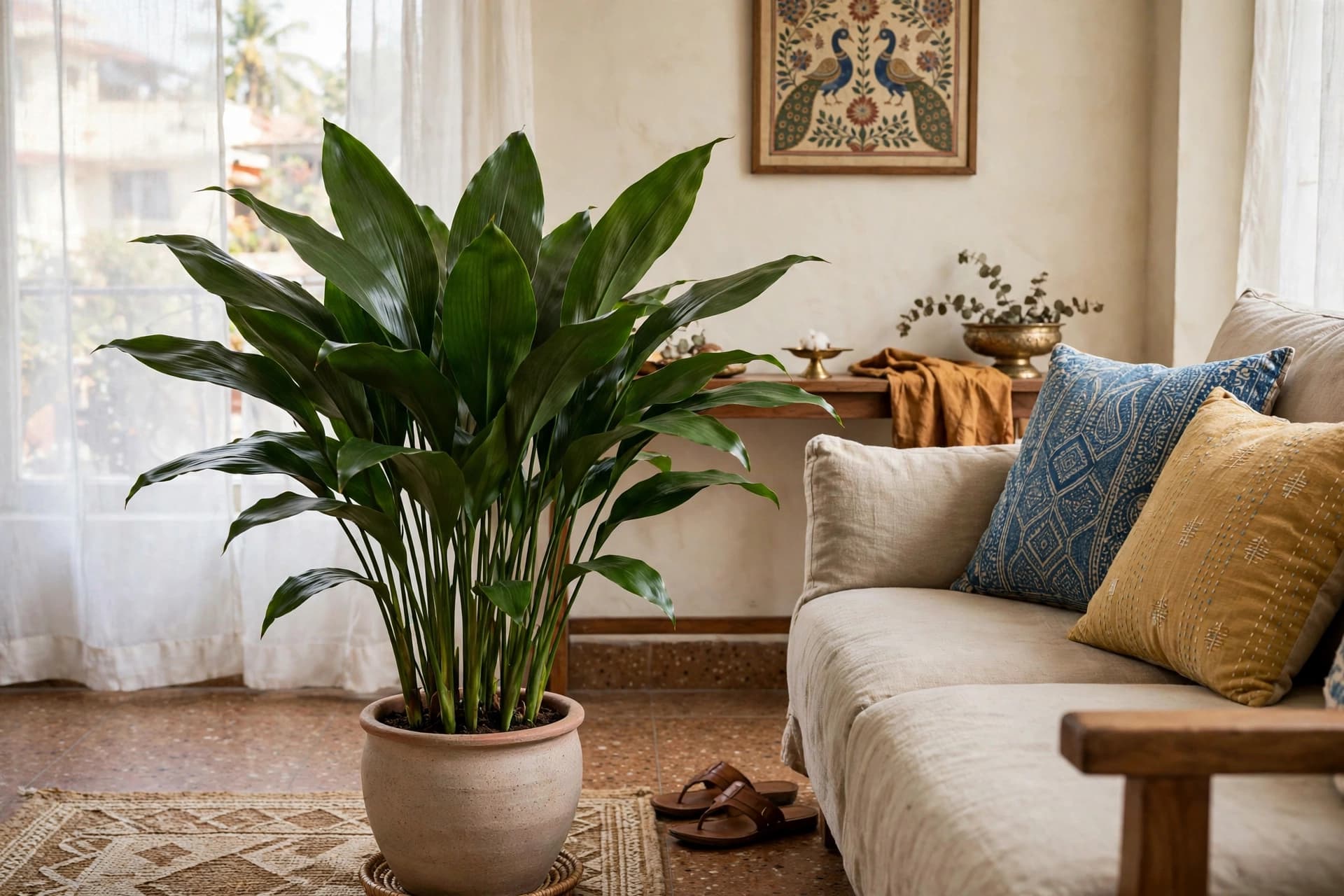
If you search for cast iron plant care, you are probably looking for one thing: a plant that survives where others give up. Aspidistra elatior, the cast iron plant, is famous for exactly that. Its broad, dark green, lance-shaped leaves rise directly from a creeping rhizome at soil level, with no trunk or stem above ground, and the plant carries on in dim corners, irregular watering and busy homes where fussier plants fail.
In India it suits the dark corners of flats, offices, stairwells and AC rooms that get almost no natural light. It grows slowly, asks for very little, and forgives a missed watering when you travel. A healthy plant in a nursery pot typically costs approximately ₹400–₹900, depending on size and city. This guide covers light, watering, soil, feeding, brown leaf tips, repotting and propagation, step by step.
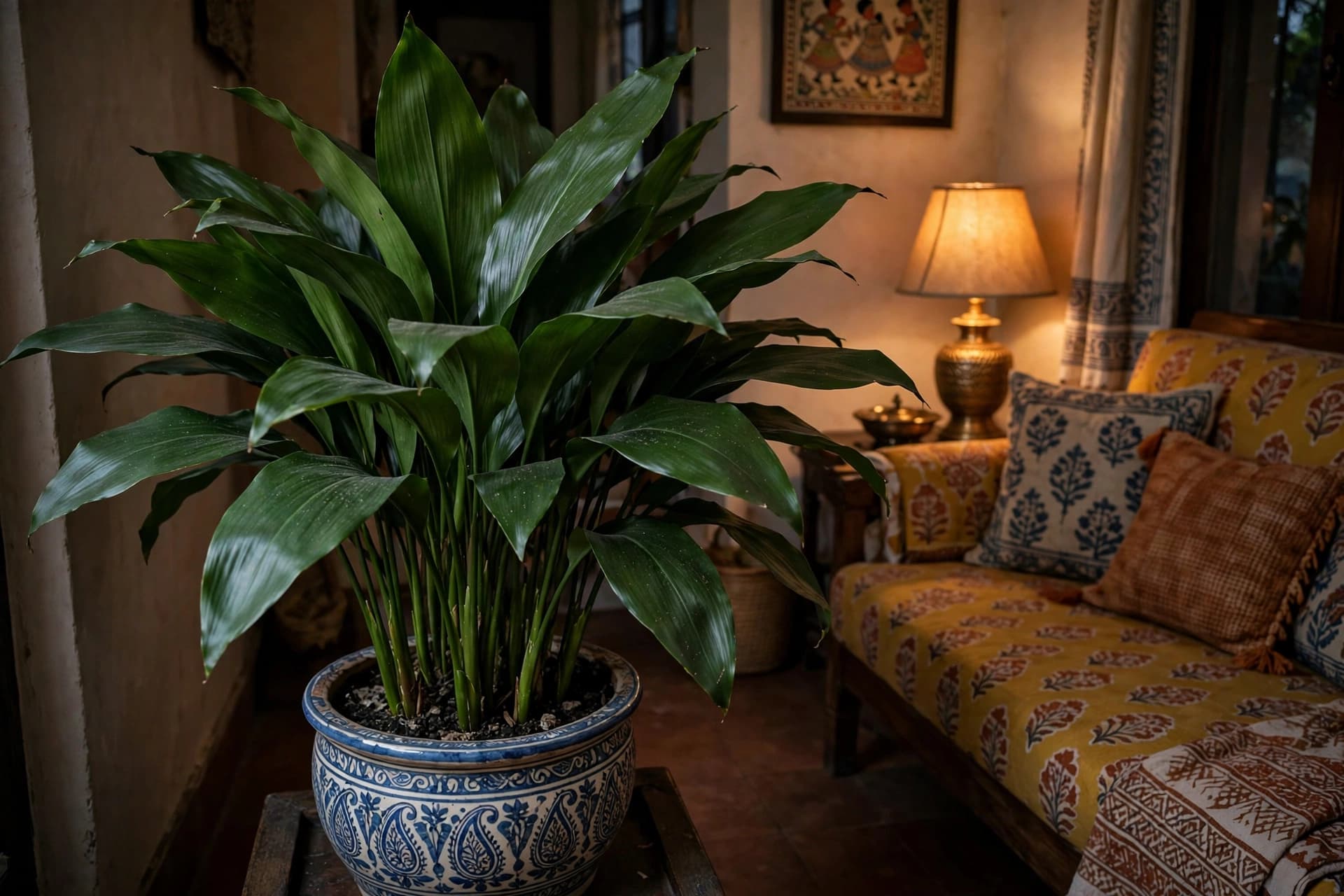
Why the Cast Iron Plant Suits Indian Homes
Most Indian homes have one spot no plant seems to like: a corner away from the windows, a north-facing room, a hallway, or an office cabin with only tube-light for company. That is exactly where aspidistra low light tolerance becomes useful. The cast iron plant is one of the best plants for dark rooms because its wide leaves are built to gather whatever light is available, and it stays deep green instead of turning pale and leggy.
It also handles everyday Indian conditions well. It tolerates the cool, dry air of AC rooms, copes when the watering routine slips during a holiday or a busy work month, and does not mind being left in the same pot for years. If you are starting out, you can order a ready-potted plant from the indoor plants section Plants and place it almost anywhere away from direct sun.
Cast Iron Plant Care at a Glance
| Need | What Aspidistra Likes |
|---|---|
| Light | Low to medium indirect light; tolerates deep shade, hates direct sun |
| Water | Water when the top half of the soil feels dry; never keep it soggy |
| Soil | Loose, well-draining mix that does not stay wet for days |
| Pot | Snug pot with drainage holes; repot only every few years |
| Feeding | Light feeding once a month in the growing season is enough |
| Temperature | Normal Indian room temperatures; comfortable in AC rooms |
| Growth | Slow — a few new leaves a year is normal and healthy |
Aspidistra Low Light: Where to Place It
Place your cast iron plant where it gets low to medium indirect light: a corner a few feet from a window, a shaded balcony wall that never takes direct sun, a reception desk, or a bedroom corner. It is one of the very few large-leaf plants that stays healthy in the darker parts of a home, which is why searches for the best plant for dark rooms so often end with this plant.
The one light rule is strict: keep it out of direct sunlight. Strong sun, especially afternoon sun through a west-facing window or on an open terrace, scorches the leaves and leaves pale, papery patches that never turn green again. Bright indirect light gives the fastest growth, deep shade gives the slowest, but the plant survives in both. If new leaves come up smaller and widely spaced, that is a gentle sign it would like a little more light — move it a step closer to the window, not into the sun.
Aspidistra Watering: Less Is Safer
Aspidistra watering is where most plants are lost, and it is almost always too much water, not too little. The thick creeping rhizome stores moisture, so the plant handles a dry spell far better than wet feet. Water only when the top half of the soil in the pot feels dry to your finger, then water slowly and thoroughly until a little runs out of the drainage holes, and empty the saucer afterwards.
In an Indian summer that may mean watering every ten days to two weeks in a shaded room; in winter or in a constantly air-conditioned room, even less often. Soggy soil is the main danger because it rots the rhizome quietly below the surface, and by the time the leaves yellow the damage is done. When in doubt, wait two more days and check again — this plant would rather be thirsty than wet. A simple watering can from the gardening tools range Gardening Tools helps you pour slowly and evenly instead of flooding the pot.
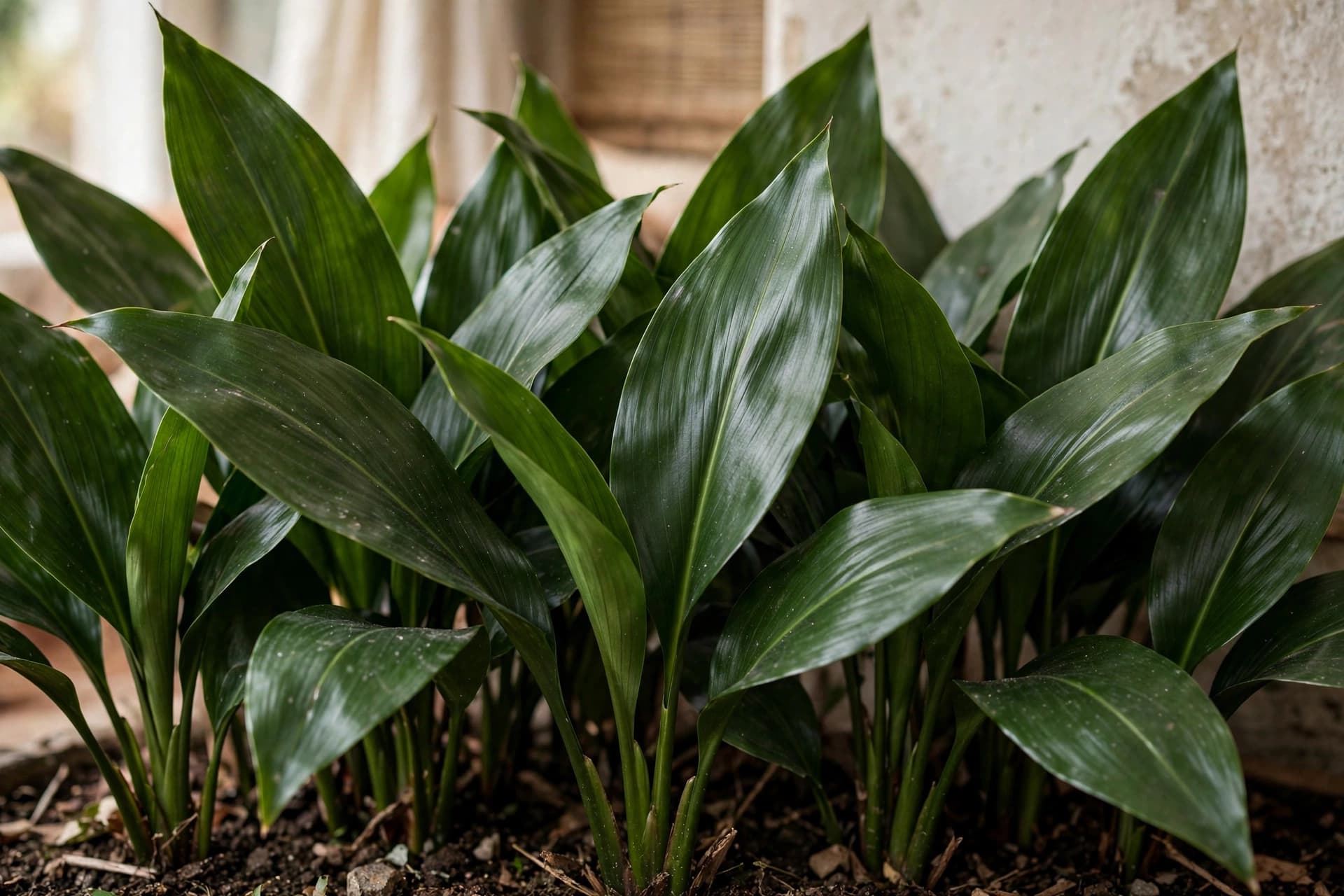
Soil and Pot for a Cast Iron Plant
Use a loose, free-draining soil mix so water passes through instead of sitting around the rhizome. A ready potting mix Soil Potting Mix with some cocopeat and a handful of perlite or coarse sand works well; heavy garden soil alone stays wet too long in a pot. The exact recipe matters less than the drainage — if water pools on the surface, the mix is too dense.
Choose a pot that is only slightly wider than the root ball, always with drainage holes. Decorative indoor pots Pots Planters can hold the nursery pot inside, which also makes watering easier: lift, water at the sink, drain, and put it back. Do not rush to repot. The cast iron plant dislikes frequent repotting and grows happily in the same pot for three to five years; repot only when the rhizome is pushing against the pot edges or the mix has broken down, and go just one size up.
Feeding, Cleaning and Everyday Care
This is a light feeder. A half-strength dose of a balanced liquid plant food Plant Nutrients once a month in spring and summer is plenty, and nothing at all is needed in winter. Overfeeding is a real risk: fertiliser salts build up in the soil and are one of the common causes of brown leaf tips, so if you are unsure whether you fed it recently, skip the feed.
The wide leaves collect dust in Indian homes, and a dusty leaf takes in even less of the little light it gets. Wipe the leaves gently with a damp soft cloth every few weeks, supporting each leaf from below so it does not tear. A leaf-cleaning and care spray Plant Care can help, but plain water on a cloth is enough. Cut any fully yellow or dead leaf off at the base with clean scissors; new leaves will replace it in time. Growth is slow, so judge the plant over months, not weeks.
A simple cast iron plant routine
- Check the soil with a finger before every watering, and water only when the top half is dry.
- Keep the pot out of direct sun, even in winter.
- Wipe dust off the broad leaves every few weeks.
- Feed lightly once a month in spring and summer only.
- Empty the saucer after watering so the pot never sits in water.
- Turn the pot a quarter turn every month so all sides get equal light.
- Leave it in the same pot for years — repot only when truly root-bound.
Why Are My Cast Iron Plant Leaves Turning Brown?
If you are searching why are my cast iron plant leaves turning brown, start with this table. Brown tips and edges are the plant's most common complaint, and the cause is usually care, not disease.
| Problem | Likely Cause | Fix |
|---|---|---|
| Brown leaf tips | Overwatering, fertiliser salts, or very dry air | Water less often, flush the soil with plain water, and trim the brown tip off |
| Brown patches on leaves | Direct sunlight scorching the leaf | Move the pot into shade or indirect light; scorched patches will not heal |
| Yellowing lower leaves | Soil staying soggy, rhizome starting to rot | Let the soil dry well, check drainage, and remove any soft, rotting rhizome |
| Pale, washed-out leaves | Too much bright light | Shift the plant to a shadier spot |
| Whole plant drooping | Severe underwatering after a long dry spell | Water thoroughly once and let it drain; it usually recovers |
| No new growth for months | Normal slow growth, or light is extremely low | Be patient, or move it slightly closer to indirect light |
Propagation and Repotting: Dividing the Rhizome
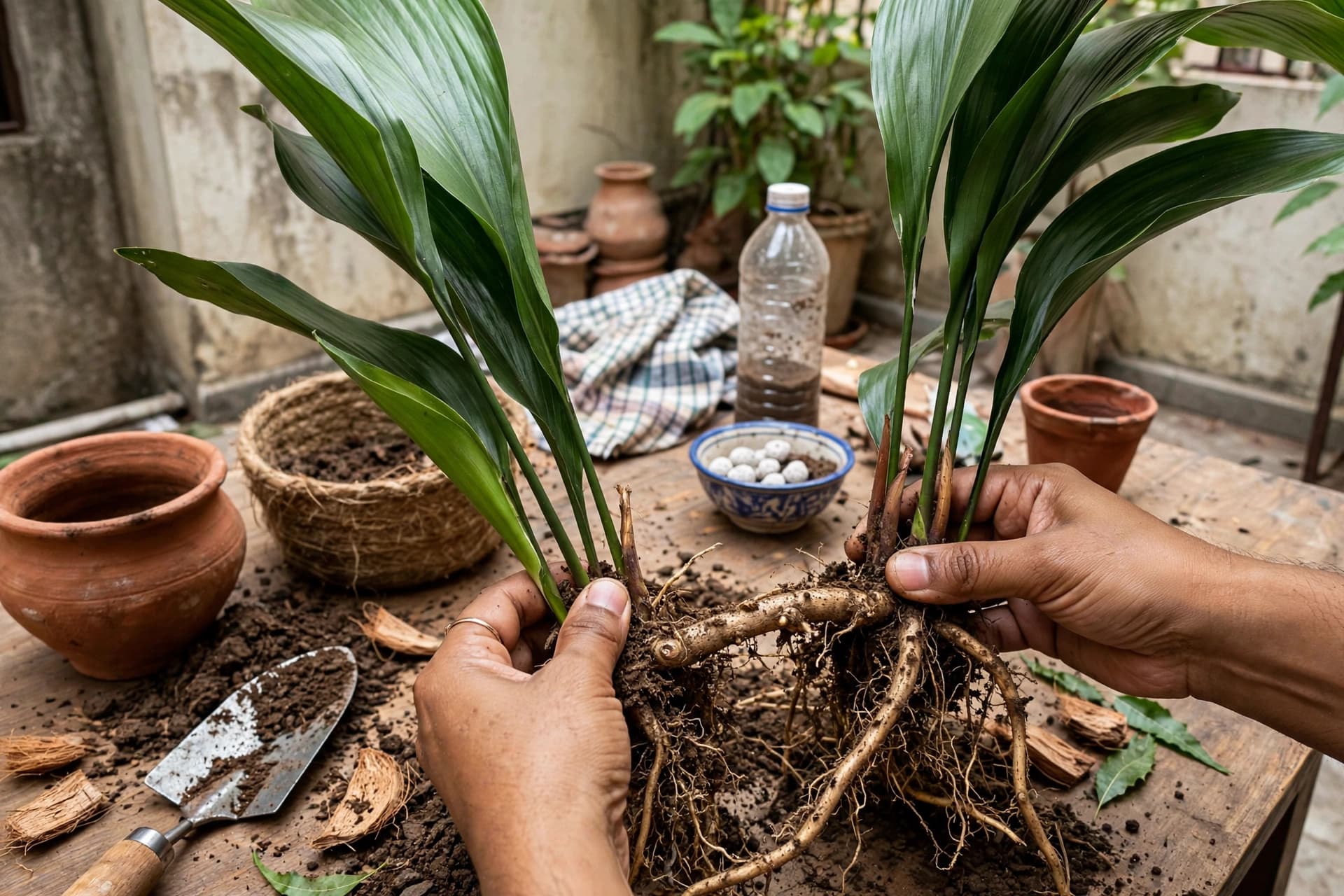
Propagation is by dividing the rhizome — there are no stem cuttings, because there is no stem. The best time is spring, when you are repotting anyway. Tip the plant out of its pot, shake off the loose soil, and you will see the thick, creeping rhizome with leaves rising from it. Gently tease or cut it into sections, making sure each section has at least two or three leaves and some roots attached. A clean knife or pruning tool Gardening Tools makes the cut neat and reduces damage.
Pot each division into its own small pot at the same depth it was growing before, water lightly, and keep it in shade while it settles. New growth is slow, so give divisions a full season before judging them. Dividing an old, crowded plant every few years is also the easiest way to refresh it without buying a new one.
Buying and varieties: The plain green Aspidistra elatior is the toughest and cheapest form, typically approximately ₹400–₹900 for a nursery plant in India. Look for firm, dark green leaves with no brown patches and a pot that is not waterlogged in the nursery. There is also a variegated form, 'Milky Way', with white spots and stripes scattered across the leaves; it is prettier, a little slower, and needs slightly more light than the plain green form to keep its markings, though it still hates direct sun.
One small surprise to watch for: in summer, small purple-brown flowers sometimes appear right at soil level, half hidden under the leaves. They are easy to miss, they are completely normal, and they are a sign the plant is settled and mature — not a problem to fix. Leave them be and they fade on their own.
Frequently Asked Questions
3 questions with expert answers
A: Very little. It thrives in low to medium indirect light and tolerates deep shade, which makes it one of the best plants for dark rooms. Keep it out of direct sun, which scorches the leaves.
A: Only when the top half of the soil feels dry — often every ten days to two weeks indoors in India, and less in winter or AC rooms. Overwatering is the most common way to kill it, because soggy soil rots the rhizome.
A: Brown tips usually come from overwatering, fertiliser salts building up in the soil, or very dry air. Water less often, flush the soil with plain water once, feed more lightly, and trim the brown tips off.
Ready to Create Your Own Garden?
Get expert help from Blooming Den to design, set up, and maintain a beautiful, low-maintenance green space.