
Benefits of Growing Herbs at Home: Why Every Home Should Have a Herb Garden
Growing herbs at home is one of the easiest and most rewarding ways to start gardening. Whether you have a spacious backyard, a sunny balcony, or simply a kitchen windowsill, herbs can thrive in small spaces while providing fresh flavors, attractive greenery, and an enjoyable gardening experience. Home herb gardens are perfect for beginners because most herbs require minimal maintenance and grow well in containers.
From basil and mint to coriander, rosemary, thyme, and parsley, fresh herbs can transform everyday cooking while adding natural beauty to your home. Beyond their culinary uses, herb gardening encourages a closer connection with nature, supports sustainable living, and provides the satisfaction of harvesting ingredients you've grown yourself. This guide explores the many benefits of growing herbs at home and explains why every household can enjoy a thriving herb garden.
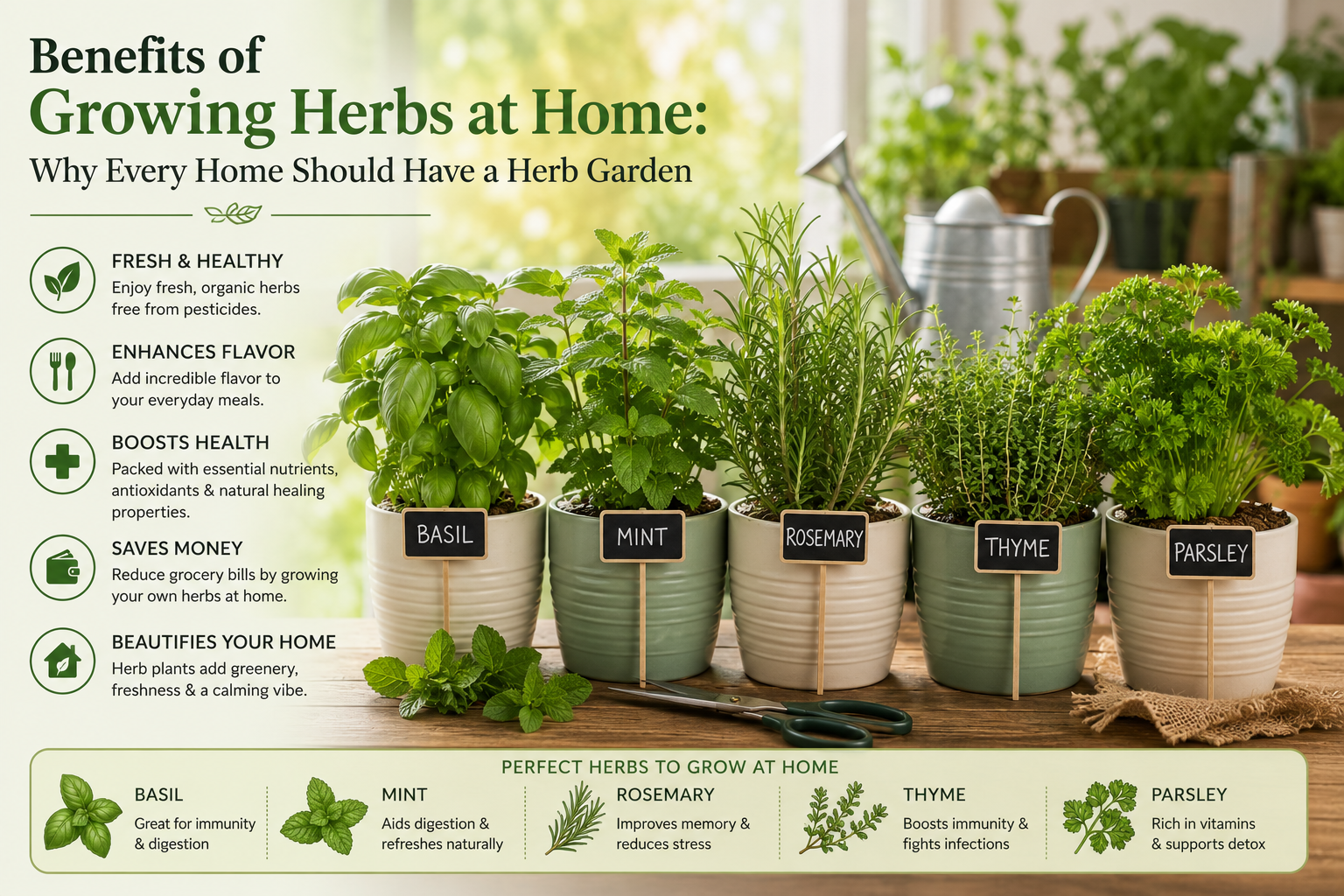
Why Start a Home Herb Garden?
Herb gardening is one of the simplest ways to introduce greenery into your daily life. Unlike many ornamental plants, herbs offer both decorative value and practical uses in the kitchen. Most herbs grow quickly, adapt well to containers, and require only basic care, making them an excellent choice for gardeners of all experience levels.
Fresh herbs are always within reach when you grow them at home. Instead of purchasing small bundles from the market whenever you cook, you can simply harvest the amount you need while allowing the plant to continue growing. This convenience makes everyday cooking more enjoyable and encourages people to experiment with fresh ingredients.
Whether you grow herbs indoors or outdoors, they create a vibrant, refreshing atmosphere while making gardening accessible even for people with limited space.
Advantages of Growing Herbs at Home
- Fresh herbs are available whenever you need them.
- Most herbs are easy to grow and maintain.
- Suitable for balconies, kitchens, patios, and windowsills.
- Add natural beauty to indoor and outdoor spaces.
- Encourage beginner-friendly gardening.
- Reduce the need for frequent herb purchases.
- Create an enjoyable and rewarding gardening hobby.
- Support a greener and more sustainable lifestyle.
What Makes Herbs Perfect for Home Gardening?
Herbs are naturally compact, adaptable, and productive. Many varieties thrive in containers, require moderate watering, and grow successfully in bright sunlight or partial shade. Their manageable size allows homeowners to grow several different herbs even in limited spaces.
Because herbs are harvested regularly, they often continue producing fresh growth throughout the growing season. This makes them one of the most rewarding categories of plants for home gardeners.
Characteristics of a Successful Home Herb Garden
| Characteristic | Benefit |
|---|---|
| Compact growth | Ideal for containers and small spaces. |
| Easy maintenance | Suitable for beginners and busy homeowners. |
| Continuous harvesting | Provides fresh herbs throughout the growing season. |
| Container friendly | Can be grown indoors, outdoors, or on balconies. |
1. Fresh Herbs Whenever You Need Them
One of the biggest advantages of growing herbs at home is having fresh ingredients available whenever you cook. Instead of purchasing herbs from a grocery store every few days, you can simply harvest the amount you need directly from your garden. Freshly picked herbs offer excellent flavor and aroma, making everyday meals more enjoyable.
Whether you're preparing soups, salads, pasta, curries, or herbal beverages, home-grown herbs provide unmatched convenience. Regular harvesting also encourages many herb plants to produce new growth, allowing you to enjoy a continuous supply throughout the growing season.
Popular Kitchen Herbs
- Basil
- Mint
- Coriander
- Parsley
- Rosemary
- Thyme
- Oregano
- Chives
2. Herbs Are Easy to Grow
Most herbs are well suited for beginner gardeners because they require only basic care. With proper sunlight, moderate watering, and well-draining soil, many herbs grow quickly and remain productive for months. Their compact size also makes them ideal for container gardening.
Unlike larger vegetables or flowering shrubs, herbs usually require less space and fewer gardening tools. Even people living in apartments can successfully grow several herb varieties using pots placed on balconies or sunny windowsills.
| Herb | Difficulty Level | Best Growing Location |
|---|---|---|
| Mint | Easy | Containers or garden beds. |
| Basil | Easy | Sunny balcony or windowsill. |
| Parsley | Easy | Indoor or outdoor containers. |
| Rosemary | Moderate | Bright outdoor locations. |
3. Growing Herbs Saves Money
Purchasing fresh herbs regularly can become expensive, especially if you only use small amounts for cooking. Growing herbs at home allows you to harvest exactly what you need while reducing waste. A single healthy herb plant can provide multiple harvests over many months with proper care.
Starting a herb garden requires only a few pots, quality potting mix, and healthy seedlings or seeds. Once established, most herbs continue producing fresh leaves with minimal ongoing expense, making them one of the most cost-effective plants to grow at home.
Cost-Saving Benefits
- Reduces frequent grocery purchases.
- Provides multiple harvests from a single plant.
- Minimizes food waste by harvesting only what you need.
- Requires minimal gardening equipment.
- Offers long-term value with proper care.
4. Herb Gardens Beautify Your Home
In addition to their practical uses, herbs add vibrant greenery and natural charm to your living spaces. Their attractive foliage complements kitchens, balconies, patios, and windowsills while creating a fresh and inviting atmosphere. Decorative containers can further enhance their visual appeal.
Whether arranged in matching ceramic pots, wooden planters, or vertical garden systems, herbs provide an attractive combination of beauty and functionality that suits both modern and traditional homes.
5. Herb Gardening Is Perfect for Small Spaces
One of the greatest advantages of growing herbs at home is that they require very little space. Even if you live in an apartment without a backyard, you can successfully grow a variety of herbs using containers, hanging baskets, railing planters, or vertical gardens. A sunny kitchen window or balcony is often enough to support a productive herb garden.
Compact herb gardens are easy to maintain and can be expanded gradually as your gardening experience grows. With thoughtful planning, even a small area can provide a continuous supply of fresh herbs throughout the year.
Ideal Places to Grow Herbs
- Kitchen windowsills.
- Balconies and terraces.
- Patios.
- Vertical wall gardens.
- Indoor plant shelves.
- Outdoor container gardens.
6. Growing Herbs Is an Excellent Hobby
Herb gardening is an enjoyable hobby that combines creativity, learning, and relaxation. Caring for herbs encourages you to spend more time outdoors or near natural greenery while developing useful gardening skills. Watching herbs grow from tiny seedlings into productive plants brings a genuine sense of accomplishment.
Gardening also helps establish healthy daily routines. Watering plants, checking soil moisture, pruning stems, and harvesting fresh leaves become simple activities that many people find relaxing and rewarding.
| Gardening Activity | Benefit |
|---|---|
| Watering herbs | Builds a consistent daily routine. |
| Pruning plants | Encourages healthier growth. |
| Harvesting leaves | Provides fresh ingredients for cooking. |
| Observing new growth | Creates satisfaction and motivation. |
Choosing the Best Herbs for Beginners
If you're new to herb gardening, begin with varieties that are easy to grow and forgiving of small mistakes. These herbs establish quickly, require only basic care, and produce fresh leaves regularly throughout the growing season.
Starting with a few reliable herbs helps build confidence before expanding your garden. Once you become familiar with watering schedules, sunlight requirements, and harvesting techniques, you can gradually introduce additional herb varieties.
Recommended Herbs for Beginners
- Mint
- Basil
- Coriander
- Parsley
- Oregano
- Chives
- Thyme
- Rosemary
Basic Herb Care Tips
Healthy herbs require consistent but straightforward care. Most varieties grow best in well-draining soil, receive several hours of sunlight each day, and benefit from moderate watering. Regular harvesting encourages fresh growth and keeps plants compact and productive.
Check soil moisture before watering, remove damaged leaves, trim flowering stems when appropriate, and ensure containers have proper drainage. Following these simple practices will help your herb garden remain healthy and productive throughout the year.
Common Mistakes to Avoid When Growing Herbs
Herbs are generally easy to grow, but a few common mistakes can affect their health and productivity. Understanding these issues will help you maintain vigorous plants that continue producing fresh leaves throughout the growing season.
| Common Mistake | Better Practice |
|---|---|
| Overwatering herbs | Water only when the top layer of soil begins to dry. |
| Using poor drainage containers | Choose pots with proper drainage holes. |
| Providing insufficient sunlight | Place herbs where they receive adequate natural light. |
| Harvesting too much at once | Harvest small amounts regularly to encourage new growth. |
| Growing too many herbs together | Allow enough space for healthy growth and airflow. |
Creative Ways to Use Fresh Herbs
Home-grown herbs are incredibly versatile and can be used in many everyday activities. Harvesting fresh herbs directly from your garden adds convenience while allowing you to enjoy their natural flavor and fragrance in numerous ways.
- Add fresh basil to pasta, pizza, and salads.
- Prepare refreshing mint drinks and herbal teas.
- Use coriander to garnish curries and rice dishes.
- Season roasted vegetables with rosemary and thyme.
- Mix parsley into soups, sauces, and sandwiches.
- Create decorative herb planters for your kitchen.
- Share fresh herbs with family and friends.
- Dry selected herbs for long-term storage.
Frequently Asked Questions
Which herbs are easiest for beginners to grow?
Mint, basil, coriander, parsley, oregano, and chives are excellent beginner-friendly herbs because they grow quickly and require relatively simple care.
Can herbs be grown indoors?
Yes. Many herbs grow successfully indoors when placed near a bright window where they receive several hours of natural light each day.
How often should herbs be watered?
Watering depends on the herb, container size, and weather conditions. Always check the soil before watering and avoid keeping it constantly wet.
Can I grow multiple herbs in the same container?
Yes, provided the herbs have similar sunlight and watering requirements and there is enough space for each plant to grow comfortably.
Building Your Own Kitchen Herb Garden
A kitchen herb garden can be as simple as a few small pots placed on a sunny windowsill. As your confidence grows, you can expand your collection by adding larger containers, vertical herb gardens, or dedicated raised beds outdoors. Organizing herbs according to their growth habits and care requirements makes maintenance easier and harvesting more convenient.
Whether you grow herbs indoors or outdoors, consistent care and regular harvesting will keep your plants healthy and productive. Over time, your herb garden will become an attractive and practical feature that supports both gardening and everyday cooking.
Quick Herb Garden Care Checklist
A simple maintenance routine will keep your herbs healthy and productive throughout the year. Use this checklist to ensure your home herb garden continues to provide fresh leaves and vibrant growth.
| Care Activity | Recommended Frequency | Purpose |
|---|---|---|
| Check soil moisture | Every 2–3 days | Prevent overwatering and underwatering. |
| Water herbs | As needed | Maintain healthy growth. |
| Harvest fresh leaves | Weekly | Encourage continuous new growth. |
| Remove dry or damaged leaves | Weekly | Keep plants healthy and attractive. |
| Apply organic fertilizer | Every 4–6 weeks | Support healthy foliage and vigorous growth. |
Signs Your Herbs Are Growing Well
Healthy herbs reward consistent care with vigorous growth and flavorful leaves. Regular observation helps you recognize positive growth while identifying potential problems before they become serious.
- Bright green, healthy foliage.
- Regular production of new leaves.
- Strong stems and compact growth.
- Pleasant natural fragrance.
- No yellowing or excessive leaf drop.
- Healthy root development.
- Continuous harvesting throughout the season.
Grow Fresh Herbs with BloomingDen
BloomingDen makes herb gardening simple for beginners and experienced gardeners alike. From healthy herb plants and premium seeds to decorative pots, planters, potting mixes, and gardening accessories, we provide everything you need to create a productive herb garden at home.
Whether you're starting with a few herbs on your kitchen windowsill or building a complete balcony herb garden, BloomingDen offers quality products and expert guidance to help your plants thrive throughout the year.
Conclusion
Growing herbs at home is one of the easiest and most rewarding gardening projects you can start. Fresh herbs enhance everyday cooking, add natural beauty to your living spaces, reduce grocery expenses, and make gardening accessible even in small apartments or homes with limited outdoor space.
With just a few containers, quality soil, and basic care, herbs such as basil, mint, coriander, parsley, rosemary, thyme, and oregano can provide fresh harvests for months. Their compact size and low-maintenance nature make them ideal for beginners while offering endless opportunities to expand your gardening skills.
Start your home herb garden today with a few easy-to-grow varieties, enjoy harvesting fresh ingredients whenever you cook, and experience the satisfaction of growing your own herbs right at home.