
Best Watering Cans: A Complete Guide for Home Gardeners
Watering is one of the most important parts of plant care, and having the right watering can makes the job easier and more precise. Whether you have a few indoor plants, a balcony garden, a terrace garden, or a larger outdoor space, choosing the right watering can can improve your everyday gardening routine.
Watering cans come in different sizes, materials, shapes, and spout designs. The best option depends on the number of plants you have, their location, and how much control you need while watering.
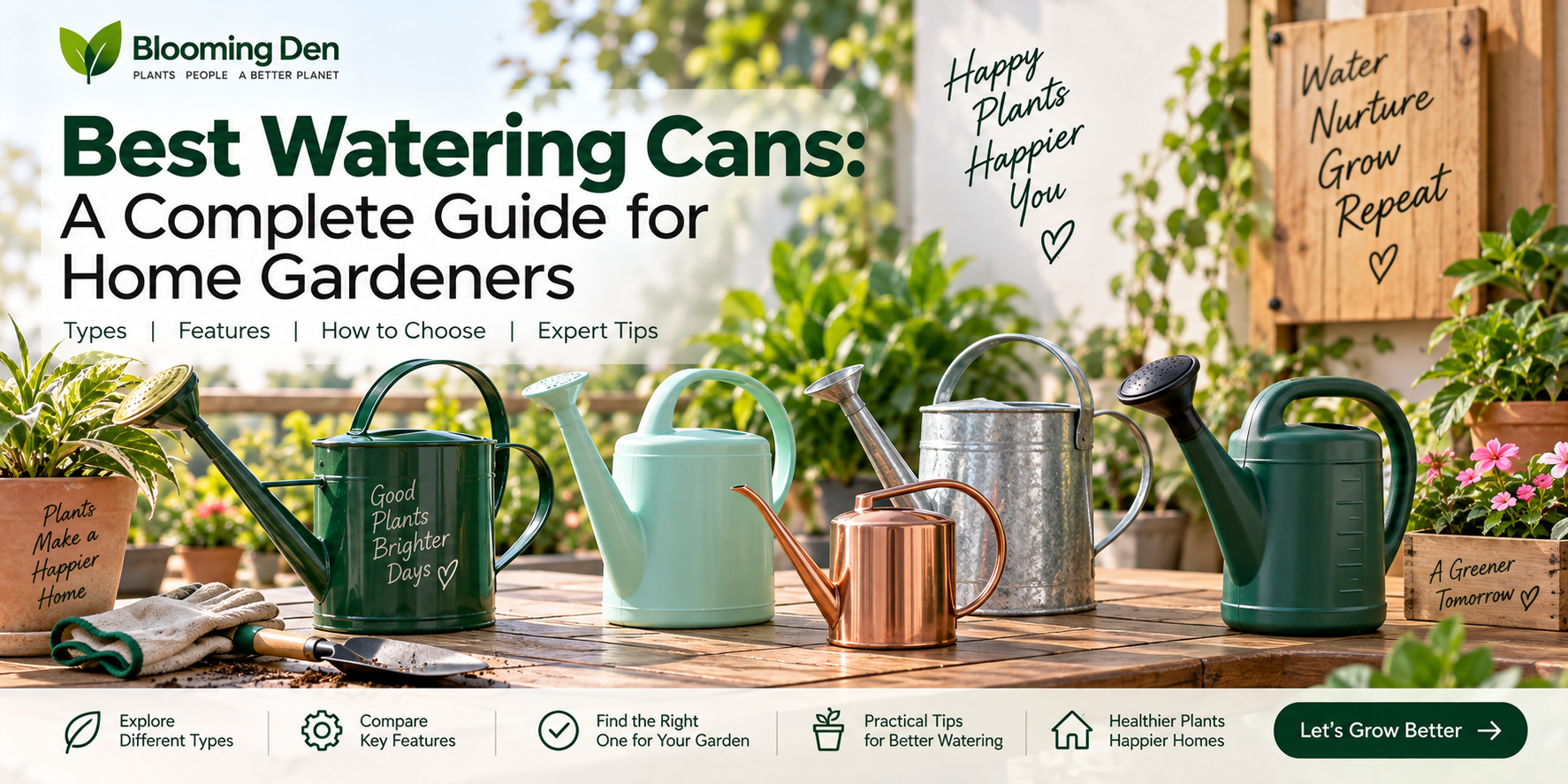
Why Choosing the Right Watering Can Matters
It may seem like any container can be used to water plants, but a proper watering can provides much better control. A suitable spout and rose can distribute water gently and reduce the risk of disturbing soil or damaging delicate plants.
The right watering can can also make gardening more comfortable. Carrying a container that is too large or heavy can become inconvenient, especially when watering plants on a balcony or indoors.
Quick Tip
Choose a watering can based on your garden size and watering needs rather than simply choosing the largest capacity available.
Different Types of Watering Cans
Watering cans are available in several designs. Understanding the differences can help you select one that suits your plants and gardening space.
| Type | Best For | Main Benefit |
|---|---|---|
| Small Watering Can | Indoor plants and small balconies | Easy to control and carry |
| Medium Watering Can | Balcony and terrace gardens | Good balance of capacity and comfort |
| Large Watering Can | Larger outdoor gardens | Fewer refills |
| Long-Spout Watering Can | Hard-to-reach plants | Better reach and precision |
1. Small Watering Cans for Indoor Plants
Small watering cans are an excellent choice for people who maintain indoor plants, windowsill plants, or a small collection of pots. Their compact size makes them easy to store and handle.
They are particularly useful when plants are placed close together because the smaller design allows you to direct water toward the soil without accidentally soaking nearby furniture or leaves.
Advantages of Small Watering Cans
- Lightweight and easy to carry
- Easy to store in small spaces
- Good control over water flow
- Suitable for indoor and tabletop plants
- Useful for seedlings and small containers
2. Medium Watering Cans for Balcony Gardens
A medium-sized watering can is often a practical choice for balcony gardeners. It can hold enough water for several plants without becoming excessively heavy.
If you have multiple pots arranged across a balcony, a medium watering can can provide a useful balance between capacity, portability, and watering control.
Best Choice for Many Beginners
If you are starting a balcony garden with several containers, a medium watering can is often a practical starting point before investing in larger watering equipment.
3. Large Watering Cans for Outdoor Gardens
Large watering cans are designed for gardeners who need to water many plants at once. They can reduce the number of trips needed to refill the container, making them useful for larger outdoor gardens, terraces, and extensive plant collections.
However, capacity is not the only factor to consider. A large watering can becomes significantly heavier when filled, so choose a size that you can comfortably carry and pour.
When a Large Watering Can Makes Sense
- You have many outdoor plants.
- Your garden is spread across a larger area.
- You want to reduce the number of refills.
- You have sufficient storage space.
- You can comfortably carry the filled container.
Avoid Going Too Large
A very large watering can may save refill trips but can become difficult to lift and control. Choose a capacity that you can comfortably handle when the can is full.
4. Long-Spout Watering Cans
Long-spout watering cans are useful when plants are positioned in difficult-to-reach locations. The extended spout allows you to direct water toward the base of a plant without having to move pots or reach through dense foliage.
They can be particularly convenient for plants placed on shelves, behind other containers, or in crowded balcony gardens.
Benefits of a Long Spout
- Better reach between closely placed pots
- More precise watering around plant bases
- Useful for indoor plant arrangements
- Helpful when foliage makes the soil difficult to access
5. Watering Cans With a Rose or Sprinkler Head
Some watering cans include a removable rose, also called a sprinkler head. It breaks the water stream into smaller flows, allowing water to reach the soil more gently.
This can be useful for seedlings, newly planted containers, and plants where a strong stream could disturb the growing medium.
| Spout Design | Suitable For |
|---|---|
| Open Spout | Direct and controlled watering |
| Rose/Sprinkler Head | Gentle watering and seedlings |
| Removable Rose | Flexible everyday use |
Plastic vs Metal Watering Cans
Watering cans are commonly available in plastic and metal designs. Both can work well, but each material has different characteristics that may make it more suitable for particular gardening situations.
| Feature | Plastic | Metal |
|---|---|---|
| Weight | Generally lightweight | Can be heavier |
| Portability | Easy to carry | Depends on design |
| Durability | Varies by plastic quality | Generally sturdy |
| Maintenance | Usually easy to clean | Requires care against corrosion depending on material |
| Best For | Indoor, balcony, and everyday home use | Gardeners looking for sturdy and durable designs |
How Much Watering Can Capacity Do You Need?
Capacity is one of the most important things to consider when buying a watering can. A small can is easier to carry and control, while a larger can means fewer trips to the water source.
| Approximate Size | Best Suited For |
|---|---|
| Small | A few indoor plants and small containers |
| Medium | Balcony and terrace gardens |
| Large | Larger outdoor plant collections |
Choose for Comfort
Remember that the stated capacity refers to the amount of water the can can hold. Once filled, the total weight also includes the watering can itself. A comfortable watering experience is more important than maximum capacity.
Best Watering Can Features to Look For
Once you know what size and type of watering can you need, the next step is to look at practical features. Small design details can make a noticeable difference when you water plants regularly.
Comfortable Handle
A well-designed handle makes the watering can easier to lift, carry, and control. This becomes especially important when the container is full.
Balanced Design
A balanced watering can should remain reasonably stable while you carry and pour it, reducing unnecessary strain on your hand and wrist.
Suitable Spout
A narrow or long spout can provide better control around individual pots, while a rose attachment can provide gentler water distribution.
Easy Filling
A sufficiently wide opening makes filling the watering can easier and can also simplify cleaning.
Choosing the Best Watering Can for Indoor Plants
Indoor plants usually benefit from a compact watering can that provides precise control. A small container is easier to carry around the house and can help you water individual pots without spilling water.
Look for a lightweight design with a narrow spout if your plants are placed on shelves, tables, or windowsills. A long spout can also help reach soil beneath dense foliage.
Ideal Features for Indoor Gardening
- Compact size
- Lightweight construction
- Narrow or controlled spout
- Comfortable handle
- Easy-to-clean design
- Suitable capacity for your number of plants
Choosing the Best Watering Can for Balcony Gardens
Balcony gardens often contain several pots arranged close together. A watering can with a medium capacity and a controlled spout can make it easier to water multiple containers without creating unnecessary mess.
If your balcony has plants placed along railings or in narrow corners, a long-spout design can be particularly useful because you can reach the soil without moving every pot.
Balcony Gardening Tip
Choose a watering can that you can comfortably carry from your water source to the farthest plant on your balcony. A slightly smaller can that is easy to handle may be more practical than an oversized one.
Choosing the Best Watering Can for Terrace and Outdoor Gardens
Terrace and outdoor gardens often contain a larger number of plants, so watering efficiency becomes more important. A medium or large watering can may reduce the number of trips required to refill it.
However, consider the distance between your water source and plants. If you need to carry a full watering can across a large terrace, excessive capacity can make watering tiring.
| Garden Situation | Recommended Approach |
|---|---|
| Few terrace pots | Small or medium watering can |
| Many container plants | Medium or large watering can |
| Large outdoor garden | Large watering can or hose |
| Hard-to-reach plants | Long-spout watering can |
How to Water Plants Properly With a Watering Can
Choosing a good watering can is only the first step. How you water your plants also matters. In many situations, water should be directed toward the growing medium rather than continuously poured over the foliage.
- Check the plant and growing medium before watering.
- Pour water slowly and direct it toward the soil around the plant.
- Give the water time to soak into the growing medium.
- Stop when the plant has received the amount of water it needs.
- Allow excess water to drain from containers where appropriate.
Avoid Overwatering
A larger watering can does not mean plants need more water. Watering should be based on the plant, soil, container, weather, and growing conditions.
Watering Can vs Garden Hose
Both watering cans and garden hoses can be useful. The better option depends on the size and layout of your garden.
| Watering Can | Garden Hose |
|---|---|
| Excellent control for individual plants | Convenient for larger gardens |
| Easy to use indoors and on balconies | Reduces carrying and refilling |
| Simple and portable | Useful for covering larger areas |
| Does not require a hose connection | Requires suitable water access |
Common Mistakes to Avoid When Buying a Watering Can
A watering can may look like a simple gardening accessory, but choosing the wrong design can make everyday plant care unnecessarily difficult. Before buying one, consider how many plants you have, where they are located, and how much water you can comfortably carry.
1. Choosing a Can That Is Too Large
A large capacity may seem convenient, but a completely filled watering can can become heavy. If it is difficult to lift or pour, watering can quickly become tiring.
2. Ignoring the Spout Design
A wide, uncontrolled stream may disturb potting soil or make it difficult to water plants accurately. Choose a spout that matches the type of plants you grow.
3. Buying Only for Appearance
Attractive designs can look great in a home or garden, but comfort, balance, capacity, and watering control should be considered before appearance.
4. Forgetting Storage
Consider where you will keep the watering can when it is not being used. A compact design may be more practical for small balconies and indoor gardens.
How to Maintain Your Watering Can
Regular maintenance can help keep your watering can clean and functional for longer. Soil particles, mineral deposits, algae, and other residue may accumulate over time, especially when the container is frequently left with water inside.
Simple Maintenance Routine
- Empty leftover water after watering whenever practical.
- Rinse the inside of the can regularly.
- Clean the spout and rose if water flow becomes restricted.
- Remove visible dirt or mineral buildup.
- Allow the container to dry when appropriate before storing it.
- Check the handle, spout, and sprinkler head for damage.
Keep the Spout Clear
If your watering can has a removable rose, check it periodically for blocked holes. A clean sprinkler head helps maintain a more consistent water flow.
Best Watering Can for Different Gardening Needs
There is no single watering can that is perfect for every gardener. The best choice depends on your plants, garden size, and daily routine.
| Gardening Need | Recommended Watering Can | Key Feature |
|---|---|---|
| Few indoor plants | Small watering can | Lightweight and precise |
| Balcony garden | Small or medium can | Easy to carry and control |
| Terrace garden | Medium or large can | Higher capacity |
| Crowded plant arrangement | Long-spout can | Better reach |
| Seedlings | Small can with rose | Gentle water distribution |
Frequently Asked Questions About Watering Cans
What is the best watering can for indoor plants?
A small, lightweight watering can with a narrow or controlled spout is generally convenient for indoor plants. It allows you to direct water toward the soil while reducing the chance of spills.
What size watering can is best for a balcony garden?
A small or medium watering can is usually practical for a balcony garden. Choose a capacity that provides enough water for your plants without becoming uncomfortable to carry when full.
Is a plastic watering can better than a metal one?
Both can work well. Plastic watering cans are generally lightweight and convenient, while metal designs can provide a sturdy option. The best choice depends on your preferences, garden size, and intended use.
Is a long-spout watering can useful?
Yes. Long-spout watering cans can be useful for reaching plants placed behind other pots, on shelves, or in crowded garden arrangements.
Should I buy a watering can with a rose?
A removable rose can be useful if you grow seedlings or plants that benefit from gentle water distribution. It also provides more flexibility because you can use the can with or without the sprinkler head.
How often should I clean my watering can?
Rinse it regularly and clean it more thoroughly whenever you notice dirt, mineral deposits, algae, or reduced water flow. Keeping the container clean helps maintain proper water delivery.
Watering Can Buying Checklist
Before buying a watering can, take a few moments to compare the features that matter most for your garden. The right choice should be comfortable to carry, easy to pour, and suitable for the plants you grow.
| Feature | What to Consider |
|---|---|
| Capacity | Choose a size that matches your number of plants and is comfortable when full. |
| Material | Consider weight, durability, maintenance, and where the can will be stored. |
| Spout | Choose a design that provides the level of watering control you need. |
| Handle | Look for a comfortable grip and balanced design. |
| Rose | Useful for gentle watering of seedlings and suitable plants. |
| Storage | Make sure the watering can fits comfortably in your available space. |
Watering Tips for Healthier Plants
A good watering can gives you better control, but proper watering also depends on understanding your plants. Different plants have different water requirements, and factors such as temperature, sunlight, container size, soil type, and season can affect how frequently they need water.
- Check the growing medium before watering instead of following a fixed schedule for every plant.
- Water slowly so that the growing medium has time to absorb the water.
- Direct water toward the soil around the plant where appropriate.
- Make sure containers have suitable drainage.
- Adjust watering according to weather and seasonal conditions.
- Avoid treating all plants as if they have identical watering requirements.
Remember
The goal is not simply to give plants more water. The goal is to provide the right amount of moisture for the specific plant and its growing conditions.
How to Choose the Best Watering Can for Your Home Garden
For a few indoor plants, choose a compact watering can that is lightweight and provides precise control. For a balcony garden with several containers, a medium-sized model can offer a good balance between capacity and portability.
If you maintain a terrace or larger outdoor garden, consider a larger capacity or combine a watering can with a suitable hose or irrigation solution. Plants that are difficult to reach may benefit from a long-spout design.
Most importantly, choose a watering can that you can comfortably use on a regular basis. A practical design that fits your garden is usually more valuable than simply choosing the largest or most expensive option.
Create a Better Plant Care Routine
A watering can is one of the simplest tools in a gardener's toolkit, but it can make everyday plant care much easier. Combined with the right soil, containers, sunlight, pruning, and regular observation, proper watering can help you maintain healthier and more attractive plants.
Whether you are growing a small collection of indoor plants or designing a complete home garden, selecting the right tools is an important first step.
Need Help With Your Home Garden?
BloomingDen can help you choose suitable plants and create a garden based on your available space, sunlight, lifestyle, and gardening requirements.
Explore BloomingDenConclusion
The best watering can is the one that fits your garden, your plants, and your daily gardening routine. Indoor gardeners may prefer a small and precise model, while balcony and terrace gardeners may benefit from medium-sized cans. Larger outdoor gardens may require higher-capacity watering equipment.
When choosing a watering can, pay attention to capacity, material, handle comfort, spout design, balance, and storage. A removable rose can also provide additional flexibility for gentle watering.
With the right watering can and a consistent plant-care routine, watering becomes simpler, cleaner, and more enjoyable. Start with a design that suits your current garden, and upgrade your watering equipment as your garden grows.