
Gardening Tools in India 2026: Essential Tools Every Home Gardener Needs
Gardening Made Easy: Discover the essential gardening tools for planting, pruning, watering, weeding, repotting, soil care, and maintaining a healthy garden in India.
Posted: August 13, 2026 | Gardening for Beginners
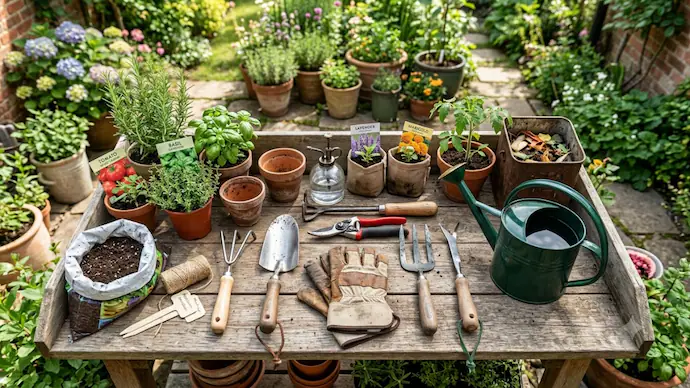
Having the right gardening tools can make planting, pruning, watering, repotting, and everyday plant care much easier. You do not need a large collection of equipment to maintain a healthy home garden. A small set of reliable tools can handle most gardening tasks for balconies, terraces, indoor plants, kitchen gardens, and outdoor spaces.
For beginners in India, basic tools such as a hand trowel, pruning shears, gardening gloves, watering can, hand fork, and weeder are often enough to get started. More advanced equipment such as spades, rakes, loppers, soil testers, and pressure sprayers becomes useful as your garden grows. :contentReference[oaicite:0]{index=0}
Indian gardening conditions can vary considerably throughout the year. Summer heat, monsoon humidity, and changing winter temperatures can affect both plants and tools. Choosing rust-resistant materials, comfortable handles, and tools that match your garden size can make gardening more comfortable and help your equipment last longer.
In this guide, you will learn about the most useful gardening tools in India, what each tool is used for, which tools beginners actually need, how to choose quality equipment, and how to clean and store your tools.
IN THIS ARTICLE
- Why Gardening Tools Matter
- Essential Gardening Tools for Beginners
- Hand Trowel
- Pruning Shears or Secateurs
- Gardening Gloves
- Watering Can and Garden Hose
- Garden Fork and Hand Cultivator
- Hand Weeder
- Garden Rake
- Spade and Shovel
- Garden Hoe
- Garden Sprayer
- Loppers and Pruning Saws
- Soil Testing Tools
- Tools According to Garden Size
- How to Choose Quality Gardening Tools
- How to Clean and Maintain Gardening Tools
- How to Store Gardening Tools
- Best Gardening Tool Kit for Beginners
- Common Gardening Tool Mistakes
- Gardening Tool Checklist
- Frequently Asked Questions
Why Gardening Tools Matter
Gardening can often be done with your hands, but the right tool makes many tasks faster, safer, and more precise. A trowel makes planting easier, sharp pruning shears create cleaner cuts, and a watering can helps deliver water gently to delicate plants.
Using the correct tool also reduces unnecessary effort. For example, trying to cut woody branches with ordinary scissors can damage both the plant and the scissors. Similarly, using a large shovel for a small indoor pot can make repotting unnecessarily difficult.
- Makes common gardening tasks easier.
- Helps you work more efficiently.
- Allows more precise planting and pruning.
- Can reduce unnecessary strain on your hands and back.
- Helps maintain plants more consistently.
Essential Gardening Tools for Beginners
Beginners do not need to purchase every gardening tool available. A small collection of versatile tools is enough for most home gardens. Current beginner gardening guides commonly recommend a hand trowel, pruners, gloves, watering equipment, and a rake as core tools. :contentReference[oaicite:1]{index=1}
| Tool | Main Use | Beginner Priority |
|---|---|---|
| Hand Trowel | Planting and digging small holes | Essential |
| Pruning Shears | Trimming stems and branches | Essential |
| Gardening Gloves | Protecting hands | Essential |
| Watering Can | Watering plants | Essential |
| Hand Fork | Loosening soil | Useful |
| Hand Weeder | Removing weeds | Useful |
| Garden Rake | Collecting leaves and leveling soil | Useful for larger gardens |
Hand Trowel
A hand trowel is one of the most useful tools for home gardening. It is designed for digging small planting holes, transplanting seedlings, moving potting mix, loosening soil, and removing small weeds. :contentReference[oaicite:2]{index=2}
What to Look For
- Strong stainless-steel or rust-resistant blade.
- Comfortable, non-slip handle.
- Balanced construction.
- A blade size appropriate for your containers.
Best For
Balcony gardens, indoor repotting, flower pots, herbs, seedlings, and small outdoor garden beds.
Pruning Shears or Secateurs
Pruning shears are used to remove dead stems, trim healthy growth, shape plants, harvest herbs and vegetables, and maintain shrubs. Sharp pruning tools can make cleaner cuts than unsuitable or blunt tools. :contentReference[oaicite:3]{index=3}
Bypass Pruners
Bypass pruners use two blades that pass by each other. They are commonly used for cleaner cuts on live stems and general pruning.
Anvil Pruners
Anvil pruners use a blade that closes against a flat surface. They can be useful for some tougher or dry material, depending on the tool and plant.
Buying Tip
Choose a pruner that fits comfortably in your hand and matches the thickness of the stems you normally cut. Do not force a small pruner through branches that require a larger cutting tool.
Gardening Gloves
Gardening gloves protect your hands from soil, rough surfaces, thorns, blisters, and minor scratches. They can also improve your grip when working with tools.
| Glove Type | Best For | Consideration |
|---|---|---|
| Cotton | Light gardening and potting | Comfortable but limited protection |
| Rubber-Coated | Soil handling and general work | Better grip and moisture resistance |
| Heavy-Duty | Thorny plants and tougher work | More protective but less flexible |
Watering Can and Garden Hose
Watering equipment is essential for maintaining plants. A watering can is particularly useful for indoor plants, balcony gardens, seedlings, and containers, while hoses are more practical for larger gardens. :contentReference[oaicite:4]{index=4}
Watering Can
Choose a size that you can comfortably carry when full. A removable rose or sprinkler head can help distribute water more gently over soil and seedlings.
Garden Hose
A hose is useful for larger outdoor gardens. Select one that is flexible enough for your garden and use a suitable nozzle to control the water flow.
Garden Fork and Hand Cultivator
A garden fork or hand cultivator helps loosen compacted soil, break up the growing medium, mix organic matter, and improve access to the soil around plants. :contentReference[oaicite:5]{index=5}
- Loosening compacted potting mix
- Mixing compost into soil
- Breaking small soil clumps
- Removing small weeds
- Preparing containers before planting
For balcony and indoor gardens, a small three-prong hand cultivator is usually more practical than a full-size garden fork.
Hand Weeder
A hand weeder is designed to remove unwanted plants from soil while helping you work around desirable plants. It is particularly useful in vegetable beds, flower gardens, and containers.
Useful For
- Removing small weeds.
- Working between closely planted crops.
- Maintaining container gardens.
- Removing weeds around established plants.
Buying Tip
Choose a strong, comfortable handle and a durable metal working end. The tool should be comfortable enough to use repeatedly without putting excessive pressure on your wrist.
Garden Rake
A garden rake is useful for collecting fallen leaves, spreading or leveling soil and mulch, and clearing debris from larger garden areas. :contentReference[oaicite:6]{index=6}
Leaf Rake
Designed primarily for collecting leaves and lightweight garden debris.
Garden or Soil Rake
Stronger tines can be useful for leveling soil, breaking up small clumps, and preparing garden beds.
Spade and Shovel
Spades and shovels are more useful for larger outdoor gardens than small indoor or balcony spaces. They help with digging, moving soil, compost, mulch, and other garden materials.
| Tool | Main Use | Suitable Garden |
|---|---|---|
| Spade | Digging and cutting through soil | Outdoor beds |
| Shovel | Moving soil, compost, and mulch | Medium to large gardens |
Garden Hoe
A garden hoe is useful for cultivating soil, preparing planting areas, and removing weeds from garden beds. It is generally more useful in outdoor soil than in small containers.
- Breaking up surface soil.
- Preparing planting rows.
- Removing weeds.
- Creating shallow planting channels.
- Maintaining larger garden beds.
Garden Sprayer
A hand sprayer can be useful for applying water to seedlings, certain foliar products, or plant-care solutions according to their directions. Small trigger sprayers are suitable for a few plants, while pressure sprayers are more practical for larger collections.
| Sprayer | Suitable For | Garden Size |
|---|---|---|
| Trigger Mister | Small indoor plants and seedlings | Very Small |
| Hand Pressure Sprayer | Plant-care applications | Small to Medium |
| Larger Pressure Sprayer | Larger garden areas | Medium to Large |
Always follow the product label when using any plant-protection or treatment solution. Clean the sprayer after use, particularly when switching between different products.
Loppers and Pruning Saws
When branches become too thick for hand pruners, larger cutting tools such as loppers or pruning saws may be required. These tools are more appropriate for established shrubs, trees, and larger gardens.
Loppers
Long handles provide greater leverage than hand pruners and make them useful for thicker branches that are within the tool's rated cutting capacity.
Pruning Saw
A pruning saw is useful for branches that are too thick for secateurs or loppers. Use the correct saw for the job and work carefully to avoid damaging the plant or yourself.
Soil Testing Tools
Soil testing tools can provide additional information about growing conditions. They are more useful for gardeners who grow vegetables, maintain larger gardens, or want to understand soil conditions in more detail.
| Tool | Measures | Usefulness |
|---|---|---|
| pH Tester | Soil acidity or alkalinity | Useful for specific plants and soil management |
| Moisture Meter | Approximate soil moisture | Useful for beginners learning watering needs |
| Soil Test Kit | Selected soil properties | Useful for vegetable and garden planning |
Gardening Tools According to Garden Size
| Garden Type | Essential Tools | Optional Tools |
|---|---|---|
| Indoor Plants | Trowel, gloves, scissors, watering can | Moisture meter, mister |
| Balcony | Trowel, pruner, gloves, watering can, cultivator | Weeder, sprayer, moisture meter |
| Terrace | Trowel, pruner, gloves, watering equipment, cultivator | Rake, weeder, sprayer, soil tester |
| Backyard | Trowel, pruner, gloves, spade, rake, watering equipment | Hoe, loppers, pruning saw, wheelbarrow |
| Large Garden | Full hand-tool and long-handle set | Specialized landscape equipment |
How to Choose Quality Gardening Tools
Buying the cheapest tool is not always the best way to save money. A durable tool that remains comfortable and functional for years can be more useful than a large collection of low-quality equipment. Current gardening guidance recommends looking for durable, rust-resistant materials and ergonomic handles. :contentReference[oaicite:7]{index=7}
| Feature | What to Look For |
|---|---|
| Material | Stainless steel or other rust-resistant metal |
| Handle | Comfortable, secure, and ergonomic |
| Construction | Strong joints with no excessive movement |
| Weight | Comfortable enough for repeated use |
| Cutting Tools | Sharp, properly aligned blades |
Ergonomics are particularly important if you spend long periods in the garden. A tool that fits your hand and feels balanced can reduce fatigue and make repetitive work more comfortable. :contentReference[oaicite:8]{index=8}
How to Clean and Maintain Gardening Tools
Regular cleaning helps remove soil and plant residue from your tools. It can also reduce the risk of transferring unwanted material between plants and helps equipment remain functional.
- Remove soil and debris after using the tool.
- Wash tools when necessary and dry them thoroughly.
- Keep cutting blades clean and sharp.
- Check handles and joints regularly.
- Lubricate appropriate moving parts according to the manufacturer's instructions.
- Store tools in a dry location.
Cleaning tools after use and storing them in a dry place are simple habits that can help extend their useful life. :contentReference[oaicite:9]{index=9}
How to Store Gardening Tools
Keep Tools Dry
Moisture can accelerate rust on metal tools. Dry tools before putting them away, particularly during India's humid monsoon season.
Use a Dedicated Storage Area
A tool box, wall-mounted rack, shelf, or garden cabinet can keep equipment organized and easier to find.
Protect Cutting Edges
Keep sharp blades closed or protected where appropriate. This helps prevent accidental cuts and protects the blade edges.
Best Gardening Tool Kit for Beginners
If you are starting your first garden, avoid buying a large multi-tool kit simply because it contains many items. Start with tools you will actually use.
| Tool | Why You Need It | Priority |
|---|---|---|
| Hand Trowel | Planting and repotting | Must Have |
| Pruning Shears | Trimming and pruning | Must Have |
| Gardening Gloves | Hand protection | Must Have |
| Watering Can | Controlled watering | Must Have |
| Hand Cultivator | Soil loosening | Recommended |
| Hand Weeder | Weed removal | Recommended |
| Sprayer | Plant-care applications | Optional |
This compact setup is enough for most beginners managing indoor plants, balconies, containers, or a small home garden. As the garden becomes larger, you can add a rake, spade, hoe, loppers, pruning saw, or other specialized equipment.
Common Gardening Tool Mistakes
- Buying too many tools before understanding your gardening needs
- Choosing tools based only on price
- Using ordinary scissors for thick plant stems
- Using a dull pruning tool on live branches
- Leaving metal tools wet after use
- Storing tools outdoors without protection from rain and humidity
- Choosing tools that are too heavy or uncomfortable for your hands
- Using large garden tools for small containers
- Failing to clean tools between gardening tasks
- Using a tool for a task beyond its intended capacity
Gardening Tool Checklist
| Tool | Primary Use | Needed By |
|---|---|---|
| Hand Trowel | Digging, planting, repotting | Every gardener |
| Pruning Shears | Trimming stems and branches | Most gardeners |
| Gloves | Hand protection | Every gardener |
| Watering Can | Watering containers | Every home gardener |
| Hand Cultivator | Loosening soil | Container and outdoor gardeners |
| Hand Weeder | Removing weeds | Outdoor and vegetable gardeners |
| Rake | Leaves, debris, and soil leveling | Medium and large gardens |
| Spade | Digging and moving soil | Outdoor gardeners |
| Sprayer | Plant-care applications | Optional |
Frequently Asked Questions
Q1. What are the most important gardening tools for beginners?
Q2. Which gardening tool is used for planting?
Q3. What tool is best for pruning plants?
Q4. Which gardening tools are best for a balcony garden?
Q5. What material is best for gardening tools in India?
Q6. How should I clean gardening tools?
Q7. How do I prevent gardening tools from rusting?
Q8. Do I need a complete gardening tool kit as a beginner?
Q9. What tools are needed for a vegetable garden?
Q10. Can I use regular scissors for gardening?
Author Bio
Written by the Blooming Den Gardening Team – Verified plant experts helping urban India go green since 2025. We deliver plants, supplies, and professional care to your doorstep.