
How Gardening Reduces Stress and Anxiety: A Natural Way to Improve Mental Well-Being
Stress and anxiety have become common challenges in modern life. Long working hours, digital distractions, financial pressures, and busy schedules can leave both the mind and body feeling exhausted. While exercise, meditation, and healthy nutrition are widely recommended for managing stress, gardening has emerged as one of the most effective and enjoyable natural therapies for improving emotional well-being.
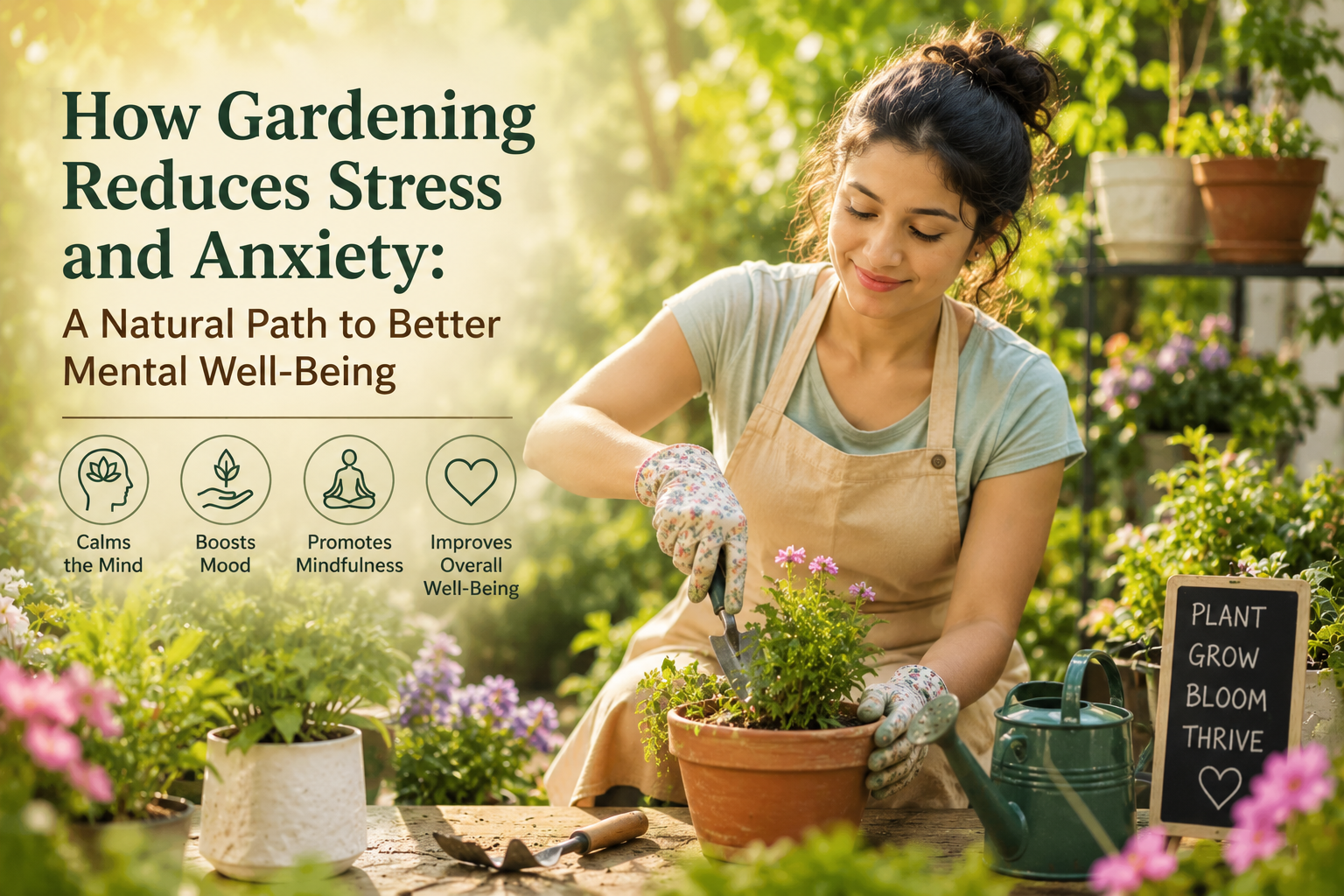
Gardening encourages people to slow down, connect with nature, and focus on meaningful activities. Whether you're planting flowers, growing vegetables, or caring for indoor plants, spending time with greenery can help calm the mind, reduce anxiety, and create lasting feelings of happiness. In this guide, we'll explore how gardening supports mental health and why it should become part of your daily wellness routine.
Understanding Stress and Anxiety
Stress is the body's natural response to challenges and demands. While short-term stress can help improve focus and performance, prolonged stress can negatively affect both physical and mental health. Anxiety often develops when stress becomes overwhelming, leading to excessive worrying, difficulty concentrating, fatigue, irritability, and sleep disturbances.
Modern lifestyles expose us to continuous stimulation from work, technology, and social responsibilities. Without healthy ways to relax, these pressures can build over time. Gardening offers a peaceful escape that encourages relaxation while providing both physical activity and emotional satisfaction.
Spending time around plants allows the mind to slow down naturally. Caring for living things shifts attention away from daily worries and creates opportunities for mindfulness, helping people feel calmer and more emotionally balanced.
Why Gardening Is an Effective Stress Reliever
Gardening combines several activities that are known to improve mental health. It involves gentle physical movement, fresh air, exposure to natural sunlight, creativity, and a strong connection with nature. Unlike many hobbies that involve screens or constant stimulation, gardening encourages quiet focus and allows the brain to recover from daily stress.
Every gardening task, from preparing the soil to watering plants and watching new growth appear, provides a sense of accomplishment. These simple achievements gradually improve confidence while reducing feelings of tension and anxiety.
Benefits of Gardening for Stress Relief
- Helps lower daily stress levels.
- Encourages relaxation through mindful activities.
- Provides healthy physical exercise.
- Reduces screen time and mental fatigue.
- Improves focus and concentration.
- Creates a sense of accomplishment.
- Encourages a stronger connection with nature.
- Supports long-term emotional well-being.
How Nature Influences the Mind
Natural environments have a calming effect on the human brain. Green spaces, flowers, trees, and fresh air reduce mental fatigue while helping people recover from stressful experiences. Even spending a short amount of time caring for plants each day can improve mood and increase feelings of relaxation.
Gardening creates opportunities to disconnect from constant notifications and reconnect with the natural world. This simple change in environment can significantly improve emotional health while encouraging healthier daily habits.
1. Gardening Lowers Stress Hormone Levels
One of the primary reasons gardening helps reduce stress is its effect on the body's stress response. During stressful situations, the body releases cortisol, a hormone that prepares us to respond to challenges. While cortisol is important for short-term survival, consistently high levels can contribute to fatigue, anxiety, headaches, poor sleep, and reduced concentration.
Gardening provides a calming environment that encourages the body to relax naturally. Activities such as planting, watering, pruning, and harvesting require gentle movements and focused attention, helping the body transition from a state of tension to one of relaxation. Spending time among plants also encourages slower breathing and a calmer heart rate.
Ways Gardening Helps Lower Stress
- Encourages relaxation through repetitive tasks.
- Reduces exposure to digital distractions.
- Provides peaceful outdoor surroundings.
- Promotes healthier daily routines.
- Supports emotional balance over time.
2. Gardening Helps Calm an Anxious Mind
Anxiety often causes the mind to focus on future uncertainties and negative thoughts. Gardening naturally redirects attention toward meaningful, present-moment activities. Instead of worrying about situations beyond your control, you become focused on watering plants, preparing soil, removing weeds, or observing healthy growth.
This shift in attention reduces mental overload while creating a sense of stability and purpose. Even simple gardening activities performed for a few minutes each day can provide a welcome mental break from everyday pressures.
| Common Cause of Anxiety | How Gardening Helps |
|---|---|
| Constant worrying | Encourages attention on the present moment. |
| Mental exhaustion | Provides a peaceful and refreshing activity. |
| Digital overload | Creates opportunities to disconnect from screens. |
| Feeling overwhelmed | Breaks large worries into simple daily tasks. |
3. Gardening Encourages Mindfulness
Mindfulness means paying full attention to what is happening right now instead of dwelling on the past or worrying about the future. Gardening naturally promotes mindfulness because every task requires gentle concentration. Feeling the soil, observing new leaves, watering plants, and removing dried foliage all encourage awareness of the present moment.
Unlike many fast-paced activities, gardening cannot be rushed. Plants grow according to their natural cycle, reminding us to slow down and appreciate gradual progress. This change in perspective helps reduce anxiety while creating a greater sense of inner peace.
Mindful Gardening Practices
- Observe plant growth each day.
- Water plants without rushing.
- Notice different colors, textures, and fragrances.
- Listen to natural sounds while gardening.
- Focus on one gardening task at a time.
4. Gardening Creates a Healthy Daily Routine
Daily routines provide structure, and structure plays an important role in reducing stress and anxiety. Gardening encourages consistency by giving you simple responsibilities such as watering plants, checking soil moisture, pruning leaves, and monitoring plant health.
Completing these small tasks every day builds healthy habits while creating a sense of accomplishment. Over time, this routine becomes a positive part of your lifestyle and contributes to greater emotional stability.
5. Gardening Improves Mood and Emotional Well-Being
Gardening provides a natural sense of achievement that can significantly improve mood. Watching seeds germinate, flowers bloom, or vegetables grow because of your care creates feelings of satisfaction and accomplishment. These positive experiences help replace negative thoughts with optimism and encourage a healthier outlook on life.
Spending time in a green environment also offers a welcome break from everyday responsibilities. Whether you are maintaining a home garden or caring for a few indoor plants, gardening creates moments of peace that help restore emotional balance and reduce feelings of frustration.
Emotional Benefits of Gardening
- Improves overall mood.
- Builds confidence through small achievements.
- Creates a stronger sense of purpose.
- Encourages gratitude and positivity.
- Supports long-term emotional resilience.
6. Gardening Encourages Healthy Physical Activity
Physical activity plays an important role in reducing stress and anxiety, and gardening offers an enjoyable way to stay active without the intensity of traditional exercise. Digging, planting, watering, pruning, and carrying pots involve gentle movement that benefits both the body and mind.
Unlike structured workouts that some people may find difficult to maintain, gardening feels productive and rewarding. Regular movement improves circulation, supports better sleep, increases energy levels, and contributes to improved mental health.
| Gardening Activity | Mental Health Benefit |
|---|---|
| Planting flowers | Improves focus and creativity. |
| Watering plants | Encourages relaxation and mindfulness. |
| Pruning branches | Promotes concentration and patience. |
| Weeding garden beds | Provides gentle exercise and reduces mental fatigue. |
7. Gardening Improves Sleep by Reducing Stress
High stress and anxiety often make it difficult to fall asleep or enjoy restful sleep. Gardening helps improve sleep by encouraging physical movement, reducing mental tension, and increasing exposure to natural daylight. These factors help regulate the body's internal clock and promote healthier sleeping patterns.
A relaxing gardening session during the morning or evening can become part of a calming daily routine. Lower stress levels before bedtime make it easier to unwind and enjoy deeper, more restorative sleep.
Gardening Habits That Support Better Sleep
- Spend time outdoors during daylight hours.
- Maintain a regular gardening schedule.
- Avoid screens while gardening.
- Use gardening as an evening relaxation activity.
- Practice slow, mindful gardening techniques.
Why Gardening Works Better Than Passive Relaxation
Many people try to relax by watching television or scrolling through social media. While these activities may provide temporary entertainment, they often fail to reduce stress effectively. Gardening is different because it actively engages both the body and the mind in meaningful work without creating additional pressure.
Every gardening task has a visible outcome, whether it is healthier plants, blooming flowers, or fresh vegetables. These small successes build confidence and reinforce positive emotions, making gardening one of the most rewarding hobbies for reducing stress and anxiety naturally.
Best Plants for Creating a Calm and Relaxing Environment
Choosing the right plants can make your gardening experience even more relaxing. Low-maintenance plants reduce the pressure of constant care while adding natural beauty to your home or garden. Many indoor and outdoor plants create peaceful green spaces that encourage relaxation and make it easier to unwind after a busy day.
| Plant | Why It's Good for Stress Relief |
|---|---|
| Lavender | Creates a peaceful atmosphere and is easy to grow. |
| Peace Lily | Adds calming greenery to indoor spaces. |
| Snake Plant | Low-maintenance and suitable for beginners. |
| Spider Plant | Fast-growing and rewarding to care for. |
| Pothos | Easy to maintain and ideal for indoor gardening. |
Simple Ways to Make Gardening Part of Your Daily Routine
You don't need hours every day to enjoy the benefits of gardening. A consistent routine of just a few minutes can help reduce stress and improve your emotional well-being. The goal is to make gardening a relaxing habit instead of another task on your to-do list.
- Spend 15 to 30 minutes with your plants each day.
- Water plants mindfully instead of rushing.
- Observe new leaves, flowers, or buds during every visit.
- Remove dry leaves and keep your garden tidy.
- Grow herbs or flowers that you enjoy caring for.
- Take breaks from phones and electronic devices while gardening.
- Create a comfortable space where you can sit and enjoy your garden.
Common Mistakes That Prevent Gardening From Being Relaxing
Gardening should reduce stress, not create additional pressure. Many beginners become discouraged because they expect perfect results or try to manage too many plants at once. Keeping your gardening routine simple helps maintain its positive effects on mental health.
| Mistake | Better Approach |
|---|---|
| Buying too many plants | Start with a few easy-care plants. |
| Expecting quick results | Enjoy gradual growth and learning. |
| Skipping regular care | Develop a simple daily routine. |
| Treating gardening like work | Focus on relaxation instead of perfection. |
Frequently Asked Questions
How long should I garden each day to reduce stress?
Spending 15 to 30 minutes each day caring for plants is enough for most people to experience noticeable improvements in relaxation and emotional well-being.
Can indoor gardening help reduce anxiety?
Yes. Indoor plants provide many of the same psychological benefits as outdoor gardening. Caring for houseplants encourages mindfulness, improves mood, and creates a calming home environment.
Which plants are easiest for beginners?
Snake Plant, Pothos, Spider Plant, Aloe Vera, and Peace Lily are excellent beginner-friendly choices because they require minimal maintenance.
Is gardening better than other hobbies for reducing stress?
Gardening is unique because it combines physical activity, fresh air, mindfulness, creativity, and a connection with nature, making it one of the most effective hobbies for managing stress naturally.
Quick Stress-Relief Gardening Checklist
Building a simple gardening routine can have a lasting impact on your mental well-being. Use this checklist to make gardening a consistent part of your lifestyle and enjoy its stress-relieving benefits every day.
| Activity | Recommended Frequency | Benefit |
|---|---|---|
| Water your plants | As needed | Creates a calming daily routine. |
| Spend time outdoors | 15–30 minutes daily | Reduces stress and improves mood. |
| Prune unhealthy leaves | Weekly | Improves focus and mindfulness. |
| Observe plant growth | Daily | Encourages gratitude and positivity. |
| Add a new plant | Every few months | Keeps gardening enjoyable and rewarding. |
Signs That Gardening Is Improving Your Mental Well-Being
The positive effects of gardening often appear gradually. As gardening becomes a regular habit, many people notice improvements in both their emotional and physical well-being.
- You feel calmer after spending time with plants.
- Your daily stress levels become easier to manage.
- You sleep better and wake up feeling refreshed.
- You spend less time on electronic devices.
- You feel more patient and emotionally balanced.
- You enjoy caring for living plants and watching them grow.
- You feel happier and more productive throughout the day.
Create Your Own Peaceful Green Space with BloomingDen
At BloomingDen, we believe that every home deserves a healthy connection with nature. Whether you're starting your first indoor garden or expanding an outdoor landscape, we offer a wide selection of healthy plants, stylish planters, gardening tools, and expert guidance to help you grow with confidence.
Explore our collection of indoor plants, flowering plants, herbs, gardening accessories, and professional gardening services to create a beautiful environment that supports both your home and your mental well-being.
Conclusion
Gardening is far more than a relaxing pastime. It is a natural, affordable, and enjoyable way to reduce stress, manage anxiety, and improve overall mental health. Through gentle physical activity, mindfulness, exposure to nature, and the satisfaction of nurturing living plants, gardening creates lasting emotional benefits that extend well beyond the garden itself.
Whether you grow a few indoor plants, cultivate herbs on your balcony, or maintain a thriving backyard garden, every moment spent caring for plants helps build healthier habits and a calmer mind. Small daily gardening activities can lead to significant improvements in mood, resilience, focus, and overall well-being.
Begin with a single plant, enjoy the process of helping it grow, and discover how gardening can become one of the simplest and most effective ways to create a happier, healthier, and more balanced life.