
How to Take Care of Your Plants While You’re Away: A Trip Checklist for 3 Days, 1 Week and 2 Weeks
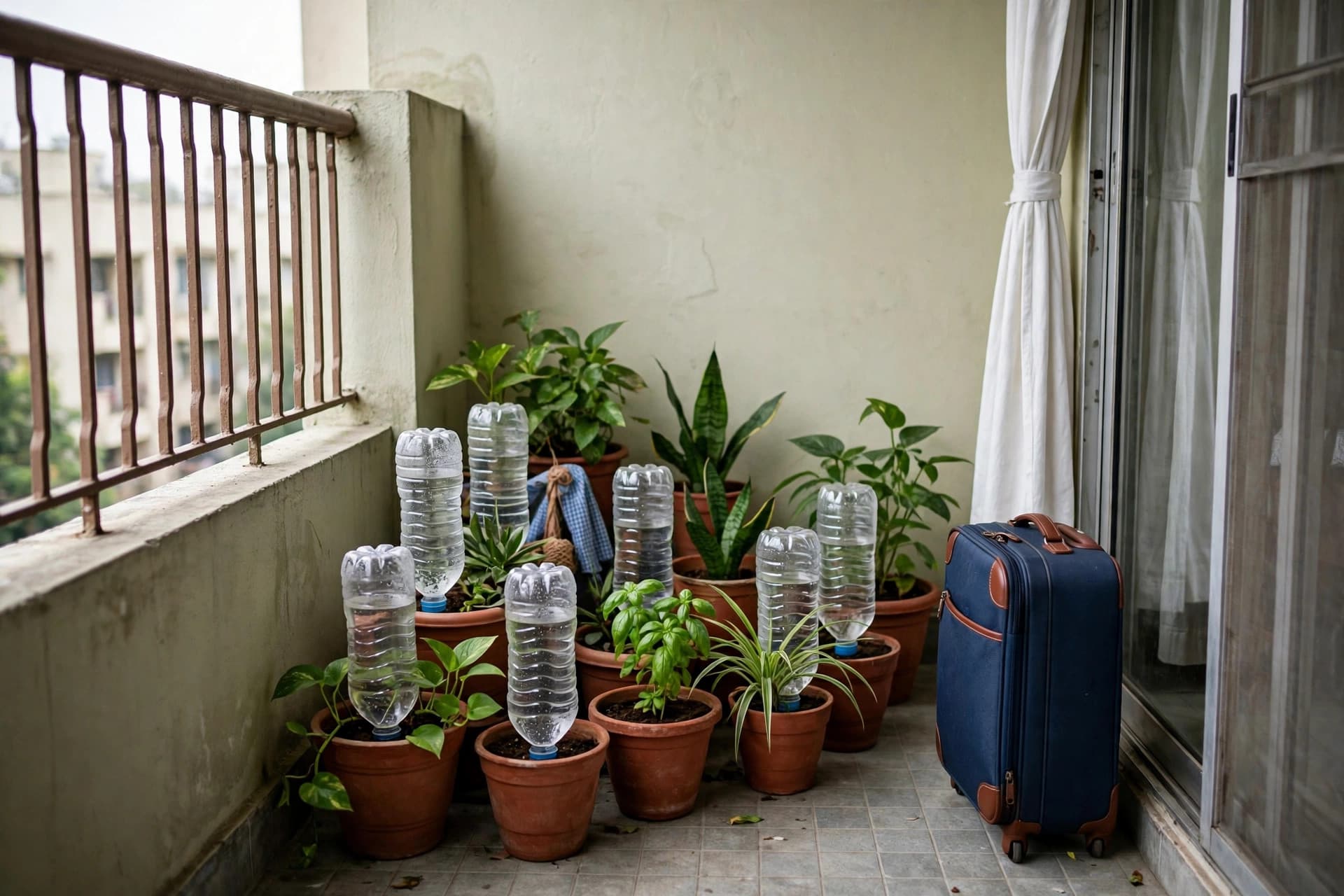
A few days away rarely harms a healthy plant, but a week or two in hot weather can. The right preparation depends on the plant, the pot, and the season, so match your steps to how long you will be gone. In this guide, we'll explain what decides how long plants can wait, give a checklist for 3 days, 1 week and 2 weeks, show how to set up a simple wick watering system, and cover balcony plants. Always start with each plant's needs and your local weather.
What Decides How Long a Plant Can Wait
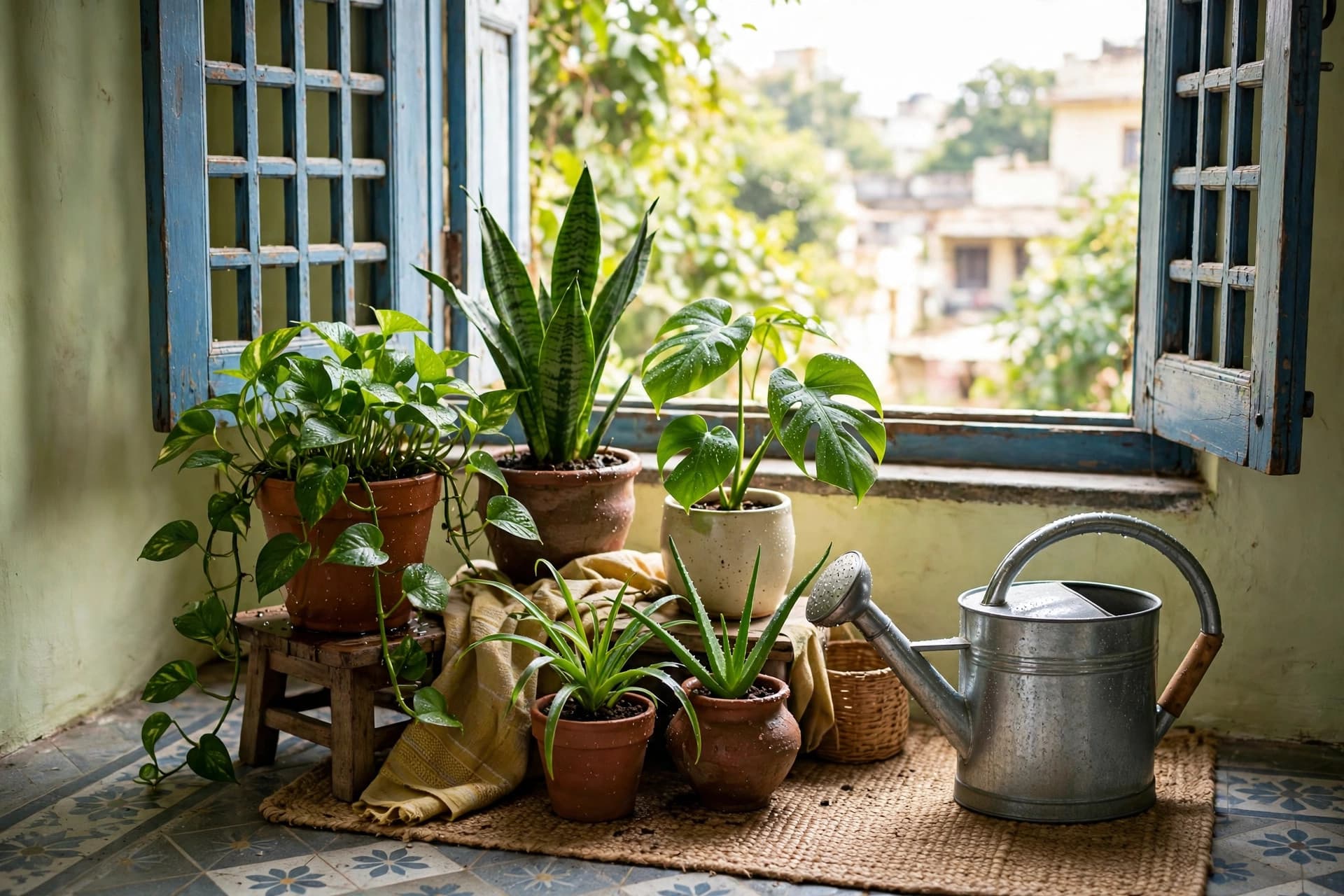
Succulents and snake plants tolerate gaps, while ferns, herbs, and seedlings do not. Pot size, season, and light also matter, because small pots in bright, hot spots dry out the fastest. Look at each plant before you plan, instead of treating every pot the same.
Benefits of Preparing Before You Leave Prevents wilting and dry stress while you are away • Avoids overwatering from a last-minute flood of water • Keeps pests from spreading unnoticed • Lets you travel without worrying about your plants • Makes the return easier, since plants stay healthy • Saves time, because a simple routine works for every trip
1. Assess Your Plants and Pots Spend a few minutes checking these four areas before you leave. Plant type: Thirsty plants need more support than succulents and tough foliage plants. Pot size: Larger pots hold moisture longer than small ones. Season: Hot, dry weeks empty pots faster than cool weeks. Light: Bright spots dry out faster than shaded corners.
2. Trip Checklist by Length of Absence
Trip Length | What to Do
| Trip Length | What to Do |
|---|---|
| 3 days | Water well the day before, let excess drain, and move plants out of direct afternoon sun. Most healthy plants need nothing more. |
| 1 week | Water well, group plants together, and move them to bright indirect light. Add a watering aid for thirsty plants such as herbs and ferns. |
| 2 weeks | Do all of the above, remove spent leaves and flowers, set up wick or drip watering, and ask someone to check once midway. |
A useful habit is to water thoroughly and let the pot drain fully, so roots are not left sitting in water.
3. Set Up a Simple Wick Watering System
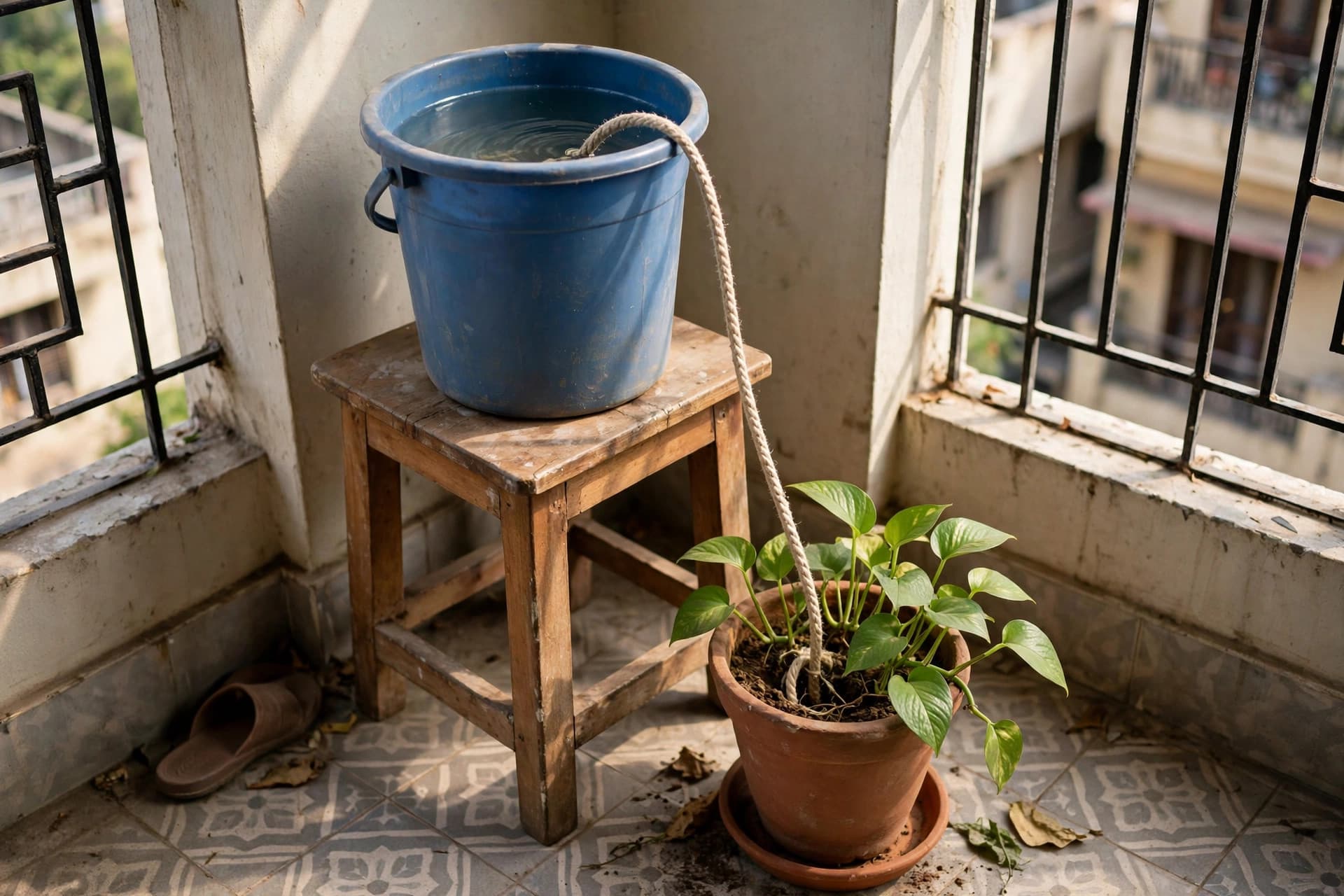
A cotton rope wick lets a plant draw water slowly from a reservoir. Test it for a few days before you travel.
- Fill a bucket or bottle with clean water and place it slightly higher than the pot.
- Cut a cotton rope long enough to reach from the water to the soil.
- Soak the rope, then push one end 5 to 8 cm into the potting mix.
- Put the other end deep in the water and check that moisture travels up.
- Test for two to three days before you leave.
4. Care for Balcony and Outdoor Plants
Balcony pots dry fastest because of sun and wind, so they need extra thought.
- Move pots into partial shade, away from hot afternoon sun.
- Set pots on trays or group them so they shelter each other.
- Mulch the soil surface with dry leaves or coco chips to slow evaporation.
- Secure tall or light pots against wind.
- Ask a neighbour to check outdoor plants once if you are away for two weeks.
Watering Aids Compared
| Method | Best For | Good to Know |
|---|---|---|
| Deep watering before you leave | Trips of 3 days or less | Let excess drain fully. |
| Wick watering | 1 to 2 weeks, medium pots | Test the setup before you travel. |
| Self-watering planters | Herbs, ferns, thirsty plants | Check the reservoir size. |
| Drip spikes or bottles | Medium to large pots | Check the flow rate on a test run. |
| Plant sitter | Trips over 2 weeks | Leave clear written instructions. |
5. Departure-Day Checklist Water deeply and empty saucers of standing water • Move plants away from hot windows and strong sun • Remove dead leaves and spent flowers • Set up and test your watering aid • Check for pests so they do not spread while you are gone • Leave a short note for any plant sitter • Skip fertilizer right before leaving
Common Mistakes to Avoid Overwatering just before leaving → Water well once and let the pot drain • Leaving plants in hot, bright windows → Move them to bright indirect light • Trying a new watering system untested → Test any setup for a few days first • Leaving pots sitting in water → Empty saucers and make sure pots drain freely • Ignoring pests before a trip → Inspect leaves and soil first • Fertilizing right before leaving → Wait until you are back
References and Further Reading These references offer further horticultural context. Region, plant variety, and growing conditions can change recommendations. ICAR: Embracing kitchen gardening — home vegetable production during winter season: 155676 CBSE: Basic Agriculture: Basic_Agriculture_X.pdf
Frequently Asked Questions
5 questions with expert answers
A: Many can, especially succulents, snake plants, and ZZ plants. Thirsty plants and seedlings need a wick or drip system, or someone to check on them.
A: Yes, water thoroughly and let the excess drain. Do not leave pots sitting in standing water.
A: They help, but test any setup for a few days first and check that the reservoir is large enough for your trip.
A: Only if the room has a window with suitable light. Dark rooms can stress plants over two weeks.
A: No. Skip feeding right before you go and resume when you are back.
Ready to Create Your Own Garden?
Get expert help from Blooming Den to design, set up, and maintain a beautiful, low-maintenance green space.