
Just Bought a New Plant? The First 14 Days: Plant Shock, Repotting and What to Do If It Droops.
Moving to a new home is stressful for a plant. A little drooping or leaf drop in the first two weeks is common, and steady care usually helps it settle. In this guide, we'll explain a day-by-day plan for the first 14 days, how to recognise plant shock, how to repot step by step, and what to do if your plant droops. Always check the plant tag and each plant's needs. Quick answer: Keep the plant in its nursery pot for a week or two, in a spot with suitable light and no hot sun • Water only when the top 2 to 3 cm of soil is dry, and let excess drain • Some drooping or leaf drop is normal — avoid moving, repotting, or fertilizing the plant in the first two weeks
Why New Plants Droop
Plants adapt to light, temperature, and humidity at the nursery or shop. A new home changes all three, which can cause plant shock. Most plants recover when conditions stay steady, so avoid moving, repotting, or overwatering in a hurry.
Benefits of a Calm First Two Weeks Reduces plant shock and leaf drop • Prevents overwatering from worried watering • Lets you spot pests before they spread • Helps the plant adapt to its new light • Avoids unnecessary repotting • Sets up a steady care routine
1. Your 14-Day Plan
- Day 1 to 2: Keep the plant in its nursery pot. Unpack, check for pests and broken stems, pick a spot with suitable light, and do not fertilize.
- Day 3 to 5: Leave the plant undisturbed. Some leaf drop or drooping is normal while it adapts.
- Day 6 to 10: Check soil moisture before watering. Rotate the pot a quarter turn and trim only clearly dead leaves.
- Day 11 to 14: If the plant is root-bound or the pot drains poorly, repot into a pot one size larger with fresh, well-draining mix.
2. Plant Shock: Signs and What to Do
Drooping: Check the soil first. Dry soil needs water, and wet soil needs time and airflow. Leaf drop: A few leaves is common. Keep conditions steady and avoid moving the plant again. Yellowing: Often overwatering or low light. Let the top layer dry before watering. Brown tips: Usually dry air or inconsistent watering. Keep care steady.
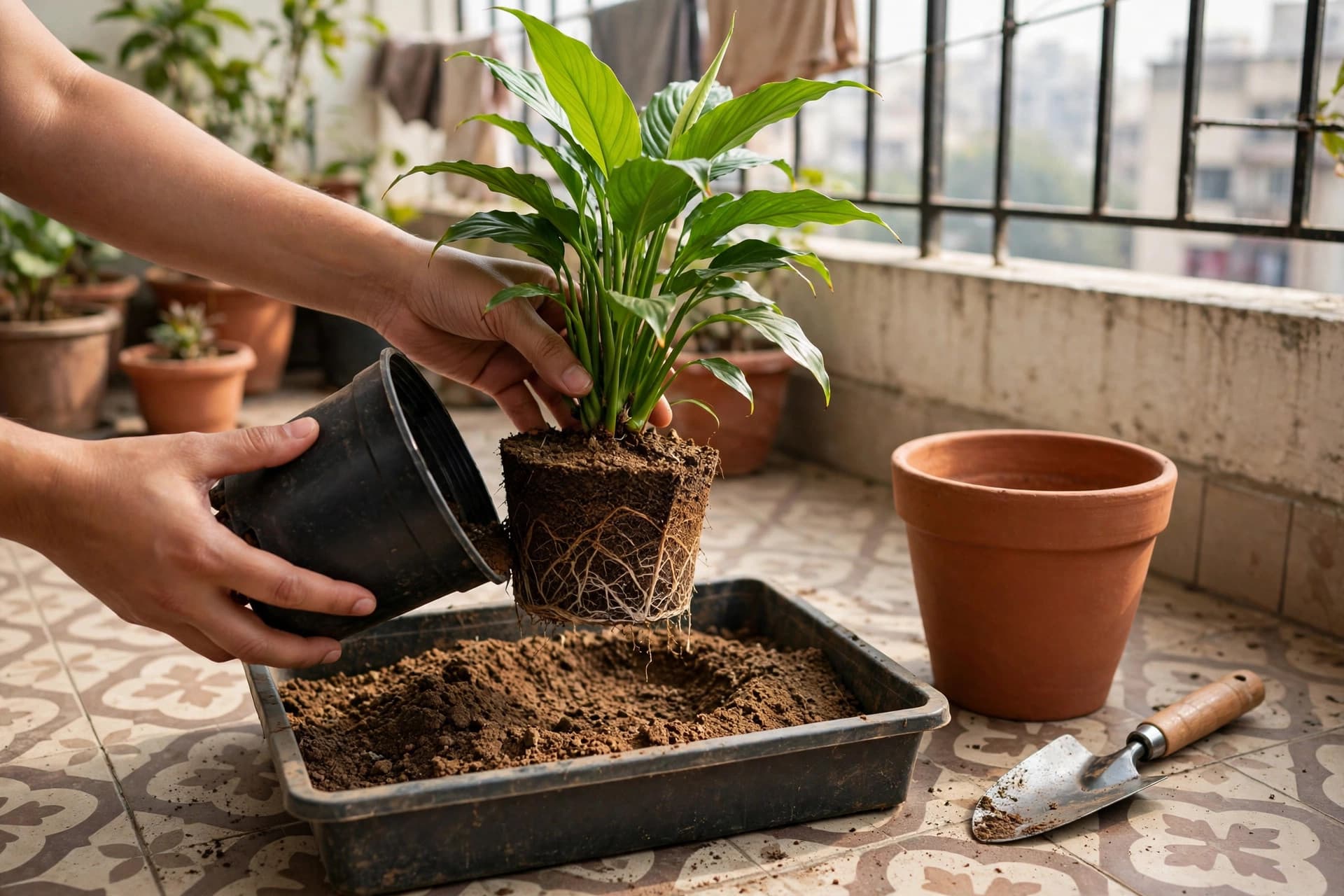
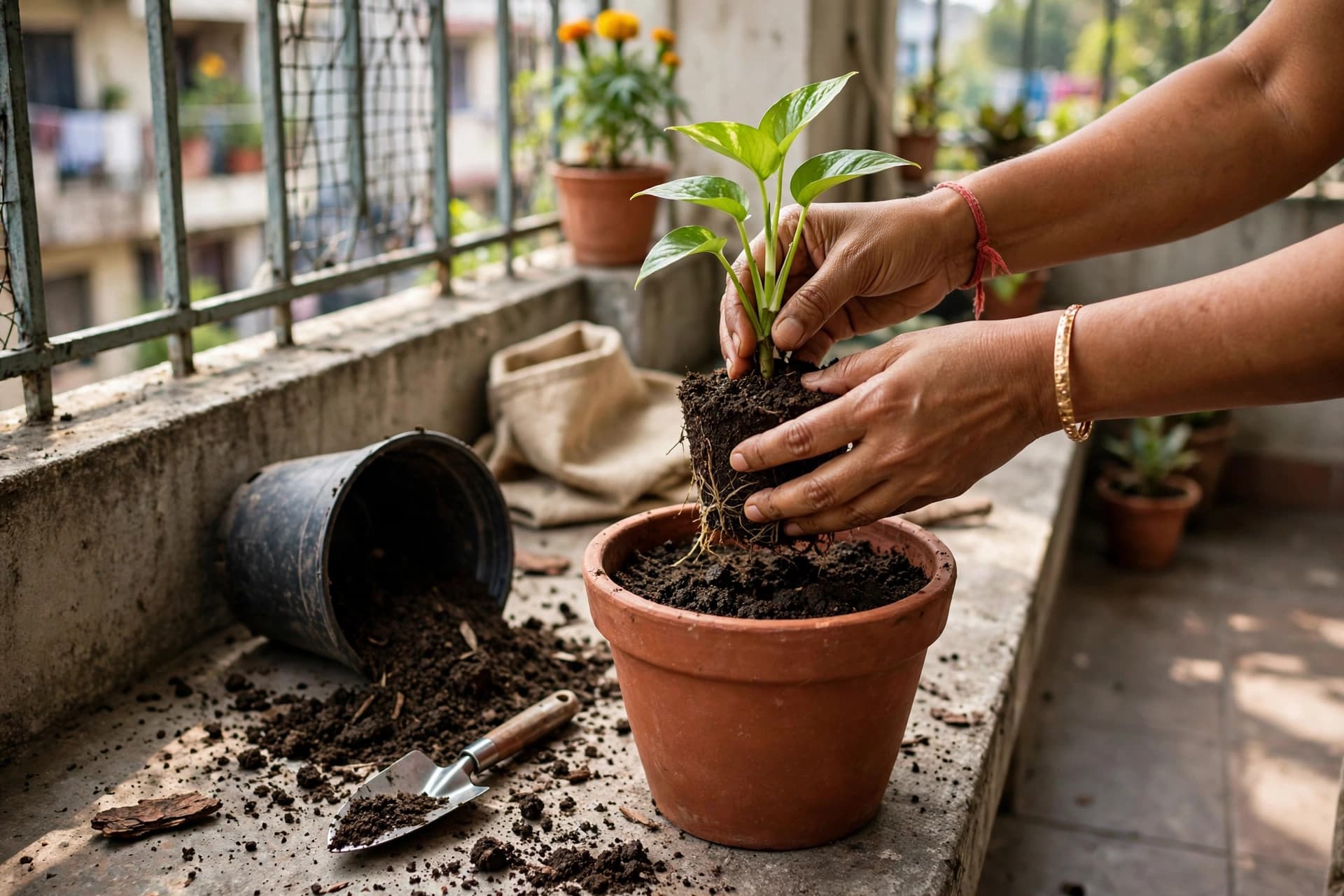
3. How to Repot Step by Step
- — before the steps: repot only when needed; if the plant looks healthy and roots are not circling or poking from drainage holes, waiting a few weeks is fine ---
- Water the plant a day before, so the root ball slips out easily.
- Choose a pot with drainage, only 2 to 4 cm wider than the root ball.
- Add a layer of fresh mix, then set the plant at the same depth as before.
- Fill around the root ball, press gently, and water until it drains.
- Place in bright indirect light and skip fertilizer for 3 to 4 weeks.
4. Choose the Right Spot and Watering Place the plant where it gets suitable light for its type, and away from AC vents, heaters, and hot windows. Check the soil with a finger before watering, and water only when the top layer is dry. What to do: Top soil feels dry → water, then let excess drain fully • Soil still feels moist → wait before watering again • Saucer holds standing water → empty it • Plant leans toward light → rotate the pot a quarter turn
5. New Plant Checklist Check leaves and stems for pests before placing near other plants • Keep the plant away from direct hot sun, AC vents, and heaters • Read the plant tag for light and water needs • Use pots with drainage holes • Water only when the top soil is dry to the touch • Avoid moving the plant around in the first two weeks
Common Mistakes to Avoid Repotting right away → Let the plant adjust for one to two weeks unless needed • Watering a drooping plant without checking → Check soil moisture first • Moving the plant between rooms → Keep it in one suitable spot • Fertilizing immediately → Wait several weeks • Using pots without drainage → Choose pots that drain freely • Skipping the pest check → Inspect leaves and soil on day one
Droop Diagnosis: What Is Wrong With My New Plant?
| What You See | Likely Cause | How to Check | What to Do |
|---|---|---|---|
| Droopy leaves, dry soil | Underwatering | Soil feels dry well below the surface | Water slowly until it drains, then keep a steady routine. |
| Droopy leaves, wet soil | Overwatering or poor drainage | Soil stays damp and may smell sour | Stop watering, empty the saucer, and let the soil dry. Check the roots if it does not recover. |
| Crispy brown leaf edges | Dry air, hot wind, or irregular watering | Look at where the plant stands | Move it away from AC and hot windows and water steadily. |
| Yellow lower leaves | Overwatering or low light | Check soil moisture and the light | Water less and move to brighter indirect light. |
| Sudden leaf drop after moving | Plant shock | Note recent changes in light and temperature | Keep conditions steady and do not move it again. |
| Leaves curling | Heat, dryness, or pests | Check the leaf undersides for insects | Move out of hot sun and inspect for pests. |
- Bringing a Plant Home: Day-One Steps ---
- 1. Wrap the plant loosely in paper or cloth during transport, and keep it away from hot car dashboards and strong wind.
- 2. Take it out of the wrapping as soon as you are home and check for pests and broken stems.
- 3. Keep it in a spot with bright indirect light for the first week, even if it is a sun-loving plant.
- 4. Move it to brighter light gradually over one to two weeks, not all at once.
- 5. Keep it a little apart from your other plants until you are sure it has no pests.
Simple Potting Mix Guide for Indian Homes The mix matters when you repot. Cocopeat alone holds water and has few nutrients, and garden soil alone can pack down hard in a pot. Mixing materials usually works better.
| Plant Type | Mix Idea | Why It Works |
|---|---|---|
| Leafy foliage plants such as money plant | Potting soil with cocopeat, compost, and a little perlite or coarse sand | Holds moisture while draining well. |
| Succulents, jade plant, aloe vera, cacti | Potting soil with plenty of coarse sand or perlite | Drains fast and prevents root rot. |
| Herbs such as tulsi and mint | Garden or potting soil with compost and some cocopeat | Rich and moist, but drains. |
| Snake plant and ZZ plant | A fast-draining mix with some sand or perlite | Roots stay healthy between waterings. |
| Pest or Sign | What It Looks Like | What to Do |
|---|---|---|
| Mealybugs | White cottony patches on stems and leaf joints | Isolate the plant, wipe with a damp cloth, and use a mild soap or neem-based spray. |
| Spider mites | Fine webbing and tiny speckles on leaves | Rinse leaves, raise humidity slightly, and repeat treatment weekly. |
| Aphids | Small green or black insects on new growth | Wipe or rinse them off, and treat if they return. |
| Fungus gnats | Tiny flies around the soil | Let the soil dry between waterings and remove standing water. |
References and Further Reading These references offer further horticultural context. Region, plant variety, and growing conditions can change recommendations. ICAR: Vegetable gardening during September–October: 87845 CBSE: Basic Agriculture: Basic_Agriculture_X.pdf
Frequently Asked Questions
7 questions with expert answers
A: Change in light, temperature, and watering can cause shock. Check soil moisture, keep conditions steady, and avoid repotting unless needed.
A: Usually no. Let it adjust for one to two weeks unless the pot has no drainage or the plant is badly root-bound.
A: Check the soil rather than following a fixed schedule. Water when the top layer is dry and let excess drain.
A: Wait several weeks. Fertilizer can stress a plant that is still adjusting.
A: If drooping continues with mushy stems, a sour smell, or spreading yellowing, check for overwatering or root problems, and ask a local nursery for advice.
A: Keep it in bright indirect light, water only if the soil is dry, and do not fertilize. Many plants recover within a couple of weeks.
A: Yes. A few lower leaves can drop while the plant adjusts. Heavy leaf loss, mushy stems, or pests need a closer look.
Ready to Create Your Own Garden?
Get expert help from Blooming Den to design, set up, and maintain a beautiful, low-maintenance green space.