
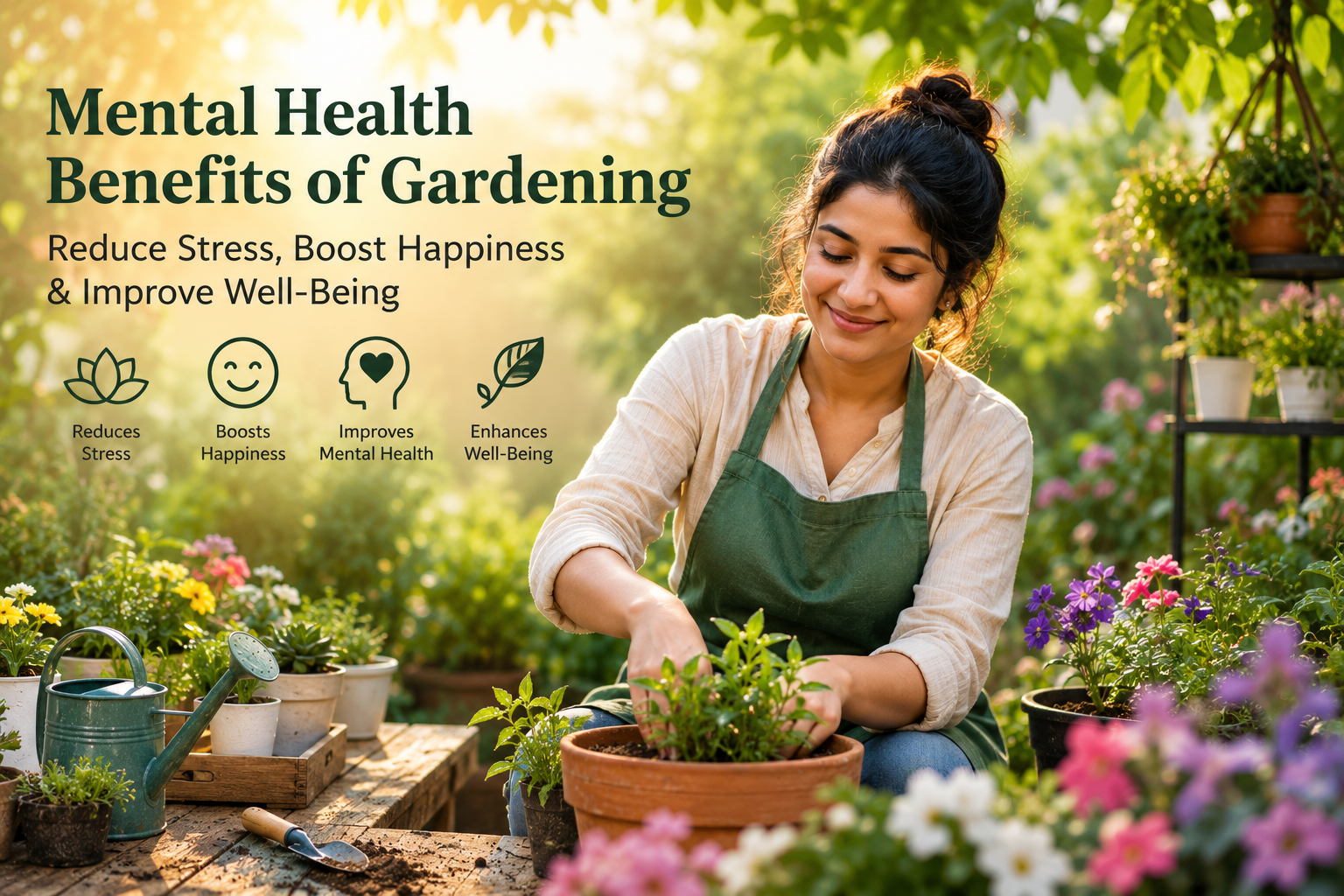
Mental Health Benefits of Gardening: How Plants Can Improve Your Well-Being
Gardening is much more than a relaxing hobby. It is a proven way to improve mental health, reduce daily stress, and create a stronger connection with nature. Whether you care for indoor plants, grow flowers on a balcony, or maintain a large garden, spending time with plants can positively influence your emotional and psychological well-being.
Research has shown that gardening helps reduce anxiety, improves mood, encourages mindfulness, and even supports better sleep. As people spend more time indoors and experience increasing levels of stress, gardening offers a simple and natural way to restore balance and improve overall quality of life.
Introduction
Modern lifestyles often involve long working hours, constant screen exposure, and busy schedules that leave little time for relaxation. These daily pressures can contribute to stress, anxiety, and mental fatigue. Gardening provides an opportunity to slow down, focus on the present moment, and reconnect with nature in a meaningful way.
Every gardening activity, from preparing the soil to watering plants and watching them grow, creates a calming experience that encourages patience and mindfulness. Unlike many indoor activities, gardening combines physical movement, creativity, and outdoor exposure, making it one of the most effective natural methods for supporting mental wellness.
Whether you are an experienced gardener or just beginning with a few houseplants, the emotional rewards of caring for plants can be experienced by people of all ages.
Why Gardening Supports Mental Health
Gardening engages both the mind and body in a healthy and balanced way. Simple tasks such as planting seeds, pruning leaves, watering flowers, and harvesting vegetables encourage concentration without creating pressure. These repetitive and purposeful activities help reduce overthinking while promoting relaxation.
Spending time around greenery has also been linked to lower stress hormone levels, improved emotional stability, better concentration, and increased feelings of happiness. Regular interaction with plants helps create a peaceful routine that supports long-term mental well-being.
Mental Health Benefits at a Glance
- Reduces everyday stress and mental fatigue.
- Helps relieve anxiety through mindful activities.
- Improves mood by creating a sense of achievement.
- Encourages mindfulness and present-moment awareness.
- Builds patience and emotional resilience.
- Supports better sleep by reducing stress.
- Promotes healthy physical activity.
- Strengthens the connection between people and nature.
1. Gardening Naturally Reduces Stress
One of the most recognized mental health benefits of gardening is its ability to reduce stress. Daily responsibilities, work pressure, and constant exposure to digital devices can increase cortisol, the body's primary stress hormone. Spending time in a garden provides a peaceful environment that helps calm the mind and lower stress levels naturally.
Gardening encourages slow, repetitive movements such as digging, watering, pruning, and planting. These activities help shift attention away from worries and create a sense of relaxation similar to meditation. Even spending 20 to 30 minutes caring for plants can noticeably improve your mood.
Simple Ways Gardening Reduces Stress
- Encourages deep focus on simple tasks.
- Provides a peaceful escape from daily routines.
- Reduces screen time and digital fatigue.
- Promotes relaxation through interaction with nature.
- Creates a calming daily routine.
2. Gardening Helps Reduce Anxiety
Anxiety often develops when the mind becomes overwhelmed by uncertainty or constant worrying. Gardening naturally redirects your attention toward positive and productive activities. Observing plants grow, noticing new leaves, and caring for living things creates feelings of stability and hope.
The sights, sounds, and scents of a garden also provide gentle sensory stimulation that helps calm the nervous system. This makes gardening an excellent complement to other healthy lifestyle practices such as exercise, mindfulness, and adequate sleep.
| Anxiety Trigger | How Gardening Helps |
|---|---|
| Overthinking | Encourages focus on simple gardening tasks. |
| Mental fatigue | Provides a refreshing outdoor environment. |
| Constant screen exposure | Promotes time away from digital devices. |
| Lack of relaxation | Creates moments of peace and mindfulness. |
3. Gardening Boosts Happiness and Self-Esteem
Watching plants grow because of your care brings a genuine sense of accomplishment. Every new flower, healthy leaf, or harvested vegetable reminds you that your efforts have produced positive results. These small achievements contribute to greater self-confidence and emotional satisfaction.
Gardening also encourages gratitude by helping people appreciate seasonal changes, natural beauty, and the simple joys of everyday life. This positive mindset can improve overall emotional resilience and increase long-term happiness.
Emotional Benefits You May Notice
- Greater confidence through caring for living plants.
- Improved sense of purpose.
- Higher daily motivation.
- Increased feelings of gratitude.
- Better emotional balance.
- More positive outlook on life.
4. Gardening Encourages Mindfulness
Mindfulness is the practice of paying attention to the present moment without judgment. Gardening naturally promotes mindfulness because it requires your complete attention. Whether you are planting seeds, watering flowers, removing weeds, or repotting a houseplant, your focus shifts away from worries and toward the task in front of you.
As you observe new leaves emerging, flowers blooming, or vegetables ripening, you begin to appreciate gradual progress instead of expecting immediate results. This mindset can reduce feelings of frustration and help create a calmer outlook on everyday life.
Mindful Gardening Activities
- Watering plants slowly and observing soil moisture.
- Pruning damaged leaves with care.
- Listening to birds and natural sounds while gardening.
- Feeling different soil textures while planting.
- Watching new growth without rushing the process.
5. Gardening Improves Sleep Quality
Good mental health and quality sleep are closely connected. Gardening combines gentle physical activity with exposure to natural daylight, both of which help regulate the body's internal clock. Spending time outdoors during the day can make it easier to fall asleep and enjoy deeper, more refreshing rest at night.
Lower stress levels achieved through gardening also reduce racing thoughts before bedtime. A relaxing gardening routine in the morning or evening can become a healthy habit that supports better sleep over time.
| Gardening Habit | Sleep Benefit |
|---|---|
| Morning gardening | Supports a healthy body clock. |
| Light physical activity | Helps the body feel naturally tired. |
| Reduced stress | Makes it easier to relax before bedtime. |
| Regular outdoor time | Encourages consistent sleep patterns. |
6. Gardening Builds Patience and Emotional Resilience
Plants grow at their own pace. Seeds take time to germinate, flowers bloom in their own season, and trees require years to mature. Gardening teaches that meaningful growth cannot be rushed. This lesson helps develop patience, emotional resilience, and a healthier perspective toward challenges in everyday life.
Every gardener experiences setbacks, including plants that fail to thrive or unexpected weather changes. Learning to adapt, solve problems, and try again strengthens emotional resilience and encourages a positive mindset rather than fear of failure.
Life Lessons Learned Through Gardening
- Progress takes time.
- Small daily efforts create lasting results.
- Setbacks are opportunities to learn.
- Consistency is more valuable than perfection.
- Growth happens gradually with care and patience.
Gardening as a Daily Self-Care Practice
You do not need a large backyard to experience the mental health benefits of gardening. A few indoor plants, herbs on a kitchen windowsill, or a small balcony garden can provide many of the same emotional rewards. The key is consistency rather than the size of your garden.
Setting aside just fifteen to thirty minutes each day for gardening can become a valuable self-care routine that supports relaxation, improves mood, and strengthens your connection with nature.
Best Plants That Promote Relaxation and Well-Being
While every plant can bring joy, some varieties are particularly well suited for creating a calm and peaceful environment. These plants are generally easy to maintain, improve indoor aesthetics, and encourage people to spend more time caring for nature. Whether placed in your living room, bedroom, balcony, or workspace, these plants can contribute to a relaxing atmosphere.
| Plant | Mental Wellness Benefit |
|---|---|
| Lavender | Creates a calming environment and promotes relaxation. |
| Peace Lily | Adds greenery indoors while creating a peaceful atmosphere. |
| Snake Plant | Easy to care for and ideal for beginners seeking a stress-free hobby. |
| Spider Plant | Fast-growing and rewarding to care for. |
| Aloe Vera | Low-maintenance plant that encourages regular plant care routines. |
Tips for Creating a Stress-Relieving Garden
A peaceful garden does not need to be large or expensive. The most relaxing gardens are designed to encourage comfort, simplicity, and a connection with nature. Even a small balcony or patio can become a calming retreat with thoughtful planning.
- Choose plants that are easy to maintain.
- Include flowering plants for seasonal color.
- Add herbs that provide pleasant natural fragrances.
- Create comfortable seating to enjoy the garden.
- Keep the space clean and well organized.
- Water plants regularly and remove unhealthy leaves.
- Spend at least 15 to 30 minutes in your garden each day.
- Reduce distractions by limiting screen time while gardening.
Making gardening part of your daily routine helps create moments of peace, allowing your mind to slow down and focus on the beauty of nature.
Frequently Asked Questions
Can gardening really improve mental health?
Yes. Gardening has been associated with reduced stress, improved mood, greater mindfulness, and better emotional well-being. Regular interaction with plants can help people feel calmer and more relaxed.
How much time should I spend gardening?
Spending just 15 to 30 minutes each day caring for plants can provide noticeable mental health benefits. Consistency is more important than the amount of time spent.
Do I need a large garden?
No. Indoor plants, balcony gardens, container gardens, and even a few potted herbs can provide many of the same emotional benefits as a larger outdoor garden.
Which plants are best for beginners?
Snake Plant, Spider Plant, Peace Lily, Aloe Vera, and Pothos are excellent beginner-friendly plants because they require minimal care and are highly rewarding to grow.
Conclusion
Gardening is one of the simplest and most effective ways to support better mental health. It combines physical activity, mindfulness, creativity, and a connection with nature into a rewarding daily practice. From reducing stress and anxiety to improving mood, patience, and emotional resilience, the benefits of gardening extend far beyond growing beautiful plants.
Whether you grow vegetables, flowering plants, herbs, or indoor greenery, every moment spent caring for plants contributes to a healthier and more balanced lifestyle. Gardening reminds us that growth takes time, consistency, and care—valuable lessons that apply not only to plants but also to our own well-being.
Start with a single plant, nurture it regularly, and discover how gardening can become a natural path toward greater happiness, relaxation, and emotional wellness.
Quick Mental Wellness Gardening Checklist
If you're getting started with gardening for better mental health, use this simple checklist to build a relaxing and sustainable routine. Small, consistent actions often have the greatest impact on emotional well-being.
| Activity | Recommended Frequency | Benefit |
|---|---|---|
| Water your plants | As needed | Builds routine and mindfulness. |
| Spend time in your garden | 15–30 minutes daily | Reduces stress and improves mood. |
| Prune and clean plants | Weekly | Encourages focus and patience. |
| Observe new growth | Daily | Promotes gratitude and positivity. |
| Add a new plant | Monthly | Keeps gardening exciting and rewarding. |
Common Mistakes to Avoid
Gardening should be an enjoyable and relaxing experience. Avoid these common mistakes to make the most of its mental health benefits.
- Trying to grow too many plants at once.
- Expecting instant results instead of enjoying the process.
- Choosing plants that require more care than your schedule allows.
- Skipping regular watering and maintenance.
- Treating gardening like another stressful task.
- Ignoring seasonal care requirements.
- Comparing your garden with others instead of enjoying your own progress.
Why Choose BloomingDen?
At BloomingDen, we believe that every home deserves a healthy green space. Whether you're a beginner looking for easy-care indoor plants or an experienced gardener planning a beautiful outdoor garden, we provide quality plants, gardening essentials, and expert guidance to help you succeed.
Explore our collection of indoor plants, flowering plants, pots, gardening tools, and professional gardening services to create a peaceful environment that supports both your home and your well-being.
Final Thoughts
Gardening is a powerful reminder that growth takes time. Every seed planted, every leaf that unfolds, and every flower that blooms reflects the value of patience, consistency, and care. These same principles can strengthen our mental and emotional well-being.
Whether you spend a few minutes watering houseplants before work or dedicate weekends to tending a larger garden, each moment spent with nature is an investment in your health. Gardening encourages relaxation, reduces stress, improves focus, and creates lasting happiness through meaningful daily routines.
Begin your gardening journey today, enjoy the calming influence of nature, and discover how nurturing plants can also help nurture a healthier, happier, and more balanced life.