
Pet-Safe Plants for Indian Homes: Which Plants Are Toxic to Dogs and Cats?
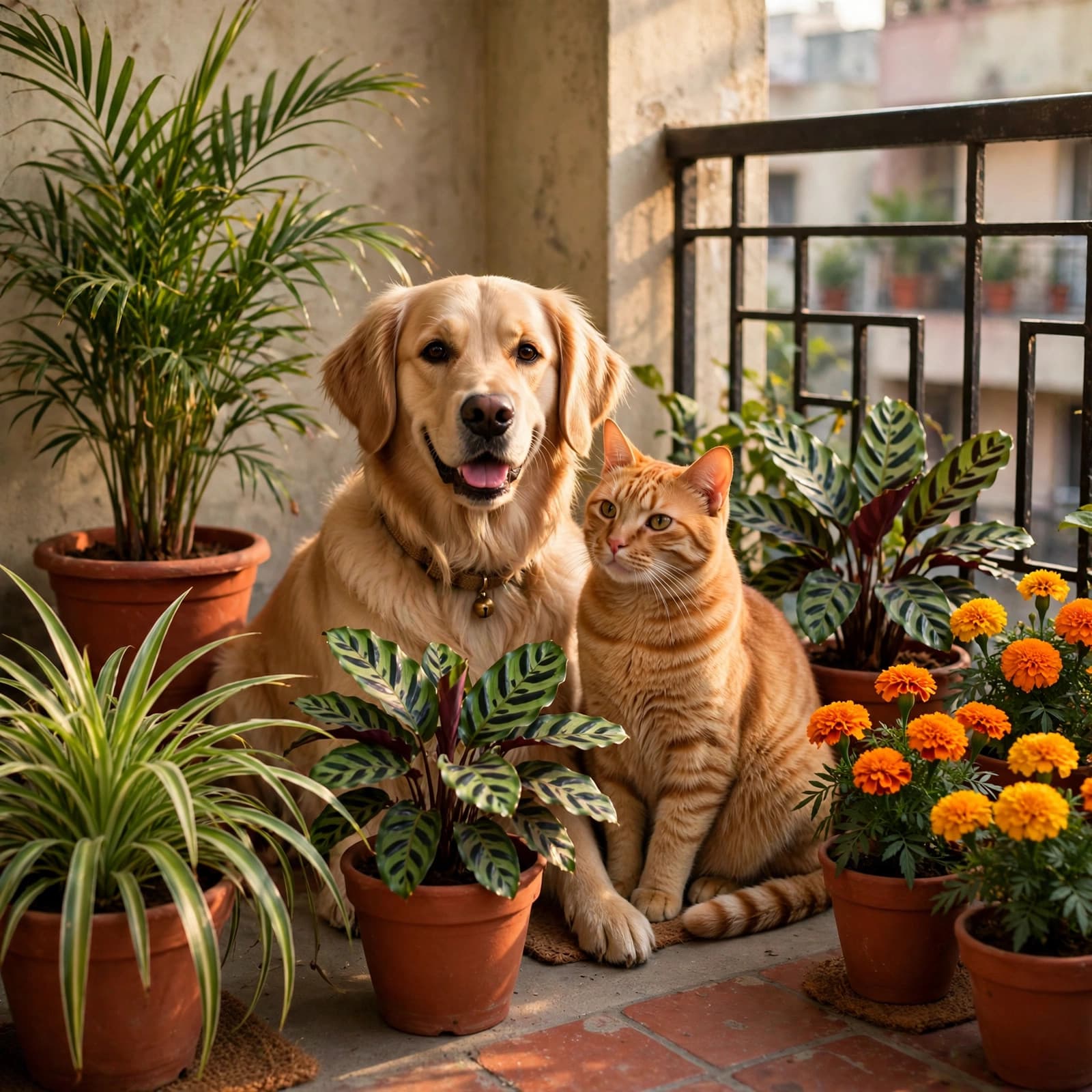
Many popular Indian houseplants, including the money plant, snake plant, and aloe vera, can be harmful to dogs and cats if they chew them. Most pet owners do not learn this until a pet gets sick. The good news is that there are many beautiful plants that are generally considered safe, and a few simple habits keep both your plants and your pets happy. You do not have to choose between a green home and a safe one. Plant names can also be confusing in India. The same common name is sometimes used for different plants, and one of them may be harmful while the other is safe. That is why this guide uses botanical names alongside common names. This guide lists common toxic and safe plants, explains the "money plant" confusion, shows warning signs of plant poisoning, and tells you what to do first if your pet chews something it should not.
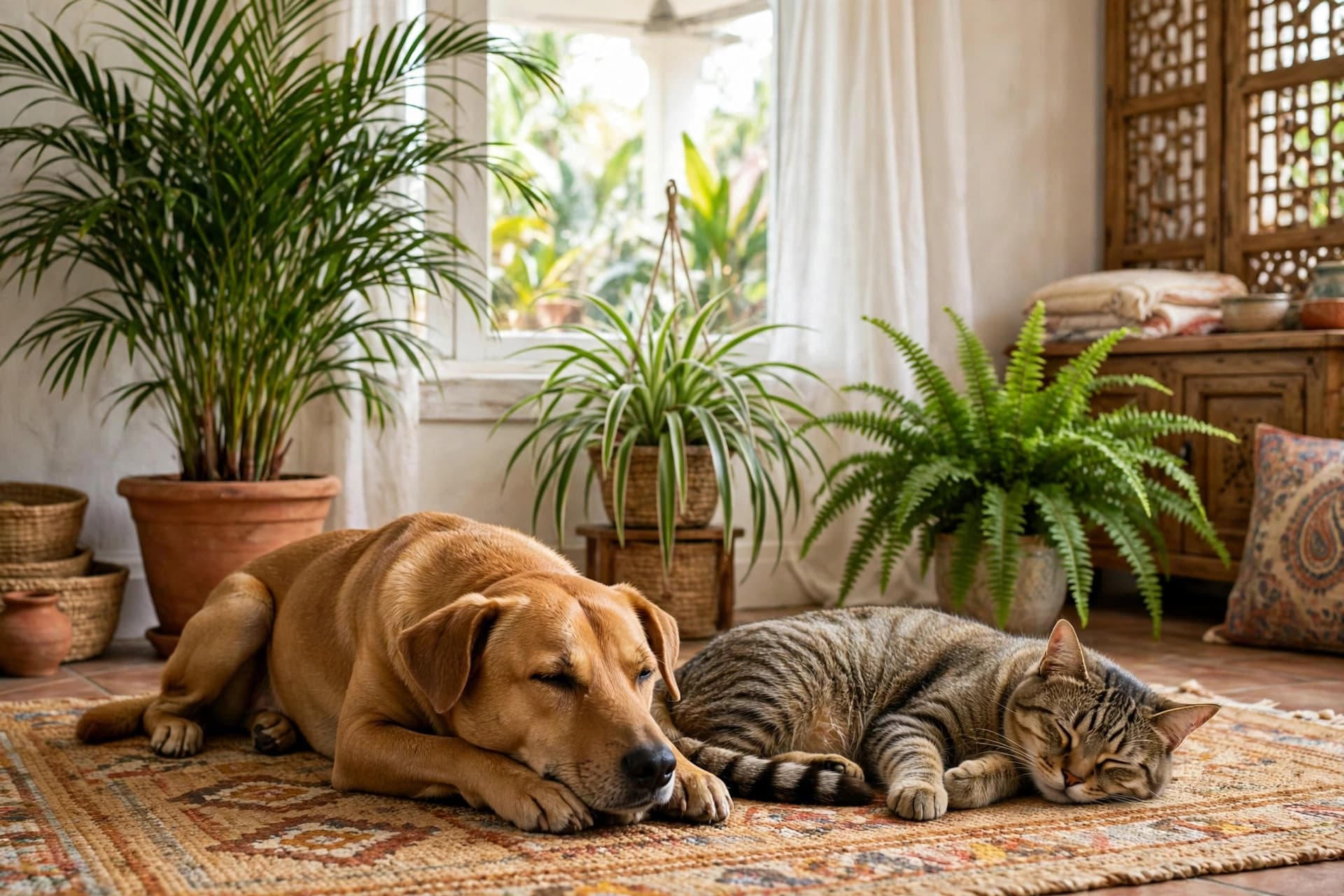
Important: General Information, Not Veterinary Advice This article is for general guidance. Plant poisoning can be serious, and your vet is the right person to advise you about your own pet. If you think your pet has eaten a plant, contact your veterinarian immediately. Do not wait for symptoms • No plant is completely risk-free. Even plants classed as non-toxic can cause mild stomach upset if a pet eats a lot of them • Always check plants by their botanical name, since local names differ across India • The lists in this article follow the ASPCA toxic and non-toxic plant database, which is based in the United States, so check the database for any plant you are unsure about
The "Money Plant" Confusion
In India, the plant most people call "money plant" is pothos (Epipremnum aureum), the trailing vine seen in bottles and balconies. Pothos is listed as toxic to dogs and cats. Other plants have similar names but are different. The Chinese money plant (Pilea peperomioides) and the money tree (Pachira aquatica) are generally listed as non-toxic. This is why the botanical name matters.
| Common Name | Botanical Name | Pet Safety |
|---|---|---|
| Money plant (the common trailing vine) | Epipremnum aureum (pothos) | Toxic to dogs and cats |
| Chinese money plant | Pilea peperomioides | Generally listed as non-toxic |
| Money tree | Pachira aquatica | Generally listed as non-toxic |
Common Plants That Are Toxic to Pets
These plants are common in Indian homes and balconies. Keep them out of reach, or choose a safer alternative if you have a curious pet.
| Plant | Botanical Name | Notes |
|---|---|---|
| Money plant (pothos) | Epipremnum aureum | Can cause mouth irritation, drooling, and vomiting |
| Snake plant | Sansevieria trifasciata | Listed as toxic to dogs and cats |
| Aloe vera | Aloe vera | Toxic to pets, even though it is used by people |
| ZZ plant | Zamioculcas zamiifolia | Listed as toxic to dogs and cats |
| Jade plant | Crassula ovata | Listed as toxic to pets |
| Peace lily | Spathiphyllum | Can irritate the mouth and stomach |
| Rubber plant | Ficus elastica | Listed as toxic to pets |
| Philodendron and Monstera | Philodendron, Monstera deliciosa | Can cause mouth irritation and vomiting |
| Dieffenbachia | Dieffenbachia | Unsafe for dogs and cats |
| Chinese evergreen | Aglaonema | Listed as toxic, and more severe for dogs |
| Chrysanthemum (guldaudi) | Chrysanthemum | Common in winter, and listed as toxic |
| Crown of thorns | Euphorbia milii | Sap can irritate, and it is listed as toxic |
| Sago palm | Cycas revoluta | Very dangerous, especially to dogs. Avoid it in homes with pets |
A few outdoor and balcony plants are also known to be dangerous, including oleander. If you have pets, check any new outdoor plant in the ASPCA database before you buy it.
Pet-Safe Houseplants You Can Choose
These plants are generally considered non-toxic to cats and dogs. They are a good place to start if you want greenery without the worry.
| Plant | Botanical Name | Light and Care Notes |
|---|---|---|
| Areca palm | Dypsis lutescens | Bright, indirect light. Very common in India |
| Parlor palm | Chamaedorea elegans | Tolerates lower light |
| Bamboo palm | Chamaedorea seifrizii | Good in shade and indirect light |
| Spider plant | Chlorophytum comosum | Easy to grow. Cats may nibble it, and it can cause mild stomach upset |
| Boston fern | Nephrolepis exaltata | Likes humidity and bright, indirect light |
| Money tree | Pachira aquatica | Bright, indirect light |
| Chinese money plant | Pilea peperomioides | Bright, indirect light, and easy to propagate |
| Calathea and prayer plant | Calathea, Maranta | Like humidity and indirect light |
| Peperomia | Peperomia | Compact and easy to care for |
| Ponytail palm | Beaucarnea recurvata | Bright light and little water |
| Haworthia | Haworthia | A small succulent for bright windowsills |
| Cast-iron plant | Aspidistra elatior | Very tough and tolerates low light |
Signs Your Pet May Have Eaten a Toxic Plant
Signs depend on the plant and on how much was eaten. Some start quickly, and others take time to appear. Drooling, pawing at the mouth, or difficulty swallowing • Vomiting or diarrhoea • Tiredness or weakness • Loss of appetite • Loss of coordination, tremors, or seizures in serious cases • Swelling or irritation around the mouth, lips, or tongue Serious plant poisoning can lead to organ damage and can be life-threatening, so treat any suspected case as urgent.
What to Do If Your Pet Chews a Plant
- Remove your pet from the plant, and take any plant pieces out of its mouth if it is safe to do so.
- Call your veterinarian right away, or go to the nearest vet clinic. Do not wait to see if symptoms appear.
- Take the plant name, a clear photo, or a small piece of the plant, so the vet can identify it.
- Note roughly how much your pet ate, and when.
- Do not try to make your pet vomit or give home remedies unless a vet tells you to.
- Follow your vet's instructions and keep your pet calm.
- How to Make Your Home Safer
- Curious cat that climbs → Choose only pet-safe plants, since high shelves may not stop a cat • Puppy that chews everything → Keep all plants out of reach and train your puppy to leave them alone • Already own toxic plants → Move them to a closed room or hang them where your pet cannot reach • Fallen leaves on the floor → Pick them up quickly, since pets may chew them • Balcony with pets → Check every outdoor plant, including flowers, shrubs, and festival plants • Pets that dig in pots → Cover the soil with large stones and keep fertilizer out of reach
Do Not Forget Fertilizers, Pesticides, and Soil The plant is not the only risk. Fertilizers, pesticides, and some mulches can also harm pets. Store fertilizers, pesticides, and neem sprays in a closed cabinet • Keep pets away from plants until sprays have dried • Follow product labels carefully, and choose options that suit homes with pets where possible • Bone meal and similar fertilizers can attract dogs, so keep them well covered or out of reach • Use only non-toxic mulches, and ask your vet if you are unsure
Common Mistakes Pet Owners Make Assuming all "air-purifying" plants are safe → Check each plant, because pothos, peace lily, and rubber plant are listed as toxic • Using only the common name → Check the botanical name in the ASPCA database • Waiting for symptoms before calling a vet → Call your vet as soon as you suspect your pet has chewed a plant • Using home remedies to make a pet vomit → Do this only if a vet tells you to • Ignoring balcony and festival plants → Check outdoor and gift plants too • Assuming a non-toxic plant is harmless in any amount → Discourage chewing, since large amounts can still upset the stomach
Pet-Safe Plant Checklist ✓ List every plant with its botanical name — local names can be confusing • ✓ Check each plant in the ASPCA database — shows which plants are risky • ✓ Move toxic plants out of reach, or replace them — reduces the chance of poisoning • ✓ Choose pet-safe plants for new purchases — prevents future problems • ✓ Store fertilizers and sprays safely — chemicals can harm pets too • ✓ Save your vet's number in your phone — helps you act fast in an emergency
References and Further Reading ASPCA: Toxic and Non-Toxic Plants (searchable database): Toxic And Non Toxic Plants ASPCA: Plants toxic and non-toxic to dogs: Dogs Plant List ASPCA: Plants toxic and non-toxic to cats: Cats Plant List
Ready to Create Your Own Garden?
Get expert help from Blooming Den to design, set up, and maintain a beautiful, low-maintenance green space.