
The Smart-Sensored Balcony: How to Automate Watering and Track Soil Moisture Using Affordable Bluetooth Sensors
Watering is the most common reason balcony plants struggle. Some days you forget, some days you water too much, and when you travel the plants are left to dry out. Small, affordable Bluetooth soil sensors can help by telling you exactly what is happening inside the pot, so you water only when it is needed.
You do not need to be a tech expert. A sensor, a phone app, and a simple watering timer are enough to build a smart balcony. In this guide, we'll explain how Bluetooth soil sensors work, what they can and cannot do, how to set them up, and how to automate watering safely on an apartment balcony.
Why Make Your Balcony Smart?
Most watering mistakes happen because we cannot see what is going on below the soil surface. The top may look dry while the roots are still wet, or the other way around. A soil moisture sensor gives you a number or a simple status, which takes the guesswork out of watering.
Balconies are also harder to care for than indoor spaces. Sun, wind, and heat make pots dry out unevenly, and a busy schedule makes it easy to miss a day. A little technology helps you stay consistent without spending more time on your plants.
Benefits of a Smart-Sensored Balcony
- Water plants only when the soil actually needs it.
- Reduce overwatering, root rot, and wasted water.
- Check your plants from your phone, even from another room.
- Spot problems early, such as pots that dry out too quickly.
- Keep plants healthier during travel and busy weeks.
- Learn how each plant behaves through the seasons.
How Bluetooth Soil Sensors Work
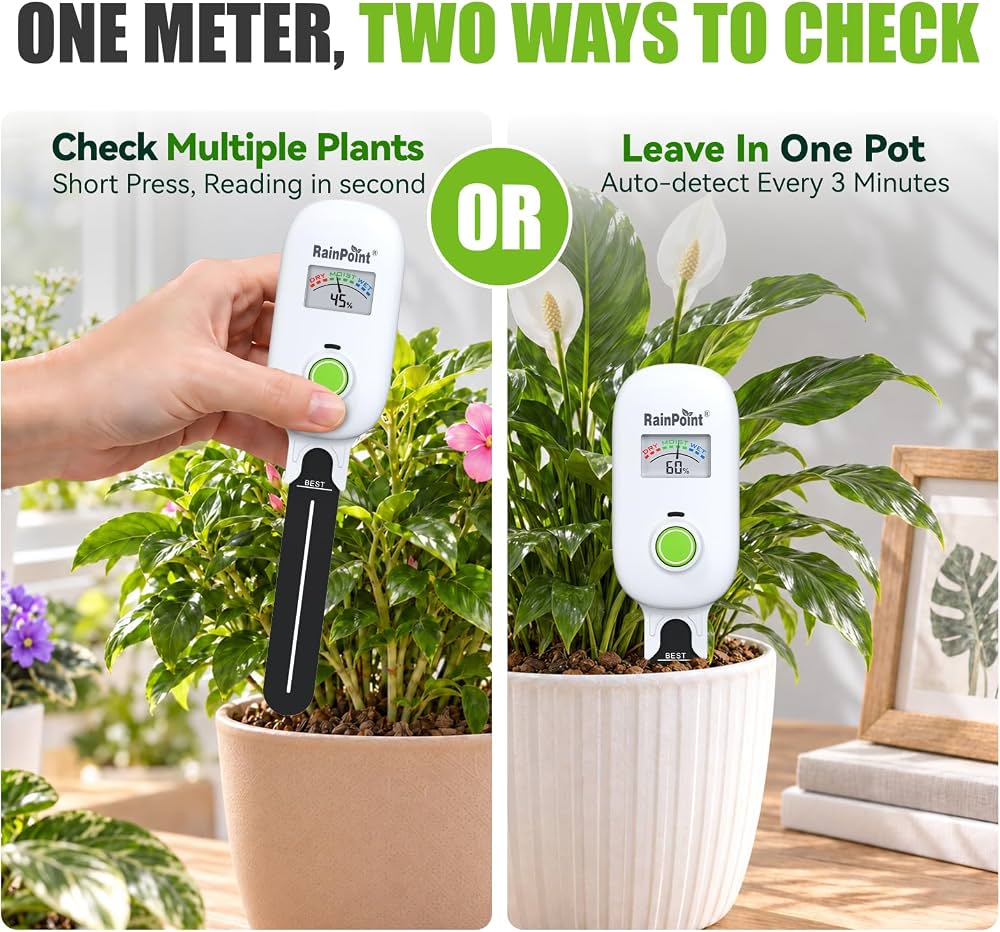
A Bluetooth soil sensor is a small probe that you push into the soil. It measures how wet the soil is and sends the reading to an app on your phone using Bluetooth. Many models also measure temperature, light, or nutrient levels, and are powered by small batteries that last for months.
Bluetooth has a short range, usually around a room or two. If you want alerts when you are away from home, you generally need a small hub or gateway that connects the sensor to your Wi-Fi.
Types of Soil Sensors
| Sensor Type | What It Does | Good to Know |
|---|---|---|
| Capacitive moisture sensor | Measures moisture without exposed metal in the soil. | Usually lasts longer and resists corrosion. |
| Resistive probe sensor | Measures moisture using two metal prongs. | Cheaper, but the metal can corrode over time. |
| Multi-function plant sensor | Reads moisture plus light, temperature, or nutrients. | Useful, but readings can vary between brands. |
| Hub or gateway | Connects Bluetooth sensors to Wi-Fi for remote alerts. | Needed if you want notifications while away. |
What Bluetooth Sensors Can and Cannot Do
It helps to be clear about this before you buy. Most affordable Bluetooth sensors only monitor your soil. They tell you when it is dry, but they do not turn on water by themselves.
Sensor vs. Automation
- The sensor measures moisture and shows it in the app.
- A separate watering timer, drip kit, or pump does the watering.
- Some systems link the two, but check the product details before buying.
- Even without a link, sensor readings help you decide how to set the timer.
What You Need to Get Started
| Item | Purpose |
|---|---|
| Bluetooth soil moisture sensor | Tracks how wet or dry the soil is. |
| Smartphone with Bluetooth | Runs the sensor app. |
| Pots with drainage holes | Keeps soil moisture readings meaningful and plants healthy. |
| Watering timer or drip kit | Waters plants on a schedule. |
| Hub or gateway (optional) | Gives remote alerts when you are away. |
1. Place the Sensor Correctly
Where you put the sensor changes what it tells you. A poorly placed sensor gives readings that are not useful.
Sensor Placement Tips
- Push the probe into the soil to the depth shown in the instructions, close to the root zone.
- Keep it a few centimetres away from the stem, so you do not damage roots.
- Make sure there is good contact between the soil and the probe, with no air gaps.
- Do not place electronic parts in direct rain or standing water.
- Use one sensor for each plant type, since different plants and pots dry at different speeds.
2. Calibrate to Your Own Soil
Moisture readings are not the same in every soil. Cocopeat, garden soil, and compost-rich mixes all give different numbers. The simplest approach is to learn what your sensor reads in your own pots.
- Note the reading when the soil is freshly watered and well-drained.
- Note the reading when the top 2 inches feel dry and the plant needs water.
- Compare with the finger test, pushing a finger 2 inches into the soil.
- Write down both numbers for each plant, and use them as your watering range.
- Re-check after repotting or changing the soil.
3. Understand What Different Plants Need
Different plants like different moisture levels. Use this as a general guide, and adjust based on your own readings and how the plant looks.
| Plant Group | Moisture Preference | Examples |
|---|---|---|
| Drought-tolerant | Let the soil dry well between waterings. | Snake plant, aloe vera, succulents |
| Moderate | Water when the top inch or two is dry. | Money plant, hibiscus, tulsi |
| Moisture-loving | Prefer soil that stays evenly moist, but not soggy. | Mint, ferns, leafy greens |
4. Choose How to Automate Watering
There are several ways to automate watering, from very simple to more advanced. Start with the simplest option that suits your balcony.
| Option | How It Works | Best For |
|---|---|---|
| Sensor with phone alerts | The app tells you when to water and you do it by hand. | Beginners and small balconies. |
| Battery tap timer with drip kit | A timer on a tap sends water through drip lines to the pots. | Balconies with a tap and many pots. |
| Gravity-fed drip | A raised water container drips water slowly into the soil. | Balconies without a tap and short trips. |
| Small pump with timer | A low-voltage pump draws water from a bucket on a schedule. | Longer trips and many pots. |
5. Set Up a Simple Drip System
A basic drip kit with a timer is one of the easiest ways to automate watering. Most kits come with pipes, drippers, and clear instructions.
- Plan the route of the pipe from the water source to the pots.
- Connect the timer to the tap or reservoir, and attach the main pipe.
- Place one dripper in each pot, close to the roots but not touching the stem.
- Run the system once and watch for leaks or drips falling outside the pots.
- Set a short watering time first, then adjust using your sensor readings.
6. Use the Sensor to Fine-Tune the Timer
The sensor and the timer work best together. The timer waters on a schedule, and the sensor shows whether that schedule is right.
How to Adjust the Schedule
- If the soil is still wet when the next watering is due, shorten the time or skip a day.
- If the soil gets too dry between waterings, water for longer or more often.
- Review the readings once a week and change one setting at a time.
- Reduce watering in winter and the monsoon, and increase it in summer.
Safety Tips for Balcony Automation
Water and electricity must be kept apart, and an automatic system can leak while you are away. A few simple precautions keep your balcony and your neighbours safe.
- Choose battery-powered or low-voltage equipment designed for outdoor use, and keep plugs and adapters well away from water.
- Never run mains electrical items near puddles or wet surfaces on the balcony.
- Test the system while you are at home and check for leaks before leaving.
- Make sure water cannot drip or overflow onto neighbours below.
- Keep a tray under pots and check drainage regularly.
- Turn off the water supply when leaving for a long trip if the system uses a tap.
Protecting Sensors from the Balcony Climate
Heat, rain, and dust can shorten the life of electronics. A little protection helps your sensors last through the seasons.
| Season | Challenge | What to Do |
|---|---|---|
| Summer | Heat and fast drying | Keep electronics out of harsh direct sun and check readings more often. |
| Monsoon | Rain and humidity | Shelter sensors and hubs, and reduce watering. |
| Winter | Slow drying and cooler air | Water less often and check battery levels. |
Track Your Plant Data
Many sensor apps store readings over time. Looking at the history helps you see patterns that are hard to notice day by day.
- See which pots dry out fastest, and give them more water or a larger container.
- Notice if a pot stays wet for days, which may mean poor drainage.
- Compare the readings with leaf health and growth.
- Use the results to change watering for each season.
- Keep a simple weekly note of your readings and actions.
Common Problems and Fixes
| Problem | Possible Cause | First Step |
|---|---|---|
| Readings jump around | Poor contact with the soil or air gaps | Reinsert the probe firmly and press the soil around it. |
| App cannot connect | Out of range or low battery | Move closer and replace the battery if needed. |
| Reading says dry but soil feels wet | Sensor placed in the wrong spot or not calibrated | Compare with the finger test and adjust your range. |
| Drip system leaks | Loose joints or blocked drippers | Tighten fittings and clear blockages. |
| Plants still look stressed | Wrong schedule or poor drainage | Review readings, drainage, and light. |
Common Mistakes to Avoid
| Common Mistake | Better Practice |
|---|---|
| Trusting the sensor blindly | Compare with the finger test and plant health. |
| Using one fixed schedule all year | Adjust watering for each season. |
| Leaving for a long trip without testing | Run the system for a few days while you are at home first. |
| Putting electronics where they get wet | Shelter all electronics and use outdoor-rated items. |
| Buying a sensor expecting it to water by itself | Check whether the product controls watering or only monitors. |
| Skipping drainage holes | Use pots with drainage and a tray underneath. |
Frequently Asked Questions
Do Bluetooth soil sensors water my plants automatically?
Most affordable Bluetooth sensors only measure and report soil moisture. Automatic watering needs a separate timer, drip kit, or pump, unless the product is specifically designed to control watering.
How far does a Bluetooth sensor work?
Usually within a room or two, and walls can reduce the range. For alerts when you are away from home, you generally need a hub or gateway that connects to Wi-Fi.
Are soil sensors accurate?
They are good for showing trends and relative dryness, but readings differ between brands and soils. Compare with the finger test and use your own range for each plant.
How long do sensor batteries last?
It depends on the model, but many last several months. Check the battery level in the app and keep spare batteries handy.
Can I automate watering if my balcony has no tap?
Yes. A gravity-fed drip system with a raised water container, or a low-voltage pump drawing from a bucket, can work without a tap.
Is it safe to leave an automatic watering system running while I travel?
Test it for several days while you are home, check for leaks, and make sure water cannot overflow onto neighbours. Ask a friend or neighbour to check on it, if possible.
Do I need a sensor for every pot?
No. Place sensors in a few representative pots, such as one for each plant type or sun spot, and use the readings to guide similar plants nearby.
Can sensors work in the rain?
Some are weather-resistant, but not all. Check the product details, and shelter the electronic parts from direct rain wherever possible.
Build Your Smart Balcony with BloomingDen
At BloomingDen, we make balcony gardening simple and enjoyable. Whether you're setting up your first plants or want expert help with a smarter watering routine, we offer plants, gardening supplies, and professional guidance to help your balcony thrive.
Explore the Bloom Store for easy-care plants and book a verified gardener to look after your balcony, so your plants stay healthy even when you're busy or away.
Conclusion
A smart-sensored balcony takes the guesswork out of watering. Affordable Bluetooth sensors show you what is happening in the soil, and a simple timer or drip kit takes care of the routine, so your plants get water when they need it.
Start small with one or two sensors, learn your plants' readings, and adjust your watering by season. Keep safety in mind by protecting electronics from water and testing your system before you travel.
Technology works best as a helper, not a replacement for observation. Use the data together with the finger test and a regular look at your plants, and your balcony will stay green and healthy all year.