
White Powder on Plant Leaves: Is It Powdery Mildew or Something Else?
You water your plant, turn a leaf over, and see a pale, dusty coating that was not there last week. Many gardeners assume it is powdery mildew and reach for the nearest spray. But a white coating on a leaf can have several causes, and the right fix depends on identifying the problem first.
In this guide, we'll explain how to inspect white marks on leaves, which clues point to powdery mildew, what else it could be, what to do step by step, and how to reduce the risk of it coming back. This is general gardening information, not a definitive diagnosis, so plant species and local conditions always matter.
Why Identify the White Mark Before Treating It?
Powdery mildew is one possibility, but mineral residue, insects, and other plant problems can also look pale or powdery. A treatment that works for a fungus will do nothing for mealybugs, and a spray that suits one plant can burn another.
Taking two minutes to look closely at the texture, pattern, and spread saves you from wasted products and from stressing the plant with the wrong treatment.
Think of the clues in this guide as a starting point. If the plant keeps declining or you are unsure, ask a local gardener or your nearest horticulture or agriculture extension office.
What Kind of White Mark Is It?
Powder-like patches
Could be consistent with powdery mildew, especially if the patches slowly expand.
Cotton-like clusters
Inspect for mealybugs or other insects instead of assuming a fungal growth.
Hard, chalky residue
Consider dried mineral deposits from hard water or sprays.
Small pale dots
Check for feeding damage, mites, or other causes of stippling.
These are clues, not a guaranteed diagnosis. Plant species and symptom progression matter.
White Marks on Leaves: Quick Comparison
| Possible Cause | What It Looks Like | Quick Check |
|---|---|---|
| Powdery mildew | White, powder-like growth that may spread; leaves can yellow or distort. | Check whether patches grow over a few days and appear on nearby plants. |
| Mealybugs | Small cottony clusters, often in leaf joints and under leaves. | Look closely for tiny insects within the fluff. |
| Mineral or spray residue | Hard, chalky spots or film, often where water dried. | Check if it wipes off as a crust and does not spread to new leaves. |
| Mites or other feeders | Tiny pale dots, stippling, or fine webbing. | Inspect the underside of leaves with a magnifying glass. |
What Powdery Mildew Can Look Like
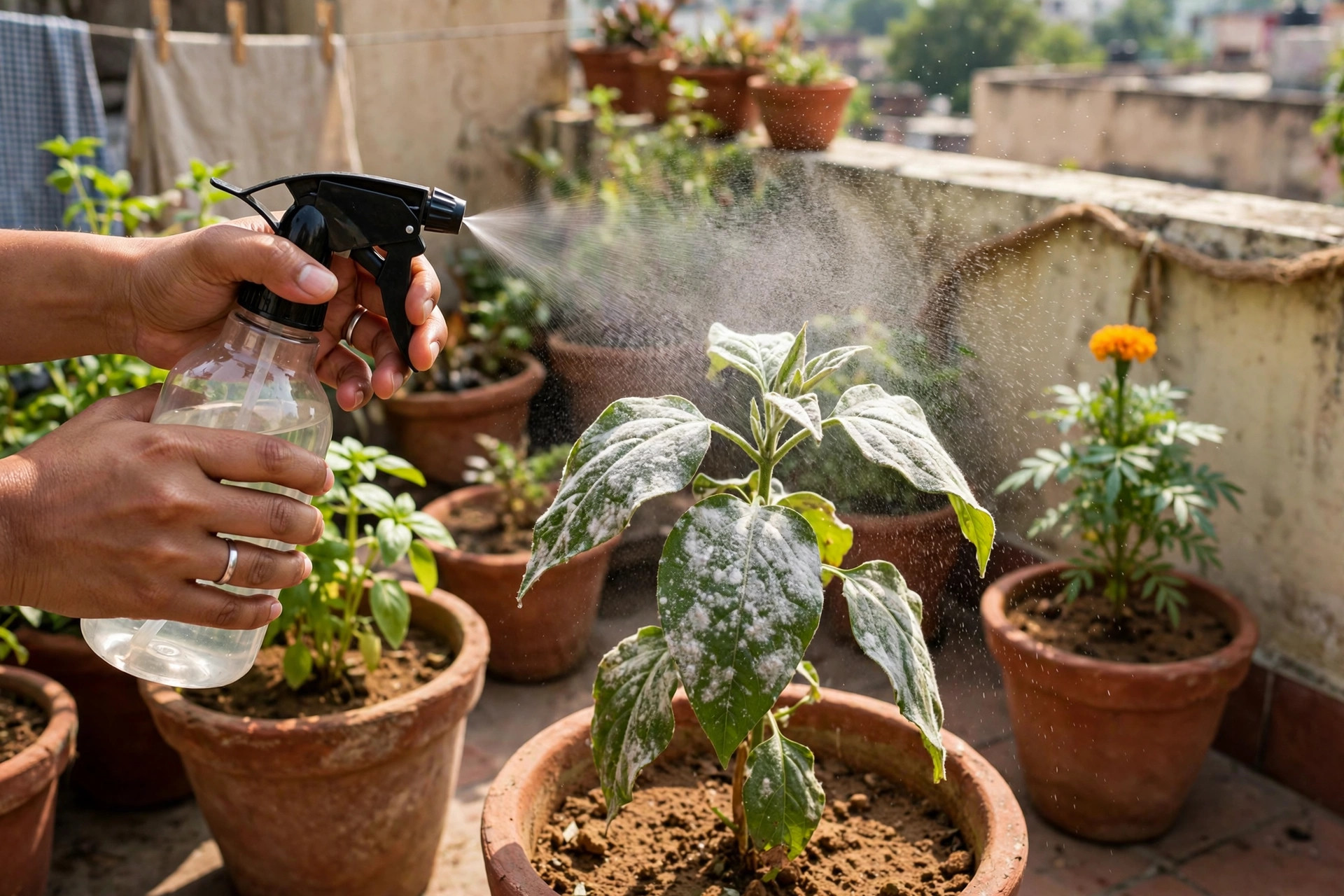
Powdery mildew often appears as white, powder-like growth on leaves or other plant surfaces. Patches may spread, and affected foliage can sometimes yellow or become distorted. Different powdery mildew species affect different host plants, so the problem on your rose may not be the same one on your squash.
Not every white mark is powdery mildew. Check the plant, the pattern, and whether the symptoms change over time.
Signs That Point Toward Powdery Mildew
- White or grey powder-like patches on the leaf surface.
- Patches that slowly grow or join together.
- Yellowing, curling, or distorted leaves near the patches.
- Similar marks appearing on nearby susceptible plants.
- Crowded plants with poor airflow or low light.
1. Inspect the Plant Properly
Start by looking at the whole plant, not just the one leaf. A careful inspection tells you whether the problem is local or spreading.
- Check both the top and underside of the leaves.
- Look at stems, leaf joints, and new growth.
- Gently rub a mark with a damp cloth to see if it wipes off like residue.
- Use a magnifying glass to look for tiny insects or webbing.
- Inspect nearby plants, since mildew and pests can spread.
- Take a photo today, and compare it after a few days to see if the patches change.
2. Step-by-Step: What to Do If You Suspect a Fungal Problem
If the clues point to powdery mildew, work through these steps in order. Most of them are about changing growing conditions, which matters more than any single product.
- Inspect both sides of the leaves and nearby plants.
- Move the plant away from others if possible, so the problem does not spread.
- Improve spacing and airflow where practical.
- Provide light that is appropriate for the plant.
- Remove limited affected leaves when suitable, using clean tools, and dispose of them in the bin rather than the compost.
- Avoid excessive nitrogen feeding and unnecessary leaf wetting.
- If the issue spreads, seek reliable diagnosis and follow the treatment label exactly.
3. Prepare Clean Tools First
Dirty tools can carry disease from one plant to another. A few seconds of cleaning protects your whole collection.
- Wipe blades with rubbing alcohol or a similar disinfectant before and after cutting.
- Use sharp scissors so cuts are clean and not crushed.
- Wash your hands after handling an affected plant.
- Clean tools between plants whenever disease is suspected.
What to Do for Other Causes
| If You Find | Better Next Step |
|---|---|
| Cottony clusters (possible mealybugs) | Isolate the plant, remove insects by hand or with a cotton bud dipped in rubbing alcohol on small areas, and recheck regularly. |
| Hard, chalky residue | Wipe gently with a damp cloth, and consider changing water or how you spray. |
| Tiny pale dots or webbing | Inspect for mites, rinse foliage where the plant allows, and seek plant-specific advice if it persists. |
Always test any new spray or wipe on a small area first, and follow the product label for your plant.
Prevention Habits That Help
Good growing conditions are the best protection. Most fungal problems start when plants are crowded, stressed, or kept in the wrong light.
- Choose plants suited to the location.
- Avoid crowding containers.
- Keep plants healthy without overwatering or overfeeding.
- Inspect new plants before placing them with an existing collection.
- Clean tools between plants when disease is suspected.
- Water at the soil level in the morning when possible, so leaves dry quickly.
- Check plants weekly so you catch changes early.
When to Get a Proper Diagnosis
Home inspection has limits. Get expert help if the problem is serious or you cannot tell what it is.
Seek Advice If
- The white patches keep spreading after you improve conditions.
- Many leaves are yellowing, distorting, or dropping.
- You find insects but cannot identify them.
- The plant is a valuable or edible crop and you are unsure which product is safe.
- You need to use a fungicide and want to confirm the correct one.
Common Mistakes to Avoid
| Common Mistake | Better Practice |
|---|---|
| Spraying before identifying the problem | Inspect the marks first, then choose a treatment that fits. |
| Believing one spray treats every white mark | Match the treatment to the identified issue and plant. |
| Removing too much healthy foliage | Remove only limited affected leaves. |
| Overfeeding with nitrogen | Feed moderately, since lush soft growth can suffer more. |
| Keeping plants crowded together | Space plants so air can move between them. |
| Using unclean tools | Disinfect tools between plants. |
Quick White Leaf Inspection Checklist
| Care Activity | When to Do It | Purpose |
|---|---|---|
| Check both sides of leaves | As soon as you notice a mark | Identify the likely cause. |
| Inspect nearby plants | Same day | Find out if it is spreading. |
| Improve airflow and spacing | Right away | Make conditions less favourable for fungus. |
| Remove limited affected leaves | When suitable | Reduce the source of spread. |
| Re-check and take a photo | Every few days | See whether the problem is changing. |
Frequently Asked Questions
Is white powder always powdery mildew?
No. It can also be residue, insects, or another plant issue. Inspect the texture, pattern, host plant, and how it progresses over time.
Should I remove leaves with white patches?
Removing limited affected leaves may help in some cases. Avoid removing too much healthy foliage, and use clean tools.
Can powdery mildew spread?
Some powdery mildew fungi can spread among susceptible plants. Inspect nearby plants and improve growing conditions when you suspect it.
Does powdery mildew need wet leaves to grow?
It depends on the species, and it is often favoured by humid air, poor airflow, and shade. That is why spacing, light, and avoiding unnecessary leaf wetting are useful habits.
Can I compost leaves with white patches?
It is safer to bag and bin them, since home compost may not get hot enough to stop the fungus.
Is it safe to eat vegetables with powdery mildew?
Powdery mildew mainly harms the plant, but heavy infection weakens it and can reduce harvest quality. If you use any product on edible crops, follow the label for use and waiting periods.
Choose Plant-Care Products Thoughtfully
BloomingDen can link to tools, potting media, or plant-protection products labelled for the identified issue and plant. We avoid promising that one spray treats every white mark or disease, because identification comes first.
Explore plant-care productsReferences and Further Reading
These references offer further horticultural context. Region, plant variety, and growing conditions can change recommendations.
Conclusion
A white coating on a leaf is a clue, not a diagnosis. Powdery mildew is one possibility, but residue, insects, and mites can look similar, so look closely before you treat.
If you suspect a fungal problem, improve airflow and light, remove limited affected leaves with clean tools, avoid overfeeding, and keep checking nearby plants.
Stay patient, track changes with photos, and ask for local advice if the problem spreads. With careful inspection and steady care, most plants recover well.
Editorial note: Replace example collection links with real product URLs and confirm product stock before publishing. This is general gardening information, not a definitive diagnosis of plant disease or pests.