
Outdoor Plants / Plant Guide
Jasmine: Complete Care Guide, Varieties & Benefits
Learn how to grow and care for jasmine with practical guidance on sunlight, watering, soil, fertilizer, pruning, propagation, varieties, common problems, and outdoor placement.
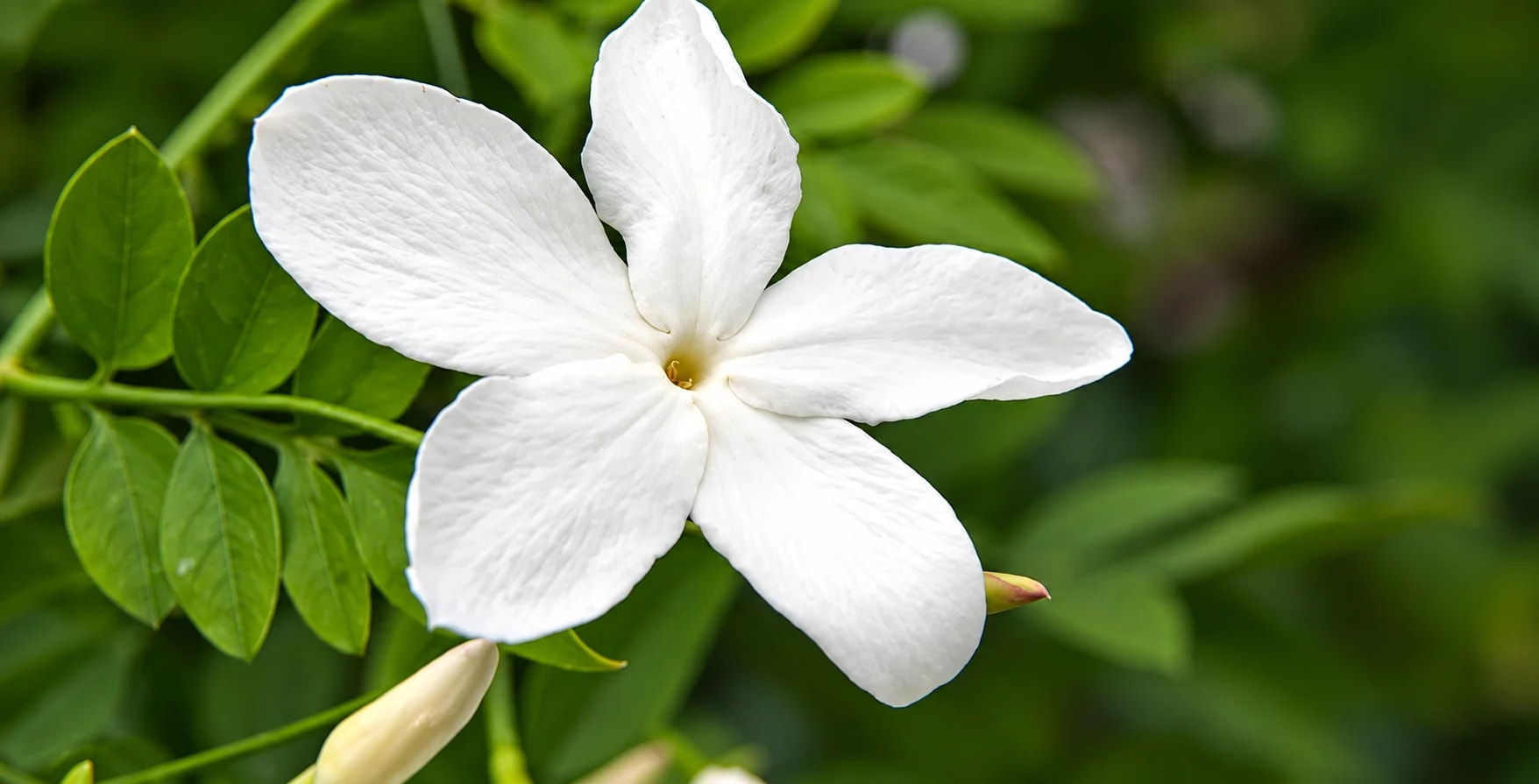
Jasmine Guide
Everything you need to know about jasmine
Jasmine is a popular outdoor plant valued for its fragrant flowers and attractive foliage. Depending on the variety, jasmine can be grown as a shrub, climber, or container plant in gardens, balconies, terraces, entrances, and other outdoor spaces.
Jasmine generally performs well with suitable sunlight, fertile well-draining soil, appropriate watering, regular feeding, pruning, and good airflow. Climbing varieties may also benefit from a trellis, wall support, pergola, or other suitable structure.
If you are looking for full-sun outdoor plants, fragrant flowering plants, or plants for a balcony or terrace garden, jasmine can be considered when the growing conditions match its requirements.
Quick facts
Jasmine at a Glance
Use these basic characteristics as a starting point when choosing and caring for a jasmine plant.
Common name
Jasmine
Also known as
Mogra / Arabian Jasmine
Plant type
Flowering outdoor plant
Light
Bright sunlight / Full sun
Watering
Regular watering with good drainage
Maintenance
Moderate
Growth
Fast-growing under suitable conditions
Propagation
Stem cuttings
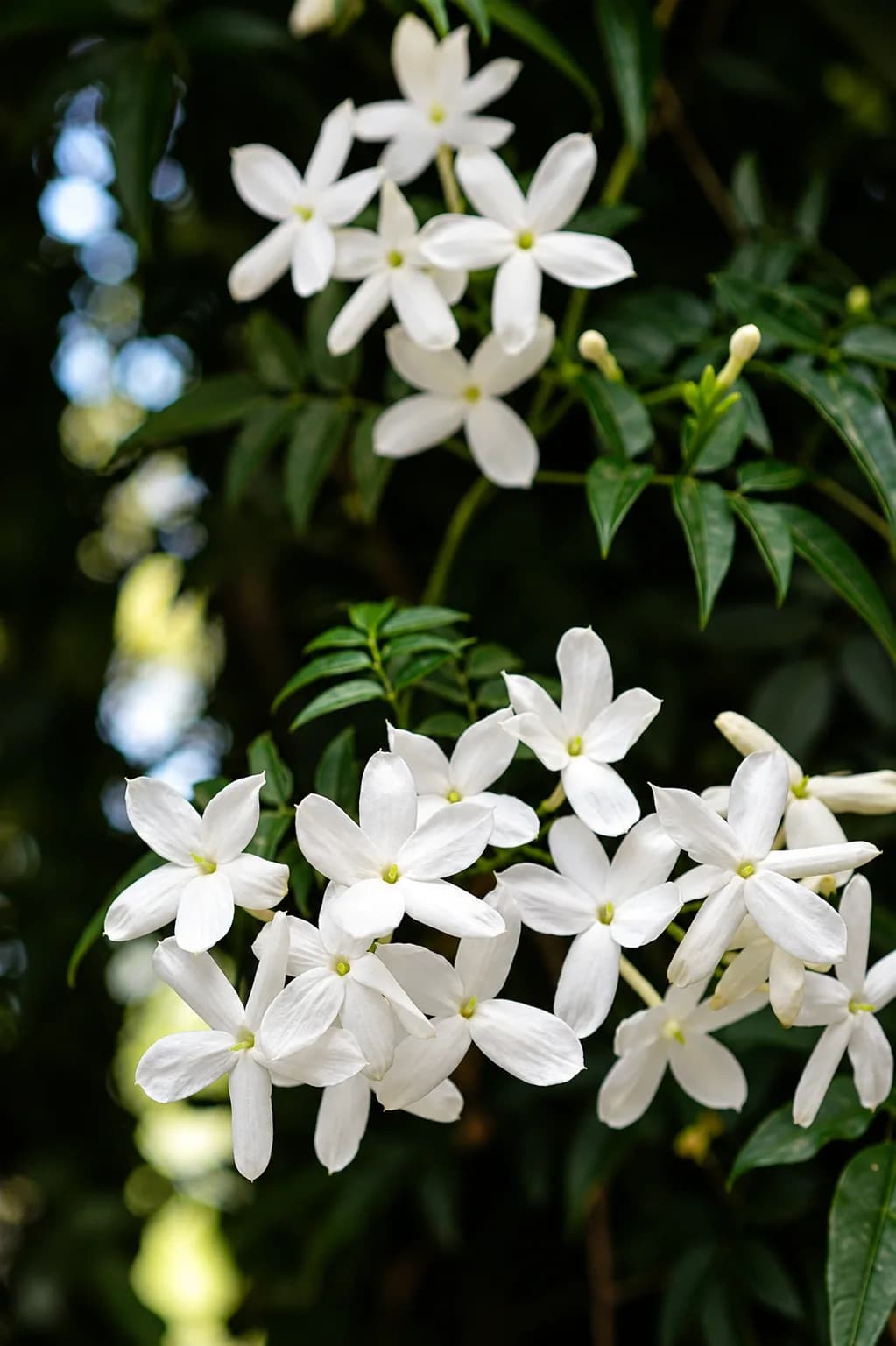
About the plant
What Is a Jasmine Plant?
Jasmine refers to a group of flowering plants valued for their fragrant flowers and ornamental growth. Different jasmine species and cultivars can vary considerably in growth habit, flower characteristics, size, and environmental requirements.
Some jasmine types grow as compact shrubs, while others develop into vigorous climbers. This makes jasmine useful for gardens, containers, balconies, terraces, entrances, pergolas, fences, and other suitable outdoor spaces.
Jasmine generally performs best when grown in suitable sunlight with fertile, well-draining soil. Watering, feeding, pruning, support, and pest monitoring should be adjusted according to the particular variety and local growing conditions.
Care guide
How to Care for a Jasmine Plant
Good jasmine care starts with suitable sunlight, fertile well-draining soil, appropriate watering, regular feeding, pruning, and good airflow.
Jasmine Light Requirements
Jasmine generally performs best in a bright outdoor location with several hours of sunlight. Good light supports healthy growth and flowering.
If you are looking for more plants suited to bright outdoor conditions, explore our full-sun outdoor plants guide.
Jasmine Watering
Water jasmine according to soil moisture and environmental conditions. Water thoroughly when the growing medium begins to dry, while avoiding constantly waterlogged soil.
Container-grown jasmine can dry faster during hot weather, so check the soil more frequently. Rainfall, pot size, soil type, sunlight, and plant size can all affect watering requirements.
For more outdoor plant options, explore our outdoor plants collection.
Best Soil for Jasmine
Use fertile, well-draining soil or potting medium that retains sufficient moisture while allowing excess water to drain away. Good drainage is especially important for jasmine grown in containers.
Temperature
Jasmine generally grows well under suitable warm conditions, although requirements vary between species. Protect plants from prolonged exposure to unsuitable temperature extremes and monitor them during very hot weather.
Humidity & Airflow
Good airflow around jasmine helps maintain healthy foliage and growth. Avoid overcrowding plants and prolonged moisture on leaves, especially during humid or rainy conditions.
Jasmine Fertilizer
Feed jasmine according to its growth stage and the fertilizer product instructions. A suitable fertilizer can support healthy vegetative growth and flowering. Avoid excessive feeding because too much fertilizer can encourage excessive foliage at the expense of flowering.
Jasmine Repotting
Container-grown jasmine may need repotting when roots have significantly outgrown the container or the growing medium has deteriorated. Choose a container with adequate drainage and enough room for healthy root development.
Jasmine Pruning
Pruning helps maintain shape, remove dead or damaged growth, manage vigorous shoots, and encourage suitable new growth. Use clean, sharp tools and prune according to the jasmine type and flowering habit.
Choose the right space
Jasmine for Different Outdoor Spaces
Jasmine can be used in several outdoor settings when sunlight, available space, drainage, airflow, container size, and mature plant growth are considered.
Garden Plants
Explore flowering plants and garden greenery for larger outdoor spaces, boundaries, entrances, and landscaped areas.
Explore garden plants →Balcony Plants
Find suitable outdoor plants for balconies while considering sunlight, wind exposure, container size, and available space.
Explore balcony plants →Terrace Plants
Discover plants for terrace gardens, containers, vertical greenery, and sunny outdoor seating areas.
Explore terrace plants →Full-Sun Plants
Explore outdoor plants that can perform well in bright sunny locations.
Explore full-sun plants →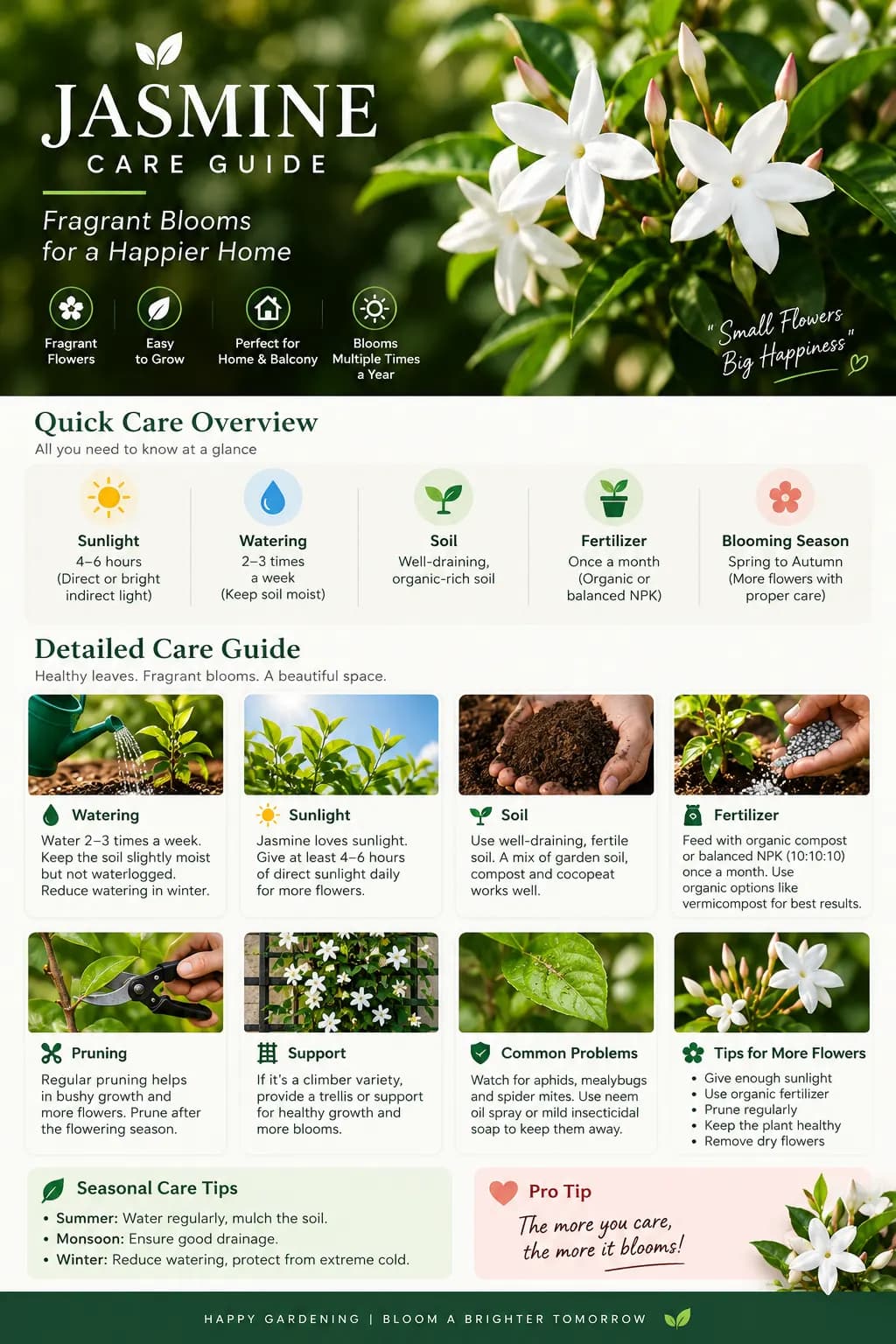
Continue learning
Read our Jasmine Care Guide
Want more practical guidance on growing jasmine? Explore our detailed care resources covering sunlight, watering, soil, feeding, pruning, propagation, flowering, and common problems.
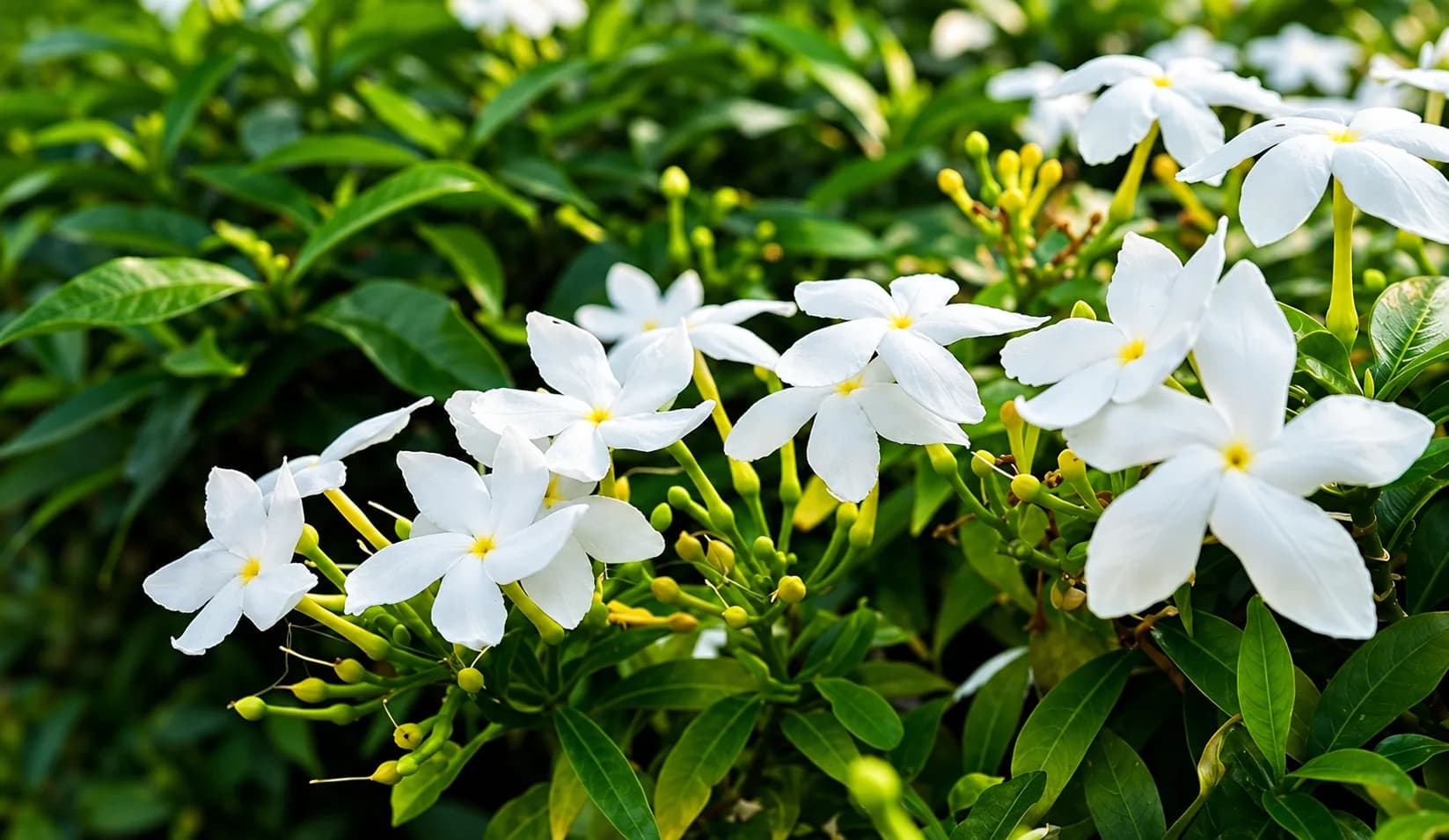
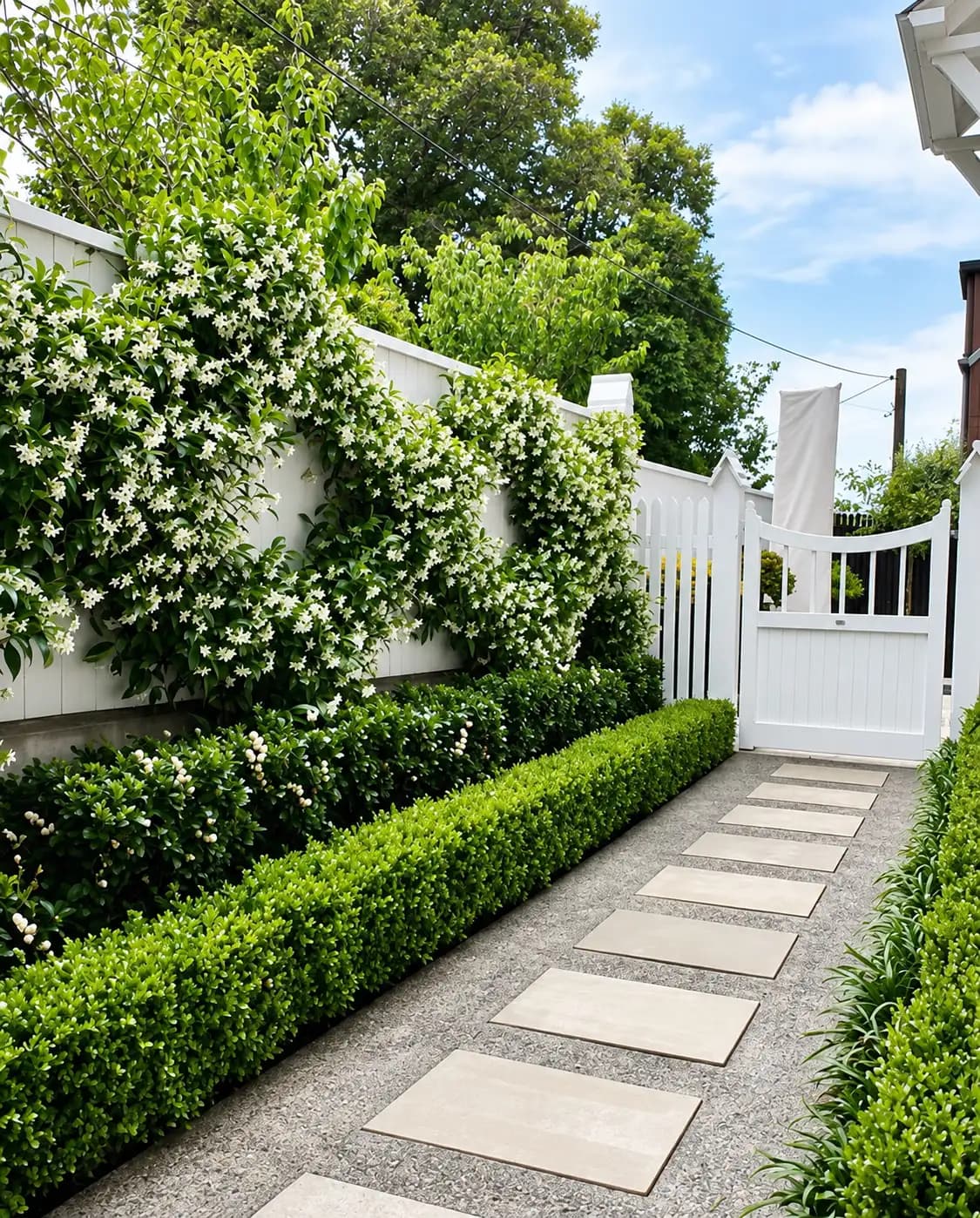
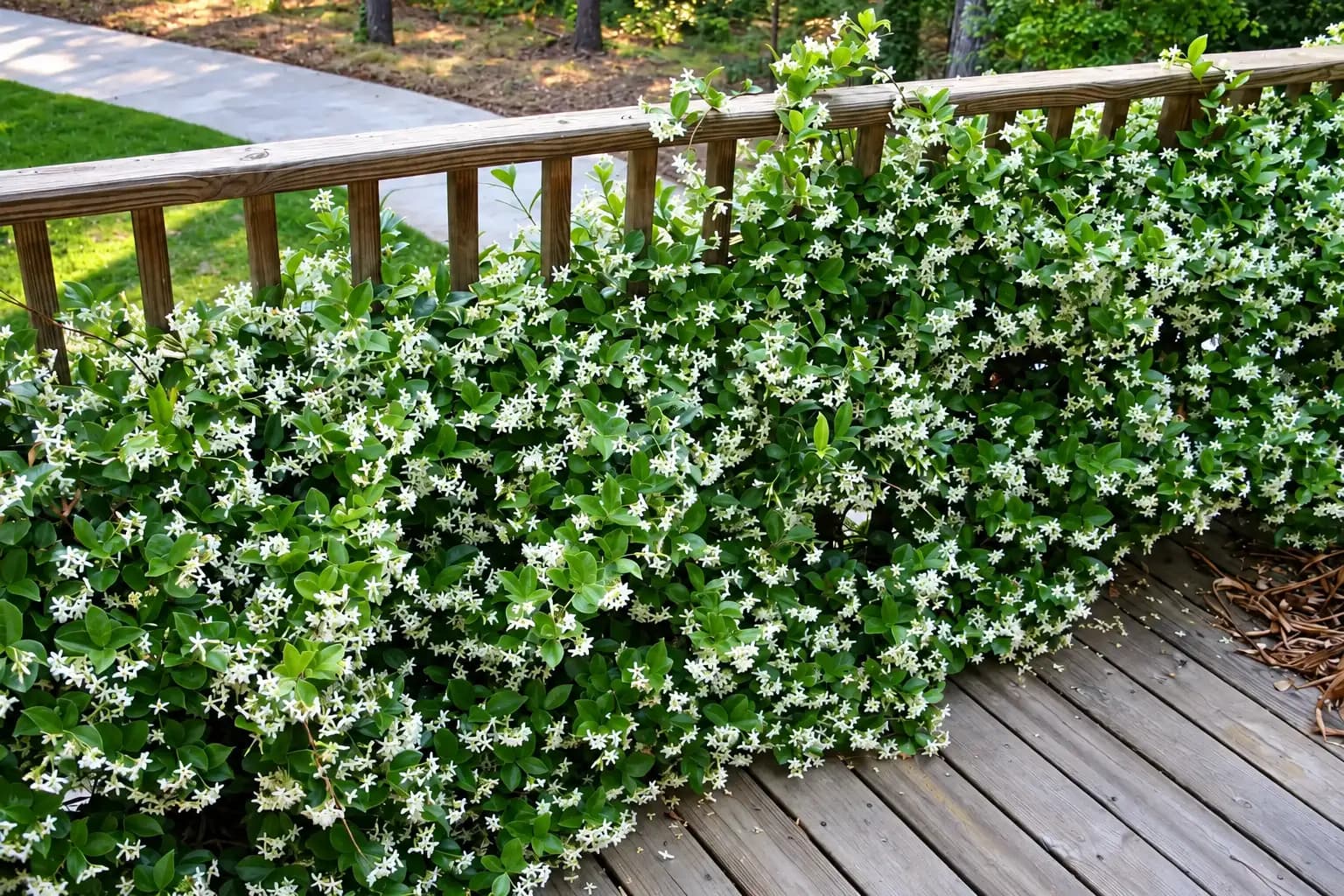
Popular varieties
Jasmine Varieties
Jasmine includes different species and cultivars with variations in flower form, fragrance, growth habit, plant size, and suitability for different outdoor spaces.
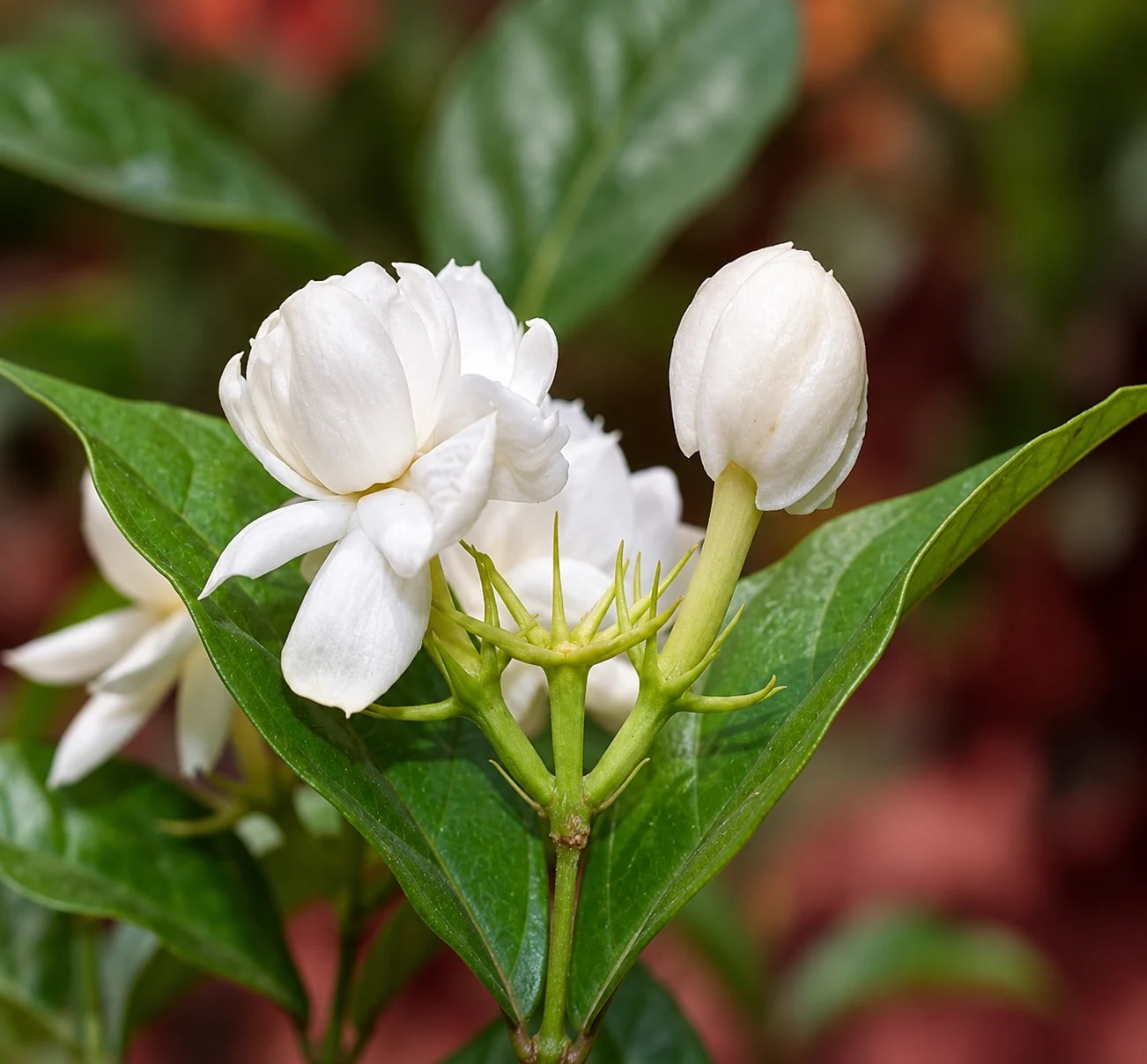
Jasmine sambac
Jasmine sambac, commonly associated with Arabian jasmine and mogra, is valued for its fragrant white flowers and compact growth. It can be suitable for gardens and containers.
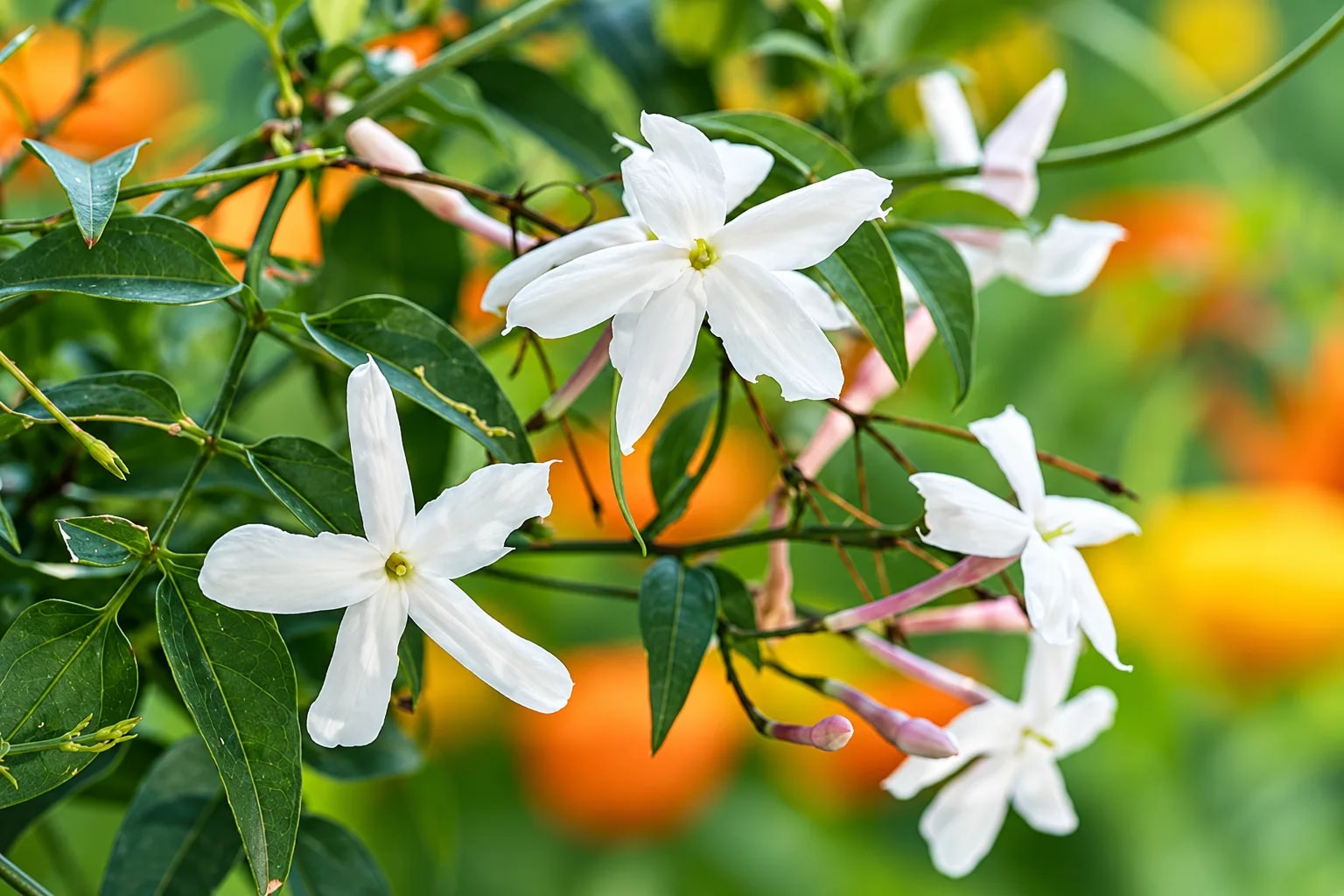
Jasminum officinale
Common jasmine is a vigorous flowering jasmine with fragrant white flowers and a climbing growth habit that can work well with suitable garden support.
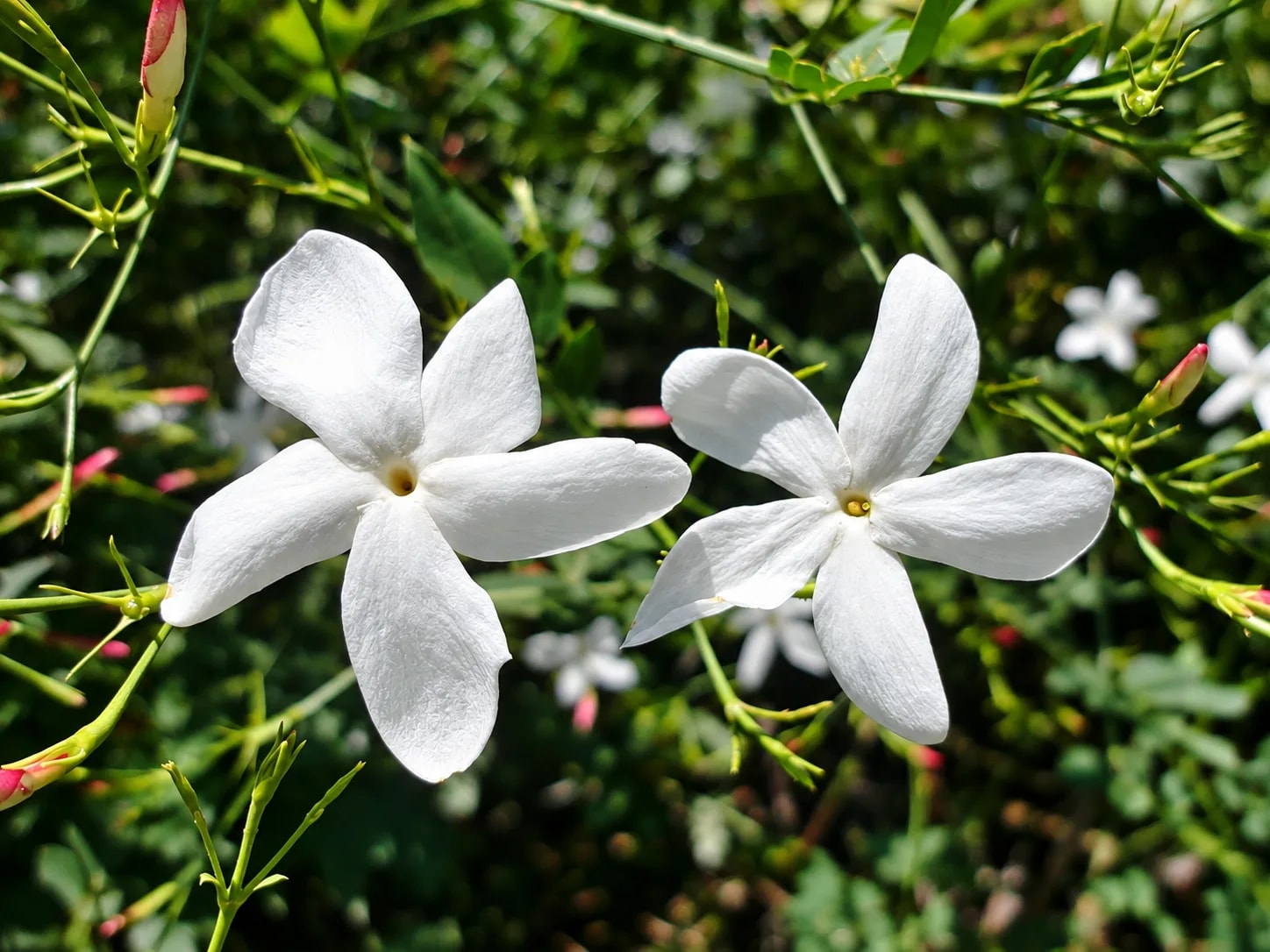
Jasminum grandiflorum
Jasminum grandiflorum is known for fragrant white flowers and is grown as an ornamental flowering plant in suitable warm outdoor conditions.
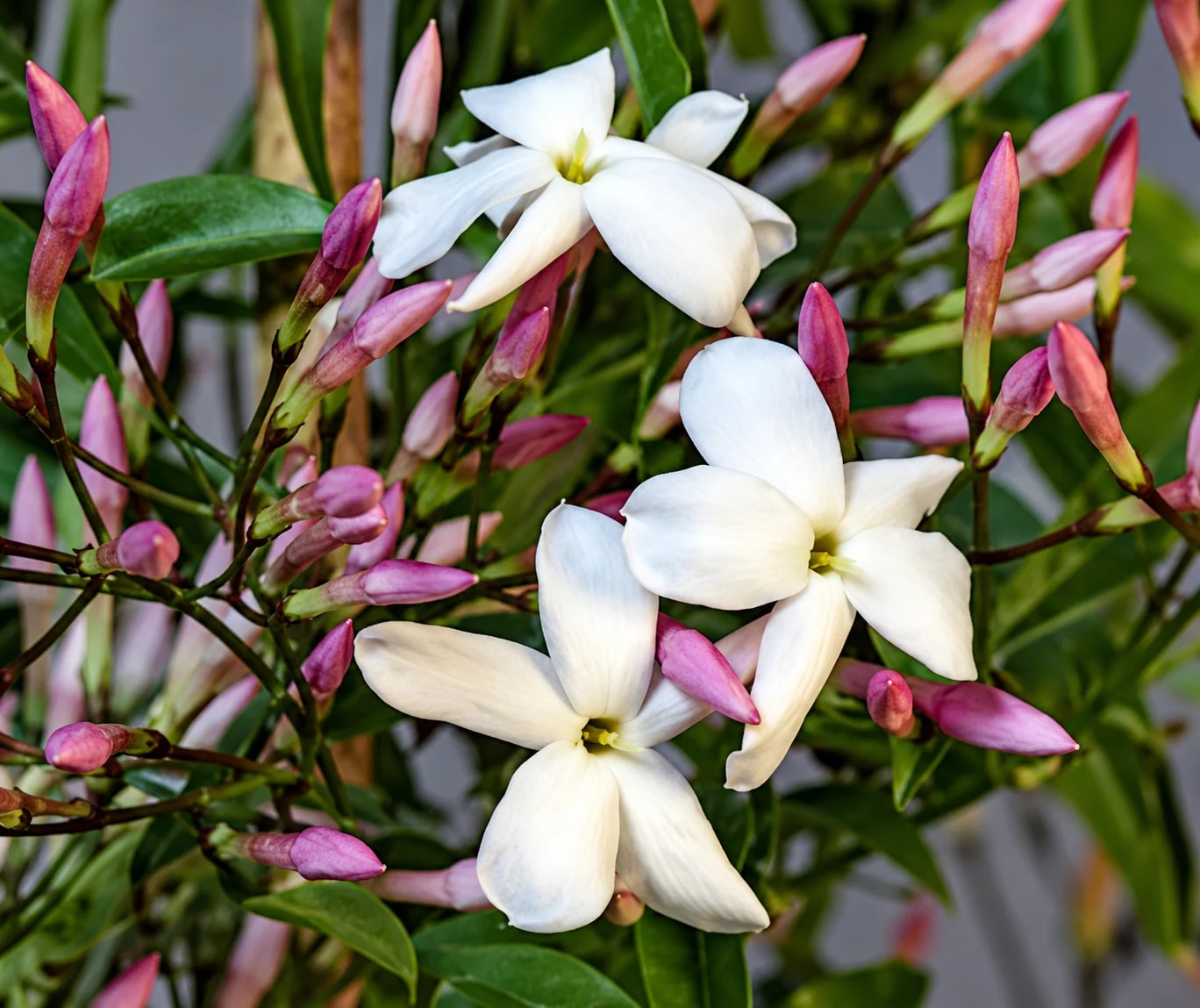
Jasminum polyanthum
Jasminum polyanthum is a vigorous jasmine with clusters of fragrant flowers and a climbing growth habit when provided with appropriate support.
Why choose jasmine?
Jasmine Benefits
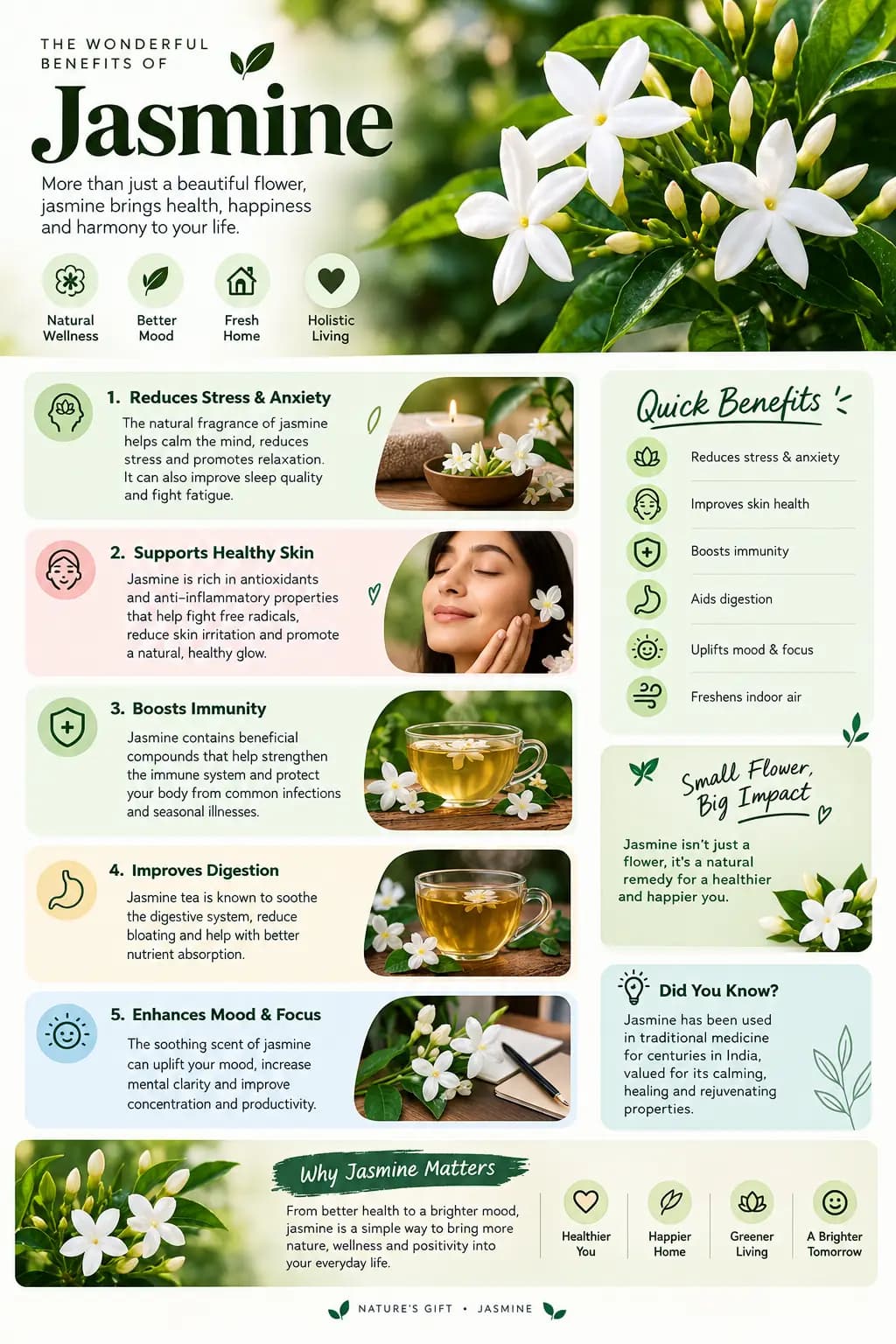
- • Produces fragrant ornamental flowers.
- • Can perform well in bright outdoor locations.
- • Many varieties can be grown in containers.
- • Works well for gardens, balconies, and terraces.
- • Climbing types can be trained on suitable supports.
- • Adds fragrance and visual interest to outdoor spaces.
Outdoor placement
Where to Keep a Jasmine Plant
Choose a location based on sunlight, available space, airflow, drainage, container size, and the mature growth habit of the plant.
Garden
Jasmine can add fragrance and flowers to gardens when planted in a suitable sunny location. Provide fertile soil, good drainage, airflow, and enough space for the plant's growth habit.
Balcony
Jasmine can be grown in suitable balcony containers when enough sunlight is available. Choose an appropriate pot with good drainage and provide support for varieties with climbing growth.
Terrace
Sunny terraces can be suitable for jasmine grown in containers. Provide sufficient root space, drainage, sunlight, and support where required.
Entrance & Outdoor Spaces
Fragrant jasmine can work well around entrances, pathways, seating areas, pergolas, and other outdoor spaces where its flowers and fragrance can be enjoyed.
Propagation
How to Propagate Jasmine
Jasmine can commonly be propagated using stem cuttings. Success depends on the jasmine type, quality of the plant material, growing medium, moisture, temperature, and overall growing conditions.
Propagation by Stem Cuttings
Select healthy suitable stem material and prepare cuttings using clean tools. Place the cutting in a suitable well-draining propagation medium and maintain appropriate moisture without keeping the medium waterlogged.
Choose Healthy Plant Material
Use healthy stems from a suitable parent plant. Avoid propagation material showing obvious disease, severe damage, or pest problems.
Troubleshooting
Common Jasmine Problems
Changes in leaves, buds, flowers, stems, and overall growth can provide clues that the plant's light, watering, drainage, nutrition, pruning, or environment needs attention.
Jasmine Plant Not Flowering
Lack of flowers can be associated with insufficient sunlight, unsuitable pruning, nutrient imbalance, irregular watering, immature growth, pests, disease, or environmental stress.
Jasmine Yellow Leaves
Yellow leaves can result from watering problems, poor drainage, nutrient deficiencies, environmental stress, pests, or naturally ageing foliage.
Jasmine Buds Falling
Bud drop can occur because of sudden changes in watering, temperature, sunlight, humidity, pests, disease, or other environmental stress.
Jasmine Leaves Curling
Curling leaves can be associated with heat stress, inconsistent watering, pest activity, or unsuitable growing conditions. Inspect the plant carefully before changing its care routine.
Jasmine Pests
Jasmine can experience aphids, mealybugs, mites, and other common garden pests. Regularly inspect young shoots, leaves, buds, and stems.
Jasmine Fungal Problems
Poor airflow, prolonged leaf wetness, excessive moisture, and humid conditions can contribute to fungal problems. Good airflow and careful watering can help reduce environmental stress.
For Indian gardens
Jasmine Care in India
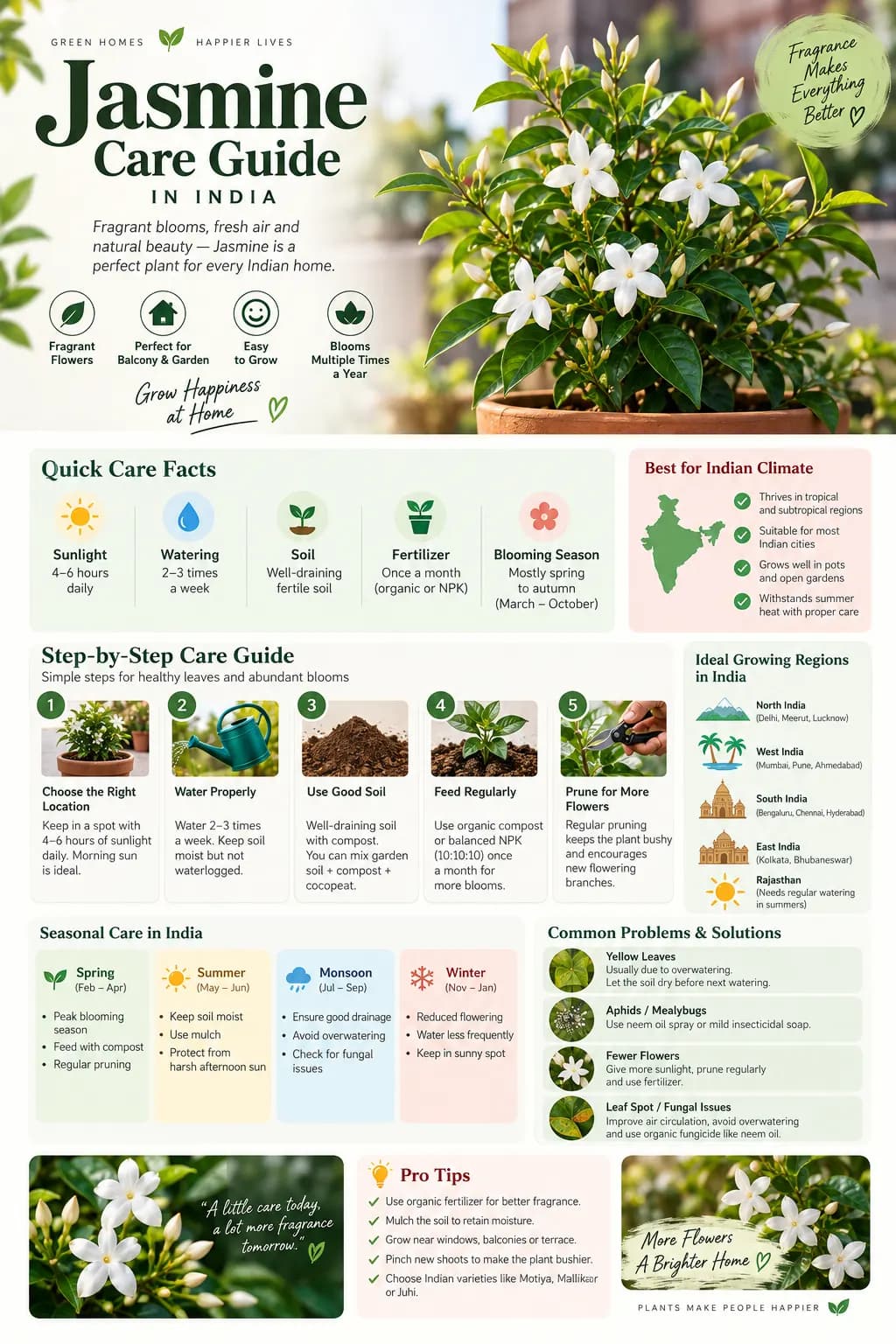
Jasmine is commonly grown in Indian gardens, balconies, terraces, containers, entrances, and other outdoor spaces. Growing conditions can vary significantly between Indian cities, seasons, elevations, and microclimates.
During hot periods, container-grown jasmine can dry out faster than plants growing in the ground. Check soil moisture regularly rather than following a fixed watering schedule.
During monsoon periods, pay particular attention to drainage and avoid unnecessary watering when rainfall is already keeping the growing medium wet.
Strong sunlight can support healthy growth and flowering, but plants should still be monitored for heat or environmental stress. Good airflow, suitable feeding, pruning, drainage, and regular pest monitoring are useful throughout the year.
Seasonal care
Jasmine Care Through the Seasons
Jasmine care can change with temperature, rainfall, sunlight, humidity, and the plant's active growth. Adjust watering, pruning, feeding, and monitoring according to local conditions.
Summer
Check soil moisture regularly, especially for jasmine growing in containers. Monitor heat and moisture loss during very hot weather.
Monsoon
Focus on drainage and airflow. Avoid unnecessary watering when rainfall has already kept the soil sufficiently moist.
Winter
Watering requirements can change as temperatures and growth change. Check the soil before watering and monitor the plant for seasonal changes.
Pruning
Prune according to the jasmine type, growth, flowering habit, desired shape, and local conditions. Remove dead, damaged, weak, or overcrowded growth when appropriate.
Quick checklist
Simple Jasmine Care Checklist
- • Provide suitable bright sunlight.
- • Use fertile, well-draining soil or potting medium.
- • Check soil moisture before watering.
- • Avoid keeping the roots constantly waterlogged.
- • Feed periodically during active growth.
- • Prune to maintain shape and encourage healthy new growth.
- • Provide support for climbing jasmine varieties.
- • Inspect leaves, buds, and stems regularly for pests and disease.
Plant care principle
Observe the plant, not just the calendar
Jasmine watering and care requirements can change with sunlight, temperature, rainfall, pot size, soil, season, variety, and plant maturity. An observation-based routine is more useful than treating every jasmine plant exactly the same way.
Related reading
More Outdoor Plant Guides
Explore related Blooming Den guides for choosing and caring for outdoor plants.
Jasmine
Jasmine Care Guide
Learn practical guidance for growing and caring for jasmine in outdoor spaces.
Read guide →Outdoor Plants
Best Outdoor Plants for Home
Explore flowering and foliage plants suitable for gardens and other outdoor spaces.
Read guide →Balcony Plants
Best Plants for Balcony
Compare jasmine with other outdoor plants suitable for balcony containers.
Read guide →Terrace Gardening
Best Plants for Terrace Garden
Explore plant options for sunny terraces, containers, and terrace gardens.
Read guide →Full Sun
Full-Sun Outdoor Plants
Discover outdoor plants that can work well in bright and sunny locations.
Read guide →Garden Plants
Garden Plants for Home
Find flowering, foliage, and ornamental plants for home gardens.
Read guide →Frequently asked questions
Jasmine FAQs
Answers to common questions about jasmine care, watering, sunlight, flowering, pruning, propagation, and outdoor placement.
How often should you water a jasmine plant?
Water jasmine according to soil moisture, weather, plant size, and growing conditions. Water thoroughly when the soil begins to dry rather than keeping it constantly wet. Container-grown jasmine may need more frequent checks during hot weather.
Does jasmine need full sun?
Jasmine generally performs well in a bright outdoor location with several hours of sunlight. Suitable light supports healthy growth and flowering, although exact requirements can vary between jasmine species and cultivars.
Is jasmine easy to grow?
Jasmine can be grown successfully when provided with suitable sunlight, well-draining soil, appropriate watering, regular feeding, pruning, and support where required. Care requirements vary depending on the jasmine type and local climate.
Where should I place a jasmine plant?
Choose a bright outdoor location with good sunlight, airflow, and enough space for the plant's growth habit. Jasmine can be grown in gardens, balconies, terraces, containers, entrances, and along suitable supports.
Why is my jasmine plant not flowering?
Insufficient sunlight, unsuitable pruning, irregular watering, nutrient imbalance, excessive vegetative growth, pests, disease, or environmental stress can affect flowering. Check the plant's light, soil moisture, feeding, pruning, and overall condition.
How do you propagate jasmine?
Jasmine can commonly be propagated using stem cuttings. Healthy plant material, a suitable well-draining propagation medium, appropriate moisture, and suitable warmth can improve the chances of successful rooting.
When should jasmine be pruned?
Pruning should be adjusted according to the jasmine type, flowering habit, growth, and local climate. Remove dead, damaged, weak, or overcrowded growth and prune appropriately to maintain shape and encourage healthy new growth.
Can jasmine grow in pots?
Yes. Many jasmine varieties can be grown in suitable containers when the pot provides adequate drainage, sufficient root space, suitable soil, and enough sunlight. Vining types may also need a trellis or other support.
Blooming Den
Grow a beautiful jasmine outdoor space
Explore outdoor plants and practical gardening support for your garden, balcony, terrace, or home.