
Nourishing Plants with Proper Fertigation
Posted: March 15, 2026 | Pruning



IN THIS ARTICLE
What Is Fertigation and Why It Matters?
If you love growing plants at home, you already know watering is essential. However, feeding them properly makes all the difference. Fertigation simply means adding nutrients to water and delivering it directly to your plants. This method saves time and ensures plants receive balanced nourishment. Instead of guessing when to fertilize, you combine watering and feeding in one easy step.
 Benefits of Fertigation at Home
Fertigation offers several advantages for home gardeners. First, it improves nutrient absorption because plants receive food in liquid form. As a result, roots can take it up quickly. Also, it reduces waste since nutrients go straight to the root zone. In addition, it helps you maintain consistency, which is key for healthy growth. Your plants stay greener, stronger, and more productive.
Choosing the Right Fertilizer
Before you start, pick a water-soluble fertilizer that suits your plants. For example, leafy plants need more nitrogen, while flowering plants prefer phosphorus-rich blends. Always read the label and follow instructions. Too much fertilizer can harm roots, so balance is important. When in doubt, start with a weaker solution and adjust gradually.
Simple Ways to Apply Fertigation
You don't need fancy equipment to begin. A watering can works well for small gardens. Just mix the fertilizer in water and pour it evenly. For larger setups, drip irrigation systems can make the process smoother. They deliver nutrients slowly and consistently. You can also track your fertigation schedule with the Blooming Den App.
How to Apply
- 🍃
Finding the Right Frequency: First, you should decide how often your plants need feeding. Instead of adding a strong dose once a month, apply a mild solution every one or two weeks.
- 🍃
Fixing the Right Strength: Next, pay attention to the strength of your solution. Too much fertilizer can burn the roots and damage the plant. Always follow the recommended dosage and, if unsure, use a slightly diluted mix.
- 🍃
Focusing on the Root Zone: Finally, make sure you apply the solution directly to the soil around the roots. Avoid pouring it over leaves because this can lead to leaf burn or disease.
Signs Your Plants Need Fertigation
Sometimes plants silently tell you they need better feeding. You just need to notice the signals. For exampleslow growth often means a lack of nutrients. Pale or yellow leaves can also indicate deficiency. In some cases, plants may look weak even after proper watering.
Slow or Stunted Growth
The first signs is slow growth. If your plant is not producing new leaves or shoots, it may not be getting enough nutrients. Even during the growing season, some plants remain the same size for weeks. This usually means the soil lacks essential elements. By starting a light fertigation routine, you can boost growth and encourage fresh development.
Yellowing Leaves
Yellow leaves often signal nutrient deficiency. In many cases, this happens due to a lack of nitrogen. You may notice older leaves turning pale first, while new ones remain green. This uneven color change clearly shows that the plant needs feeding.
Weak Stems and Drooping Plants
If your plant looks weak or struggles to stand upright, it might need better nutrition. Weak stems often result from poor nutrient supply. Even if you water regularly, the plant may droop because it lacks strength from within. Providing nutrients through fertigation can improve structure and stability.
Organic vs Chemical Fertigation
Have you ever wondered why some home gardens look effortlessly lush while others struggle, even with regular watering? The answer often lies not in how much you water, but in how you feed your plants. Fertigation—mixing nutrients with water—has made plant care easier than ever. But now comes the real question: should you choose organic fertigation or chemical fertigation for your home garden?
Let’s break it down in a simple, honest, and practical way so you can decide what works best for your plants.
Organic Fertigation
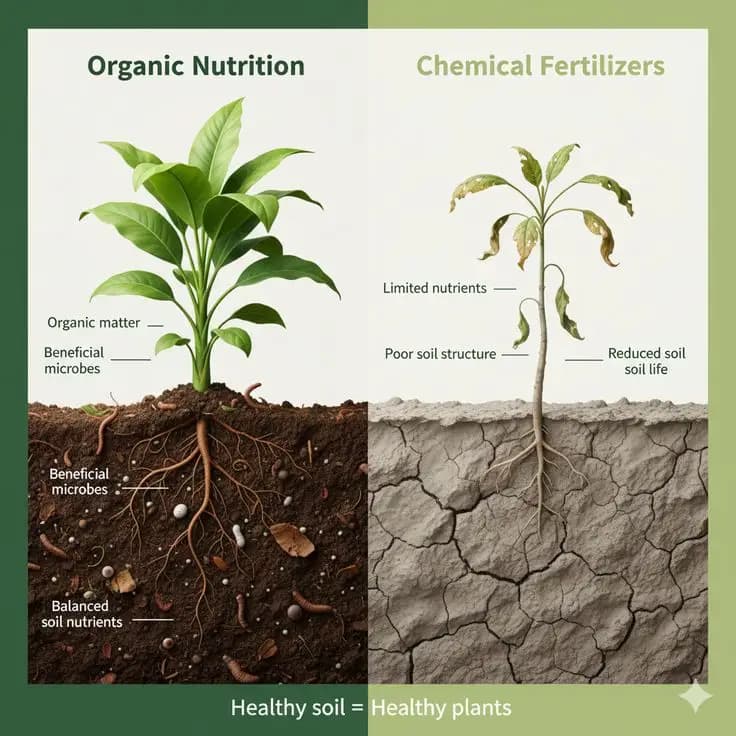
Organic fertigation uses natural sources of nutrients. These include compost tea, liquid seaweed, cow dung solution, and other plant-based or animal-based inputs. These solutions are rich in natural minerals and beneficial microbes.
Unlike synthetic fertilizers, organic options work slowly. However, they improve soil health over time. This means your plants not only grow but also develop stronger roots and better resistance to stress.
In addition, organic fertigation feels closer to nature. Many home gardeners prefer it because it supports long-term sustainability.
Chemical Fertigation
Chemical fertigation relies on manufactured fertilizers. These are specially designed to provide nutrients like nitrogen, phosphorus, and potassium in precise amounts.
The biggest advantage here is speed. Plants respond quickly because nutrients are immediately available. If your plant looks weak or yellow, chemical fertigation can show visible improvement within days.
However, this method requires careful handling. Too much fertilizer can harm the roots and disturb the natural balance of the soil.
Key Differences Between Organic and Chemical Fertigation
Organic fertigation focuses on long-term soil health. It builds a living ecosystem in the soil. Over time, this leads to steady and natural growth.
In contrast, chemical fertigation focuses on quick results. It delivers nutrients directly and efficiently. However, it does not improve soil structure in the same way.
Another important difference is control. Chemical fertilizers allow precise measurement. Organic solutions vary depending on their source, which makes them less predictable.