
AI Garden Audit: A Complete Guide to Analyzing Your Garden with AI
Understanding what your garden needs can be challenging, especially when you have multiple plants, limited space, or are unsure why some areas are not performing well. An AI garden audit uses artificial intelligence and image analysis to examine your garden and provide useful insights about plants, space, visible issues, and possible improvements.
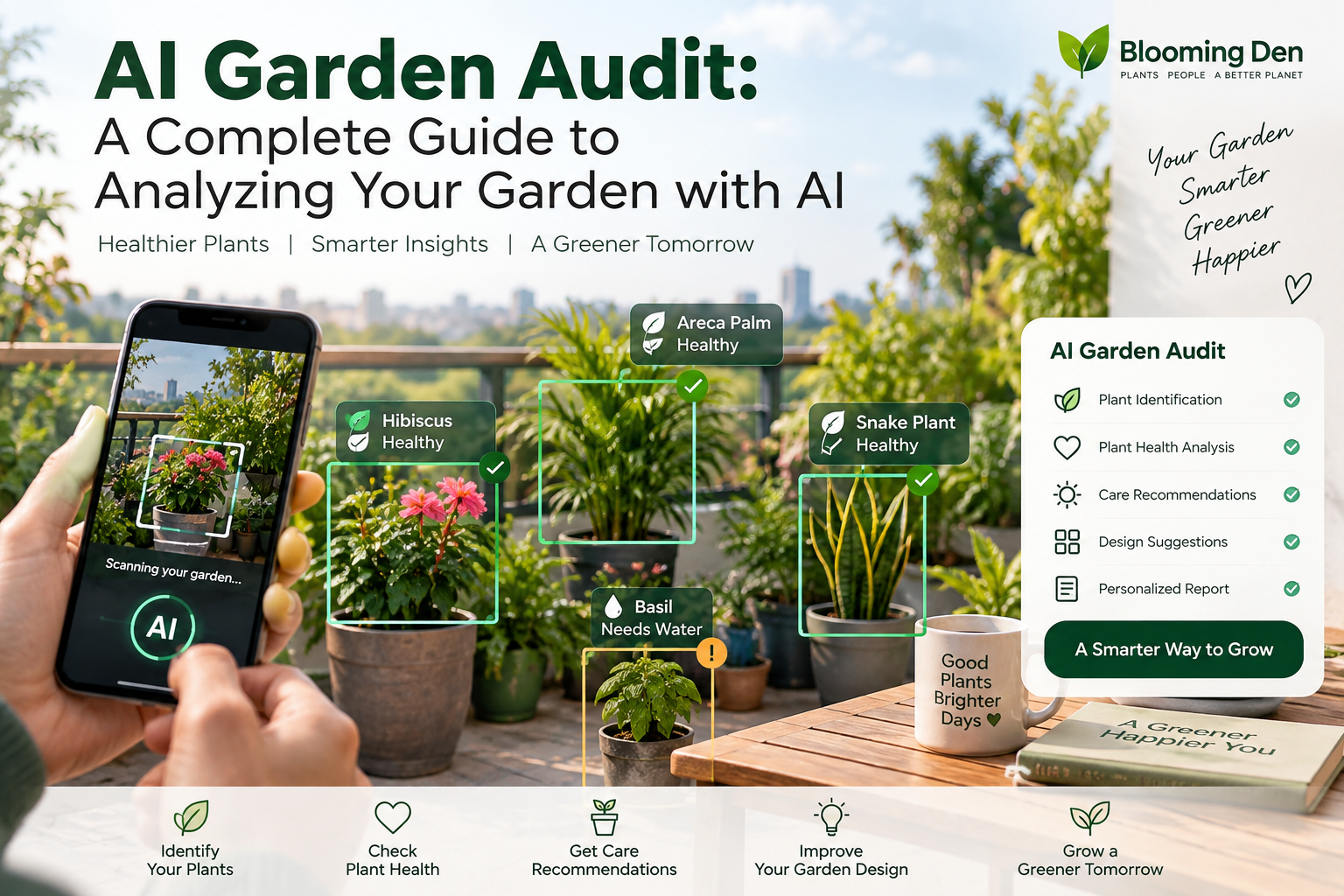
What Is an AI Garden Audit?
An AI garden audit is a technology-assisted assessment of a garden using photographs and artificial intelligence. The system can examine visible plants, containers, garden structures, available space, plant condition, and other features that can be identified from an image.
Instead of manually evaluating every part of a garden, homeowners can upload a garden photograph and receive a structured overview of what is visible and what may need attention. Depending on the system, the audit can also generate recommendations for improving plant health, garden design, maintenance, and space utilization.
What can an AI garden audit analyze?
- Visible plants and vegetation.
- Plant health indicators that can be seen in the image.
- Pots, planters, and other garden containers.
- Empty or underutilized garden areas.
- Walls, railings, and other usable garden structures.
- Overall garden arrangement and space utilization.
- Visible maintenance or design concerns.
Why Should You Audit Your Garden?
A garden can gradually become overcrowded, underutilized, or difficult to maintain. Plants grow, containers get moved, empty spaces appear, and gardening routines change over time. A garden audit provides an opportunity to step back and understand the space as a whole.
| Garden Challenge | How an AI Audit Can Help |
|---|---|
| Empty Spaces | Highlights areas that may have potential for better utilization. |
| Overcrowded Plants | Helps identify areas where plant arrangement may need attention. |
| Plant Stress | Can identify visible signs of unhealthy or stressed plants. |
| Poor Space Utilization | Can highlight unused vertical or horizontal areas. |
| Maintenance Problems | Can identify visible areas that may require cleaning, pruning, or better organization. |
How Does an AI Garden Audit Work?
Although the technology behind AI garden audits can vary, most systems follow a similar process. The goal is to convert a garden photograph into structured observations that can help the gardener make better decisions.
- Upload a garden image: The user provides a clear photograph of the garden or outdoor space.
- Visual analysis: AI examines the visible plants, containers, structures, and garden features.
- Object identification: The system identifies relevant objects and areas within the garden.
- Condition assessment: Visible plant-health and maintenance indicators are evaluated.
- Space analysis: The system considers empty areas, plant placement, and available garden structures.
- Recommendations: The collected observations can be converted into practical suggestions for improving the garden.
Important Note
An AI garden audit is based primarily on the information available to the system. A photograph cannot reveal every condition, such as hidden root problems, soil composition, underground drainage, or exact sunlight exposure throughout the day. AI results should therefore be treated as useful guidance rather than a complete replacement for physical garden inspection.
What Can an AI Garden Audit Detect?
A garden contains many different elements, and an AI system can analyze several of them from a well-captured photograph. The more clearly the garden is visible, the more useful the resulting assessment can be.
Plant Inventory
An AI garden audit can identify visible plants and organize them into a basic inventory. This can help gardeners understand what is already growing in their space before deciding whether to add, remove, or rearrange plants.
Visible Plant Health
The system can examine visible signs such as yellowing leaves, damaged foliage, wilting, discoloration, or other unusual appearances. These observations can help highlight plants that may require closer inspection or additional care.
Empty and Underutilized Areas
Not every garden uses its available space efficiently. AI can identify visible empty areas and help gardeners think about how those spaces could be used for additional plants, containers, vertical gardening, seating, or decorative elements.
Pots and Planters
An audit can identify visible pots and planters and provide an overview of how containers are distributed throughout the garden. This can be useful when planning better plant placement or organizing a container garden.
Walls and Railings
Vertical surfaces can provide valuable gardening opportunities, especially in balconies and compact urban spaces. An AI audit can identify visible walls, railings, or similar structures that may potentially support vertical planters or climbing plants.
Common Garden Elements AI Can Analyze
- Existing plants and visible vegetation.
- Plant containers and planters.
- Empty areas and unused space.
- Walls and vertical surfaces.
- Railings and balcony structures.
- Visible garden furniture or decorative elements.
- Signs of visible plant stress or damage.
AI Garden Audit for Different Garden Types
An AI garden audit can be useful for different types of gardening spaces. The recommendations may vary depending on the available area, existing plants, and how the garden is being used.
| Garden Type | What an AI Audit Can Help With |
|---|---|
| Balcony Garden | Container arrangement, vertical space, and unused areas. |
| Terrace Garden | Plant distribution, empty areas, containers, and garden layout. |
| Home Garden | Plant health, garden organization, and space utilization. |
| Kitchen Garden | Visible crops, containers, empty planting areas, and organization. |
| Indoor Plant Area | Plant arrangement, containers, and visible plant condition. |
How AI Can Help You Use Garden Space Better
Space is often one of the biggest challenges for urban gardeners. A balcony, terrace, or small backyard may have more gardening potential than it initially appears to have.
By identifying empty areas and visible structures, AI can help create ideas for better space utilization. For example, a suitable empty wall may be considered for vertical gardening, while an unused corner could accommodate a group of container plants.
Think Vertically
When floor space is limited, walls, railings, shelves, hanging planters, and vertical structures can create additional opportunities for plants. An AI audit can help identify visible areas that may be worth considering for a vertical gardening setup.
AI Garden Audit vs Manual Garden Assessment
AI and manual inspection can complement each other. A gardener can use AI to quickly organize visible information and identify areas worth examining, then use personal knowledge or professional expertise to validate the findings.
| Approach | Advantage | Limitation |
|---|---|---|
| AI Audit | Fast analysis of visible garden features | Cannot directly inspect hidden conditions |
| Manual Inspection | Can physically examine soil, plants, and surroundings | Requires time and gardening knowledge |
| Professional Assessment | Can combine physical inspection with gardening expertise | Requires access to a gardening professional |
How AI Evaluates Your Garden's Health
A garden audit is not only about identifying plants. A well-designed AI system can also examine visible indicators of plant health, garden organization, and space utilization. These observations can help you understand which parts of your garden are doing well and which areas may need attention.
Plant Health Indicators
AI can examine visible characteristics such as leaf color, foliage density, wilting, damaged leaves, and other signs of stress. These observations can help identify plants that may require closer inspection or improved care.
Healthy vs Stressed Plants
By analyzing visible differences between plants, an AI system can help categorize areas that appear healthy and areas that show possible signs of stress. This can make it easier for gardeners to prioritize which plants should be checked first.
Empty Space Analysis
Empty areas are not necessarily a problem, but they can represent opportunities. AI can identify visible unused portions of a garden and help generate ideas for better utilization, such as additional containers, vertical plants, herbs, flowers, or decorative elements.
Garden Density
A garden can also become too crowded. When plants are placed very close together, maintenance and access can become more difficult. An AI audit can highlight visually dense areas that may deserve closer examination.
Key Areas to Evaluate
- Overall visible plant health.
- Healthy and stressed plant areas.
- Empty or underutilized spaces.
- Overcrowded plant arrangements.
- Available walls and vertical surfaces.
- Existing pots and containers.
- Overall garden organization.
Turning an AI Garden Audit into Actionable Recommendations
The real value of a garden audit comes from what you do with the information. Instead of simply listing plants and problems, an AI system can organize its findings into practical recommendations that help you improve the space step by step.
| Finding | Possible Recommendation |
|---|---|
| Empty Corner | Consider suitable container plants or decorative elements. |
| Unused Wall | Explore suitable vertical gardening options. |
| Stressed Plant | Check watering, light, soil, pests, and other growing conditions. |
| Crowded Area | Review plant spacing and accessibility. |
| Limited Floor Space | Consider shelves, hanging planters, or vertical gardening. |
| Poorly Organized Containers | Group plants based on size, appearance, or care requirements. |
Using AI to Improve Garden Design
An AI garden audit can also be useful before redesigning a garden. Rather than immediately buying new plants and pots, you can first understand what already exists and identify which areas have the greatest potential for improvement.
This approach can reduce unnecessary purchases and help create a more intentional garden. Existing healthy plants can be retained, suitable empty spaces can be utilized, and new additions can be selected based on the available environment.
Keep What Is Working
Not every garden needs a complete makeover. If existing plants are healthy and well positioned, they can remain the foundation of the garden while smaller improvements are made around them.
Improve Underused Areas
Empty corners, unused walls, and open sections can be considered for new plants or functional garden features. The goal should be to improve the garden without making it unnecessarily crowded.
Plan Before Buying
An audit can provide a useful starting point before purchasing new plants, pots, soil, or gardening accessories. Planning first can help you spend your gardening budget more thoughtfully.
AI Garden Audits for Small Urban Gardens
Small balconies, terraces, and compact home gardens often require careful space management. Every available area can have a different purpose, so understanding the layout is particularly valuable.
An AI audit can help identify opportunities for vertical gardening, container grouping, unused corners, and better plant placement. This makes AI-assisted analysis especially useful for gardeners who want to create a greener space without unnecessarily increasing clutter.
How to Get the Best Results from an AI Garden Audit
The quality of an AI garden audit depends heavily on the quality of the information provided. A clear garden photograph combined with useful details about the space can produce a much more meaningful assessment.
Take a Clear Garden Photograph
Capture the garden from an angle that shows as much of the space as possible. Avoid extremely dark, blurry, or heavily filtered photographs. Good lighting helps the AI identify plants, pots, structures, and visible problem areas more effectively.
Include the Entire Garden
A complete view provides useful context about the overall layout. If the garden is large, you can also capture additional images of specific areas, plants, or problem spots when the system supports multiple images.
Provide Important Garden Information
Details such as sunlight exposure, watering habits, maintenance preferences, garden size, and the types of plants you want can help make recommendations more relevant. A photograph alone cannot reveal every condition of a garden.
Use the Audit as a Starting Point
An AI audit should help you decide what to investigate and improve first. It should not be treated as a perfect measurement of every garden condition. Combine the results with your own observations and practical gardening knowledge.
Tips for a Better AI Garden Audit
- Use a clear and well-lit garden photograph.
- Show the complete garden layout whenever possible.
- Include close-up images of plants with visible problems.
- Provide accurate information about sunlight and watering.
- Mention your maintenance preferences.
- Review recommendations before making major changes.
Common Mistakes to Avoid During a Garden Audit
Whether you are performing an AI-assisted audit or a manual garden inspection, a few common mistakes can lead to poor decisions. A garden should be evaluated as a complete space rather than based on a single plant or isolated feature.
Removing Healthy Plants Too Quickly
An untidy-looking plant is not necessarily an unhealthy plant. Before removing an existing plant, understand its condition, growth pattern, and role in the garden.
Adding Too Many New Plants
Empty space does not mean every area needs to be filled. Overcrowding can make maintenance more difficult and may reduce the visual balance of the garden. Add plants according to the available space and their expected growth.
Ignoring Maintenance Requirements
A garden may look beautiful initially but become difficult to maintain if plants require more care than you can regularly provide. Consider your available time before implementing recommendations.
Focusing Only on Appearance
Garden design should balance appearance with plant health, sunlight, watering, space, drainage, and maintenance. A visually attractive garden is more successful when it is also practical to care for.
Frequently Asked Questions About AI Garden Audits
What is an AI garden audit?
An AI garden audit uses artificial intelligence and image analysis to examine visible elements of a garden, such as plants, pots, empty areas, structures, and visible signs of plant stress, and can provide recommendations for improvement.
Can AI identify all the plants in my garden?
AI can identify many visible plants, but identification accuracy depends on image quality, plant visibility, and the capabilities of the particular AI system. Plants that are partially hidden or visually similar may require additional information.
Can an AI garden audit detect unhealthy plants?
AI can identify visible signs of plant stress or damage, such as yellowing, wilting, discoloration, and damaged foliage. However, a photograph cannot reveal every underlying cause, so further inspection may be necessary.
Can AI tell me where to place new plants?
An AI system can suggest potential areas based on visible space, existing plants, and available structures. The final placement should also consider actual sunlight, plant requirements, drainage, and maintenance access.
Is an AI garden audit useful for a small balcony?
Yes. Small balconies can benefit from space-focused analysis because walls, railings, corners, and vertical areas can provide additional gardening opportunities.
Can AI design my entire garden?
AI can help generate garden design ideas and recommendations based on the available information. However, practical factors such as measurements, structural limitations, sunlight patterns, drainage, and local growing conditions should also be considered before implementing a complete redesign.
How often should I perform a garden audit?
There is no fixed schedule that works for every garden. Consider reviewing your garden when seasons change, plants grow significantly, the layout changes, or you notice recurring maintenance or plant-health problems.
Turn Your AI Garden Audit into a Garden Improvement Plan
An AI garden audit becomes most useful when its findings are converted into clear actions. Instead of making many changes at once, use the audit to prioritize the areas that can make the biggest difference to your garden.
- Identify existing plants: Understand what is already growing in your garden.
- Check plant health: Prioritize plants showing visible signs of stress or damage.
- Review unused areas: Identify corners, walls, railings, or other spaces with gardening potential.
- Improve organization: Rearrange plants and containers where necessary.
- Choose new additions carefully: Select plants and garden products based on the actual requirements of the space.
- Monitor the results: Observe how the garden changes after improvements are made.
AI Garden Audit and Smarter Gardening Decisions
One of the biggest advantages of AI-assisted garden analysis is that it can help gardeners make decisions before spending money on new plants, pots, soil, or accessories. By first understanding the existing space, you can focus your budget on improvements that are actually useful.
| Before Buying | What to Consider |
|---|---|
| New Plants | Available space, sunlight, maintenance, and existing plants. |
| New Pots | Plant size, root space, drainage, and garden layout. |
| Vertical Planters | Available walls, railings, structure, and sunlight. |
| Garden Accessories | Actual maintenance needs and available storage space. |
From Garden Audit to Personalized Transformation
An AI garden audit can serve as the foundation for a more personalized garden transformation. Once the existing space is understood, the next step can be deciding what should be retained, what should be improved, and what new elements could be introduced.
This approach is especially useful when working with a specific budget or maintenance preference. Instead of automatically replacing everything, a transformation plan can focus on improving the existing garden while adding only the elements that provide meaningful value.
A Smarter Garden Improvement Process
- Audit your existing garden.
- Understand visible plant and space conditions.
- Identify the highest-priority improvements.
- Decide what should be kept, modified, or added.
- Match improvements with your budget and maintenance preference.
- Implement changes gradually.
- Monitor the garden and make further adjustments when needed.
The Future of AI-Powered Gardening
AI can potentially make gardening more personalized by combining visual analysis with information about plants, garden history, environmental conditions, and user preferences. Instead of receiving generic gardening advice, homeowners can increasingly receive recommendations tailored to their specific space.
The future of smart gardening can connect garden analysis with plant recommendations, care reminders, garden transformations, product suggestions, and ongoing monitoring. This can help turn gardening from a trial-and-error activity into a more informed and manageable experience.
AI Can Be Your Gardening Assistant
AI does not replace the gardener. Instead, it can help you understand your garden faster, identify areas worth investigating, and make more informed decisions about improving your space.
Final Thoughts on AI Garden Audits
An AI garden audit can be a powerful starting point for understanding and improving your garden. By analyzing visible plants, garden elements, available space, and signs of plant stress, AI can help turn a simple garden photograph into useful insights.
The most effective approach is to use AI alongside real-world gardening knowledge. Consider the audit results together with sunlight, soil, watering, drainage, maintenance requirements, and your personal gardening goals. With the right combination of technology and practical care, even a small urban garden can become healthier, more organized, and more enjoyable.
Remember
An AI audit is based on the information and images available to it. Hidden soil, root, drainage, structural, and environmental conditions may require physical inspection. Use AI recommendations as guidance and verify important decisions based on the actual conditions of your garden.
Discover a Smarter Way to Improve Your Garden
BloomingDen combines gardening knowledge and technology to help you understand your garden, discover improvement opportunities, and create a space that fits your plants, lifestyle, and preferences.
Explore BloomingDen for AI-powered gardening solutions, plant-care guidance, garden ideas, and practical resources for creating a better garden.