
How to Grow and Care for a Bird of Paradise Plant at Home in India
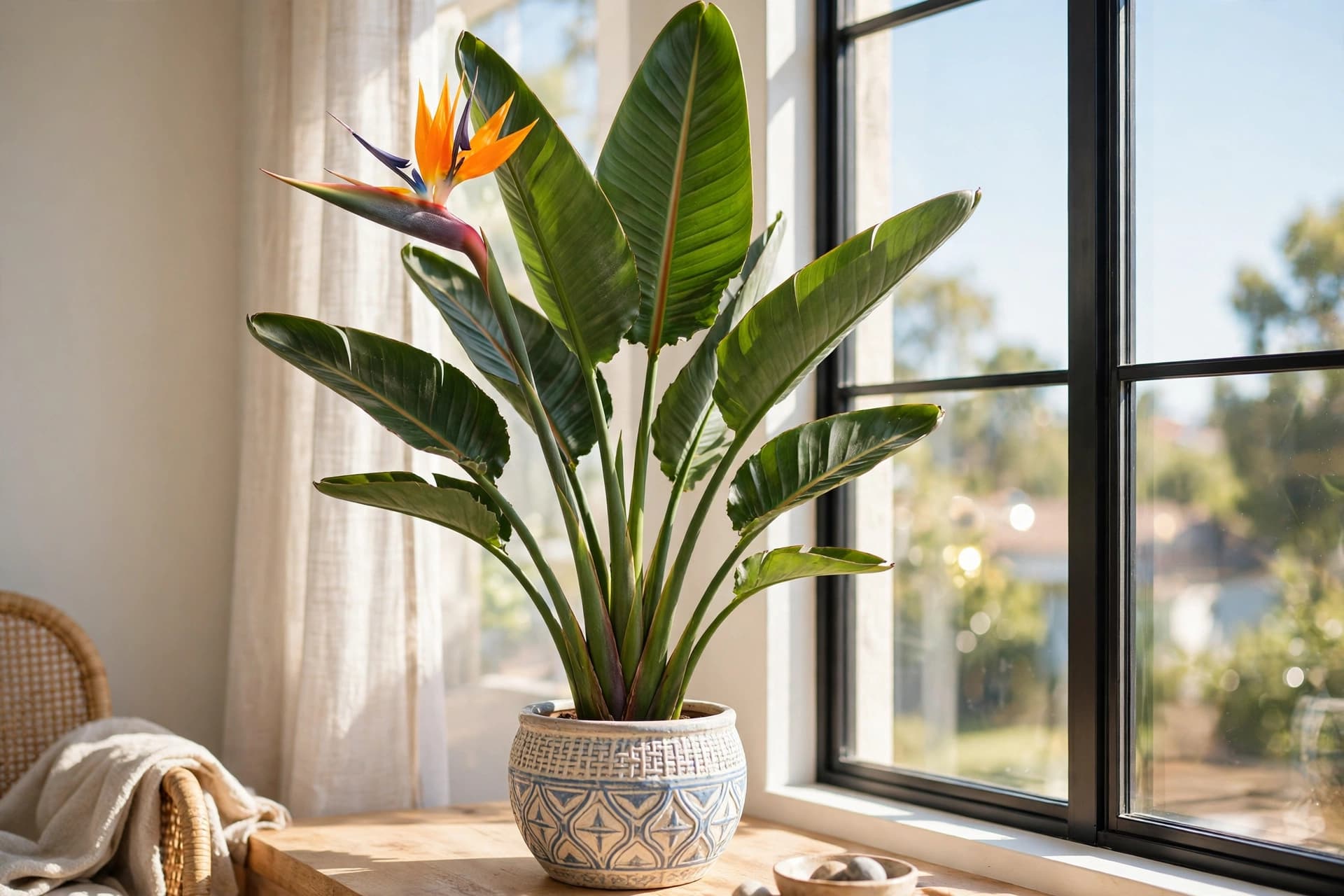
The bird of paradise is the plant people buy when they want one bold, dramatic corner in the room. Its tall stems and huge paddle-shaped leaves give a plain living room an instant tropical look, and the flower — when it comes — looks like an orange crane about to take off. In India it is grown mostly as a foliage plant indoors, and it rewards you when its few non-negotiables are met: the brightest light you have, free-draining soil, and watering only when the top soil has dried.
This guide is for anyone who has brought home a bird of paradise plant Plants or is planning to. It covers the two types sold in India, where to keep the plant, how to water and feed it, why the big leaves split on their own (it is normal), and how to fix the problems owners search for most.
What Is a Bird of Paradise Plant?
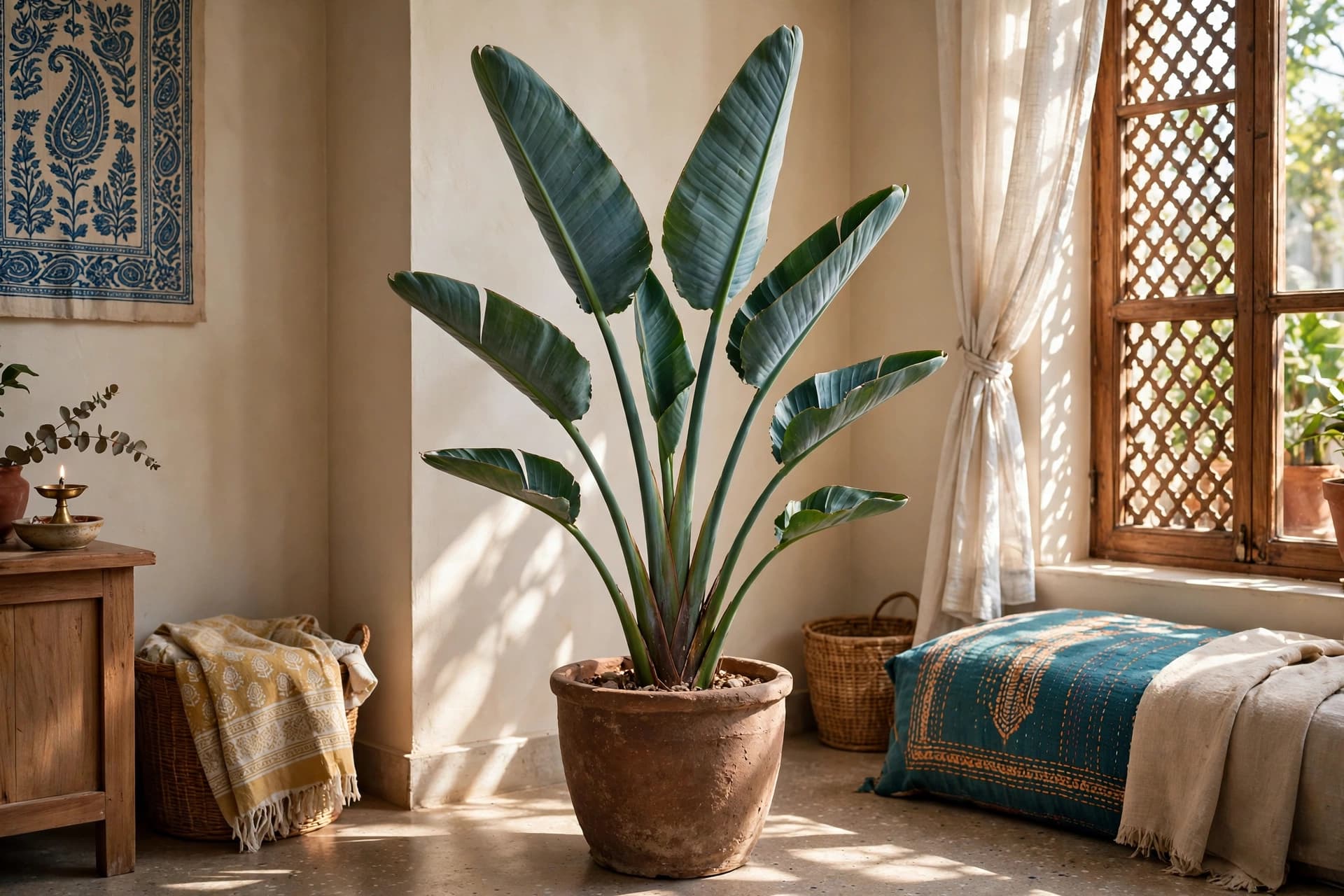
The bird of paradise (Strelitzia) comes from South Africa and is a relative of the banana plant, which is why the leaves look similar — but they are stiffer, more upright, and more blue-green than banana leaves. The leaves grow on long stalks from the base of the plant, and each new leaf rises rolled up like a spike from the centre before it unfurls. It is a slow grower, so a big specimen takes years, but it is also long-lived and can stay with you for decades.
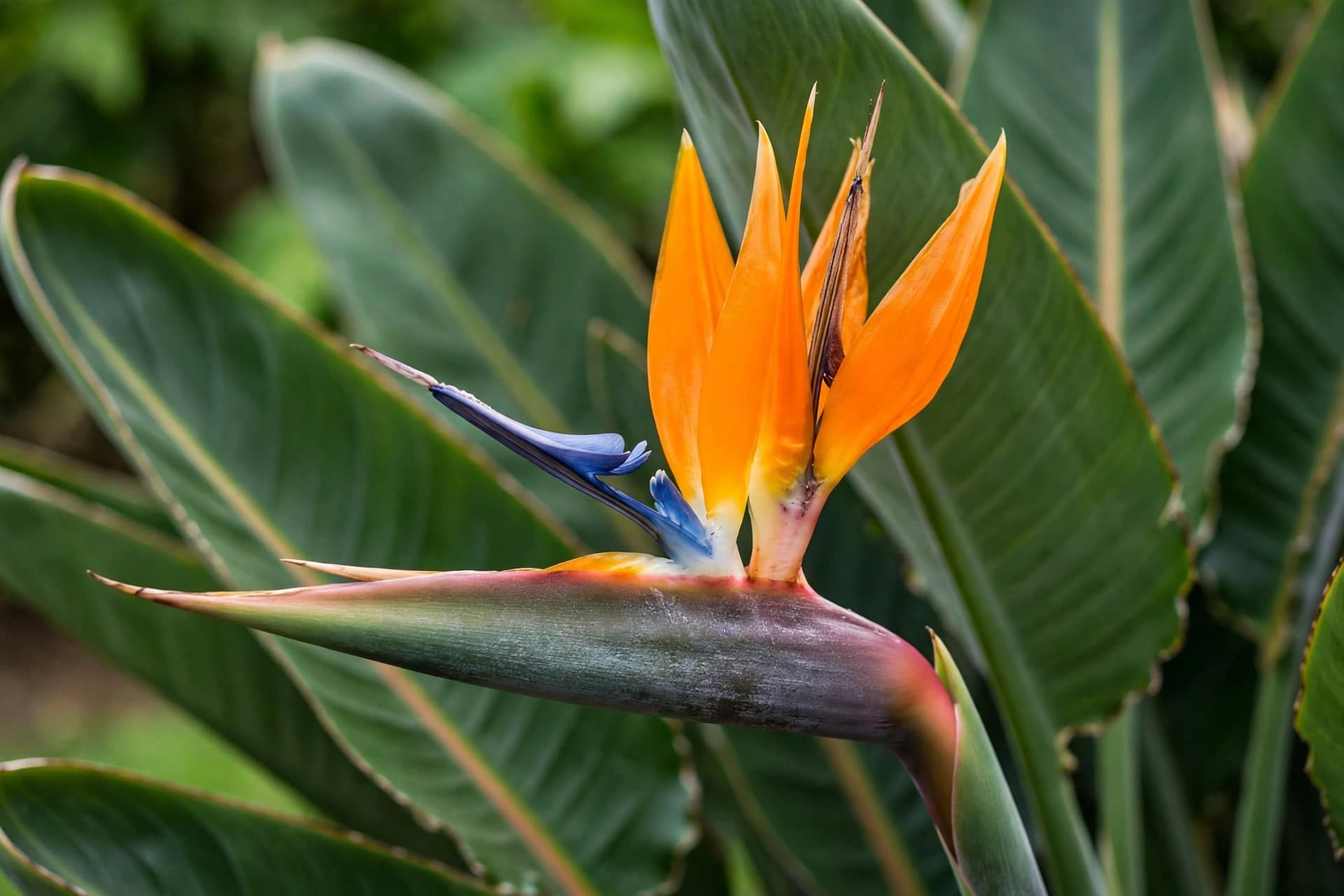
The plant is named after its flower, which resembles the head of a crane. One safety note: the leaves and stems are mildly toxic if chewed, so keep the plant away from pets and small children who nibble on leaves.
The Two Types of Bird of Paradise
Two types are sold in India, and knowing which one you have changes how much space you must plan for. Strelitzia reginae is the smaller, true flowering type. Strelitzia nicolai, the white bird of paradise, is a giant — and most of the large "indoor" bird of paradise plants sold in nurseries are actually nicolai. It grows beautifully as a foliage plant, but it will eventually touch the ceiling of a normal room, so give it your tallest corner from day one.
Type | Flowers | Size | Best For Strelitzia reginae | Orange and blue, crane-shaped | About 1.5–2 m tall | Sunny balconies and bright corners where you hope for flowers Strelitzia nicolai | White and pale blue | Giant — ceiling height indoors, far taller outdoors | Large living rooms and halls, as a bold foliage plant
Where to Keep a Bird of Paradise: Light Matters Most
Give this plant the brightest spot in your home — a south- or west-facing window, a sunny balcony corner, or the brightest end of the living room. It needs several hours of direct sun to stay compact and to have any hope of flowering. In a dim corner it will survive for a while, but the stems stretch, the leaves droop, and flowers never come.
Be honest with yourself about indoor flowers: flowering indoors in India is uncommon. A plant usually needs to be mature — at least 4–5 years old — well fed, and in strong light before it blooms, so indoors it is best enjoyed as a foliage plant, with any flower a bonus. Turn the pot a quarter every few weeks so all sides get light and the plant grows evenly, and shift it into stronger sun gradually over a week so the leaves do not scorch.
Soil and Pot for a Bird of Paradise
The roots are thick and fleshy and they hate sitting in water. Use a rich but free-draining potting mix Soil Potting Mix — a simple recipe is garden soil and compost for richness, with cocopeat, perlite, or coarse sand added so extra water runs out quickly. The pot must have drainage holes, and because a mature plant is tall and top-heavy, choose a large, sturdy pot Pots Planters that will not tip over.
One warning owners learn late: those thick roots grow with real force and can crack plastic and even terracotta pots as the plant becomes root-bound. If you see the pot bulging or a crack appearing, the plant is asking for a repot — do not ignore it.
Watering and Feeding a Bird of Paradise
Watering routine: Water when the top 4–5 cm of soil feel dry. Pour slowly until water runs out of the drainage holes, let the pot drain fully, and empty the saucer — the roots should never stand in water. A big plant near a sunny window in summer may need this once a week or more; in winter, water much less, only when the soil has dried well. Soil that stays soggy rots the thick roots, and that is the fastest way to lose this plant. Leaves curling inwards are the plant's thirst signal — check the soil before anything else.
Feeding: Those huge leaves are hungry work. Feed every 2–4 weeks through the growing season (roughly March to September) with a balanced plant fertiliser Plant Nutrients at the dose on the label. Stop or cut feeding right down in winter, when growth slows and extra feed only builds up salts in the soil.
Why Bird of Paradise Leaves Split — and Why It Is Normal
This is the most searched question about this plant, so here is the clear answer: the big leaves split along their side veins as they mature, and it is completely normal. In the wild, the splits let wind pass through the leaf instead of tearing the whole leaf off the plant. A leaf without splits is simply a young leaf. Splits are not a pest, not a disease, and not a sign that you are caring for the plant badly — please do not tape them shut or cut a healthy split leaf.
Keeping the leaves looking good
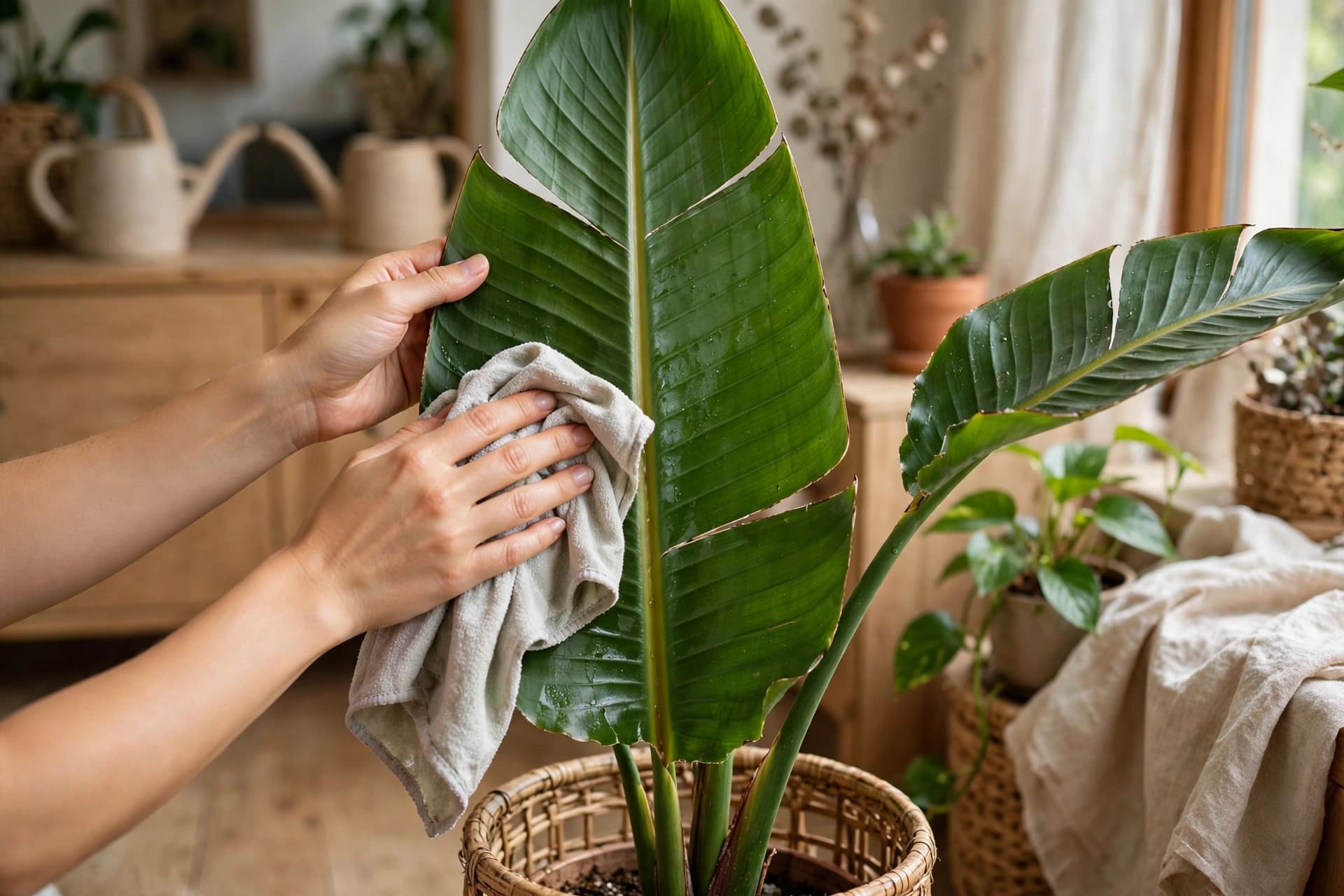
- Wipe the dust off each leaf with a soft, damp cloth about once a month — clean leaves take in light better and look glossy; a gentle leaf cleaning Plant Care is all they need.
- Give the plant open space so the leaves do not rub against walls or furniture, which tears them further.
- If a heavy stem leans, tie it loosely to a support instead of forcing it straight.
- Cut away only fully yellow or dead leaves, at the base of the stalk.
Repotting a Bird of Paradise
Water the plant a day before repotting so the root ball slides out more easily. Choose a new pot only one size bigger — about 5 cm wider — with drainage holes. Tip the pot on its side and ease the plant out; never pull it by the leaves.
Bird of Paradise Care by Season in India
Summer (March–June): This is the fastest growth period. Water more often, feed regularly, and give the plant as much light as you can. If it sits right against a hot glass window at noon and the leaf edges scorch, pull it back half a metre — it still gets bright light without the worst heat.
Monsoon (July–September): The plant enjoys the humid air, but the soil stays wet for long stretches. Water less, check that the drainage holes are not blocked, and if the pot is on a balcony, move it out of driving rain so the roots do not sit in water for days.
Winter (November–February): Growth slows right down, especially in North India. Water much less, stop feeding, keep the plant away from cold window draughts at night, and leave it in your brightest spot to make up for the weaker winter sun.
| Problem | Likely Cause | Fix |
|---|---|---|
| Leaves splitting along the veins | Normal growth — the splits let wind pass through the big leaves | Nothing to fix; it is the sign of a maturing leaf |
| Brown, crispy leaf edges | Dry air, salt build-up from fertiliser or hard water, or irregular watering | Keep watering steady, flush the soil with plain water, and trim only the dead brown part |
| Leaves curling inwards | Thirst, or strong heat | Water deeply, move the plant out of harsh noon heat, and check again the next day |
| No flowers | Too little light, or the plant is still young — flowering usually starts at 4–5+ years | Move it to the brightest spot with some direct sun, feed in the growing season, and be patient |
| Whole plant drooping | Soil bone dry — or the opposite, roots rotting in soggy soil | Check the soil first: water well if dry; if it is wet and sour-smelling, repot into fresh, draining mix and trim rotten roots |
| Oldest lower leaves turning yellow | Natural ageing of old leaves | Cut the spent leaf stalk at the base; new leaves keep coming from the centre |
Ready to Transform Your Green Space?
Get expert plant advice, garden design, and recurring maintenance service.
Ready to Create Your Own Garden?
Get expert help from Blooming Den to design, set up, and maintain a beautiful, low-maintenance green space.