
How to Get Rid of Mealybugs on Indoor Plants
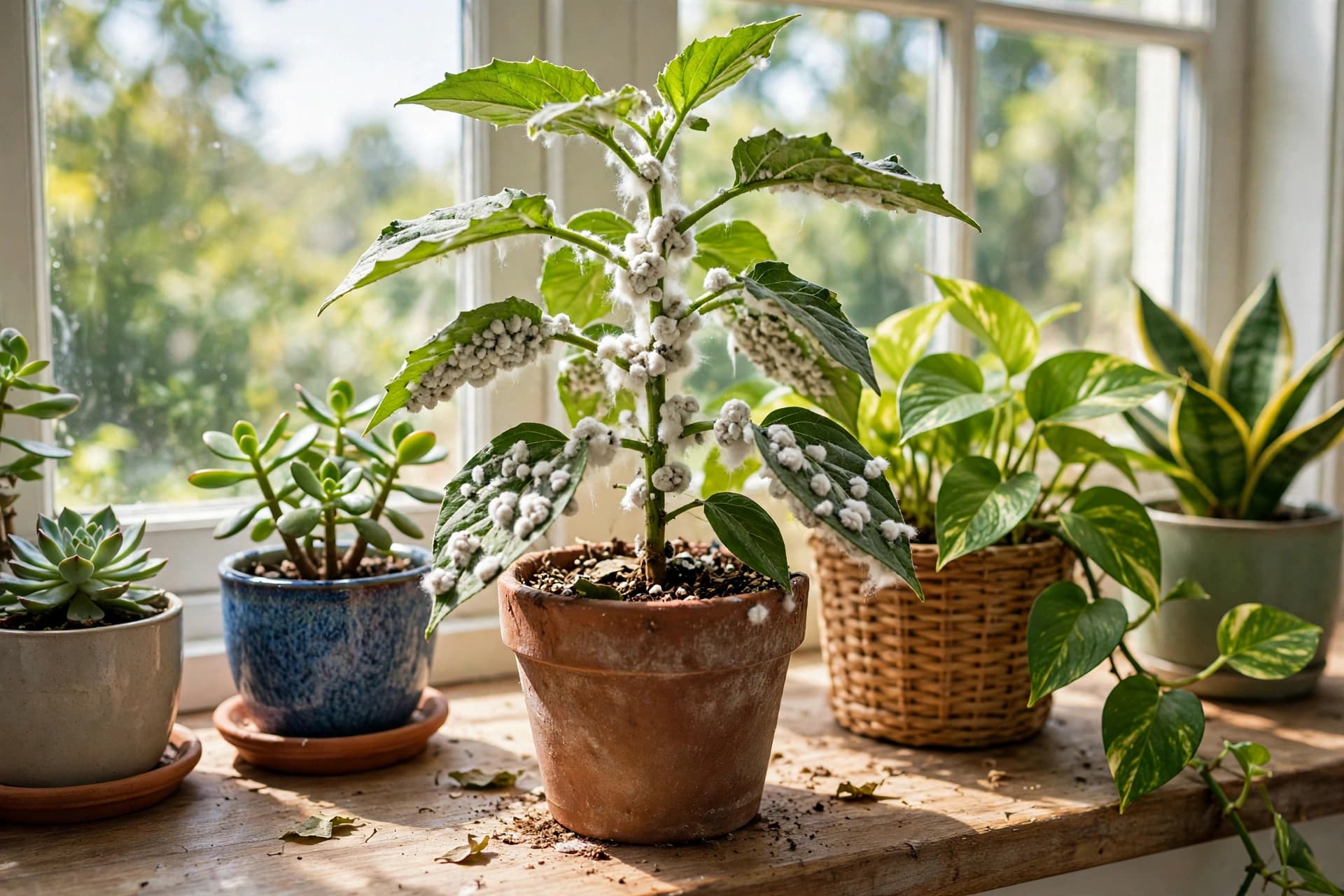
If you have noticed white, cottony clusters hiding under the leaves or along the stems of your indoor plants, you are almost certainly looking at mealybugs. These small, soft-bodied pests are one of the most common problems on houseplants in Indian homes, and they multiply quickly in warm indoor corners.
The good news is that you do not need strong chemicals to beat them. This guide explains how to get rid of mealybugs using simple methods — a cotton swab, a neem oil spray and a little patience — and how to stop them from coming back.
What Are Mealybugs and Why Do They Appear on Indoor Plants?
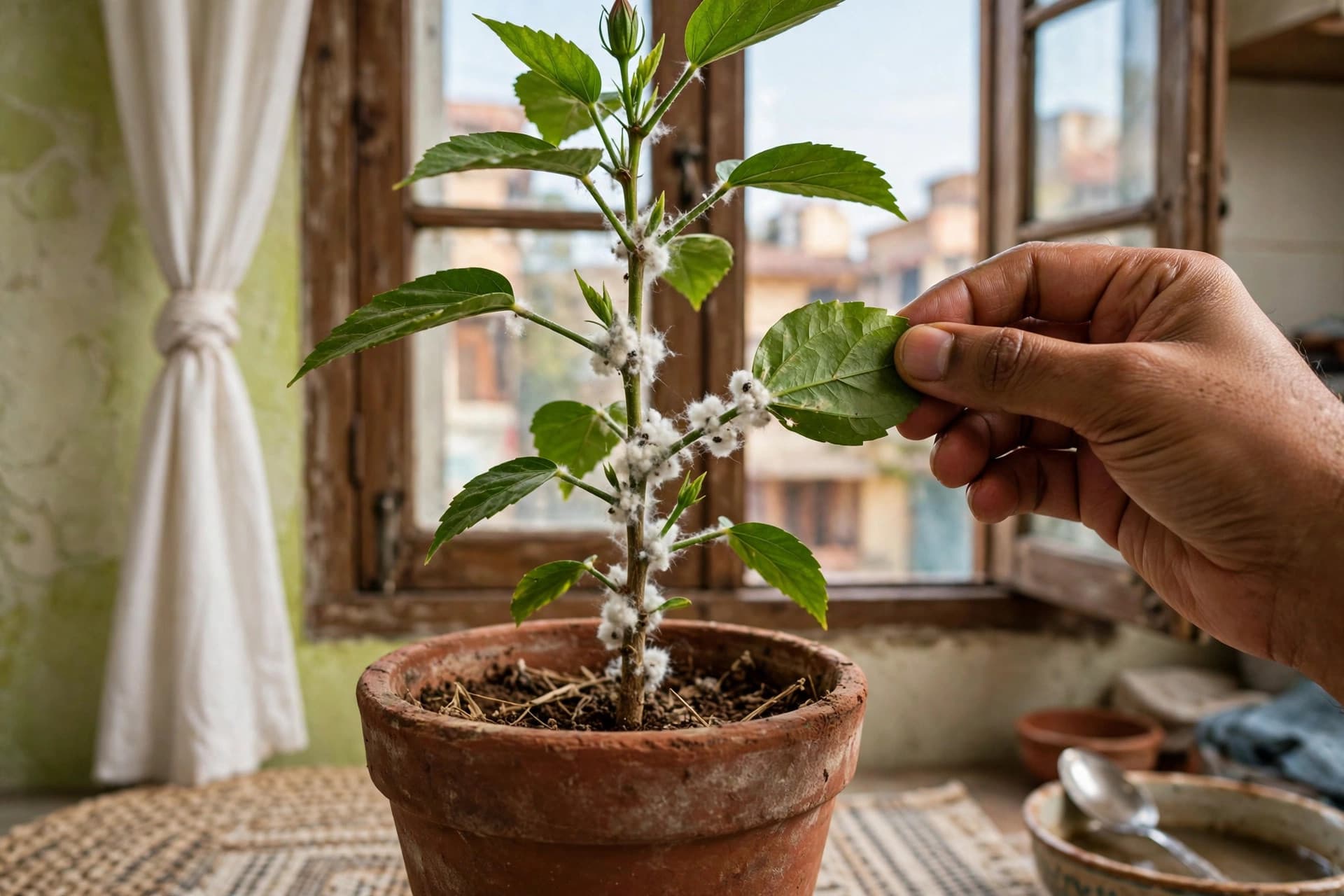
Mealybugs are tiny sap-sucking insects covered in a white, waxy, cotton-like coating that protects them from sprays and predators. They feed on plant sap, which weakens the plant, yellows the leaves and leaves behind a sticky residue called honeydew. They appear most often on plants kept in warm, crowded, low-airflow spots, and they spread easily from one plant to its neighbours — which is why one infested plant
How to Identify Mealybugs on Your Plants
- White cottony clusters where the leaf joins the stem, and under the leaves
- Sticky, shiny residue (honeydew) on leaves and on the floor below the plant
- Leaves turning yellow, curling or dropping without any change in watering
- Slow, stunted new growth even though the plant is being fed
- Ants moving on the plant — they farm mealybugs for the honeydew
How to Get Rid of Mealybugs: Step by Step
- Isolate the plant. Move it away from your other plants immediately so the
- mealybugs cannot spread.
- Remove them by hand. Dip a cotton swab or ear bud in rubbing alcohol (surgical
- spirit) or a little soapy water and dab every cluster. The mealybugs turn brown and
- come off easily.
- Prune the worst parts. If a leaf or stem tip is fully covered, cut it off and
- throw it in the dustbin — not on the soil.
- Spray with neem oil. Mix as given in the next section and spray the whole plant,
- especially under the leaves and along the stems.
- Repeat every 5–7 days for at least 3–4 weeks. Mealybug eggs are protected by the
- waxy coating, so one spray is never enough — the repeats catch the new ones as they
- hatch.
Neem Oil Spray for Mealybugs
Neem oil is the most reliable home treatment for mealybugs because it breaks their feeding and breeding cycle instead of just washing them off. Mix it fresh each time and always spray in the evening, so the leaves do not burn in direct sun.
- 5 ml (1 teaspoon) cold-pressed neem oil
- 1 litre of water
- A few drops of mild liquid soap, to help the oil mix with the water
- Shake well, spray the full plant, and use the mix the same day
How to Prevent Mealybugs from Coming Back
- Check new plants carefully before bringing them near your collection, and keep them
- separate for a week
- Wipe the leaves of your indoor plants every few weeks — mealybugs are easy to spot
- early on clean leaves
- Keep space between pots so air can move; crowded, still corners suit mealybugs best
- Do not over-feed with nitrogen-rich fertiliser — soft, lush new growth attracts
- them
- Check under the leaves whenever you water; two minutes of checking saves weeks of
- treatment
When a Plant Is Too Badly Infested to Save
If a plant is covered from base to tip, keeps re-infesting after a month of treatment, or has started rotting at the stem, it is better to throw it away than to risk your whole collection. Mealybugs also hide in roots below the soil, so for a valuable plant, unpot it, wash the roots clean and repot in fresh soil before you give up on it.
Ready to Transform Your Green Space?
Get expert plant advice, garden design, and recurring maintenance service.
Frequently Asked Questions
4 questions with expert answers
A: Remove every cluster with a cotton swab dipped in rubbing alcohol, then spray neem oil every 5–7 days for at least 3–4 weeks. The repeats are what make it permanent, because they kill the new mealybugs as the protected eggs hatch.
A: Yes. Neem oil smothers mealybugs and stops them feeding and breeding. Mix 5 ml of cold-pressed neem oil and a few drops of mild liquid soap in 1 litre of water, spray the whole plant including under the leaves, and repeat weekly.
A: Because their eggs and waxy coating protect them from a single treatment, and a few almost always survive hidden under leaves or in the soil. Treat for a full month, isolate the plant, and check neighbouring plants too — the comeback usually starts from one missed cluster.
A: Yes, very easily. The young crawlers move from plant to plant when leaves touch, and they can also travel on your hands, tools and watering can. Isolate an infested plant at once and wash your hands after handling it.
Ready to Create Your Own Garden?
Get expert help from Blooming Den to design, set up, and maintain a beautiful, low-maintenance green space.