
Mosquitoes in Plant Pots: How to Prevent Breeding in Standing Water
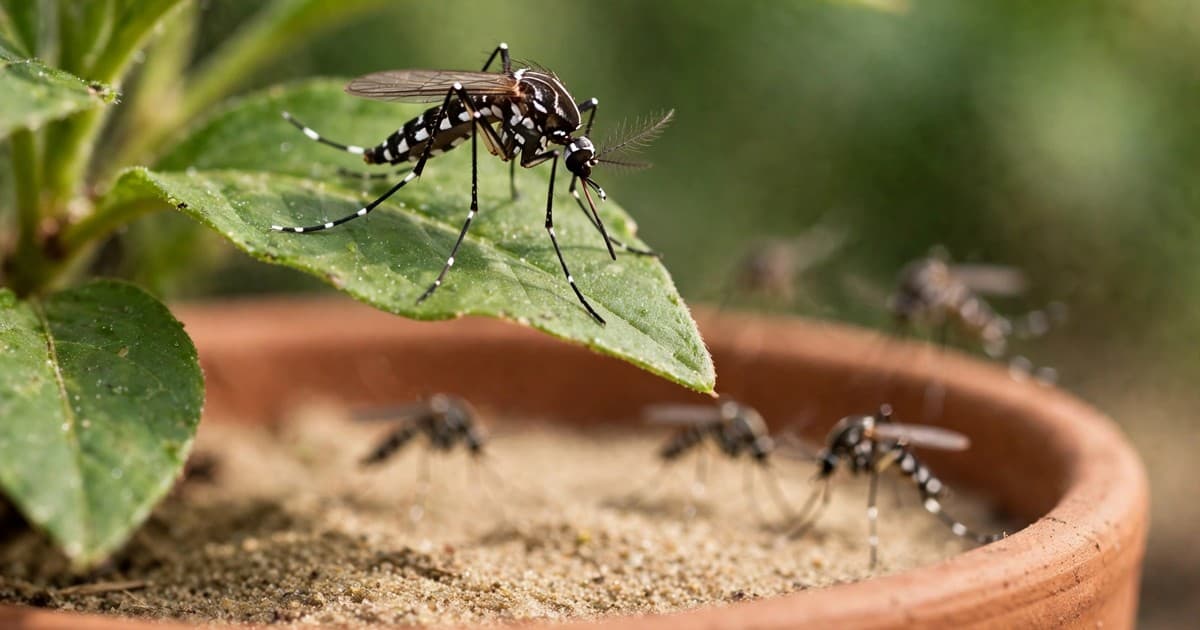
If mosquitoes appear around your balcony or terrace plants every evening, the source is often closer than you think. Mosquitoes do not need a pond or a puddle to multiply — the shallow water sitting in a plant pot saucer is enough for them to breed. In warm Indian weather, a mosquito can complete its whole life cycle, from egg to biting adult, in about a week to ten days. That means one ignored saucer can release a fresh batch of mosquitoes right outside your window. The good news is that this is one of the easiest garden problems to fix. This guide explains why mosquitoes breed in plant pots, where exactly to look, how to spot larvae before they grow wings, and the simple habits that stop breeding for good.
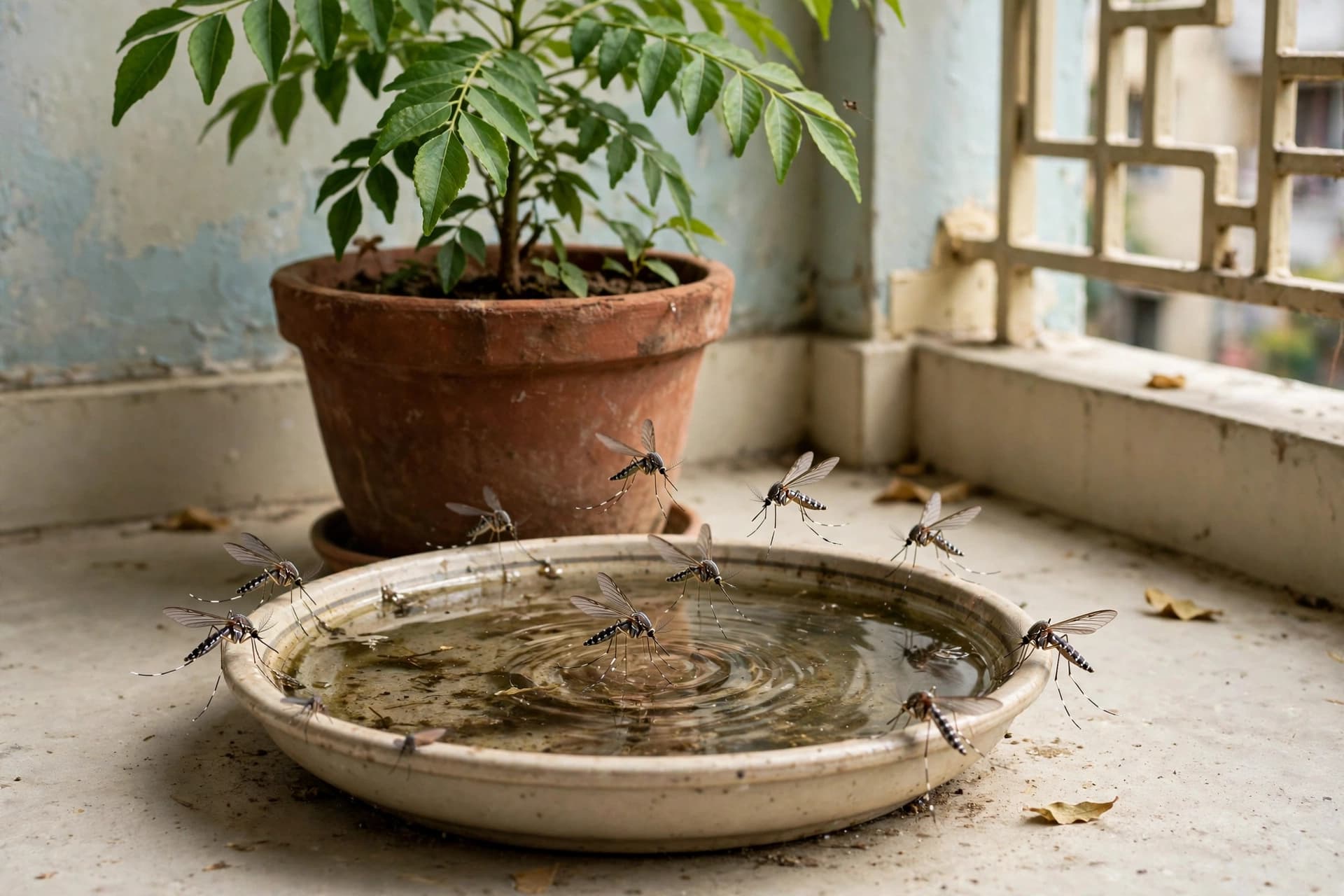
Why Do Mosquitoes Breed in Plant Pots?
A female mosquito lays her eggs on or near still water, because her young cannot survive on dry land. The eggs hatch into tiny larvae that live in the water, feed on the bits of organic matter in it, and hang just below the surface to breathe. After a few days they turn into pupae, and soon after, adult mosquitoes fly out. Plant pots offer everything this cycle needs: regular watering keeps saucers and trays topped up, the water is sheltered and undisturbed, and fallen leaves and soil wash add food for the larvae. Mosquitoes matter beyond the itching bites — in India they are known to spread illnesses such as dengue and malaria, which is why health authorities advise every household to remove mosquito breeding spots around the home. Checking your pots is a small step that protects your whole family, and it takes only a few minutes a week.
Where Mosquitoes Breed In and Around Your Pots
| Breeding spot | Why mosquitoes use it | What to do |
|---|---|---|
| Pot saucers and drip trays | Water collects here after every watering and is rarely disturbed | Empty and wipe dry every 2 to 3 days |
| Waterlogged soil surface | Soggy, slow-draining soil holds a film of water on top | Improve drainage and cover the surface with a sand layer |
| Self-watering pots and reservoirs | The hidden water store sits still for weeks | Check weekly; add a Bti tablet if larvae appear |
| Lotus bowls and water features | Open standing water kept permanently for the plant | Use Bti tablets and change the water weekly |
| Empty pots, buckets and watering cans kept outdoors | Rainwater collects inside them unnoticed | Store upside down or under cover |
| Blocked balcony drains and corners | Puddles form where water cannot flow away | Clear the drain and sweep puddles dry |
| Bromeliads and leaf cups | Water pools in the centre of the plant | Flush the centre cup with fresh water every week |
How to Spot Mosquito Larvae (Wrigglers)
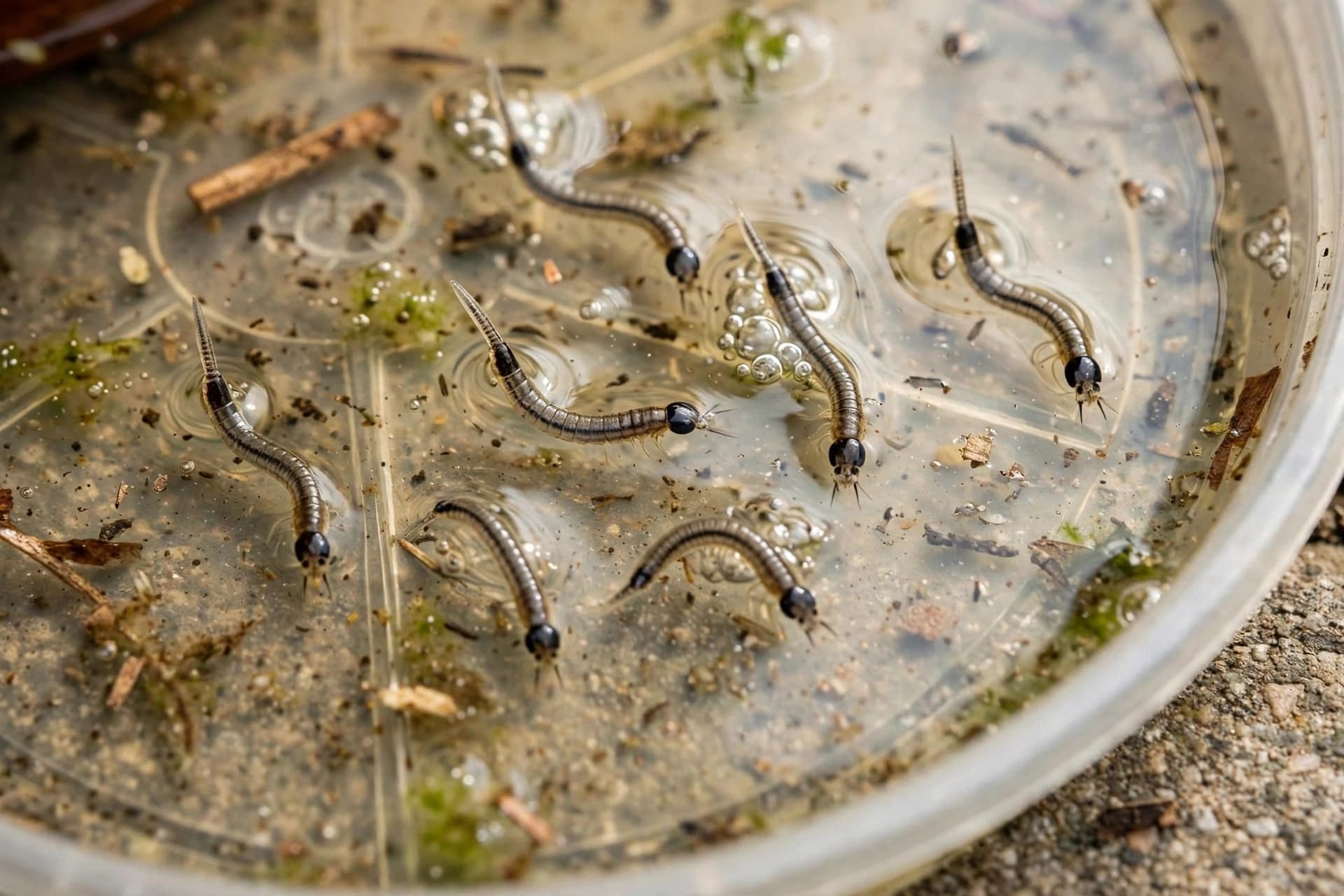
You do not have to wait for biting adults to know your pots are breeding mosquitoes — the larvae give them away. Look closely at any standing water in saucers, trays or bowls on a bright day. Mosquito larvae, often called wrigglers, are tiny worm-like creatures, usually 3 to 5 millimetres long, that hang upside down just below the water surface. When you tap the pot or move the tray, they wriggle down to the bottom in a quick, jerky motion and come back up after a few seconds. You may also see the rounder pupae, called tumblers, which roll in the water but do not feed. If you find either, act the same day: • Tip the water out onto dry ground or a sunny patch of soil, where the larvae cannot survive — never into another container or a drain that holds water. • Scrub and wipe the saucer or tray well, because mosquito eggs stick to the sides and can hatch when water returns. • Leave the container fully dry for at least a day before using it again. • Check every other pot, tray and corner the same day — breeding is rarely limited to one spot.
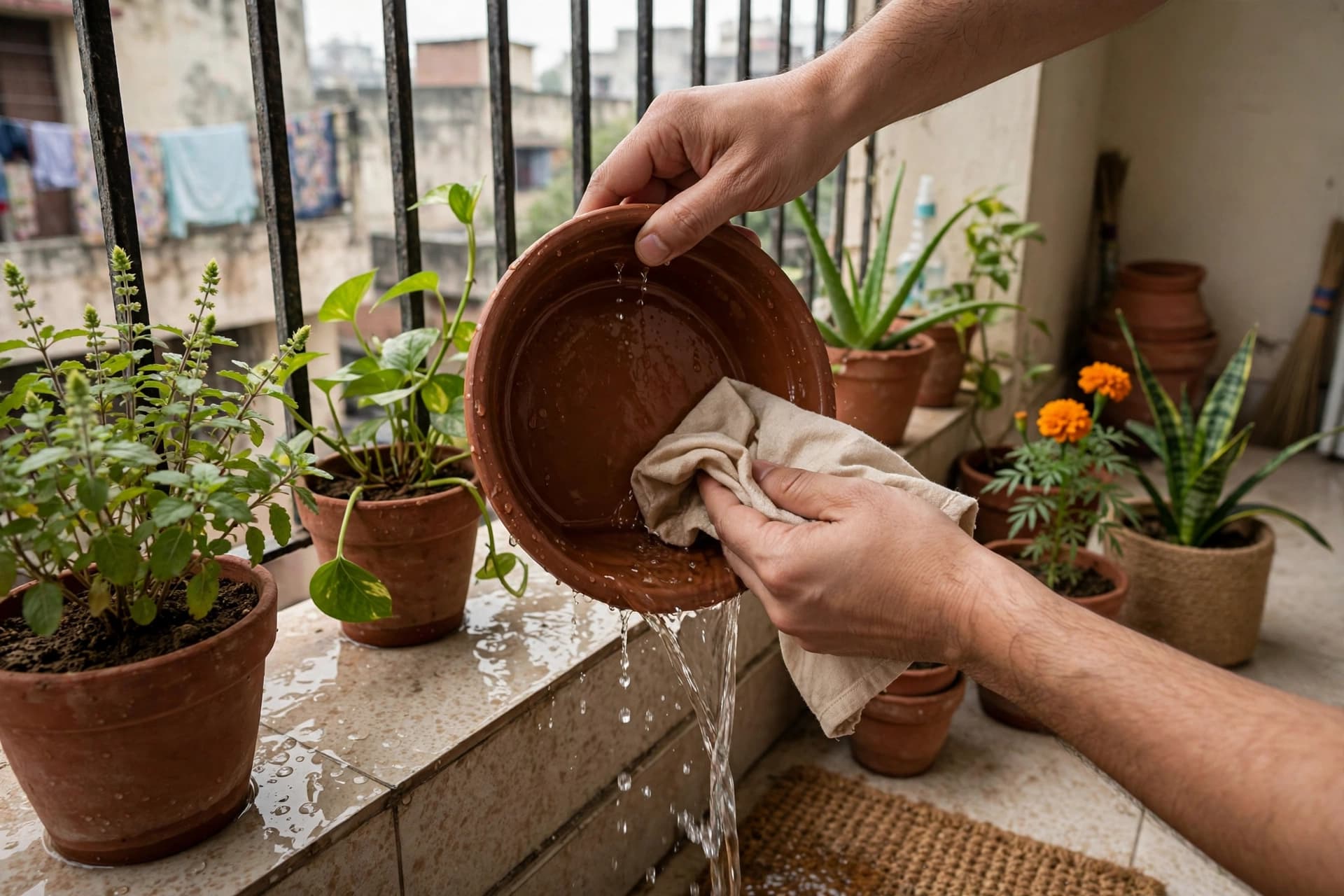
Step 1: Empty and Wipe Saucers Every Few Days
The single most effective step is also the simplest: never let water sit in a saucer for more than two or three days. After watering, let the pot drain for about half an hour, then tip out whatever water remains in the saucer or tray. Wiping matters as much as emptying. Aedes mosquitoes, the kind that spread dengue, lay eggs that stick to the inside walls of containers just above the waterline, and these eggs can survive dry for months and hatch the moment water touches them again. A quick scrub or a firm wipe with a cloth removes them. If your pots do not have saucers at all, even better — use pots with proper drainage holes and well-fitting saucers Pots Planters only where a tray is genuinely needed, such as on a windowsill or a wooden floor, and keep those trays on your emptying routine.
Step 2: Cover the Soil with Sand and Fix Drainage
Waterlogged soil is the second breeding ground. When a pot drains slowly, a film of water sits on the soil surface, and mosquitoes can use even that. Spread a layer of coarse sand, about 1 to 2 centimetres thick, over the soil surface. The sand dries out quickly after watering, so the surface stays dry between waterings and offers mosquitoes no place to lay eggs; it also keeps the soil below evenly moist and reduces fungus gnats. Along with the sand layer, fix the drainage itself: • Make sure every pot has drainage holes, and clear any hole blocked by roots or compacted soil. • Raise pots slightly on pot feet, bricks or a stand so water can flow out freely instead of pooling under the pot. • Use a free-draining potting mix Soil Potting Mix with cocopeat, compost and perlite or coarse sand instead of heavy garden soil that stays soggy. • Repot plants whose soil has become dense and waterlogged; fresh mix restores drainage at once. • After heavy rain, check pots kept in the open and tip out collected water the same day.
Step 3: Change Your Watering Habits
- Water in the morning, so extra water in saucers and on soil dries during the day instead of standing overnight.
- Water at the base of the plant, slowly, and stop as soon as water starts coming out of the drainage holes.
- Avoid light daily watering that keeps the top of the soil permanently wet; most plants prefer a thorough watering, then a short dry gap.
- Use a watering can with a narrow spout Gardening Tools so water goes into the pot, not all over the tray and floor.
- After watering a group of pots, make one quick round to empty every saucer — it takes two minutes.
- In the rainy season, when pots catch rain on their own, check saucers and trays every alternate day.
Bti and Neem: For Water You Cannot Empty
Some water cannot simply be thrown away — a lotus bowl, a bird bath, a water feature, or the reservoir of a self-watering pot. For these, Bti is the standard solution used in mosquito control. Bti (Bacillus thuringiensis israelensis) is a naturally occurring bacterium found in soil. In tablet or dunk form, it releases substances that kill mosquito larvae when they feed, and it is considered safe for plants, fish, birds, pets and people when used as directed on the label. Drop a tablet, or a piece of one sized for the container, into the water and replace it as the label advises, usually every few weeks. Neem is the other home-garden option: a neem-based spray on the soil surface, or neem cake worked into the top layer of soil, can help discourage mosquitoes from laying eggs, and it fits easily into a regular plant care Plant Care routine. Use neem as a support, not a substitute — for open standing water, Bti plus weekly water changes is the reliable combination.
Mosquito-Repellent Plants That Help
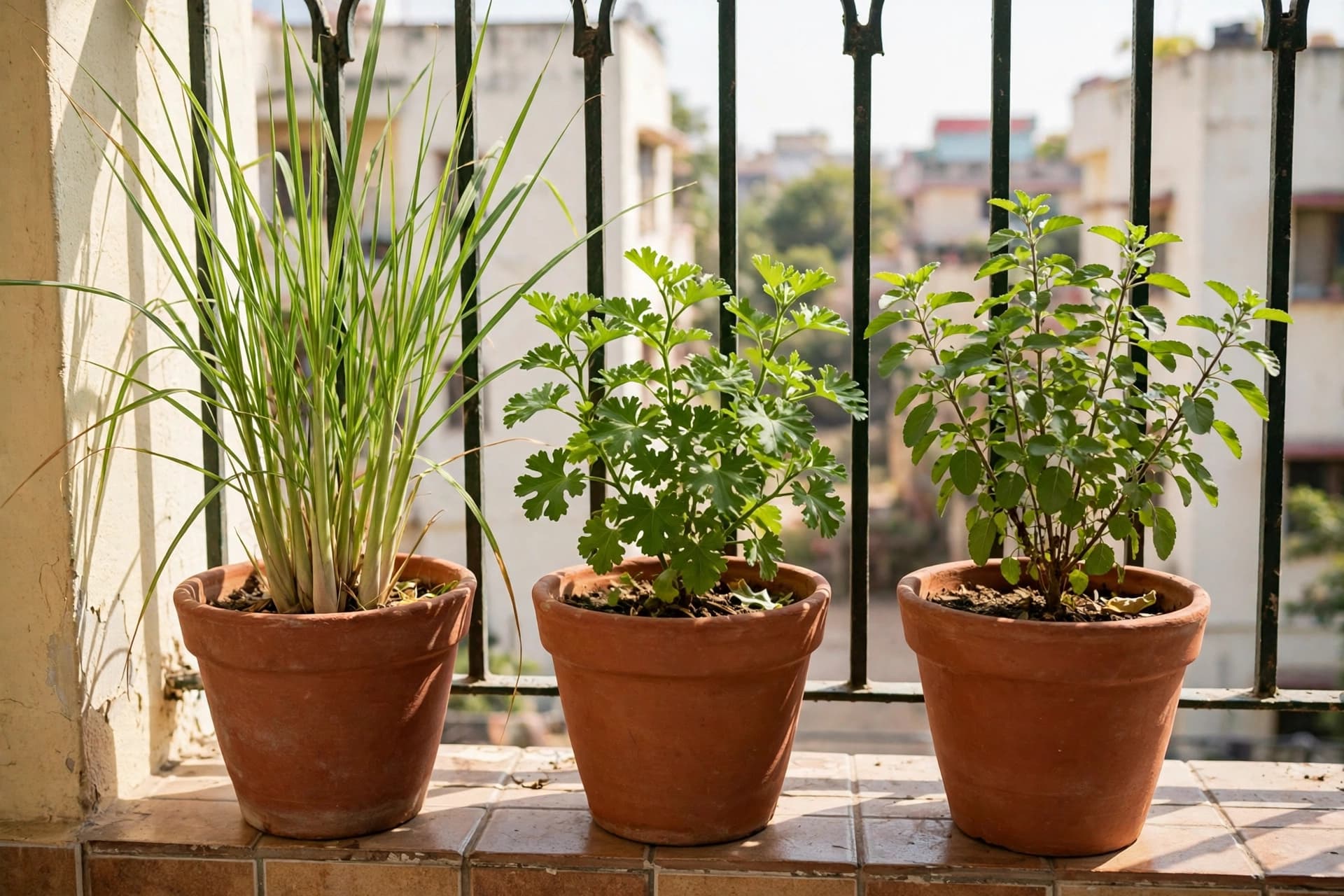
Some plants carry strong scents that mosquitoes dislike, and growing them near seating areas and doors adds one more layer of protection. Lemongrass is the best known — it contains citronella oil in its leaves. Citronella-scented geranium and tulsi are also popular choices for balconies and windowsills in Indian homes. Keep your expectations honest: a standing plant releases only a little of its scent, and the oils work mainly when the leaves are brushed or crushed, so these plants help most when you brush past them or rub a leaf. They cannot stop mosquitoes that are already breeding in your saucers. Think of lemongrass, citronella and tulsi Plants as support for the steps above, never a replacement for removing standing water — that is what actually ends the breeding.
A Simple Weekly Anti-Mosquito Routine for Your Pots: Prevention works best as a habit, not a one-time clean-up. Follow this simple routine and breeding never gets a chance to restart:
- Day 1: Water all pots in the morning; after half an hour, empty and wipe every saucer and tray.
- Mid-week: Walk the balcony or terrace once, checking saucers, reservoirs, empty pots and corners for standing water.
- Weekly: Look closely at any water that must stay — lotus bowls, bird baths, self-watering reservoirs — for wrigglers, and refresh Bti tablets when due.
- Weekly: Flush the centre cups of bromeliads and any leaf axils that hold water.
- After every heavy rain: Tip out rainwater collected in saucers, empty pots and buckets the same day.
- Once a month: Scrub saucers, trays and water containers properly to remove stuck eggs and algae.
Ready to Transform Your Green Space?
Get expert plant advice, garden design, and recurring maintenance service.
Ready to Create Your Own Garden?
Get expert help from Blooming Den to design, set up, and maintain a beautiful, low-maintenance green space.