
How to Grow Plants in Water: A Beginner’s Guide to Water Propagation
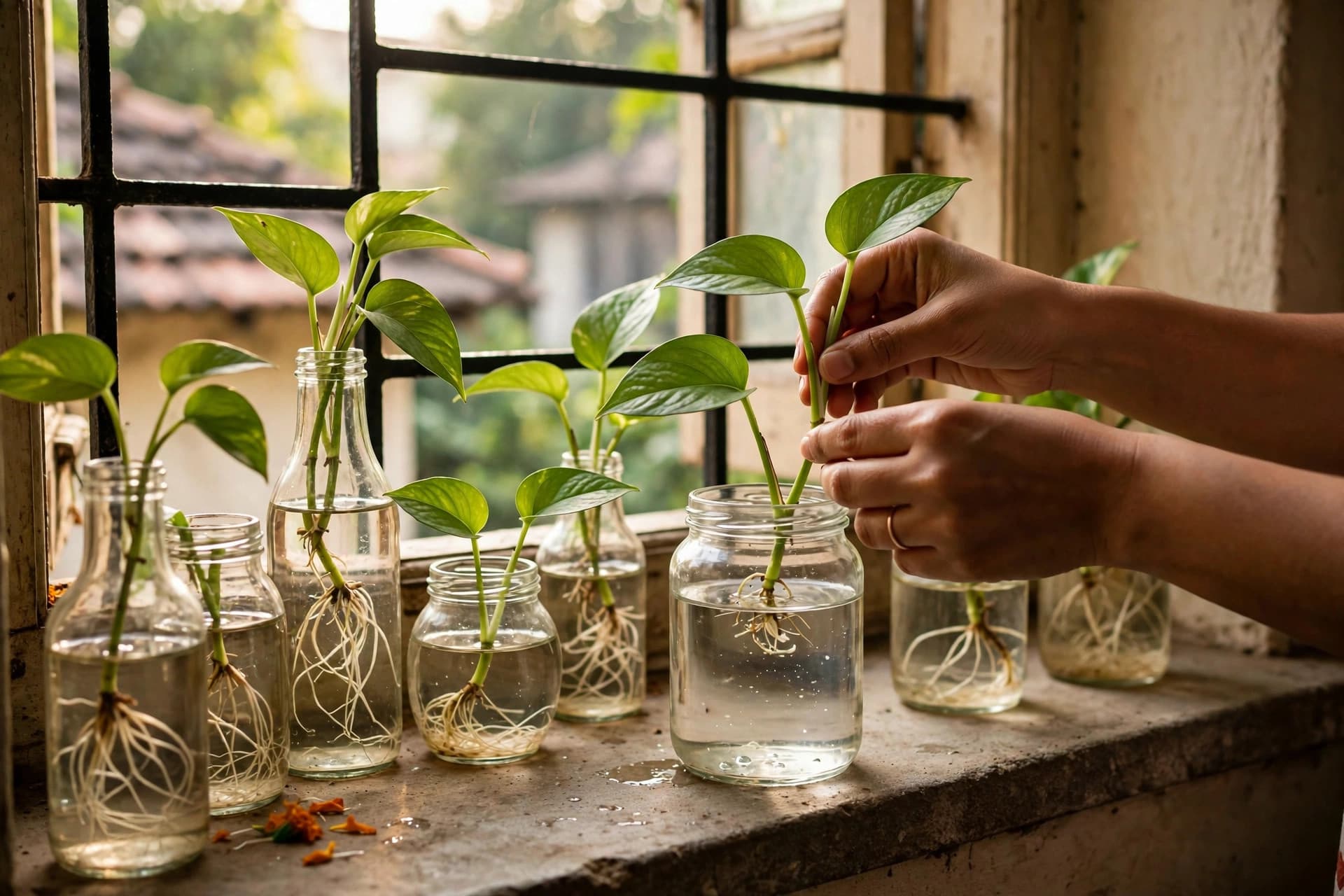
Have you ever noticed roots growing from a plant cutting placed in a glass of water? Water propagation is a simple way to grow new plants from healthy cuttings, and it is especially popular among indoor gardeners. It allows you to watch roots develop while keeping the process easy to observe. Not every plant can be propagated successfully in water, and a cutting that develops roots in water may need extra care if it is later moved into soil. In this guide, we'll explain how water propagation works, which plants are suitable, how to prepare cuttings, how to care for developing roots, and what to do when a cutting begins to rot.
What Is Water Propagation?
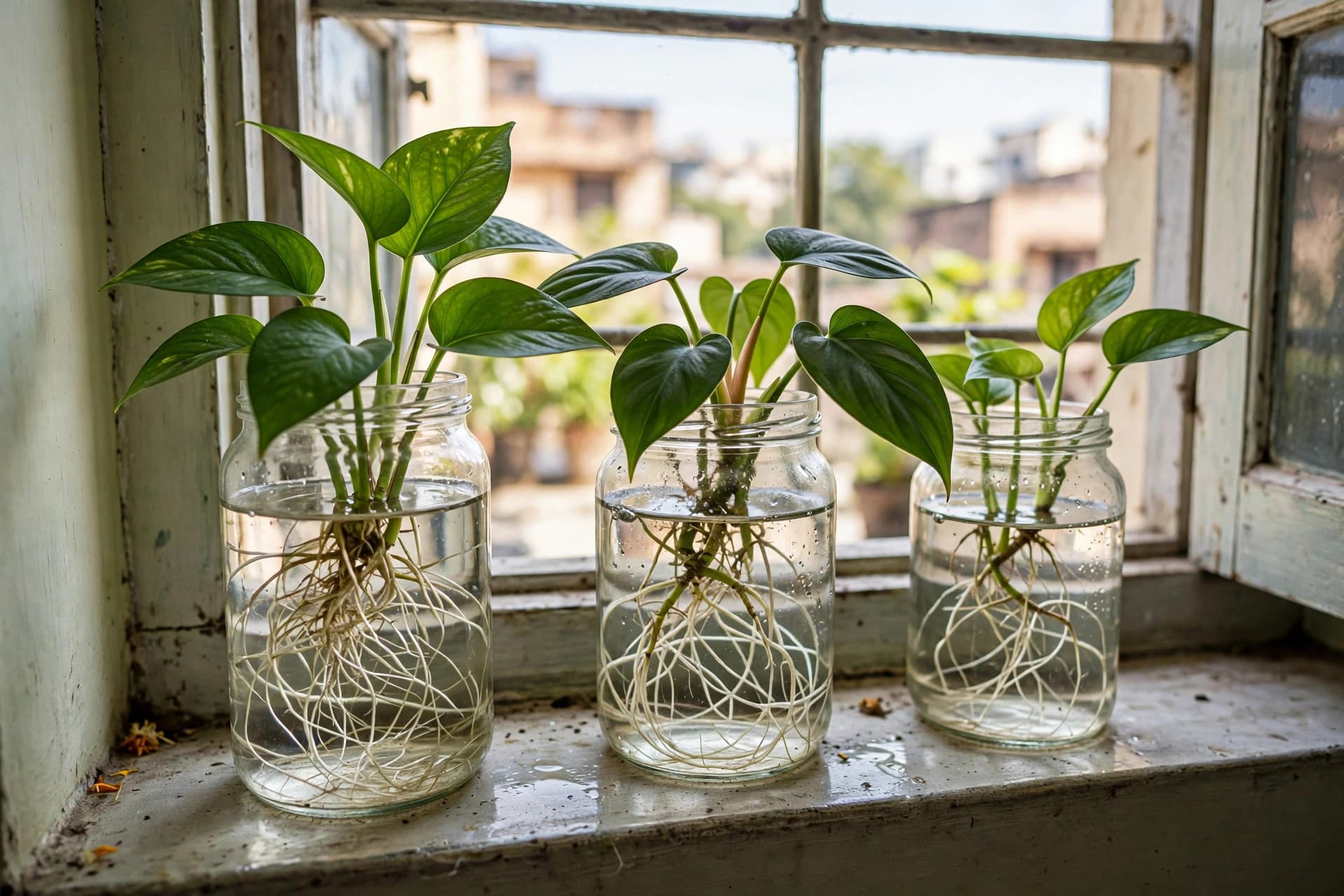
Water propagation is a method of growing new plants from cuttings by placing part of a stem or another suitable plant section in water. Under the right conditions, roots begin to develop from the cutting. Many common houseplants can be propagated this way. However, the method depends on the plant's natural growth habit. Some plants root readily from stem cuttings, while others require division, seeds, or a different propagation method. Water propagation is useful for observing root development, but it does not automatically mean the plant can live in water forever. Long-term water culture requires suitable conditions and, for many plants, a source of nutrients.
Benefits of Growing Plants in Water
Root development can be observed through a clear container • It is a convenient way to propagate suitable houseplants • Small cuttings can be started without immediately preparing a pot of soil • Clean containers make it easier to notice changes in the roots • Water propagation can be a useful learning activity for beginners • It can help gardeners create new plants from healthy parent plants
Plants That Can Often Be Propagated in Water
| Plant | Propagation Note | Care Reminder |
|---|---|---|
| Money plant / Pothos | Take a stem cutting with at least one suitable node. | Keep the node in water and the leaves above it. |
| Heartleaf Philodendron | Use a healthy stem section with a node. | Provide bright, indirect light. |
| Tradescantia | Healthy stem cuttings can often root readily. | Avoid allowing the cutting to become overcrowded. |
| Coleus | Take a healthy stem cutting from a suitable growing tip. | Remove leaves that would sit below the waterline. |
| Spider plant | Plantlets may develop roots in water. | Move to a suitable growing medium when established, if desired. |
What You Need for Water Propagation
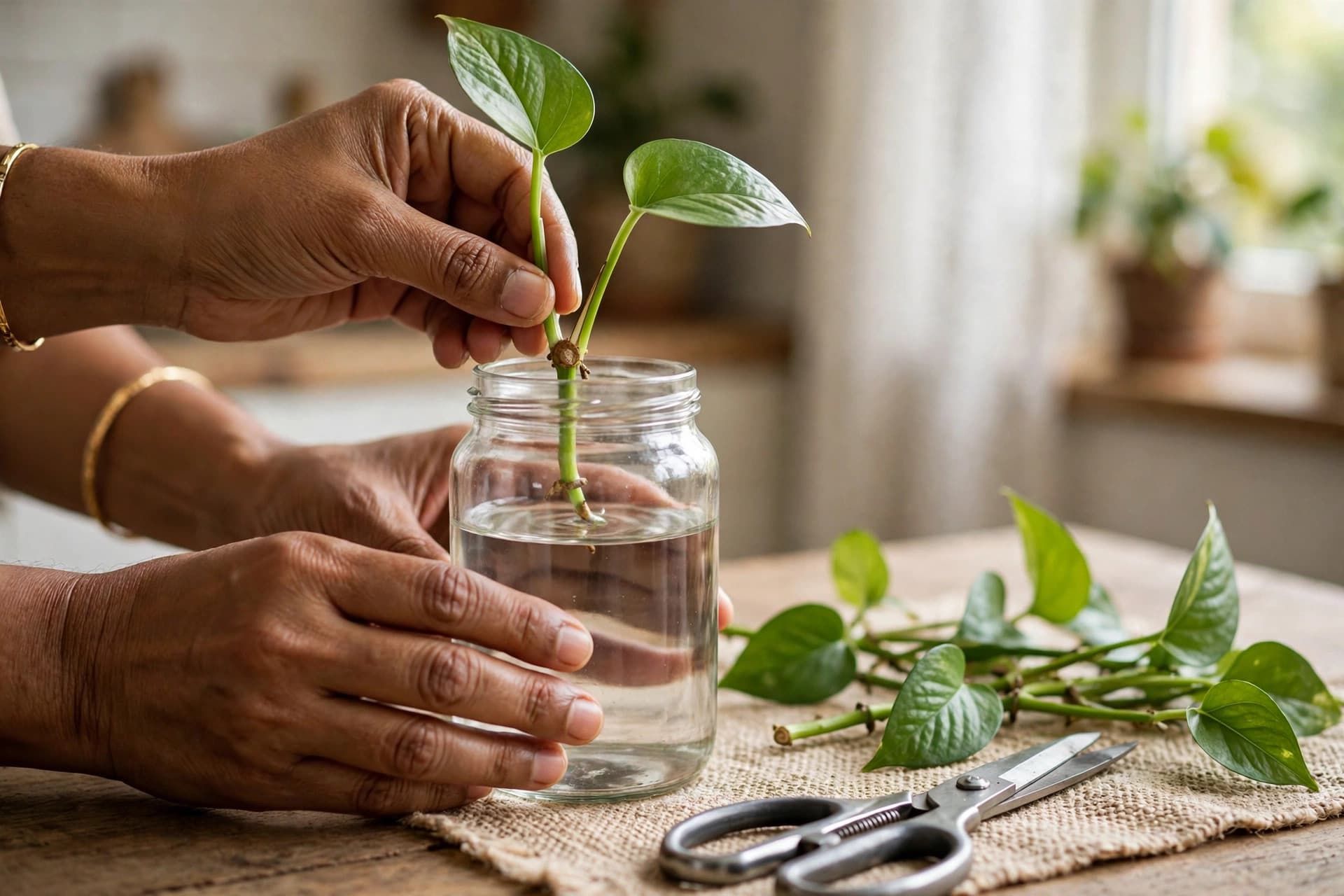
You will need: A healthy parent plant suitable for propagation • Clean, sharp scissors or pruning shears • A clean glass jar or container • Fresh water suitable for your plants • A bright location with indirect light • A clean surface for preparing the cutting Choose a container that supports the cutting without crushing it. A narrow-necked glass can help keep the stem upright, while a wider container may be useful for several cuttings. Avoid containers that are difficult to clean.
Step-by-Step: How to Grow Plants in Water
- 1. Choose a healthy parent plant: Select a plant that is growing well and does not show signs of pests, disease, or severe stress.
- 2. Identify a suitable cutting: For plants propagated from stem cuttings, choose a healthy section with a node. A node is the point on the stem where a leaf or root may develop.
- 3. Make a clean cut: Use clean, sharp scissors or pruning shears. Avoid crushing or tearing the stem.
- 4. Prepare the cutting: Remove leaves that would be submerged in water. Keep healthy leaves above the waterline where possible.
- 5. Place the cutting in water: Position the cutting so that the appropriate node is submerged. Do not submerge the entire stem or leave leaves sitting in the water.
- 6. Choose a suitable location: Place the container in bright, indirect light. Avoid harsh direct sunlight that may overheat the water or stress the cutting.
- 7. Check the cutting regularly: Inspect the water, stem, and roots. Refresh the water when it becomes cloudy or dirty, and clean the container if needed.
How to Care for Cuttings While Roots Develop
| Care Area | What to Do |
|---|---|
| Water | Keep the rooting node submerged and refresh cloudy or dirty water. |
| Light | Provide bright, indirect light suitable for the plant. |
| Temperature | Avoid cold drafts, hot windowsills, and sudden temperature changes. |
| Container | Keep it clean and check for algae or residue. |
| Roots | Handle gently; developing roots can be fragile. |
| Problem | Possible Cause | What to Check |
|---|---|---|
| Cutting becomes soft | Stem deterioration or rot | Remove damaged tissue and inspect the remaining cutting. |
| Water becomes cloudy | Organic residue or microbial growth | Refresh the water and clean the container. |
| No roots appear | Unsuitable cutting, plant type, or conditions | Check whether the plant can be propagated from that type of cutting. |
| Leaves wilt | Stress, water loss, or damaged stem | Inspect the stem and adjust the environment. |
When Should You Move a Water-Rooted Plant into Soil?
There is no single root length that works for every plant. Some cuttings can be transferred when they have several healthy roots, while others benefit from more development before transplanting. If you decide to move a cutting into soil, choose a suitable pot with drainage holes and a growing medium appropriate for the plant. Keep the medium evenly moist during the adjustment period without leaving it waterlogged. Transplanting tips: Handle the new roots carefully • Use a clean pot with drainage holes • Choose a growing medium suitable for the plant species • Keep the plant in suitable light while it adjusts • Avoid fertilizing immediately after transplanting unless the plant's care requirements indicate otherwise
Can Plants Live in Water Permanently?
Some plants can adapt to long-term water culture, but a cutting that is simply rooted in water is not necessarily ready for permanent water growing. Plants need access to nutrients, oxygen around their roots, and suitable environmental conditions. Long-term water culture may require a suitable nutrient solution and careful monitoring. Do not add random fertilizers or household ingredients to the water, as they may damage the plant or encourage unwanted growth.
FAQ
References University of Illinois Extension – Gardening Resources: Gardening University of Minnesota Extension – Houseplants: Houseplants
Frequently Asked Questions
5 questions with expert answers
A: Rooting time varies by plant species, cutting condition, temperature, and light. Some cuttings may root relatively quickly, while others take several weeks or longer. Check the plant's propagation requirements rather than relying on a fixed timeline.
A: Not necessarily. Check the water regularly and refresh it when it becomes cloudy, dirty, or depleted. Keep the container clean and avoid unnecessary disturbance of developing roots.
A: Water quality varies by location. Many plants tolerate ordinary household tap water, while some are sensitive to particular minerals or treatment residues. If a plant shows problems, check its specific water requirements.
A: Some plants can grow from leaf cuttings, while others need a stem section or node. The method depends on the species, so identify the plant before choosing a propagation technique.
A: Healthy roots generally do not need to be trimmed simply because they developed in water. Avoid unnecessary cutting and handle them gently during transplanting.
Ready to Create Your Own Garden?
Get expert help from Blooming Den to design, set up, and maintain a beautiful, low-maintenance green space.