
How to Revive Plants After Diwali: A Smoke, Soot and Dust Recovery Guide
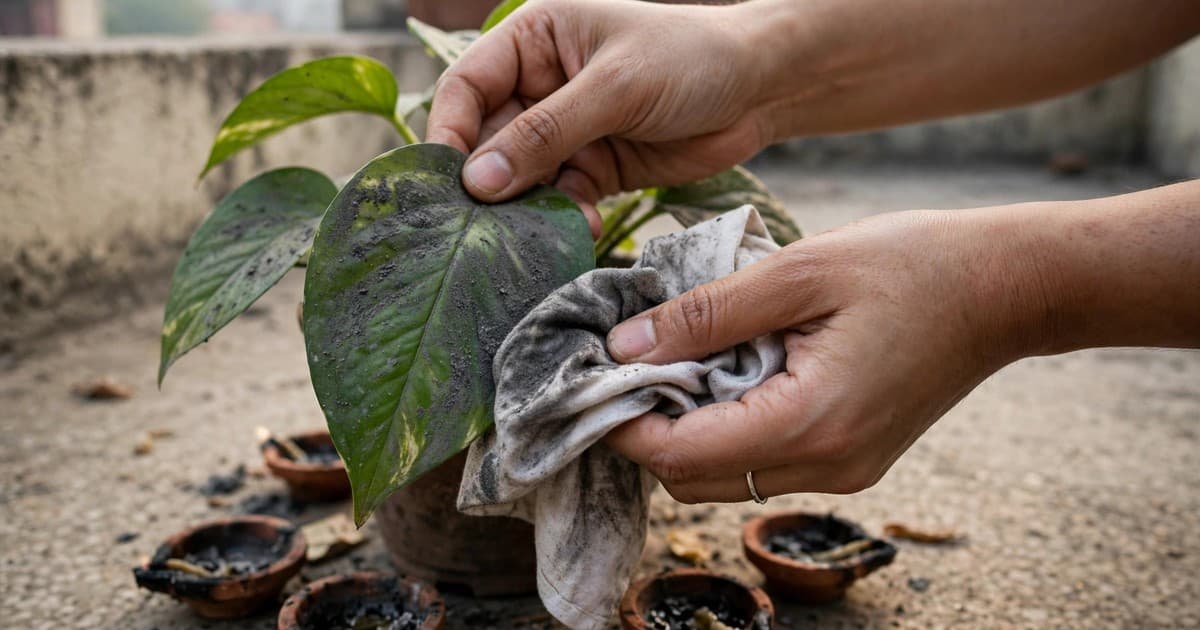
Diwali falls on Sunday, 8 November 2026 this year, with Dhanteras on 6 November and Bhai Dooj on 11 November. Keep this guide ready for the morning after the festival, because that is when your plants need you most. Firecracker smoke, soot and dust settle on leaves overnight, and a few simple steps taken early can make the difference between a plant that bounces back and one that keeps dropping leaves for weeks.
Learning how to revive plants after Diwali is mostly about doing things in the right order. First clean the leaves, then check the damage honestly, then water, feed and prune with restraint. Plants stressed by smoke do not need a sudden burst of fertiliser or a hard prune on day one. They need clean leaves, steady water and time.
Delhi's air is already poor before the festival: on the morning of 2 November 2026, Delhi's air quality index was reported at 278, very unhealthy, with PM2.5 the main pollutant. Repeat the gentle cleaning steps through festival week rather than doing them once.
How to revive plants after Diwali smoke?
Start the morning after Diwali by rinsing or wiping every leaf, checking stems and soil, and moving the worst-affected plants to bright, sheltered light. Clean leaves can photosynthesise again, which is the real engine of recovery.
First, look before you touch anything. Check for a grey or black film on leaves, curled edges, brown tips, sudden leaf drop and ash on the soil surface. Delicate plants such as ferns, orchids and young seedlings usually show damage first, while hardy plants such as money plant, snake plant and bougainvillea often shrug off a light coating.
How to clean soot off plant leaves safely?
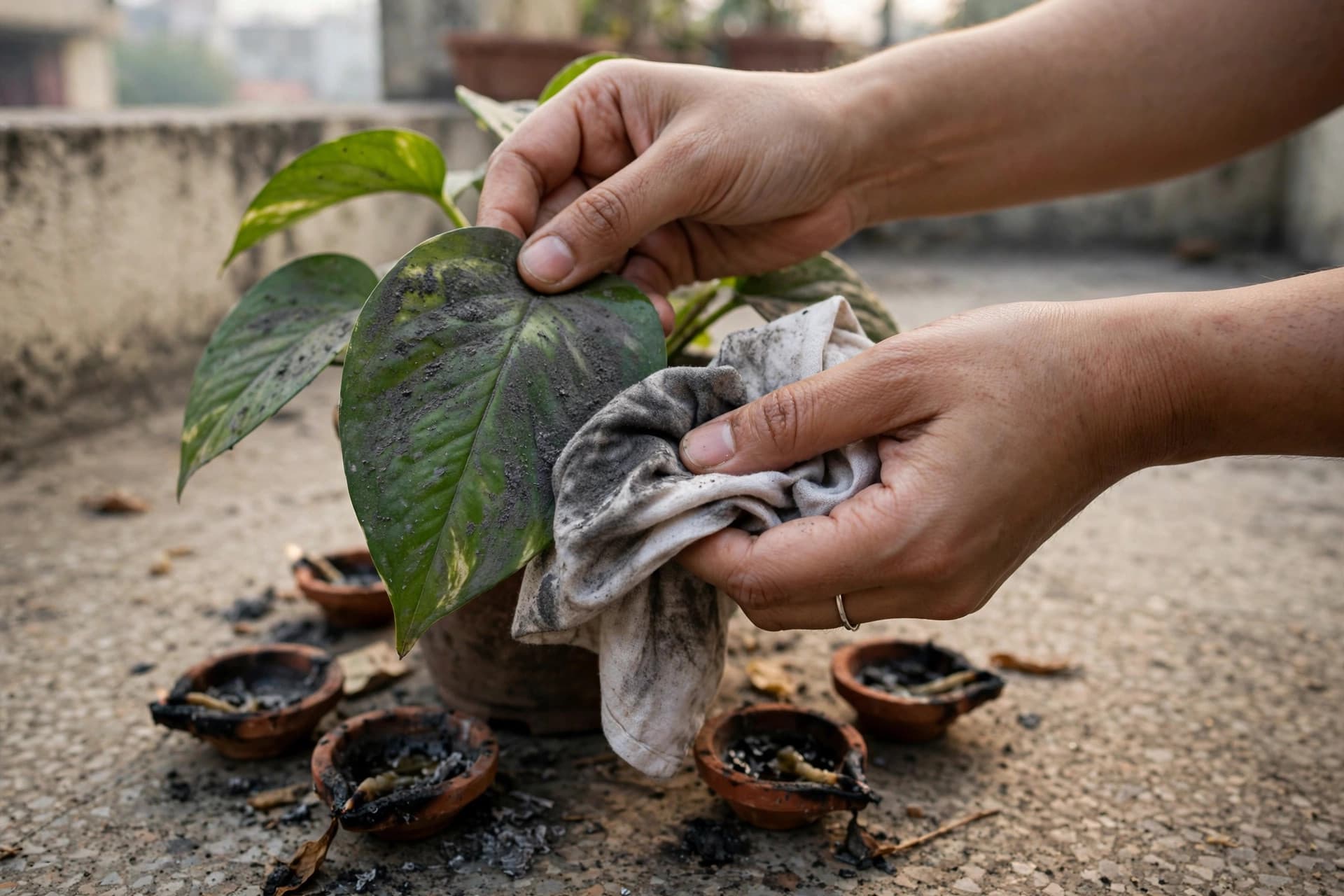
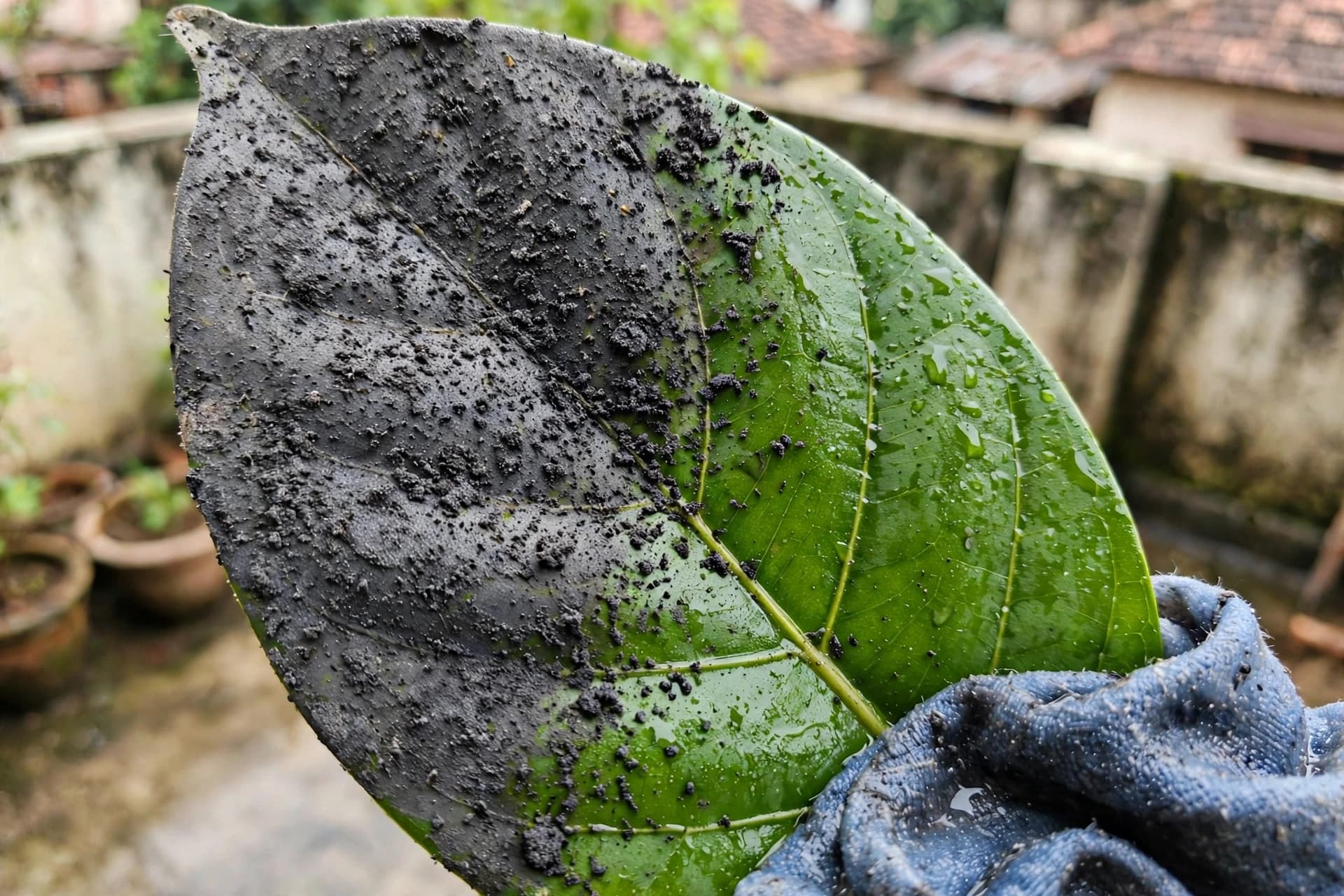
Wipe or rinse leaves gently with plain water, and never use detergents, phenyl or harsh cleaners on foliage. Soot blocks light and clogs the tiny pores on leaves, so removing it matters more than any tonic you could buy.
For indoor plants and small pots, wipe each leaf, top and underside, with a soft cloth dampened in plain water. For sturdy outdoor plants, a gentle shower from a watering can or hose on a soft setting works well, but keep the pressure low so you do not tear leaves or wash soil out of the pot. Fuzzy leaves trap soot more stubbornly, so wipe them patiently rather than scrubbing. Let leaves dry in bright, indirect light, not harsh midday sun, which can scorch wet, stressed foliage.
Should you water plants more after smoke exposure?
Water normally, based on what the soil actually feels like, and do not flood a stressed plant. Smoke damage is above ground, so drowning the roots only adds a second problem.
Push a finger about an inch into the soil. If it feels dry at that depth, water thoroughly until a little drains from the bottom, then empty the saucer. If it is still damp, wait. In Delhi's dry, clear early-November weather, with days around 28–29°C and nights around 16–18°C, most balcony pots dry out within a day or two, but shaded indoor pots stay damp much longer. Check daily for the first week rather than following a fixed schedule.
Hold off on fertiliser for at least a week after heavy smoke exposure. A stressed plant cannot use extra feed well, and strong fertiliser on dry or damaged roots can burn them. When you do feed again, use a mild dose of vermicompost or balanced liquid feed at half strength, and only if the plant is already showing firm leaves or tiny new buds.
When should you prune damaged leaves after Diwali?
Prune only leaves that are clearly dead, and wait a few days before cutting anything that is merely discoloured. Leaves that are partly green are still feeding the plant, even if they look untidy.
After three or four days, snip off leaves that have turned fully brown, black or crisp, cutting just above a healthy leaf joint with clean, sharp scissors. Do not cut back whole branches in the first week unless a stem is snapped or clearly dead and mushy. If you are unsure whether a stem is alive, scratch a tiny patch of bark gently: green underneath means it is still alive. Clean scissors between plants so you do not spread infection from damaged tissue.
How long do plants take to recover from smoke damage?
Most lightly affected plants improve within one to two weeks, while heavily coated or scorched plants may take three to four weeks to push out new growth. Judge recovery by new leaves, not by old leaves looking perfect again
Keep a simple routine for the first fortnight: inspect leaves every two or three days; wipe them again if fresh dust settles; keep plants in bright, indirect light sheltered from cold night winds; water only when the top inch of soil is dry; and do not repot a weakened plant in the first week.
A plant that keeps dropping leaves after two weeks, or whose stems turn soft and smell bad, may have root damage or rot rather than smoke damage alone. Check the roots: white and firm is healthy, brown and mushy is not. Trim only rotted parts, repot into fresh, well-draining mix, and water sparingly while it recovers.
Frequently Asked Questions
4 questions with expert answers
A1: Do not throw the plant away yet. If stems are flexible and green under the bark, water lightly, give bright indirect light, and wait two to three weeks for new buds.
A2: Heavy, direct exposure can scorch leaves and kill tender plants, but most established plants recover if leaves are cleaned promptly and roots are not overwatered.
A3: Not straight away. Wait until the plant is stable and showing new growth, unless soil is badly contaminated with ash or roots are rotting.
A4: Move pots away from the street-facing edge, group them in a sheltered corner, cover delicate plants loosely on Diwali night, and wash leaves the next morning.
Ready to Create Your Own Garden?
Get expert help from Blooming Den to design, set up, and maintain a beautiful, low-maintenance green space.