
Vastu Plants for Home: Which Plants to Keep, Where to Place Them, and How to Care for Them
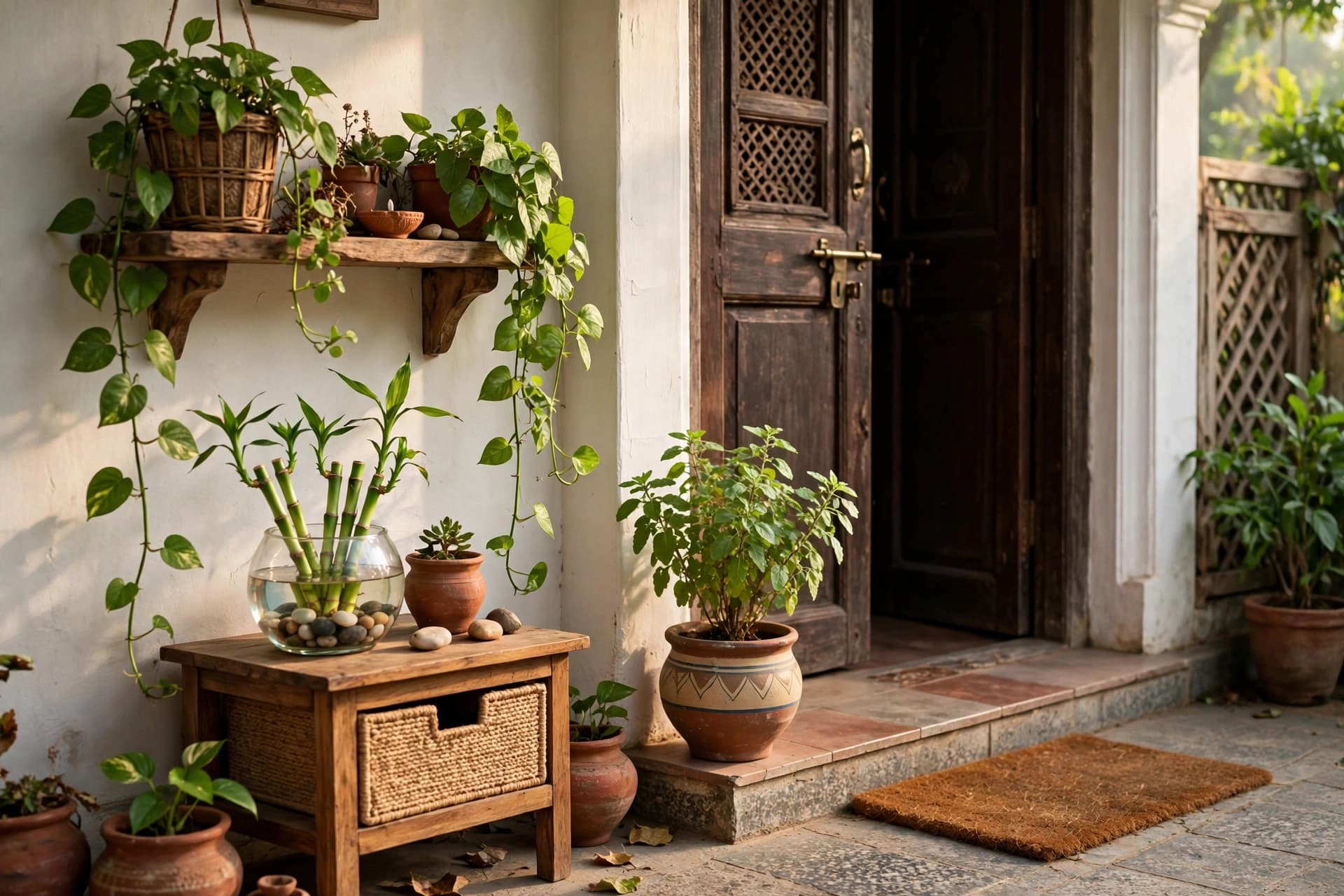
Many Indian households keep tulsi, money plant, and snake plant for tradition as well as greenery. Where you place them matters, but so does giving each plant the light, water, and care it needs. In this guide, we'll explain popular Vastu plants, where tradition suggests placing them, how to set up a plant corner, and how to care for each plant. Vastu is a traditional belief system, so use it as a guide and let each plant's needs decide whether it thrives.
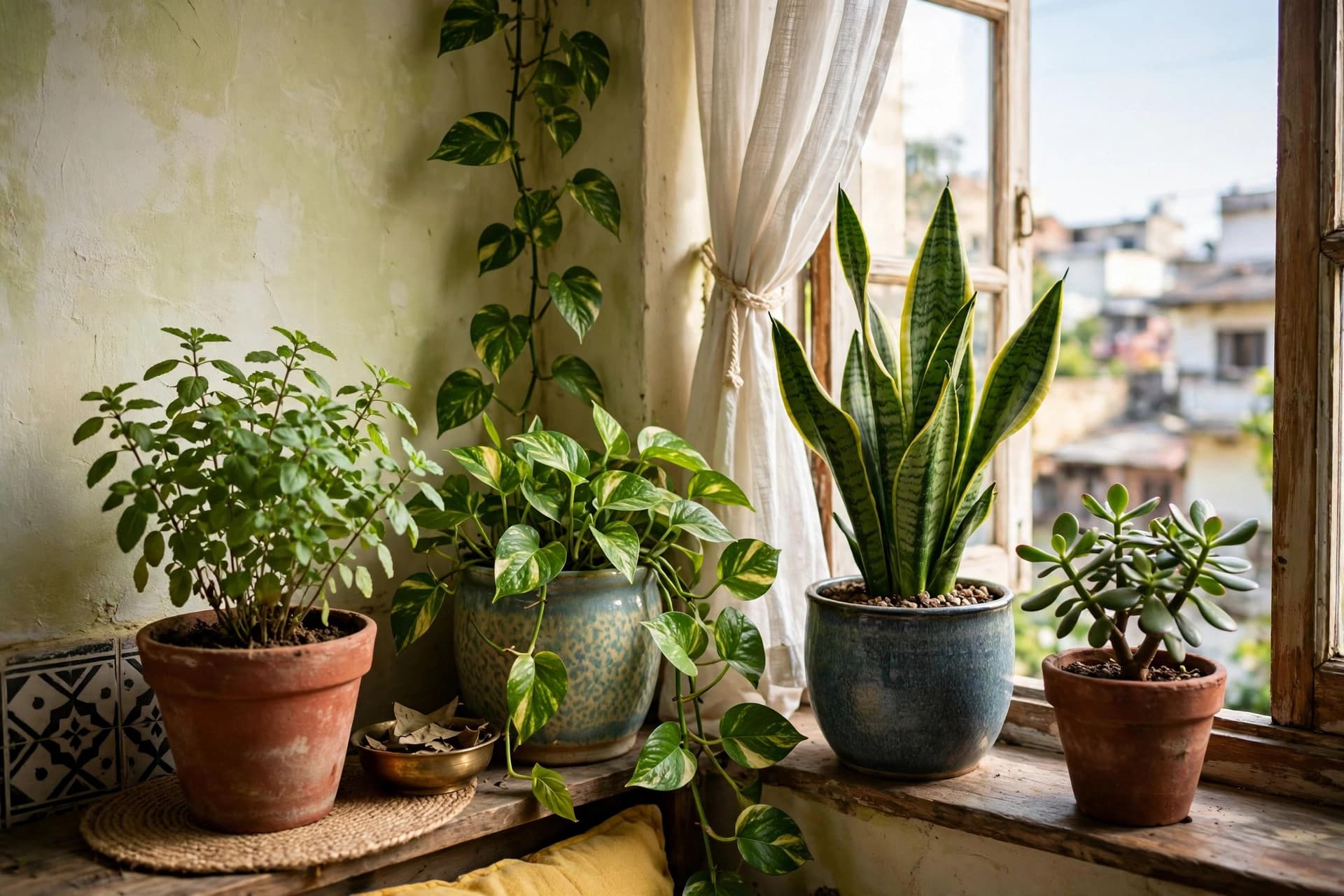
A Note on Vastu and Plant Care
Vastu placement is based on tradition, not on scientific evidence. Some people follow it closely and others use it loosely. A plant that gets the wrong light or too much water will struggle anywhere, so check its care needs before choosing a spot.
Benefits of Keeping Plants at Home
Adds greenery and a calmer feel to living spaces • Gives you a daily routine of simple care • Lets you grow useful plants such as tulsi and aloe vera • Works for balconies, windows, and small rooms • Many of these plants are hardy and suit beginners • Keeps you connected to household tradition
1. Popular Vastu Plants and Where They Are Traditionally Placed
| Plant | Traditional Placement | Care Basics |
|---|---|---|
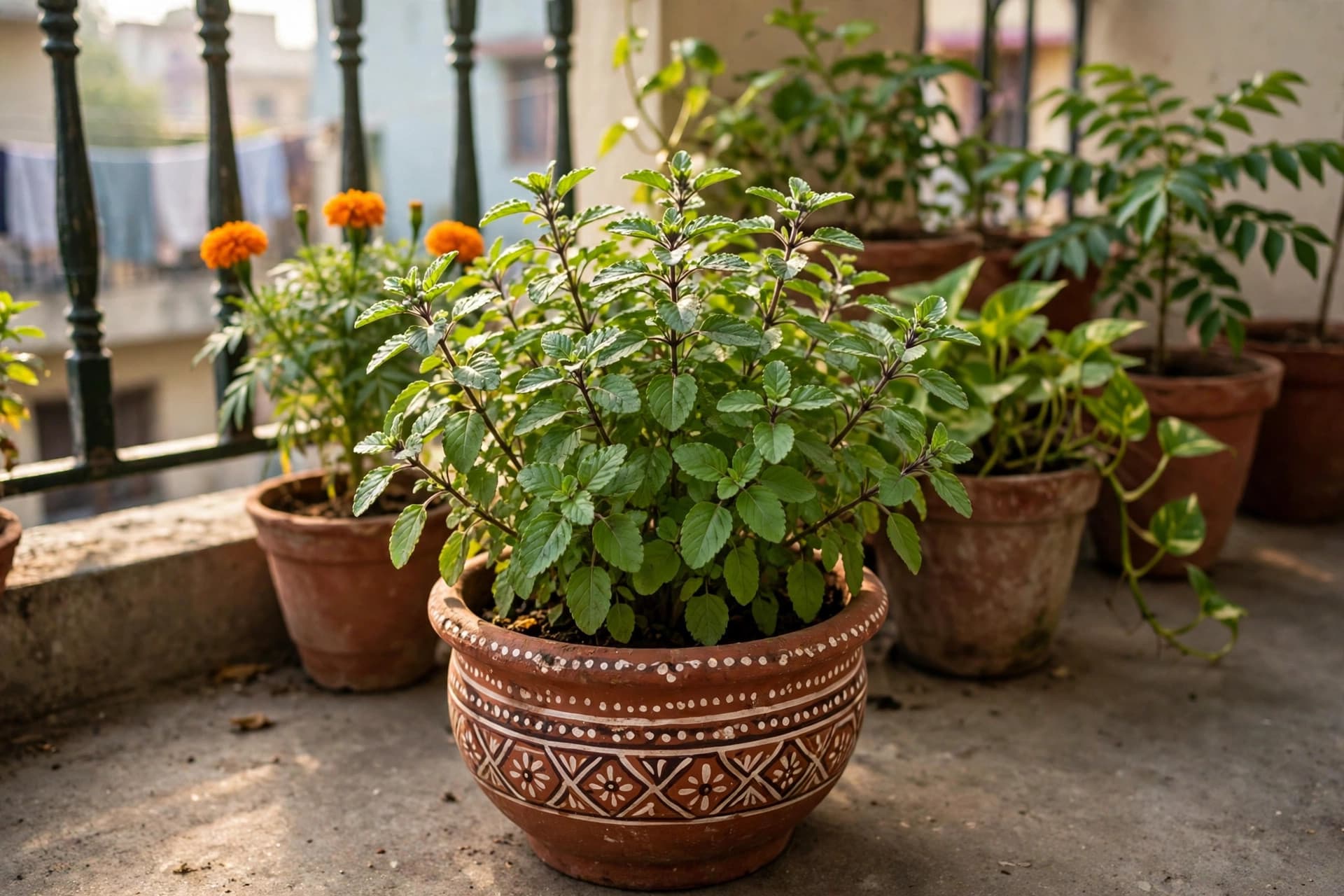
| Tulsi | North-east, east, or a sunny courtyard or balcony | Needs several hours of direct sun. Keep the soil moist but drained, and pinch off flower spikes. |
| Money plant | Living room or kitchen | Bright indirect light. Let the top soil dry slightly. Mildly toxic to pets. |
| Snake plant | Bedroom, entrance, or living room corners | Very tolerant. Water only when the soil is dry. |
| Lucky bamboo | East or south-east, indoors | Keep roots in clean water or damp pebbles. Change water weekly and avoid direct sun. |
| Jade plant | Near the entrance, in bright light | Succulent. Needs a sunny window and a fast-draining mix. |
| Aloe vera | Balcony or sunny window | Bright light, little water. Use a cactus mix and a pot with drainage. |
2. Plants Often Avoided Indoors
Some Vastu guides advise against thorny plants, cacti, and dead or dying plants in living areas, and against large trees close to the house. Whether you follow this is a personal choice. From a care view, removing dying foliage is good practice for any plant.
3. Match Plants to Light
Bright direct light: Tulsi, jade plant, and aloe vera suit sunny balconies and windows. Bright indirect light: Money plant does well near a bright window without harsh sun. Low to medium light: Snake plant tolerates dimmer rooms. Indirect light: Lucky bamboo prefers soft light and clean water.
4. Set Up a Plant Corner Step by Step
Pick the direction you want, then check that the spot has suitable light for the plant. Choose a pot with drainage holes and a saucer. Use a well-draining mix matched to the plant. Standard potting mix suits tulsi and money plant, and a gritty mix suits jade and aloe. Group plants by water needs so watering is simple. Rotate pots every couple of weeks for even growth.
5. Plant Care Checklist
Keep leaves dust-free with a damp cloth • Remove yellow or dead leaves promptly • Check soil moisture before every watering • Use clean pots and fresh potting mix when repotting • Keep plants away from AC vents and hot windows • Keep pet-toxic plants out of reach
Common Mistakes to Avoid Choosing a spot only for direction → Check that the spot also has suitable light • Overwatering money plant and snake plant → Let the soil dry before watering • Keeping tulsi in deep shade → Give it several hours of direct sun • Using pots without drainage holes → Choose pots that drain freely • Leaving dead leaves on plants → Remove them promptly • Placing pet-toxic plants within reach → Keep them out of reach
Plant Care Schedule
- Check soil moisture — before every watering: avoids overwatering and dry stress.
- Wipe leaves — every couple of weeks: keeps leaves clean so they take in light.
- Rotate pots — every couple of weeks: encourages even growth.
- Change lucky bamboo water — weekly: keeps roots clean.
- Inspect for pests — weekly: catches problems early.
References and Further Reading These references offer further horticultural context. Region, plant variety, and growing conditions can change recommendations. ICAR: Embracing kitchen gardening — home vegetable production during winter season: 155676 NITI Aayog: Horticulture and crop cultivation information: 2214 CBSE: Basic Agriculture: Basic_Agriculture_X.pdf
Frequently Asked Questions
6 questions with expert answers
A: Tradition often favours the north-east or east. Tulsi also needs several hours of direct sun, so check your light.
A: Yes, in clean water changed weekly, or in soil. Keep it out of harsh direct sun.
A: It is commonly placed there. It tolerates low light and needs little water, but it is mildly toxic to pets.
A: That is a belief rather than a proven effect. Healthy plants can add greenery and a calmer feel to a space.
A: Choose a plant that suits low light, or place the plant where it gets enough light. Healthy growth matters more than the exact spot.
A: Yes, if the plant suits balcony light and wind. Tulsi, jade plant, and aloe vera usually do well in sunny spots.
Ready to Create Your Own Garden?
Get expert help from Blooming Den to design, set up, and maintain a beautiful, low-maintenance green space.