
Hydroponics at Home in India
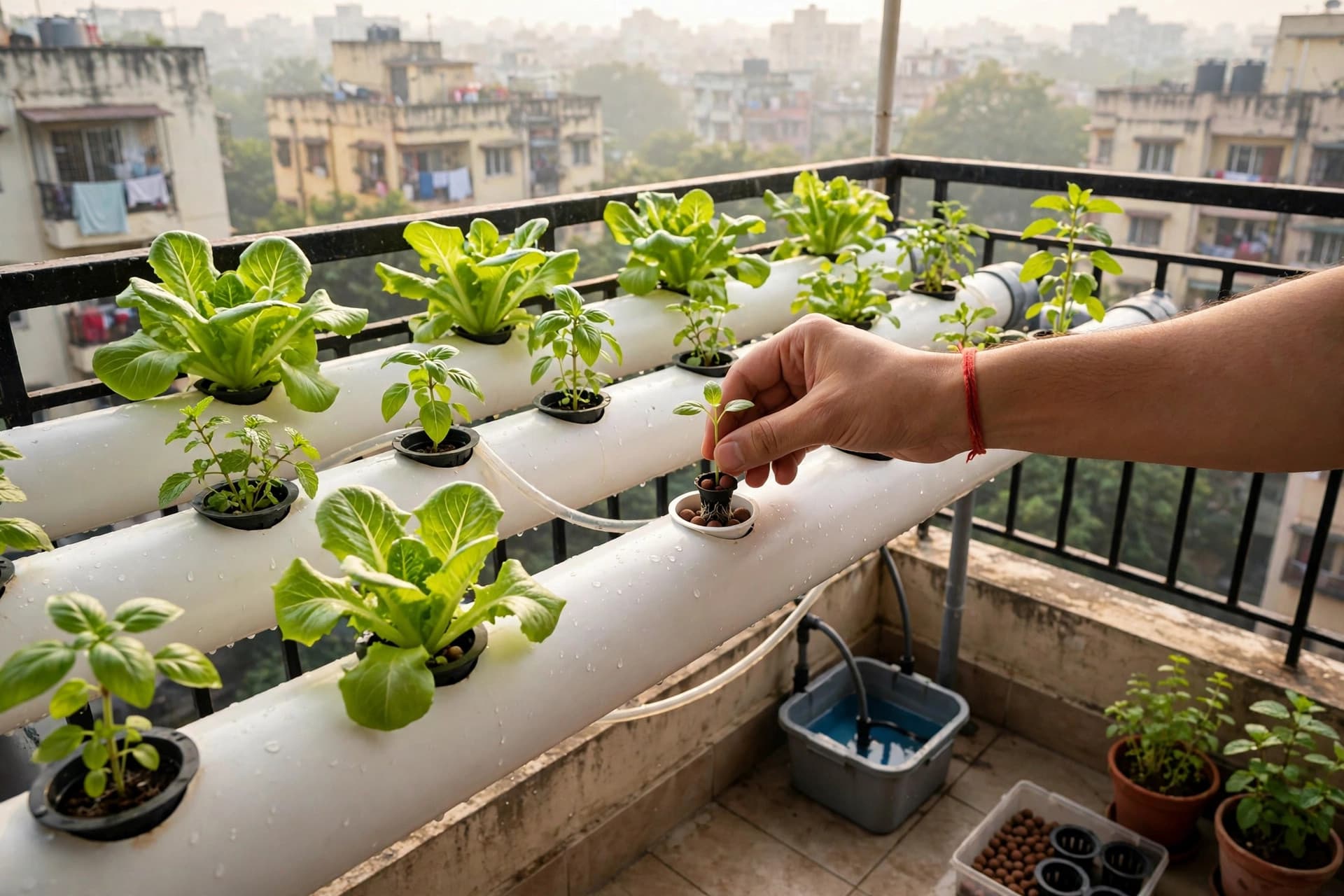
Hydroponics is a way of growing plants without soil. Instead, the roots take up water and nutrients from a nutrient solution. It sounds high-tech, but the simplest versions need nothing more than a container, a net cup, and a nutrient mix. Home hydroponics is popular with apartment dwellers because it needs very little space. Leafy greens and herbs, such as lettuce, spinach, basil, and mint, are the easiest plants to start with. It is not magic, though. Hydroponics needs a routine, a bit of learning, and attention to light, temperature, and nutrients. In India, hot weather is the biggest challenge, so timing and placement matter. This guide explains how home hydroponics works, which beginner systems are easiest, what you need, how to set up a simple jar system, and how to handle the Indian climate and common problems.
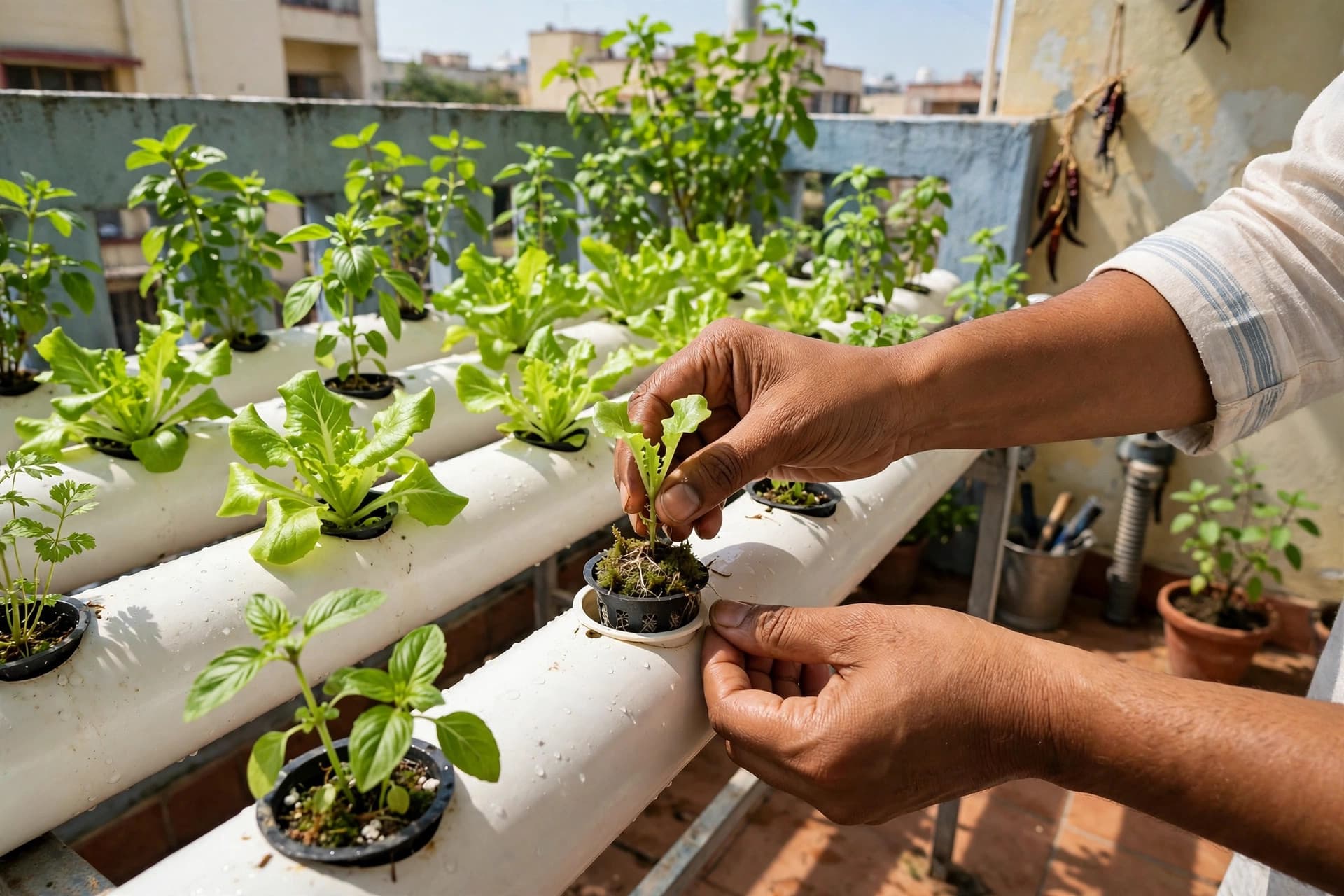
What Is Hydroponics?
In hydroponics, plants grow with their roots in water that contains dissolved nutrients, instead of in soil. Most home systems use a ready-made hydroponic nutrient mix dissolved in water. The plant roots are held in place by a net cup filled with an inert material, such as a grow cube, coco, or clay pebbles. The plant still needs light, air, and the right temperature, just like any other plant.
| Feature | Details |
|---|---|
| Growing Medium | No soil. The roots sit in a nutrient solution |
| Best Beginner Crops | Lettuce, spinach, basil, mint, and similar leafy greens and herbs |
| Easiest System | The Kratky method, which needs no pump or electricity |
| Main Needs | Good light, clean water, correct nutrients, and a cool enough root zone |
| Space Needed | A sunny windowsill, shelf, or balcony corner |
Is Hydroponics Right for You? Hydroponics suits some people very well, and it is honest to say it is not for everyone. Think about what you want to grow and how much attention you can give. Good points: Works in small spaces, with no garden soil needed • Clean, with no soil mess indoors • Leafy greens and herbs can grow well • Fun and educational for families Things to think about: Needs a routine, such as checking water and nutrients • Nutrient mixes and equipment have a cost • Not ideal for big fruiting plants at the start • Hot weather is hard on the nutrient solution Hydroponics will not always be cheaper than buying vegetables, so treat it as a hobby that also gives you fresh greens.
Beginner Systems Compared There are several types of hydroponic systems. These are the ones most suited to beginners at home. The Kratky method was developed by Dr. Bernard Kratky at the University of Hawaii. It is the simplest way to begin, and it is also helpful where power cuts are common.
| System | How It Works | Electricity | Best For |
|---|---|---|---|
| Kratky method | Plants sit above a still nutrient solution, and the water level falls as they grow | None | Absolute beginners and small leafy crops |
| Wick system | A wick draws nutrient solution up to the roots | None | Small herbs and simple projects |
| Deep water culture (DWC) | Roots sit in nutrient water that is kept oxygenated by an air pump | Air pump needed | Lettuce, basil, and greens, with more yield |
| Nutrient film technique (NFT) | A thin stream of nutrient solution flows past the roots | Pump needed | Learners ready for a more advanced setup |
Best Plants to Start With Fast-growing leafy crops are the best choice, because they finish growing before the nutrient solution runs out. Start with: Lettuce, the most common crop for simple systems • Spinach and other small leafy greens • Basil, mint, and coriander (dhania) • Kale and arugula, once you have some experience Fruiting plants, such as tomatoes, chillies, and cucumbers, need bigger containers and more careful nutrient management, so wait until you are comfortable with greens.
| Item | Purpose | Notes |
|---|---|---|
| Dark or opaque container with a lid | Holds the nutrient solution | Blocking light helps prevent algae |
| Net cups | Hold the plant above the solution | The lid needs holes that fit them |
| Grow cubes or inert medium | Support the seed and roots | Such as rockwool, coco, or clay pebbles |
| Hydroponic nutrient mix | Feeds the plant | Use one made for hydroponics, and follow the label |
| pH test kit or meter | Checks the acidity of the solution | Helpful for good nutrient uptake |
| EC or TDS meter (optional) | Checks the strength of the nutrient solution | Useful once you have some experience |
| Grow light (if needed) | Replaces sunlight in a dark home | Not needed on a very sunny balcony |
| Air pump (DWC only) | Adds oxygen to the water | Not needed for Kratky |
Step-by-Step Kratky Setup
- Wash the container well, and choose one that blocks light. A dark jar or a box works, and a clear one can be wrapped in dark paper.
- Make a hole in the lid that fits a net cup, and make sure the cup sits firmly.
- Start the seeds in a small grow cube, and keep it damp until the seedlings have roots and a few small leaves.
- Place the seedling and its cube in the net cup, and fill around it with a little inert medium to hold it.
- Mix the nutrient solution in clean water, following the label, and check the pH.
- Fill the container with solution to the level your guide recommends, usually the base of the net cup at the start.
- Place the lid and cup on the container, and put it in a bright place, with the reservoir out of direct sun.
- Over the next few weeks, the plant takes up the solution and the level drops, which leaves an air gap that the upper roots use.
- Harvest the leaves when the plant is full size. Then clean the container, and start a fresh batch with new solution.
Light Requirements Light is as important in hydroponics as in soil. Without enough light, plants grow weak and leggy, even if the nutrients are perfect. Light habits: Place the system in a very bright spot, such as a sunny window or balcony corner • Many guides suggest 12 to 16 hours of light a day for leafy greens under a grow light • Protect the plants and the reservoir from harsh afternoon sun in hot weather • Keep the reservoir dark so algae cannot grow
Nutrients, pH and EC Because there is no soil, the plant depends fully on the nutrient solution. Two simple measurements help you manage it. Managing the solution: Always follow the nutrient label for the amount to mix, since products differ • Too strong a solution can harm the plant, so do not add extra nutrients to speed up growth • Use only pH adjusters made for hydroponics, and add them in small amounts • If your tap water is very hard, check its TDS, and consider filtered or rainwater • Replace the solution in circulating systems every one to two weeks, or as your guide says
| Measure | What It Shows | General Guide for Leafy Greens |
|---|---|---|
| pH | How acidic or alkaline the solution is | Often kept at about 5.8 to 6.5 |
| EC or TDS | How strong the nutrient mix is | Many guides use an EC of about 1.2 to 1.6 for vegetative growth |
Hydroponics in the Indian Climate Heat is the biggest challenge in India. Warm nutrient solution holds less oxygen and encourages algae and root problems. Lettuce, for example, grows best when the solution is kept around 20 to 22 degrees Celsius, which is hard in a hot summer. India notes: Power cuts are common, so the pump-free Kratky method is a good place to start • Cover reservoirs well, so mosquitoes cannot breed in the standing water • Keep the reservoir out of direct sun to reduce heating and algae
| Season | Challenge | What to Do |
|---|---|---|
| Summer | Warm solution, algae, and root stress | Shade the setup, use light-coloured containers, and choose heat-tolerant herbs like basil |
| Monsoon | Humidity and mosquitoes | Keep reservoirs tightly covered and the setup sheltered from rain |
| Winter | Slower growth in cool, low-light rooms | The best season for lettuce and spinach, so give them the brightest spot |
| System | Setup Cost Level | Effort |
|---|---|---|
| Kratky jar or box | Low | Low, with a few quick checks a week |
| Deep water culture with air pump | Low to medium | Medium, with regular solution checks and changes |
| Grow light, if needed | Extra cost, plus electricity | Low, with a timer |
| Problem | Possible Cause | First Step |
|---|---|---|
| Green slime in the reservoir | Light reaching the water | Wrap or darken the container, and clean it out |
| Yellow leaves | Nutrient or pH problem, or too little light | Check pH, nutrient strength, and light |
| Brown or burnt leaf tips | Nutrient solution too strong, or heat | Dilute the solution and cool the setup |
| Slimy roots or a bad smell | Warm, stagnant water or low oxygen | Replace the solution, clean the container, and lower the temperature |
| Slow, leggy growth | Not enough light | Move to a brighter spot or add a grow light |
| Plant wilts in the afternoon | Heat stress | Move out of hot sun and check the solution temperature |
Common Beginner Mistakes Mixing the nutrient solution too strong • Ignoring the pH of the solution • Giving too little light • Using a clear container, which lets in light and grows algae • Starting with fruiting plants instead of leafy greens • Leaving the reservoir uncovered, which invites mosquitoes and dirt • Placing the setup in hot, direct summer sun • Using ordinary garden fertilizer instead of a hydroponic nutrient mix Safety and Hygiene Keep nutrient mixes and solutions away from children and pets — they are fertilizers and are not for drinking • Wash your hands after handling nutrients and solution • Clean containers, cups, and tools between batches • Wash the leaves well before eating • Keep electrical items, such as air pumps and grow lights, away from water, and use them with proper plugs and covers • Never leave open, stagnant water, since it can breed mosquitoes
| Check | Care Requirement | Why It Matters |
|---|---|---|
| ✓ | Start with a simple Kratky setup | Easier to learn, with no pump |
| ✓ | Choose lettuce, spinach, or herbs | Quick leafy crops suit beginners |
| ✓ | Use a hydroponic nutrient mix, as per the label | Avoids feeding too much or too little |
| ✓ | Check pH regularly | Helps plants take up nutrients |
| ✓ | Give bright light, and shade from hot sun | Supports healthy growth without heat stress |
| ✓ | Keep the reservoir dark and covered | Prevents algae and mosquitoes |
| ✓ | Clean everything between batches | Reduces disease and slime |
References and Further Reading UF/IFAS Extension: Set it and forget it hydroponics (the Kratky method): Pdf UF/IFAS Extension St. Lucie County: Kratky hydroponic method, a simple way to grow plants without soil: Kratky Hydroponic Method A Simple Way To Grow Plants Without Soil UF/IFAS EDIS: Growing lettuce in small hydroponic systems: HS1422
Frequently Asked Questions
6 questions with expert answers
A: Hydroponics is a way of growing plants without soil, with the roots taking up water and nutrients from a nutrient solution.
A: The Kratky method is the simplest, because it needs no pump or electricity. Deep water culture is also beginner-friendly but needs an air pump.
A: Lettuce, spinach, basil, mint, and coriander are the easiest. Fruiting plants like tomatoes need more space and more careful nutrient management.
A: A simple Kratky jar or box costs much less than a pump-based system, and a grow light adds to the cost. Prices vary by seller and change often, so check current prices before you buy.
A: It is better to use a nutrient mix made for hydroponics, because garden fertilizers are not designed to dissolve fully or give a balanced solution in water.
A: It can if water is left open and unused. Keep reservoirs tightly covered, change the solution as needed, and do not let water stand uncovered.
Ready to Create Your Own Garden?
Get expert help from Blooming Den to design, set up, and maintain a beautiful, low-maintenance green space.