
Why Are My Seedlings Falling Over? Causes and Prevention of Damping-Off
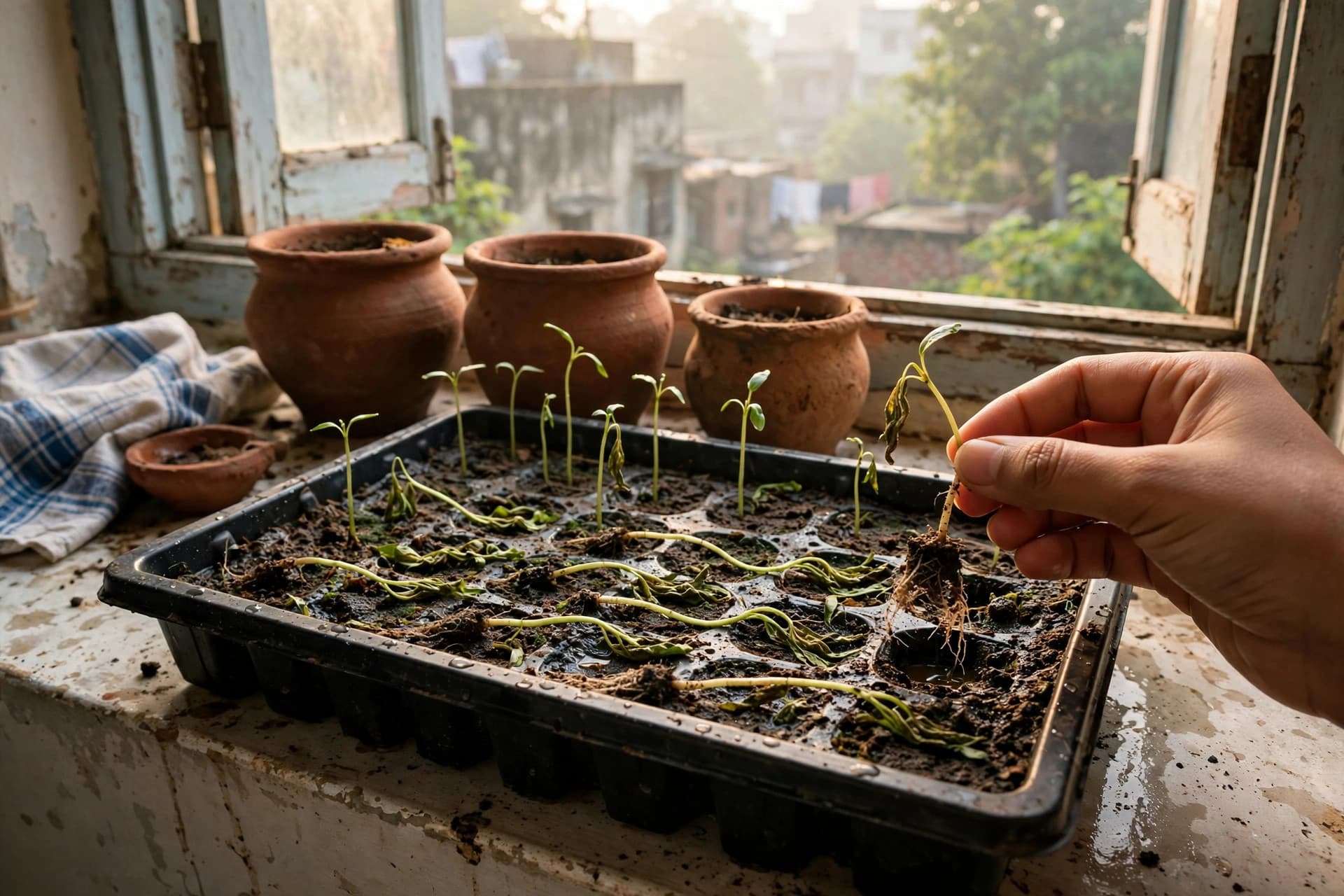
You sow your seeds, they sprout, and everything looks perfect. Then one morning, a few seedlings are lying flat on the soil, with thin, dark, pinched stems at the base. This is one of the most heartbreaking problems in gardening, and it has a name: damping-off. The good news is that damping-off is almost always preventable. In this guide, we'll explain what damping-off is, why it happens, how to spot it early, what you can do if it has already started, and how to protect your next batch of seedlings.
What Is Damping-Off?
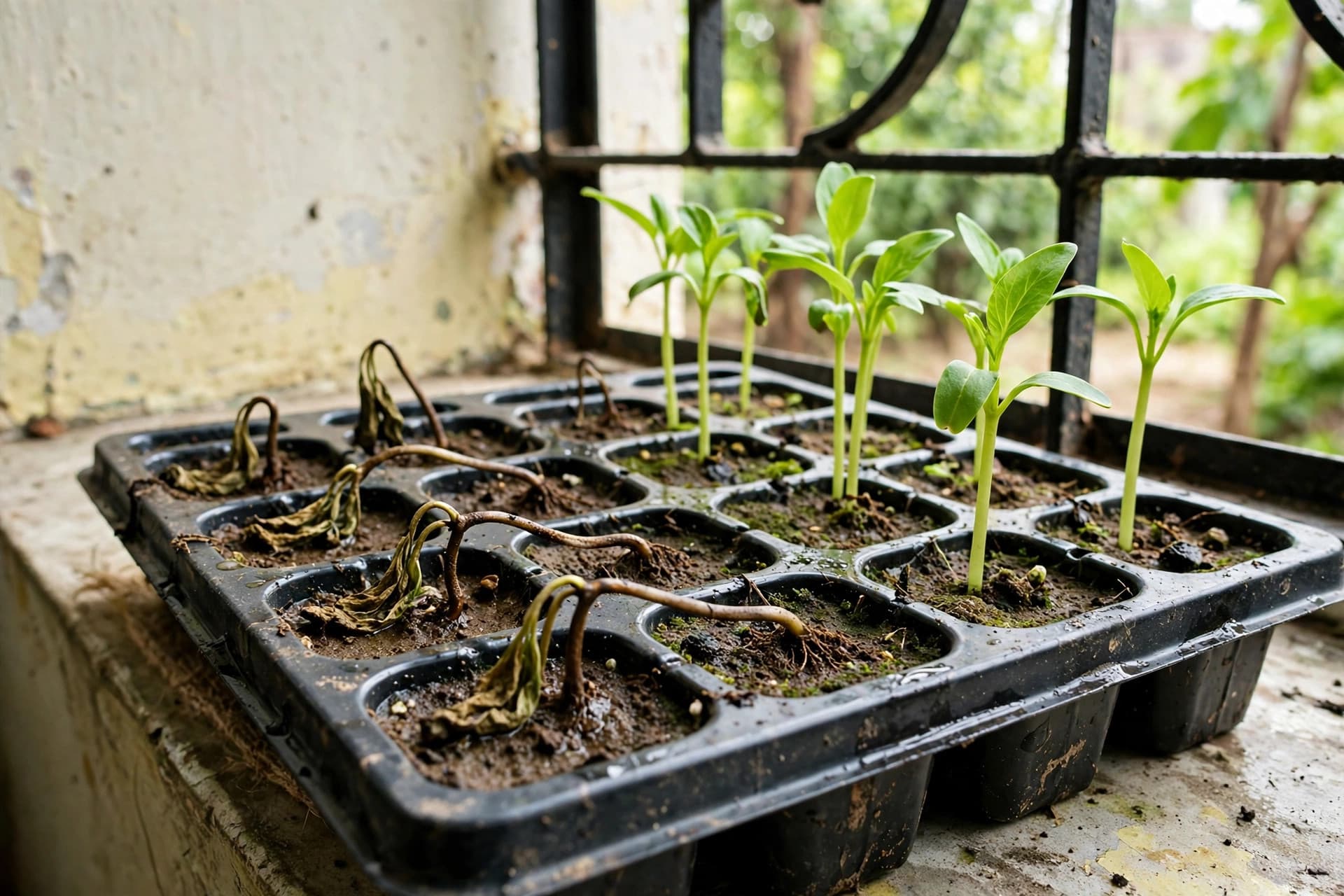
Damping-off is a disease of young seedlings caused by soil-living organisms, mainly fungus-like water moulds and fungi such as Pythium, Rhizoctonia, Fusarium, and Phytophthora. These organisms are common in soil, water, and old pots, and they attack the soft, tender tissue of seedlings. The infection usually starts at the soil line. The stem turns thin, watery, and dark at the base, and can no longer hold the seedling upright. The seedling then topples over and dies, often within a day or two. Damping-off can strike in two ways. Before the seedling comes up, the seed or tiny root can rot underground, so the seed never appears. After the seedling emerges, the stem collapses at the soil line. Both are caused by the same conditions.
Why Do Seedlings Fall Over? The Main Causes
The organisms behind damping-off are already present almost everywhere. What turns them into a problem is the environment around the seedlings. Damp, crowded, still, and unclean conditions give them the perfect chance. Main causes: Overwatering and soil that stays wet for days • Poor drainage, such as pots or trays without holes • Reused soil, old pots, or trays that were not cleaned • Seeds sown too thickly, which creates crowding and damp air • Little airflow, especially in covered trays or closed rooms • Too little light, which makes seedlings weak and leggy • Cool, damp weather or cold soil that slows seedling growth • Heavy, compacted garden soil used for starting seeds • Too much fertilizer, which creates soft, weak growth
Damping-Off or Just Leggy Seedlings? How to Tell
| Sign | Damping-Off | Leggy Seedling — before the table: not every falling seedling has damping-off; seedlings that stretch toward weak light become tall and floppy but still have a healthy, green stem; check the base of the stem to be sure --- |
|---|---|---|
| Stem base | Thin, dark, soft, and water-soaked at the soil line. | Green, firm, and healthy but long and thin. |
| How it falls | Suddenly collapses, often overnight. | Slowly leans or flops over time. |
| Spread | Neighbouring seedlings fall in patches or circles. | All seedlings stretch in the same direction toward light. |
| Soil surface | May show white fuzzy mould and stay constantly wet. | Usually looks normal. |
| Fix | Needs quick action on moisture, airflow, and hygiene. | Needs more light and lower temperature. |
Early Warning Signs to Watch For Catching damping-off early can save the rest of the tray. Check your seedlings every day, and look closely at the base of the stems. Common signs of damping-off: Seeds that never sprout, even though the soil was kept moist • Stems that look thin, pinched, or water-soaked at the soil line • Seedlings that suddenly flop over while the leaves still look green • White or grey fuzzy mould on the soil surface • Brown, mushy roots when a fallen seedling is lifted out • Empty gaps or bare patches spreading across the tray
1. Start with Clean Pots, Trays, and Tools The organisms that cause damping-off can survive on old pots, trays, and tools. Starting clean is one of the simplest and most effective steps you can take. Clean start checklist: Wash old pots and trays well with soap and water to remove all soil • Soak them for a few minutes in a mild disinfectant, such as a weak bleach solution, then rinse and dry fully • Wipe scissors, labels, and sowing tools with rubbing alcohol • Use new containers with drainage holes when possible • Wash your hands before handling seedlings
2. Use the Right Seed-Starting Mix Ordinary garden soil is heavy, holds too much water, and often carries disease organisms. For seedlings, use a light, fresh, sterile mix that drains quickly but still holds a little moisture. Always use fresh mix from a clean bag, and never reuse soil from a tray where seedlings have already collapsed.
| Ingredient | Role in the Mix |
|---|---|
| Cocopeat (well rinsed) | Holds light moisture and stays soft for tiny roots. |
| Perlite or coarse sand | Improves drainage and airflow in the mix. |
| Vermiculite | Holds some water evenly without turning soggy. |
| Well-finished compost (small amount) | Adds mild nutrition. Keep the amount small for seedlings. |
3. Water Carefully Wet soil is the number one trigger for damping-off. The aim is a mix that feels lightly moist, like a wrung-out sponge, and never soggy. Smart watering tips: Moisten the mix before sowing, then water gently only when the surface begins to dry • Use a fine mist sprayer or a bottom tray so the soil is not flooded • Water in the morning so the surface dries during the day • Use clean water, and never leave water standing in the tray • Water less in cool, cloudy weather and during the monsoon
4. Sow Thinly and Give Seedlings Airflow Crowded seedlings trap moisture between their stems, and the damp, still air helps disease spread from one seedling to the next. Spacing and fresh air make a big difference. Airflow habits: Sow seeds thinly and follow the depth on the seed packet • Thin out extra seedlings early, using scissors to cut them at the soil line • If you use a cover or dome to keep seeds warm, remove it once most seeds have sprouted • If you must keep a cover on, open it for part of the day • Place trays in a spot with gentle air movement, not in a closed, damp corner
5. Give Enough Light and Warmth Strong, steady growth helps seedlings pass through the delicate stage faster. Seedlings that sit in cold, dim, damp conditions stay soft for longer and remain easy targets.
| Condition | What to Do |
|---|---|
| Temperature | Keep the soil warm enough for the crop so seeds germinate quickly. |
| Humidity | Avoid constantly wet air around the trays. |
| Feeding | Skip fertilizer until true leaves appear, then use a very diluted feed. |
6. Can Cinnamon Help Prevent Damping-Off? Many gardeners lightly sprinkle plain ground cinnamon on the soil surface after sowing to discourage surface mould. Cinnamon has shown antifungal activity in laboratory studies, but evidence from real seed trays is limited, and results vary. If you want to try it, use only a thin dusting of pure cinnamon, and do not pile it around the stems of tiny seedlings. Treat it as a small extra, never as a replacement for clean soil, good drainage, and careful watering. Keep in mind: Cinnamon cannot save a seedling that has already collapsed • A thick layer can harm tender tissue and does not work better • Stop using it if the seedlings look weak, and improve airflow instead
What to Do If Damping-Off Has Already Started
- — before the steps: a seedling that has collapsed cannot be brought back, but you can often save the others; act quickly with these steps ---
- 1. Remove fallen and sickly seedlings straight away, along with the soil around their roots.
- 2. Stop watering until the soil surface is dry to the touch.
- 3. Scrape off any mouldy top layer of soil and replace it with fresh, dry mix.
- 4. Open covers, move the tray to a brighter spot, and improve airflow.
- 5. Thin out crowded seedlings so the survivors have space.
- 6. Water later from the bottom, and only when needed.
- 7. If the whole tray is failing, start again with clean trays and fresh mix instead of reusing the old soil.
- Note after the steps: For valuable seeds or large nurseries, a suitable fungicide made for seedlings may help. Use it only as the product label says, and remember that it works best along with clean conditions and careful watering.
| Common Mistake | Better Practice |
|---|---|
| Watering every day out of habit | Check the soil first and water only when the surface starts to dry. |
| Using garden soil for seed trays | Use a light, fresh, sterile seed-starting mix. |
| Reusing dirty pots and trays | Wash and disinfect all containers before sowing. |
| Sowing seeds too thickly | Sow thinly and thin out early. |
| Keeping the cover on all day | Remove or open the cover once seeds have sprouted. |
| Feeding fertilizer too early | Wait for true leaves and use a very diluted feed. |
| Leaving collapsed seedlings in the tray | Remove them at once, along with the soil around them. |
| Care Activity | When to Do It | Purpose |
|---|---|---|
| Clean pots, trays, and tools | Before every sowing | Remove disease organisms. |
| Use fresh, sterile seed mix | At sowing | Give seeds a clean, airy start. |
| Sow thinly | At sowing | Prevent crowding and damp air. |
| Check soil before watering | Every day | Avoid soggy soil. |
| Remove or open covers | Once seeds sprout | Improve airflow. |
| Inspect stem bases | Daily for the first weeks | Catch problems early. |
Signs Your Seedlings Are Healthy When conditions are right, seedlings grow steadily and firmly. Look for these good signs as your tray develops. Healthy signs: Seeds sprout evenly across the tray • Stems are thick, green, and firm at the soil line • Seedlings stand upright without leaning or flopping • The soil surface dries slightly between waterings • True leaves appear on schedule • No new gaps or mouldy patches appear in the tray
Frequently Asked Questions
5 questions with expert answers
A: It is a disease that rots the stem or roots of very young seedlings, usually at the soil line, so they fall over and die. It is caused by soil-living organisms that thrive in wet, crowded, and unclean conditions.
A: Once a seedling has collapsed at the base, it usually cannot be saved. Remove it quickly and fix the conditions to protect the other seedlings.
A: Seeds can rot in wet soil before they appear, which is a form of damping-off. Old seeds, cold soil, or sowing too deep can also be the cause, so check the soil moisture and the seed packet instructions.
A: White mould on the soil is often harmless, but it is a sign that the soil stays too damp. Scrape off the top layer, let the surface dry, and increase airflow.
A: Both can work if done carefully. Bottom watering keeps the stems and soil surface drier, while gentle misting is useful for the first days. Whichever you choose, empty any extra water from the tray.
Ready to Create Your Own Garden?
Get expert help from Blooming Den to design, set up, and maintain a beautiful, low-maintenance green space.