
Indoor Plants / Plant Guide
Begonias: Complete Care Guide, Benefits & Varieties
Learn how to grow and care for Begonias indoors with practical guidance on light, watering, soil, humidity, propagation, varieties, and indoor placement.
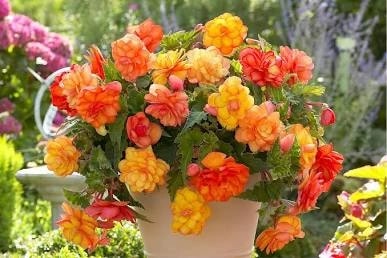
Begonia Plant Guide
Everything you need to know about Begonias
Begonias are among the most diverse and visually striking indoor plants. Celebrated for their kaleidoscope of painted leaves, geometric patterns, and delicate flower clusters, they make instant decorative statements in homes and offices.
Whether you choose spectacular foliage types like Rex Begonias or blooming cane varieties like the Polka Dot Begonia (Maculata), providing the right balance of bright indirect light, gentle moisture, and humidity ensures long-term vitality.
If you are comparing plants for different rooms, explore our office plants and bedroom plants collections to find the ideal match for your space.
Quick facts
Begonia at a Glance
Use these basic characteristics as a starting point when choosing and caring for Begonias indoors.
Common name
Begonia
Botanical name
Begonia spp.
Plant type
Foliage & flowering indoor plant
Light
Bright indirect to filtered light
Watering
Keep lightly moist; allow topsoil to dry
Maintenance
Moderate
Growth
Bushy, cane, or creeping foliage
Propagation
Stem cuttings, leaf cuttings & division
About the plant
What Are Begonias?
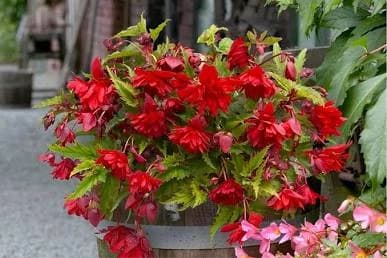
Begonias constitute a vast genus of over 2,000 species native to moist subtropical and tropical rainforests. Indoors, they are prized for their spectacular asymmetry, metallic leaf sheens, and vibrant flowering.
From the spiral-leaved Rex cultivars to tall, bamboo-stemmed Cane varieties, begonias offer unprecedented visual variety for interior design enthusiasts.
While they appreciate attentive watering and moderate humidity, their compact root systems and fast growth make them immensely rewarding indoor companions.
Care guide
How to Care for Begonias
Good Begonia care starts with suitable bright indirect light, controlled watering, well-draining soil, and comfortable humidity.
Begonia Light Requirements
Begonias perform best in bright, filtered or indirect sunlight. Place them near east-facing or shaded south/west windows to preserve rich foliage colors and encourage blooming.
Avoid harsh direct midday sun which can burn delicate foliage. For darker rooms, explore our low-light indoor plants guide.
Begonia Watering
Water when the top 1–2 inches of soil feel dry. Begonias prefer lightly moist soil and dislike drying out completely or sitting in waterlogged pots.
Always empty the drainage saucer after watering. For broader guidance, explore our indoor plant collection to compare care across species.
Best Soil for Begonias
Use a light, airy, well-draining potting mix containing peat moss, perlite, and fine pine bark to maintain moisture without suffocating the roots.
Temperature
Maintain comfortable room temperatures between 18°C and 26°C (65°F–78°F). Protect plants from cold drafts, air conditioner vents, and temperatures below 15°C (60°F).
Humidity
Begonias love moderate to high humidity (50%+). Use a room humidifier or pebble tray rather than heavy misting, as wet leaves are prone to fungal mildew.
Fertilizer
Feed with a balanced, diluted houseplant fertilizer once every 2–4 weeks during active growth in spring and summer. Pause feeding during winter.
Repotting
Repot in spring when roots fill the pot. Begonias have shallow root systems and prefer slightly snug pots with ample drainage holes.
Pruning & Grooming
Pinch back growing tips on cane varieties to encourage bushy growth. Remove spent flowers and dead leaves regularly to keep the plant healthy and attractive.
Choose the right space
Begonias for Different Indoor Spaces
Begonias can suit several indoor environments when their light, humidity, and care requirements are matched to the space.
Living Room Displays
Add vibrant color and artistic leaf patterns to side tables, consoles, and plant stands.
Explore living room plants →Bright Home Offices
Brighten executive desks and shelves with colorful, compact foliage varieties.
Explore office plants →Bedroom Plants
Find decorative flowering plants that add tranquility and beauty to well-lit bedrooms.
Explore bedroom plants →Plant Collections
Group with humidity-loving tropicals for a lush, layered interior botanical showcase.
Explore indoor plants →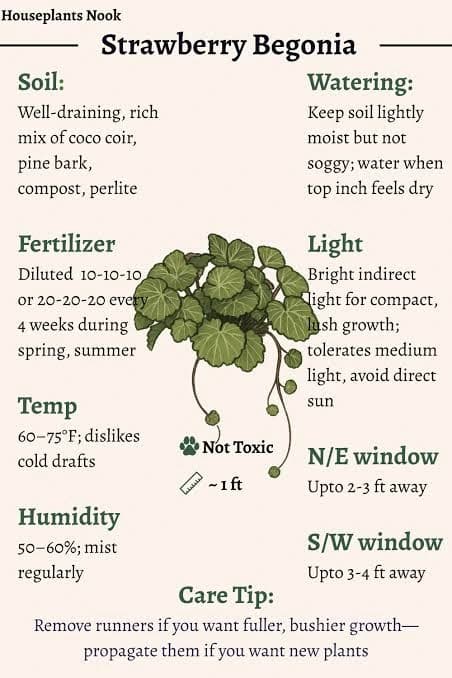
Continue learning
Read our Begonia Care Guide
Want more practical guidance on growing Begonias indoors? Read our detailed Begonia care article covering light, watering, soil, humidity, temperature, flowering, propagation, varieties, and common care mistakes.
Popular varieties
Begonia Varieties
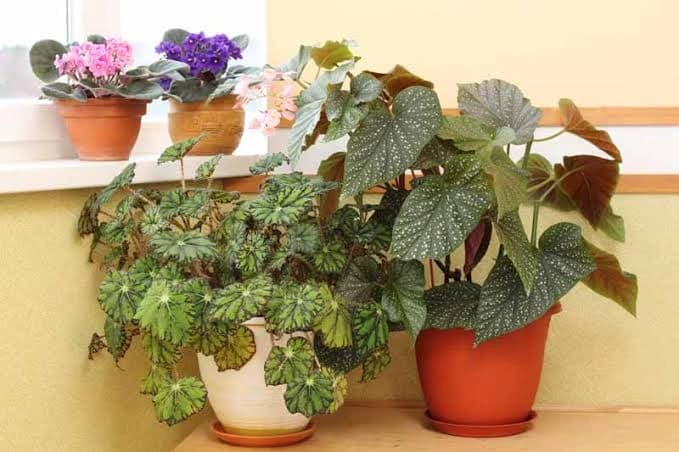
Begonias are available in different forms with variations in foliage color, leaf pattern, flowers, and growth habit.
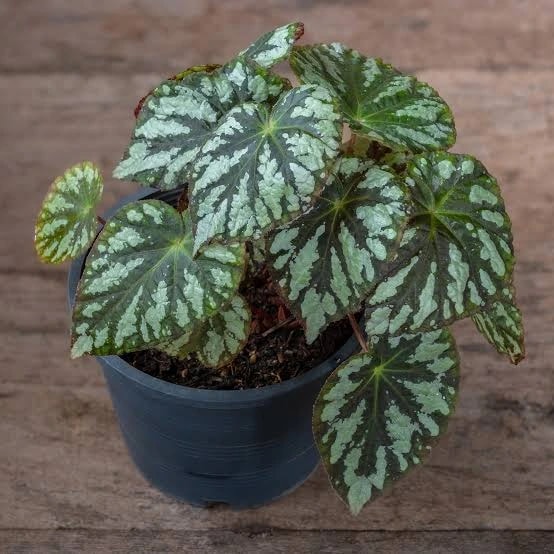
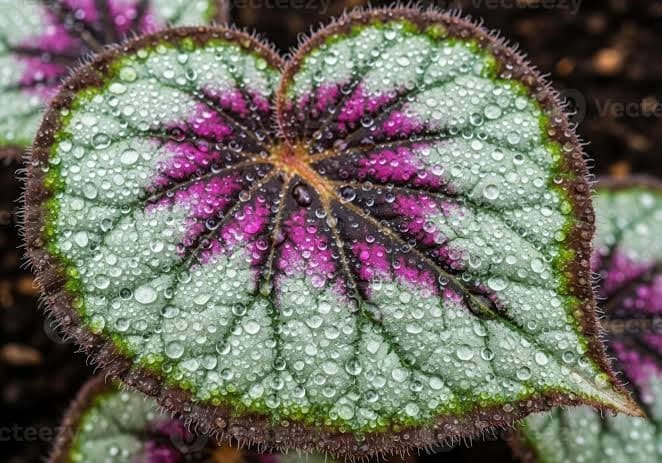
Rex Begonia
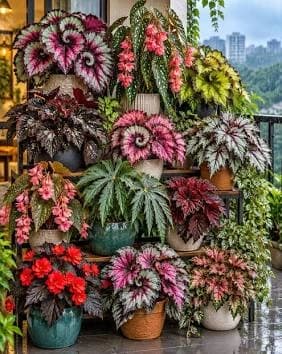
Prized for showstopping painted foliage featuring swirling patterns of metallic silver, burgundy, pink, and emerald green.
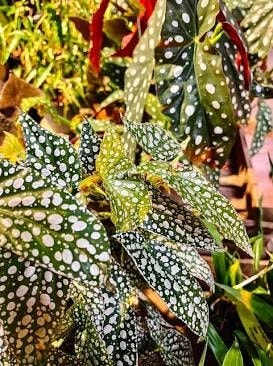
Angel Wing Begonia
Features distinctive wing-shaped dark green leaves dotted with silver speckles and hanging clusters of pink or red blooms.
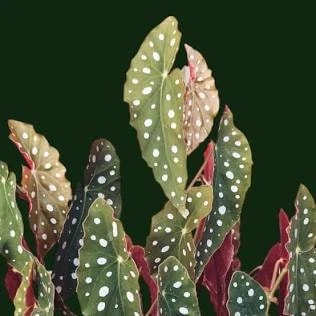
Polka Dot Begonia (Maculata)
A dramatic cane begonia known for its olive-green leaves with crisp white polka dots and crimson-red undersides.
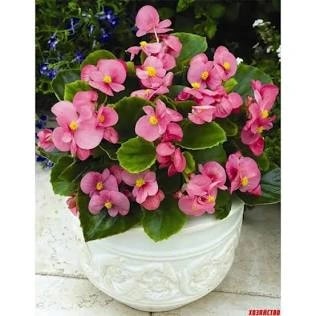
Wax Begonia
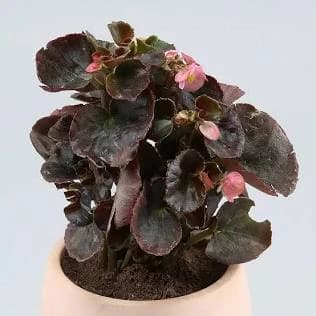
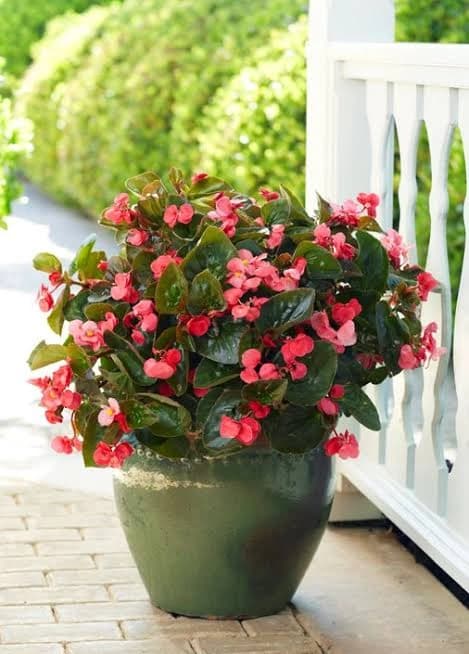
A compact, resilient variety with glossy bronze or green leaves and continuous blooms of red, pink, or white.
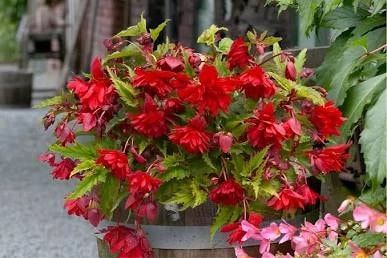
Cane Begonia
Sturdy, bamboo-like upright stems with lush patterned foliage and pendulous flower clusters.
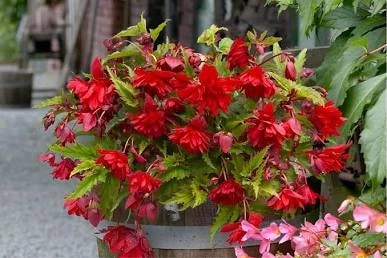
Beginner Begonias
Hardier hybrid selections cultivated specifically for ease of indoor care and reliable indoor performance.
Why choose Begonias?
Begonia Benefits
- • Extraordinary range of painted, iridescent foliage colors.
- • Many varieties bloom with clusters of delicate flowers.
- • Compact growth fits easily on desks, shelves, and side tables.
- • Fast-growing and simple to propagate from leaf or stem cuttings.
- • Adds vibrant color without requiring outdoor garden space.
Indoor placement
Where to Keep Begonias
Choose a location based on bright indirect light, humidity, temperature, and ease of monitoring soil moisture.
Living Room
Begonias make eye-catching tabletop and shelf accents where colorful painted foliage can be appreciated up close.
Home Office
Compact varieties like Rex or Polka Dot Begonias bring natural artistry and energy to desks with bright indirect light.
Well-Lit Bedrooms
Position near bright windows with sheer curtains to enjoy subtle blooms and calming colorful foliage.
Bathrooms
Bathrooms with a bright window provide the ambient humidity that keeps begonia leaves lush without crispy edges.
Propagation
How to Propagate Begonias
Begonias can be propagated through stem cuttings, leaf cuttings, or crown division depending on the variety.
Stem Cuttings (Cane & Wax)
Take a 4-inch stem cutting with at least one node. Place in clean water or moist seed-starting mix in bright indirect light until roots develop.
Leaf & Wedge Cuttings (Rex & Rhizomatous)
Cut healthy leaf veins and pin the leaf flat against moist potting medium, or plant leaf wedges upright. Tiny plantlets will sprout along the veins.
Troubleshooting
Common Begonia Problems
Changes in leaves, growth, or flowering can provide clues that light, watering, drainage, roots, or humidity needs attention.
Yellow Begonia Leaves
Yellowing foliage is usually caused by overwatering, poorly draining soil, or cold drafts stressing the root system.
Crispy Brown Leaf Tips
Dry brown edges indicate low humidity, underwatering, or excessive direct sunlight scorching the thin foliage.
Drooping or Soft Stems
Drooping stems when soil is wet point to root rot; drooping in dry soil means the plant urgently needs a thorough watering.
Powdery Mildew (White Spots)
White powdery fungus occurs in stagnant air with high humidity; improve ventilation and avoid getting water on leaves.
Begonia Not Flowering
Flowering varieties require brighter indirect light and occasional phosphorus-rich feeding to initiate flower buds.
Faded Leaf Color or Leggy Stems
Loss of vibrant leaf patterns and long gaps between leaves indicate the plant is not receiving enough bright indirect light.
For Indian homes
Begonia Care in India
Indoor conditions in India can vary significantly between cities, seasons, room orientations, and building types. Avoid following a fixed watering schedule simply because it worked in another home.
During warmer summer months, check soil moisture regularly and maintain good airflow to prevent heat stress. During monsoon periods, reduce watering and ensure ample ventilation to prevent fungal mildew.
Good drainage, bright filtered light, comfortable humidity, and careful observation are more reliable than watering according to a calendar.
Quick checklist
Simple Begonia Care Checklist
- • Provide bright filtered or indirect light.
- • Check soil moisture before watering.
- • Allow topsoil to dry slightly between waterings.
- • Use a pot with proper drainage holes.
- • Maintain moderate humidity (50%+).
- • Wipe or inspect leaves regularly for pests.
Plant care principle
Observe the plant, not just the calendar
Begonia care requirements can change with light, temperature, season, pot size, soil, and indoor humidity. A consistent observation-based routine is more useful than treating every begonia exactly the same way.
Related reading
More Indoor Plant Guides
Explore related Blooming Den guides for choosing and caring for indoor plants.
Peace Lily
Peace Lily Care Guide
Learn about peace lily light, watering, flowering, and common care tips.
Read guide →Pothos
Pothos Plant Care Guide
Explore pothos trailing growth, light requirements, and propagation.
Read guide →Snake Plant
Snake Plant Care Guide
Learn practical snake plant care for indoor homes and workspaces.
Read guide →ZZ Plant
ZZ Plant Care Guide
Discover how to care for drought-tolerant ZZ plants indoors.
Read guide →Office Plants
Best Plants for Office in India
Compare popular indoor plants for desks, cabins, and workspaces.
Read guide →Air-Purifying Plants
Indoor Plants That Purify Air Naturally
Explore top indoor plants for cleaner, healthier living spaces.
Read guide →Frequently asked questions
Begonia FAQs
Answers to common questions about Begonia care, watering, light, soil, propagation, flowering, varieties, and common problems.
How often should you water a begonia?
Water begonias when the top 1 to 2 inches of soil feel dry to the touch. They prefer consistently light moisture but should never sit in soggy, waterlogged soil. Always allow excess water to drain out of the pot.
How much light do begonias need indoors?
Most indoor begonias thrive in bright, filtered indirect sunlight. Good lighting keeps foliage colorful and promotes blooming. Avoid harsh direct midday sun, which can easily scorch the delicate leaves.
Why are my begonia leaves turning yellow?
Yellow leaves are most commonly caused by overwatering or poorly draining soil. Other potential causes include insufficient light or natural leaf aging. Check soil moisture and drainage holes before adjusting your watering routine.
Why are my begonia leaves getting crispy brown edges?
Crispy brown leaf edges usually indicate low indoor humidity, dry soil, or excessive direct sunlight. Keep begonias in moderate-to-high humidity (50%+) and away from direct heating or AC drafts.
Can begonias grow in low light?
While some cane and rex begonias tolerate moderate light, most varieties perform best with bright indirect light. In very dark spaces, growth becomes leggy, foliage colors fade, and blooming will stop.
Do begonias flower indoors?
Yes. Wax, cane, and angel wing begonias readily produce clusters of white, pink, or red blooms indoors when given sufficient bright indirect light and light monthly feeding during the growing season.
How do you propagate begonias?
Begonias can be propagated through stem cuttings (cane and wax types), leaf cuttings or leaf wedges (rex and rhizomatous types), or root division during repotting.
Are begonias easy to care for?
Begonias are moderately easy to care for once you understand their basic needs: bright indirect light, well-draining aerated soil, light moisture, and comfortable indoor humidity.
Blooming Den
Create a healthier indoor plant space
Explore indoor plants and practical plant care support for your home or workspace.