
Indoor Plants / Plant Guide
Peace Lily: Complete Care Guide, Benefits & Varieties
Learn how to grow and care for peace lilies with practical guidance on light, watering, soil, propagation, varieties, common problems, and indoor placement.
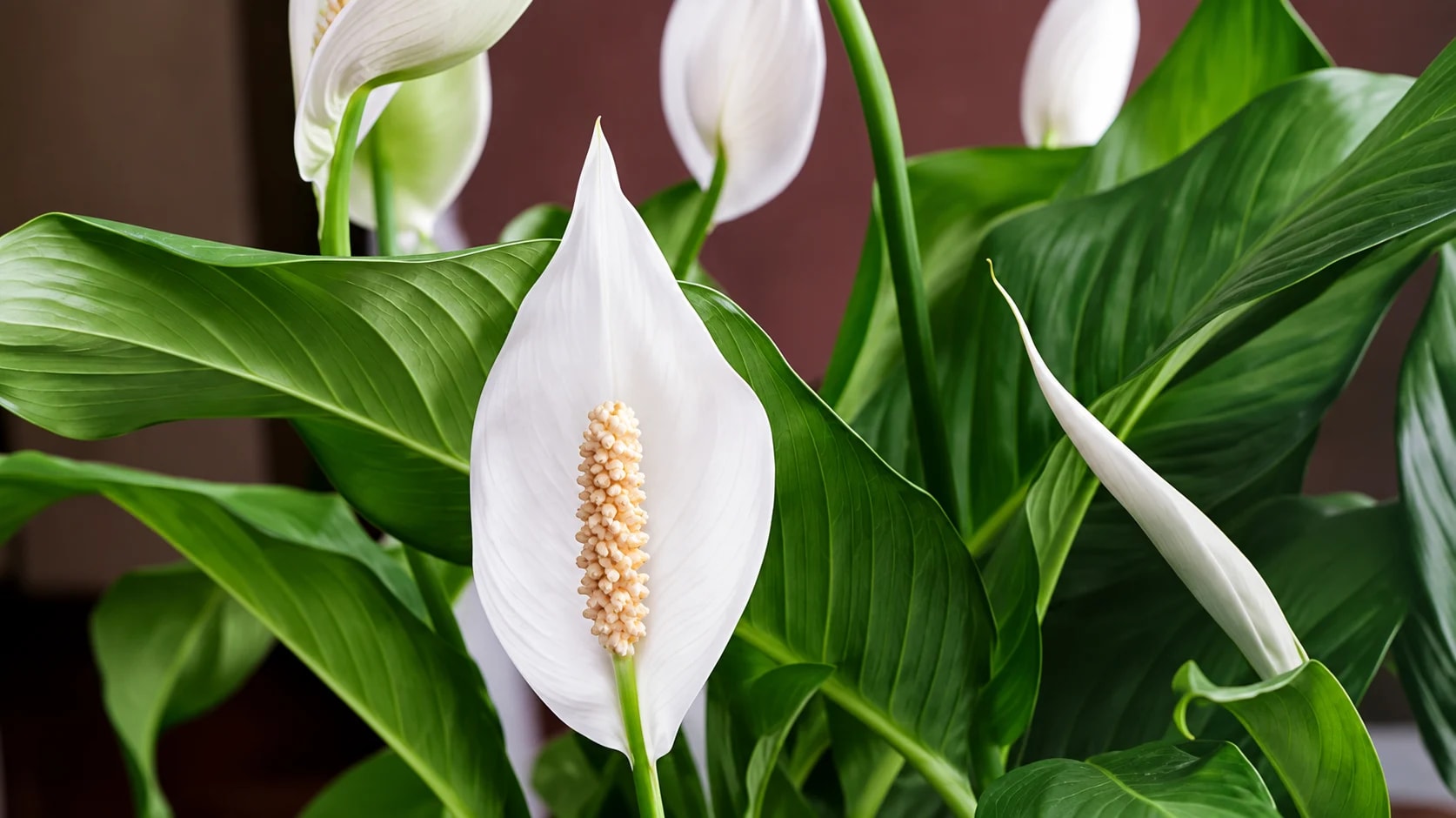
Peace Lily Guide
Everything you need to know about peace lilies
Peace lilies are among the most popular indoor plants for homes, offices, bedrooms, and bathrooms. Their glossy, deep green foliage and elegant white blooms provide a clean tropical look, while their expressive leaves make watering straightforward.
Peace lilies are particularly useful for people looking for low-maintenance indoor plants or plants that can tolerate lower-light indoor conditions.
They can also work well in office spaces and bedrooms when the available light, temperature, space, and watering routine are suitable.
Quick facts
Peace Lily at a Glance
Use these basic characteristics as a starting point when choosing and caring for a peace lily.
Common name
Peace Lily
Botanical name
Spathiphyllum
Also known as
Spathe Flower / White Sails
Light
Bright indirect to low light
Watering
Keep soil consistently moist, not soggy
Maintenance
Low to moderate
Growth
Clumping upright foliage with blooms
Propagation
Root division
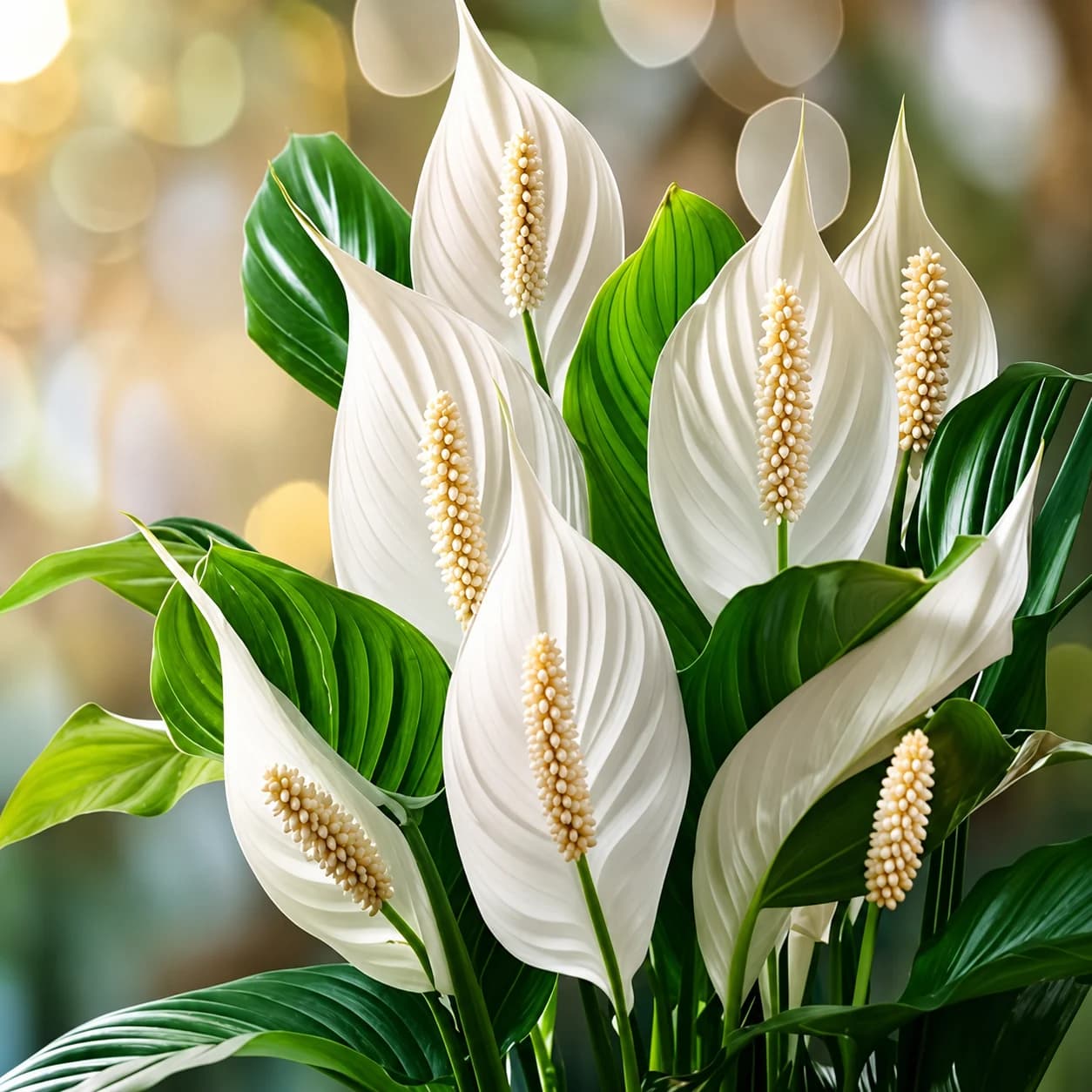
About the plant
What Is a Peace Lily?
The peace lily (Spathiphyllum) is a beloved indoor foliage and flowering plant known for its arching deep green leaves and striking white spathe blooms that resemble flags or sails.
Native to tropical rainforest understories of Central and South America, peace lilies naturally thrive in dappled shade and humid environments.
Their remarkable ability to communicate water needs by gently wilting, combined with their air-purifying qualities, makes them a favorite houseplant for homes and offices alike.
Care guide
How to Care for a Peace Lily
Good peace lily care starts with suitable indirect light, consistent watering, well-draining soil, and a container with drainage.
Peace Lily Light Requirements
Peace lilies thrive in medium to bright indirect light. While they can survive in lower-light corners, adequate indirect light is essential for consistent white flowers.
Avoid direct sunlight, which can quickly burn the tender broad leaves. If you are looking for plants for darker rooms, explore our low-light indoor plants guide.
Peace Lily Watering
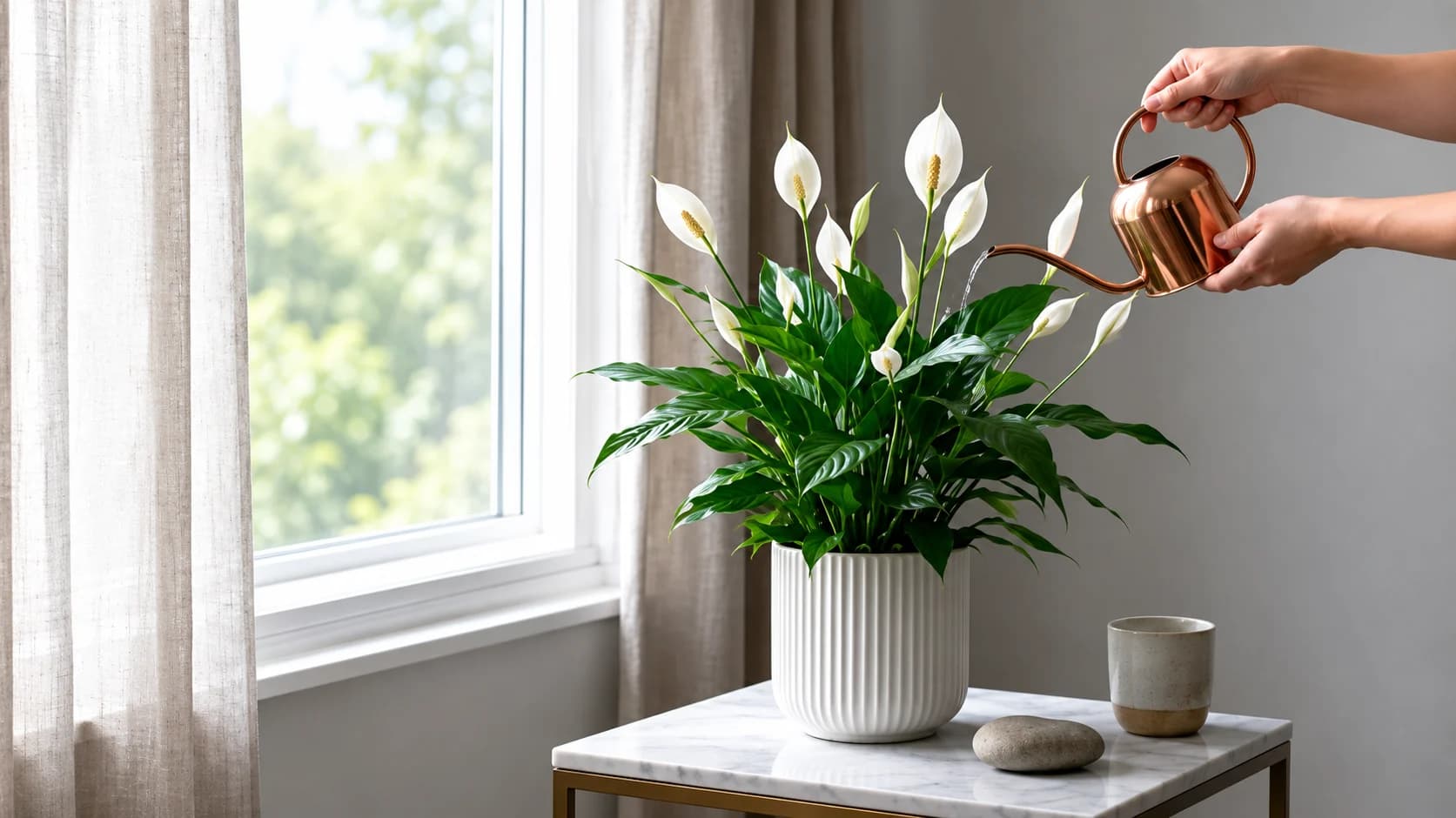
Keep the soil evenly moist but never waterlogged. Water when the top 1 inch of soil feels dry, or when the leaves just start to lose their perkiness.
Always empty the drainage saucer so the roots never sit in standing water. For broader guidance, explore our indoor plant collection and compare care requirements between different houseplants.
Best Soil for Peace Lily
Use a rich, well-aerated potting mix containing peat moss or coco coir, perlite, and bark to retain moisture while ensuring rapid drainage.
Temperature
Peace lilies prefer warm room temperatures between 18°C and 27°C (65°F–80°F). Protect them from cold air conditioning drafts and temperatures below 15°C (60°F).
Humidity
Native to tropical rainforests, peace lilies appreciate higher humidity (50%+). Grouping plants or using a pebble tray helps prevent brown leaf tips.
Fertilizer
Feed with a balanced, diluted houseplant fertilizer once every 6 weeks during spring and summer. Avoid over-fertilizing, which can cause brown tips.
Repotting
Repot every 1–2 years in spring when roots crowd the container or when the plant requires watering more frequently than usual.
Pruning & Cleaning
Trim spent flower stalks at the base and remove yellowing leaves with clean shears. Wipe broad leaves with a damp cloth to keep them glossy and clean.
Choose the right space
Peace Lily for Different Indoor Spaces
Peace lilies can suit several indoor environments when their light and care requirements are matched to the space.
Office Plants
Explore plants suitable for desks, cabins, reception areas, and workspaces.
Explore office plants →Bedroom Plants
Find indoor plants that can work well in bedrooms with suitable light and available space.
Explore bedroom plants →Low-Light Plants
Explore indoor plants that can tolerate lower-light environments.
Explore low-light plants →Low-Maintenance Plants
Discover easy-care indoor plants for busy homes and workspaces.
Explore easy-care plants →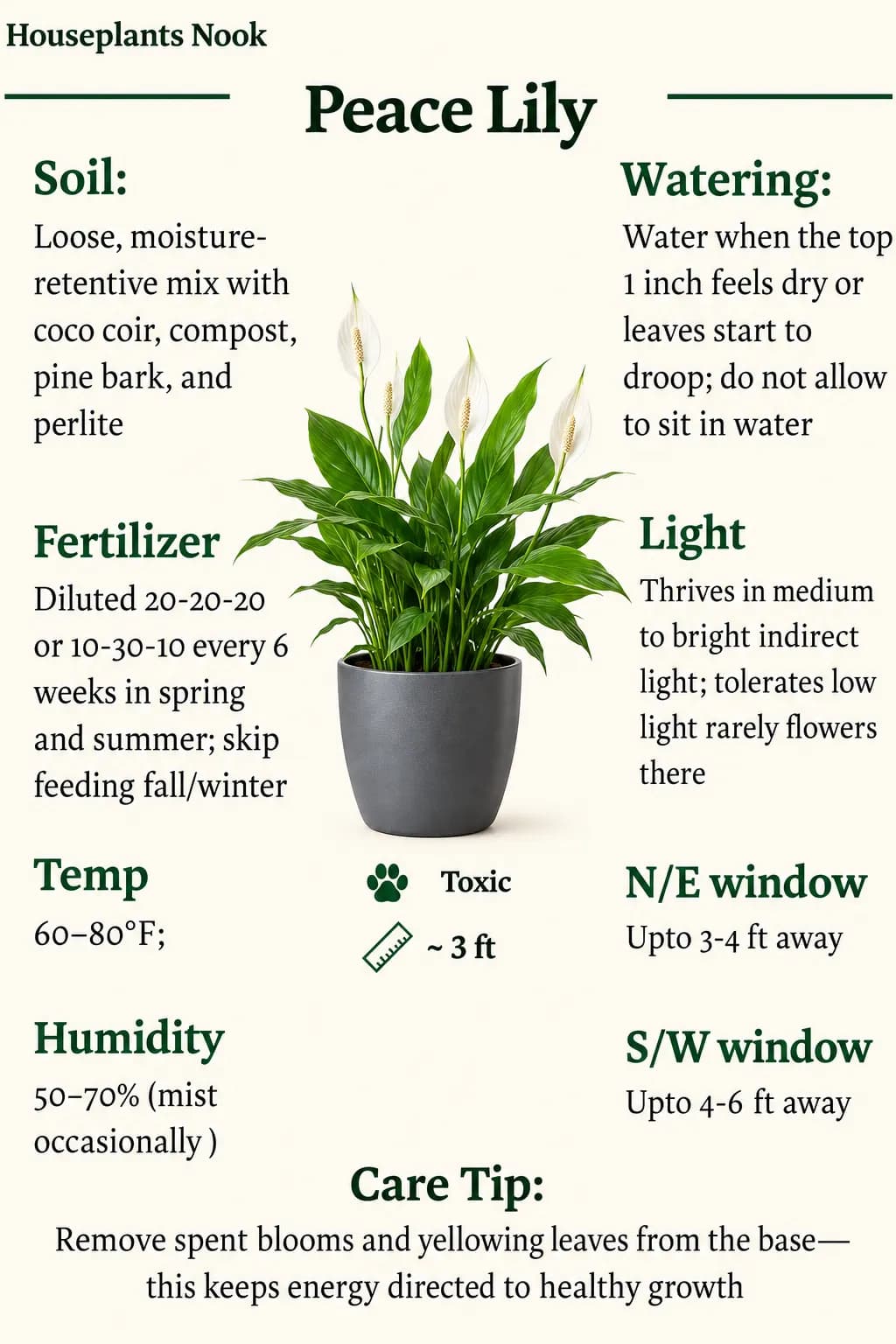
Continue learning
Read our Peace Lily Care Guide
Want more practical guidance on growing peace lilies indoors? Read our detailed Peace Lily care article covering light, watering, humidity, temperature, varieties, and blooming tips.
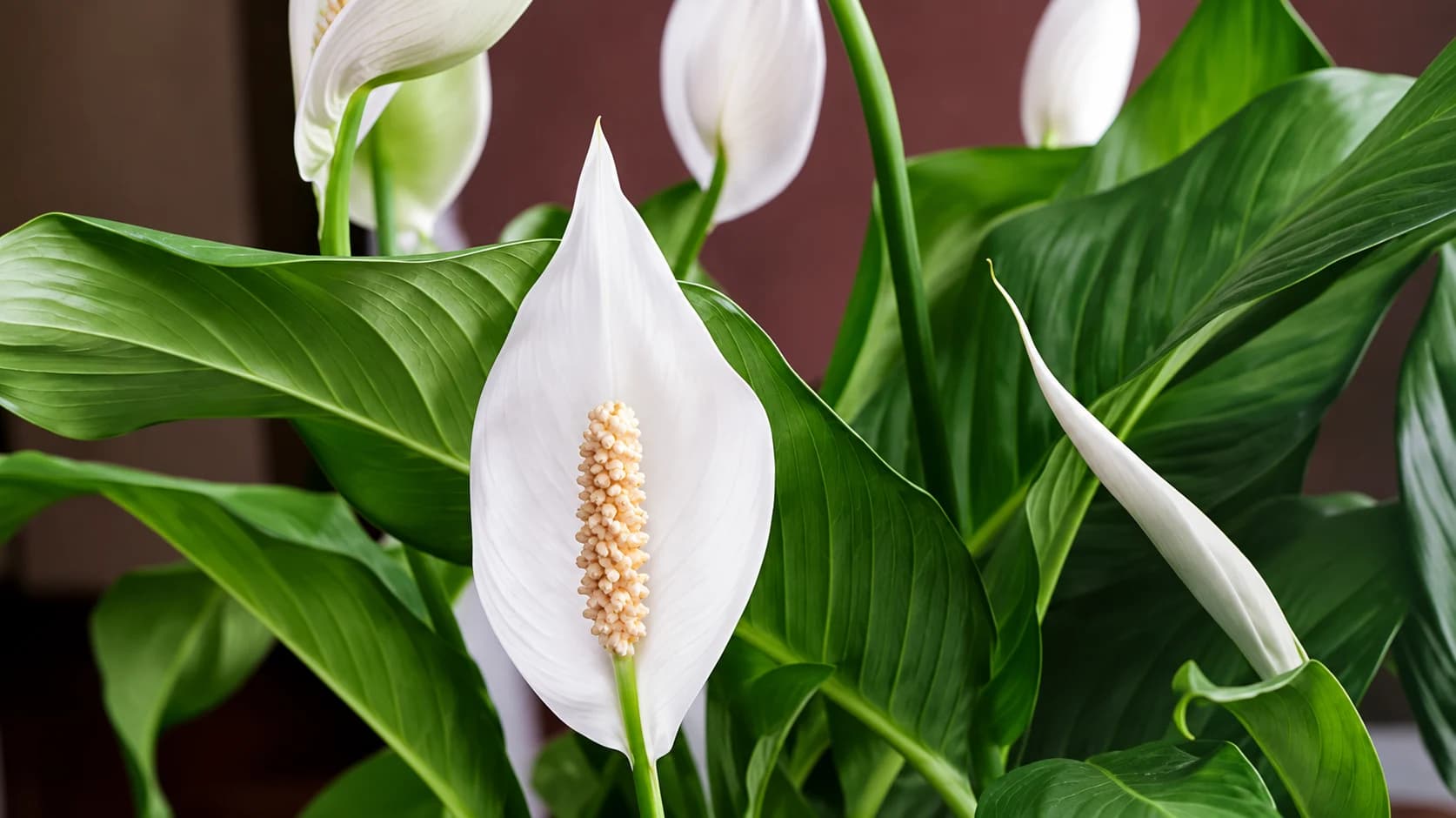
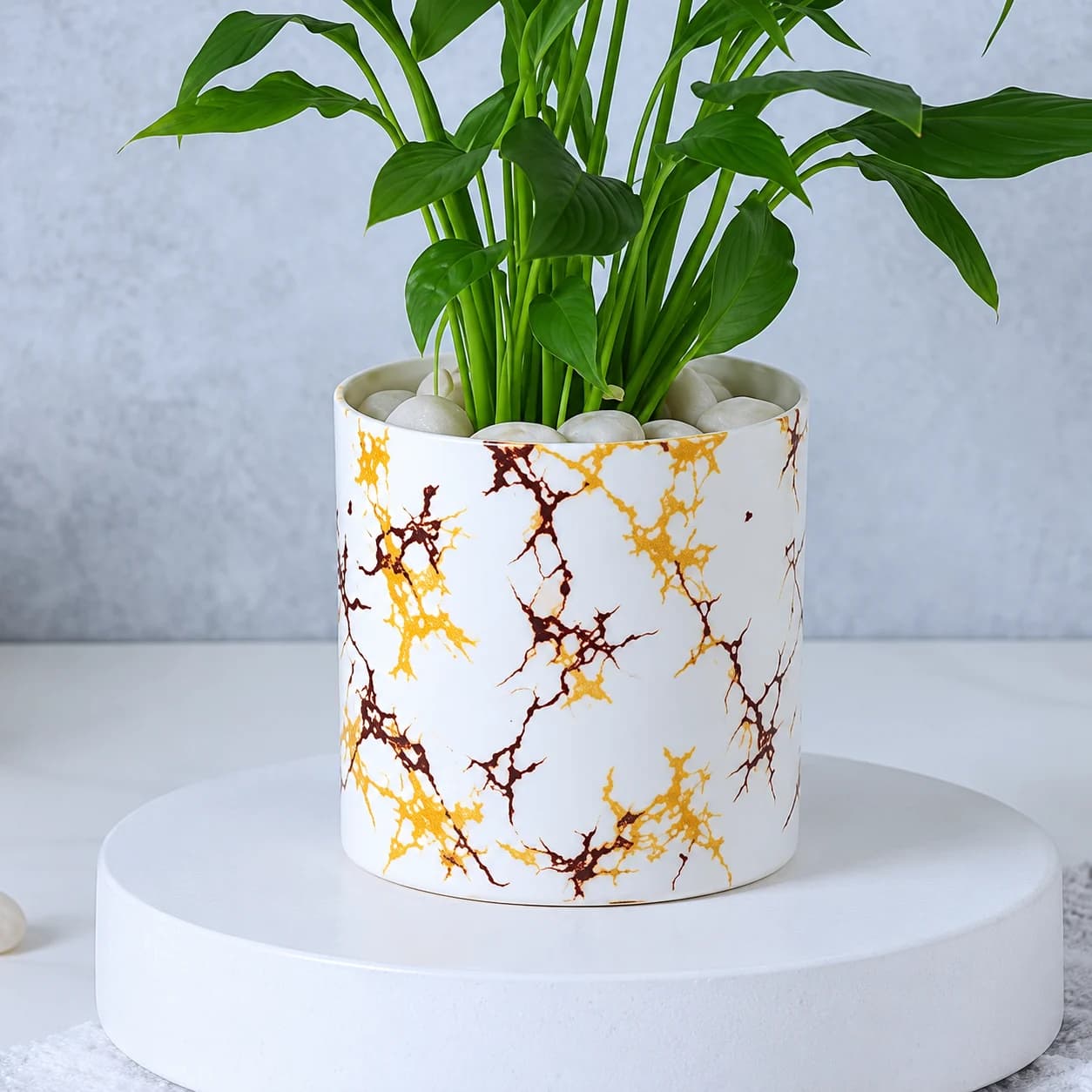

Popular varieties
Peace Lily Varieties
Peace lilies are available in different forms with variations in leaf size, variegation, and bloom characteristics.
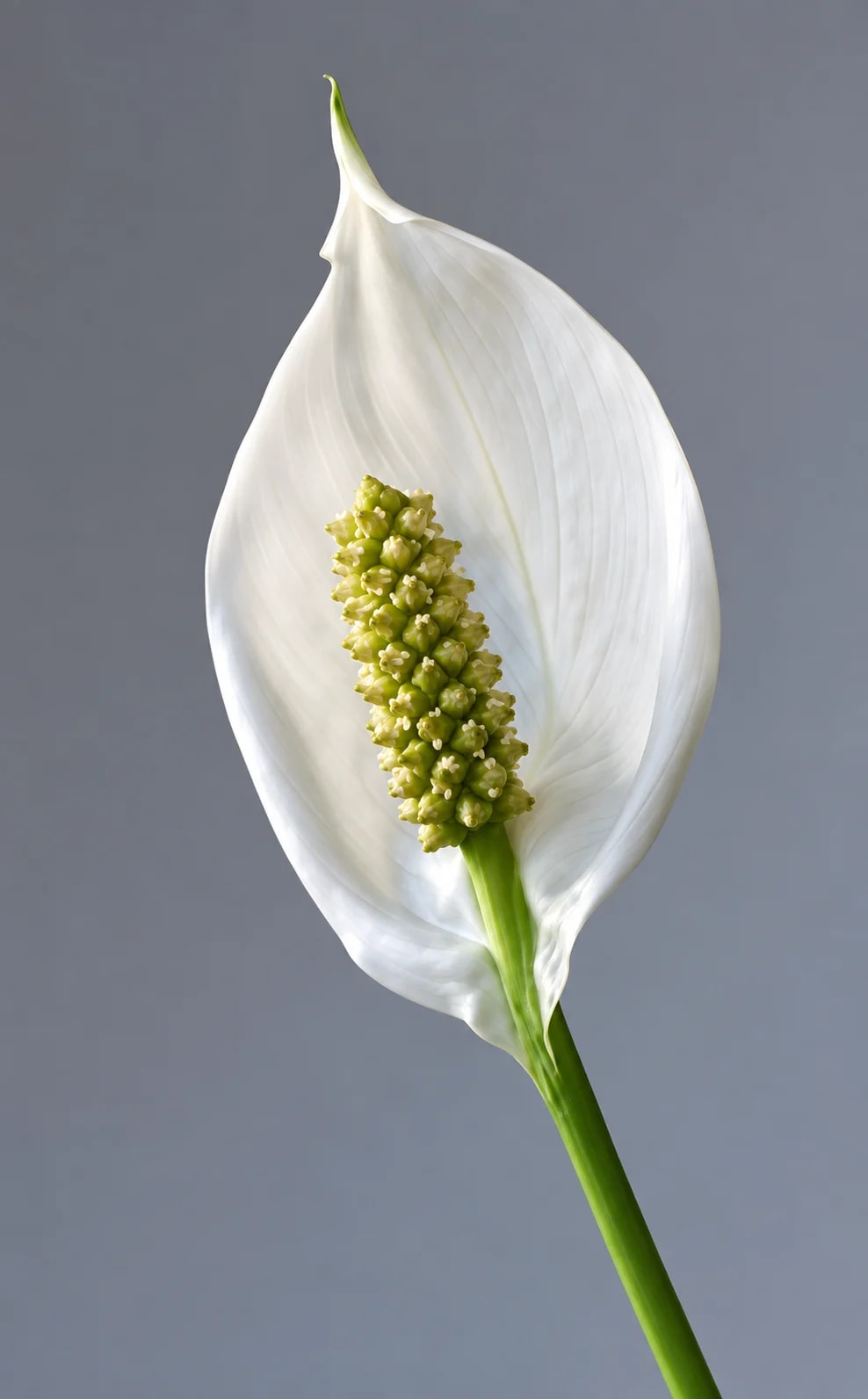
Spathiphyllum wallisii
The classic compact peace lily, ideal for tabletops, desks, and smaller indoor spaces.
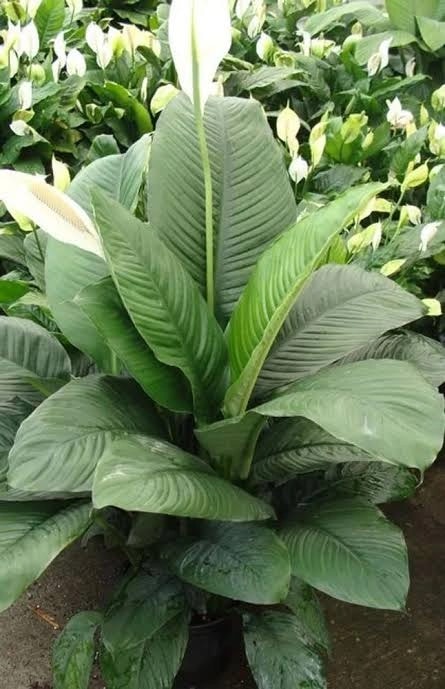
Sensation Peace Lily
The largest cultivar available, featuring enormous, deeply ribbed dark green leaves for a dramatic focal point.
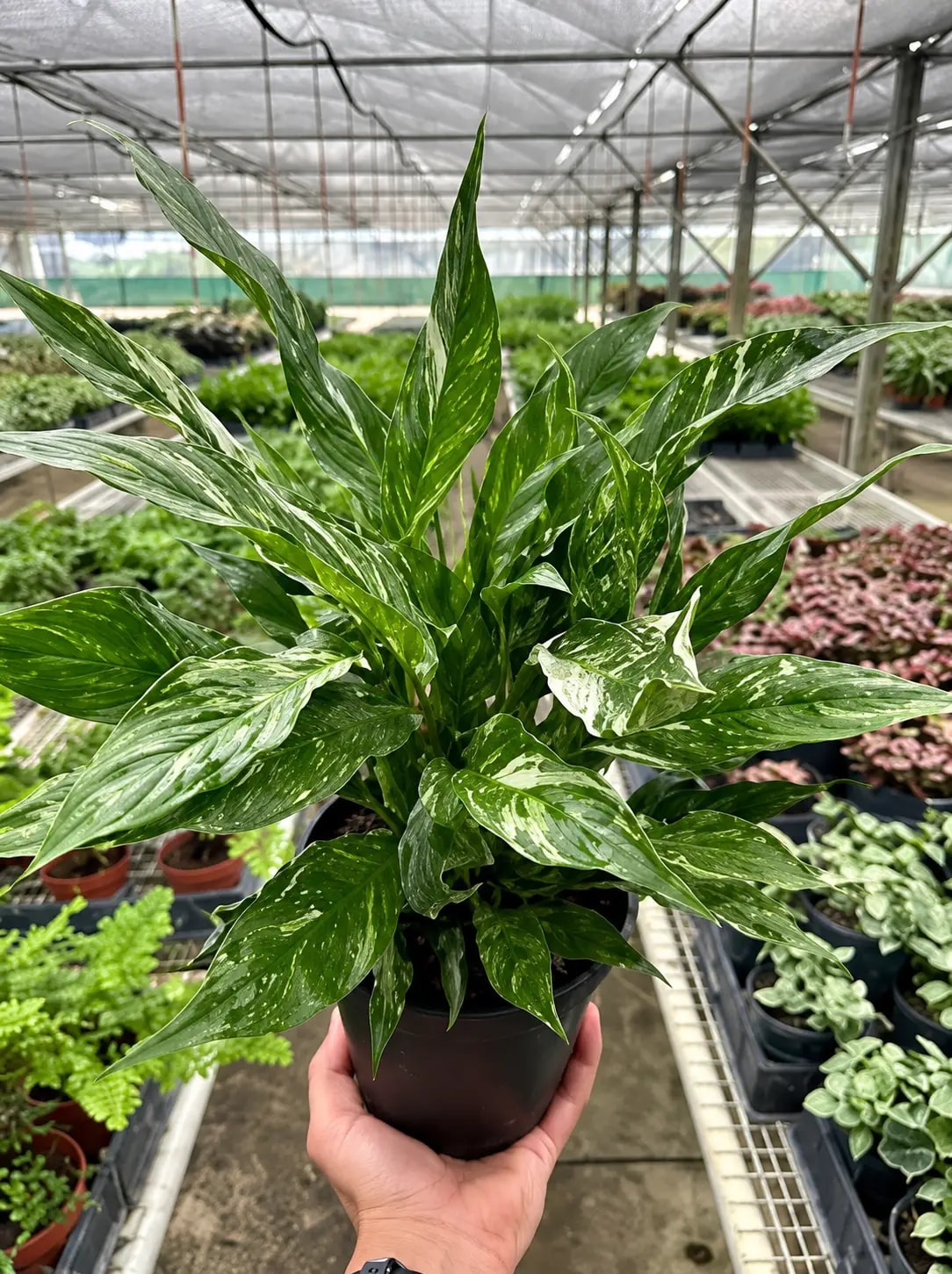
Domino Peace Lily
A stunning variegated cultivar displaying splashes and marbling of pure white across dark green leaves.
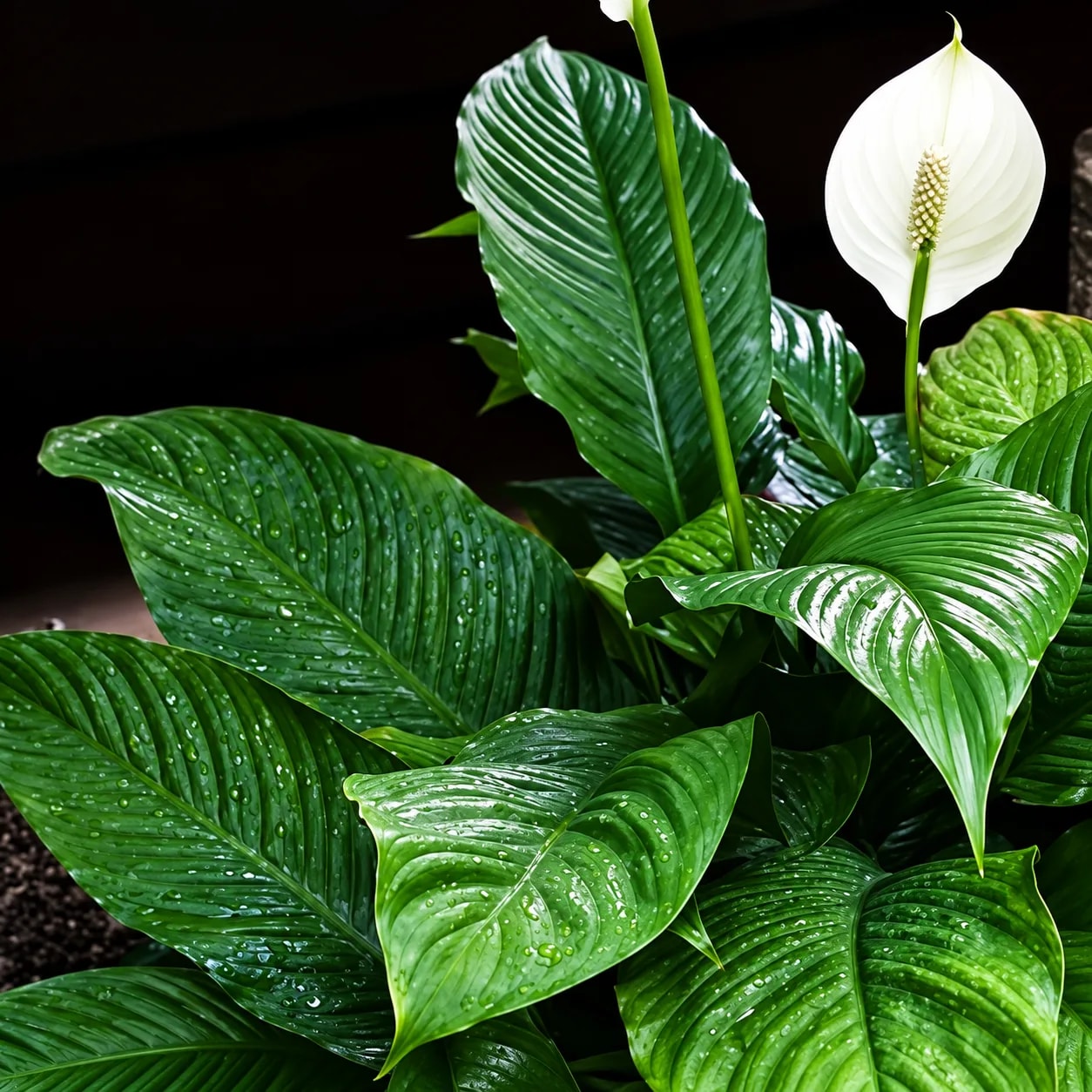
Mauna Loa Peace Lily
A medium-to-large cultivar prized for dense foliage and abundant, long-lasting white spathe flowers.
Why choose a peace lily?
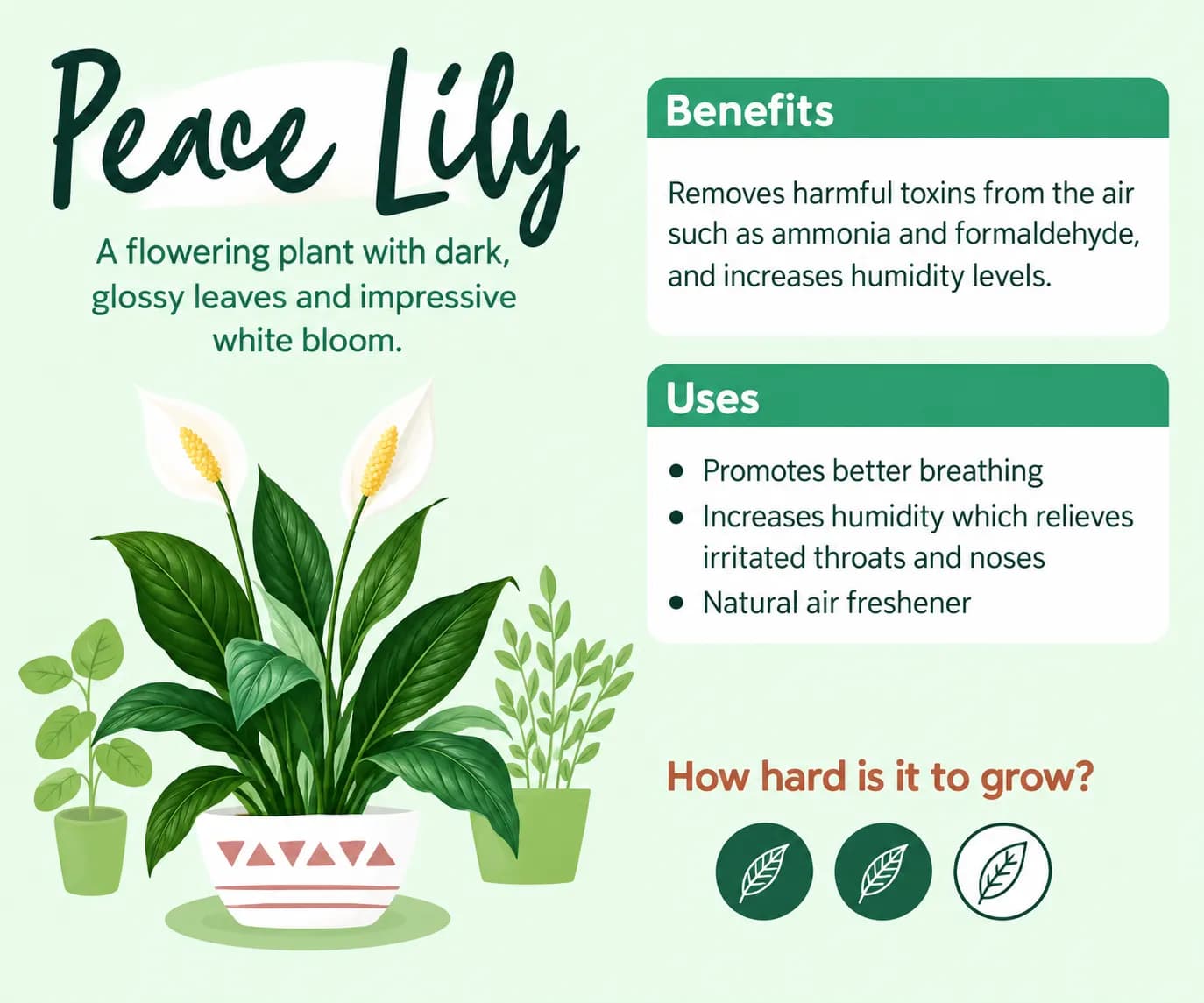
Peace Lily Benefits
- • Produces elegant white blooms throughout the year.
- • Tolerates lower-light indoor conditions.
- • Expressive leaves make watering needs easy to detect.
- • Lush tropical foliage enhances interior aesthetics.
- • Available in compact and statement giant varieties.
Indoor placement
Where to Keep a Peace Lily
Choose a location based on light, temperature, available space, and how easy it is to maintain the plant.
Living Room
A peace lily adds lush green foliage and graceful white blooms to living room corners, side tables, and plant stands.
Bedroom
Peace lilies are among the most popular bedroom plants, creating a serene, relaxing atmosphere with moderate humidity.
Office
Their air-purifying qualities and elegant white spathes bring life to workspaces, reception areas, and conference rooms.
Bathrooms
Bathrooms with a bright indirect window offer ideal natural humidity for peace lilies to flourish with minimal brown tips.
Propagation
How to Propagate a Peace Lily
Peace lilies are propagated by root division during repotting, creating multiple healthy individual plants.
Crown Division
Gently unpot an established peace lily and separate the root ball into natural crown clusters with healthy roots and leaves attached.
Potting New Divisions
Plant each separated division into fresh, well-draining soil, water lightly, and keep in warm, bright indirect light while new roots establish.
Troubleshooting
Common Peace Lily Problems
Changes in leaves or blooms can provide clues that the plant's light, watering, drainage, roots, or environment needs attention.
Yellow Peace Lily Leaves
Yellowing leaves typically indicate overwatering, poor pot drainage, or natural ageing of the lower, older foliage.
Brown Leaf Tips or Edges
Crispy brown leaf tips are often caused by low indoor humidity, tap water minerals, or dry soil conditions.
Drooping or Wilting Foliage
Peace lilies dramatically droop when thirsty, but persistent wilting despite damp soil points to root rot.
Peace Lily Not Blooming
Lack of white spathes usually means the plant needs more bright indirect light or a mild balanced feeding.
Peace Lily Root Rot
Soggy, waterlogged soil suffocates roots, causing soft, blackened roots and rapid leaf discoloration.
Green Flowers
White spathes naturally turn green as they age, but excessive fertilizer or low light can also cause premature green blooms.
For Indian homes
Peace Lily Care in India
Indoor conditions in India can vary significantly between cities, seasons, room orientations, and building types. Avoid following a fixed watering schedule simply because it worked in another home.
During warmer summer months, peace lilies may require more frequent watering and humidity support. During monsoons and cooler winter periods, the soil retains moisture longer.
Good drainage, appropriate indirect light, airflow, and careful observation are more reliable than watering according to a calendar.
Quick checklist
Simple Peace Lily Care Checklist
- • Check soil moisture before watering.
- • Use a pot with proper drainage holes.
- • Provide bright indirect or filtered light.
- • Avoid letting the plant stay waterlogged.
- • Wipe broad leaves to remove dust build-up.
- • Repot when root-bound to refresh soil nutrients.
Plant care principle
Observe the plant, not just the calendar
Watering and care requirements can change with light, temperature, season, pot size, soil, and indoor conditions. A consistent observation-based routine is more useful than treating every peace lily exactly the same way.
Related reading
More Indoor Plant Guides
Explore related Blooming Den guides for choosing and caring for indoor plants.
Snake Plant
Snake Plant Care Guide
Learn practical snake plant care for indoor homes and workspaces.
Read guide →Pothos
Pothos Plant Care Guide
Explore pothos plant care, trailing growth, propagation, and placement.
Read guide →ZZ Plant
ZZ Plant Care Guide
Discover how to care for drought-tolerant ZZ plants indoors.
Read guide →Office Plants
Best Plants for Office in India
Compare peace lily with other plants suitable for desks, offices, and workspaces.
Read guide →Bedroom Plants
Best Plants for Bedroom in India
See how peace lily compares with other popular bedroom plants.
Read guide →Air-Purifying Plants
Indoor Plants That Purify Air Naturally
Explore peace lily and other popular indoor plants for greener interiors.
Read guide →Frequently asked questions
Peace Lily FAQs
Answers to common questions about peace lily care, watering, placement, propagation, and problems.
How often should you water a peace lily?
Peace lilies should generally be watered when the top 1 to 2 inches of soil feel slightly dry. They prefer consistently moist but well-drained soil. Avoid keeping the roots waterlogged or letting the soil dry out completely to the point of severe drooping.
Can peace lilies grow in low light?
Yes. Peace lilies can tolerate low-light indoor environments, though they flower more reliably and produce lusher foliage when provided with moderate to bright indirect light.
Are peace lilies easy to care for?
Yes. Peace lilies are very popular for beginners because they are expressive plants—their leaves subtly droop when thirsty, serving as a helpful indicator for watering.
Where should I place a peace lily?
A peace lily does best in living rooms, bedrooms, offices, and bathrooms where it receives medium to bright indirect light and protection from cold drafts.
Why are my peace lily leaves turning yellow?
Yellow leaves are most commonly caused by overwatering, poorly draining soil, or natural leaf ageing. Check soil moisture and drainage holes before adjusting your watering routine.
Why is my peace lily not flowering?
The most common reason a peace lily stops blooming is insufficient light. Move the plant to a spot with brighter, filtered indirect light and apply a balanced fertilizer during the growing season.
How do you propagate a peace lily?
Peace lilies are propagated by crown division. When repotting, gently separate the root ball into smaller clusters with healthy roots and leaves, then pot each division into fresh soil.
Is Spathiphyllum the botanical name for peace lily?
Yes, Spathiphyllum is the botanical genus name for the peace lily. It belongs to the Araceae family and is native to tropical rainforests of the Americas and Southeastern Asia.
Blooming Den
Create a healthier indoor plant space
Explore indoor plants and practical plant care support for your home or workspace.