
Monsoon Plant Care in India 2026: Complete Guide to Protect Your Plants from Overwatering, Fungus and Pests
The monsoon brings refreshing rain and fresh growth, but excess moisture can damage roots, encourage fungal diseases, and attract unwanted garden pests. Learn how to protect indoor plants, balcony gardens, terrace pots, and outdoor greenery throughout India's rainy season.
Why Monsoon Plant Care Is Important in India
India's monsoon can provide plants with valuable natural moisture. However, repeated rainfall, humid air, and cloudy days can keep potting soil wet for longer than usual. Roots need both moisture and oxygen, so soil that remains saturated can weaken plants and increase the risk of root rot.
Balcony gardens, terrace containers, indoor plants near open windows, and plants growing in heavy garden soil can face different challenges. The best care routine depends on the plant species, pot size, drainage, rainfall exposure, and local weather.
The goal is not to keep every plant dry. It is to maintain suitable moisture while allowing excess water to drain away.
1. Prevent Overwatering During the Monsoon
Overwatering is one of the most common problems during rainy weather. A plant that needed frequent watering in summer may need much less once regular showers begin.
How to check whether your plant needs water
- Touch the soil surface and check a little below it.
- If the soil is still damp, wait before watering again.
- Check whether rain has already reached the pot.
- When watering is needed, water the soil evenly and allow excess water to drain.
- Empty saucers and decorative containers after rainfall.
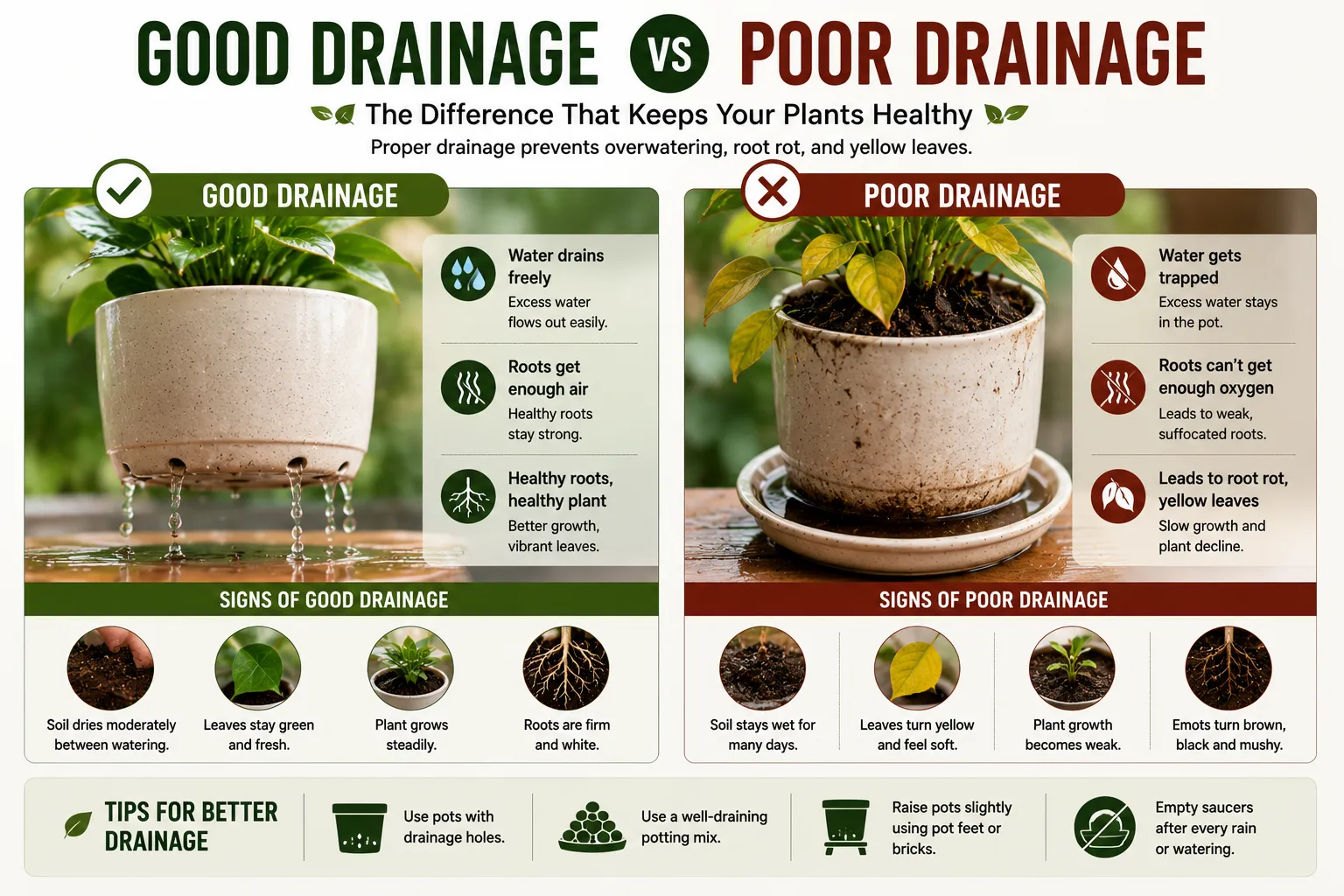
2. Improve Drainage in Pots and Garden Beds
Proper drainage helps excess rainwater escape and allows air to reach plant roots. Without it, soil can remain saturated for too long.
For balcony and terrace pots
- Use containers with open drainage holes.
- Clear blocked holes carefully.
- Raise pots using stable pot feet or stands.
- Remove water collected in trays.
- Use a potting mix suited to the plant.
For outdoor garden beds
- Prevent water from collecting around plant bases.
- Improve compacted soil where appropriate.
- Consider raised beds in areas that repeatedly flood.
- Keep drainage paths clear of leaves and debris.
- Avoid walking on saturated soil unnecessarily.
Adding more sand, compost, or other material does not automatically fix every soil problem. Choose amendments based on the existing soil and the needs of your plants.
3. Protect Plants from Fungal Diseases
Warm, humid conditions and leaves that stay wet for long periods can increase the risk of certain fungal diseases. Warning signs include spreading leaf spots, powdery coatings, and damaged or decaying plant tissue.
Signs to look for
- Brown or black spots that continue to spread.
- White powder-like growth on leaf surfaces.
- Soft stems or decaying plant parts.
- Repeated leaf drop alongside persistently wet soil.
- White or fuzzy growth on the soil surface.
Practical ways to reduce fungal problems
- Leave enough space between pots for air circulation.
- Water at soil level instead of repeatedly wetting foliage.
- Remove affected leaves with clean gardening tools.
- Dispose of diseased plant material rather than putting it in ordinary compost.
- Give plants suitable light and avoid dark, damp corners.
4. Watch Out for Monsoon Pests
Rainy weather can bring pest problems to balconies, terraces, and indoor plant collections. Regular inspection helps you identify infestations before they spread.
| Pest or problem | What to look for | First step |
|---|---|---|
| Aphids | Small insects clustered on new growth | Inspect shoots and gently wash them off where suitable. |
| Mealybugs | White, cotton-like clusters | Isolate the affected plant and inspect nearby pots. |
| Fungus gnats | Small flies around persistently damp soil | Allow suitable soil drying and improve drainage. |
| Snails and slugs | Chewed leaves and slime trails | Inspect damp areas and remove hiding debris. |
| Spider mites | Fine webbing and speckled leaves | Check leaf undersides and isolate badly affected plants. |
Neem-based products may help manage certain pests when used correctly, but they do not treat every insect or fungal disease. Follow the label, test on a small part of the plant first, and avoid spraying pollinators or applying products in unsuitable weather.
5. Protect Plants from Heavy Rain and Strong Winds
Heavy showers can break stems, wash soil out of pots, damage tender seedlings, and knock over containers. A few simple preparations can reduce this risk.
- Move delicate plants to a bright, sheltered area during severe rain.
- Secure hanging baskets and railing planters.
- Place tall pots on stable, level surfaces away from exposed edges.
- Support climbers and plants with weak stems.
- Check that drainage holes are not covered by pooled water.
- After a storm, remove broken stems and replace washed-out soil where needed.
Avoid placing heavy pots where they could fall from balconies or terraces. Prioritise a secure location over convenience.
6. Adjust Sunlight and Airflow
Cloudy weather reduces available sunlight, while humid air can slow the drying of soil and leaves. Plants still need the right amount of light for their species.
Indoor plants
Keep plants near an appropriate light source, allow air to move through the room, and avoid placing pots in constantly damp, unventilated corners.
Balcony and terrace plants
Give plants their required light while sheltering vulnerable species from prolonged downpours. Space pots so leaves can dry between showers.
7. Fertilize Carefully During the Rainy Season
Heavy rain can wash nutrients out of containers and garden beds, but adding extra fertilizer whenever leaves look pale is not always the answer. Excess moisture, root damage, and insufficient light can produce similar symptoms.
- Check drainage and root health before feeding a struggling plant.
- Do not apply fertilizer to saturated soil.
- Use compost or a suitable fertilizer in moderation when growth is healthy.
- Apply nutrients during a suitable break in the rain.
- Follow the product's recommended amount and application method.
8. Common Monsoon Plant Problems and Solutions
Yellow leaves and wet soil
What to do: Pause watering, check drainage, and move the plant under cover if rain exposure is excessive. Check for other causes if yellowing continues.
Wilting while soil is wet
What to do: Do not immediately add more water. Inspect drainage and check whether roots show signs of decay if the problem is severe.
White growth on leaves or soil
What to do: Determine whether it is surface mould, mineral residue, or a plant disease. Improve airflow and avoid persistent excess moisture.
Leaves damaged after a storm
What to do: Remove badly broken parts with clean tools, stabilise the pot, and protect the plant from another period of severe weather.
9. How to Save a Plant After Overwatering
If a plant has remained in saturated soil and is wilting or declining, check its condition before making major changes.
- Move it out of direct rainfall to a bright, sheltered spot suited to its light needs.
- Stop additional watering while the soil remains excessively wet.
- Check whether the pot's drainage holes are blocked.
- If root rot is suspected, inspect the roots carefully. Healthy roots are generally firm, while rotting roots may be dark and soft.
- If necessary, trim clearly decayed roots using clean tools and repot in fresh, suitable, well-draining mix.
- Allow the plant to recover and resume watering only when its needs and soil moisture indicate it is appropriate.
Recovery depends on the plant species and how much damage has occurred. Avoid heavy fertilizing while roots are stressed.
10. Your Weekly Monsoon Plant Care Checklist
Use this simple checklist to build a consistent routine without overwatering your plants.
- ✓Check drainage holes in every pot.
- ✓Raise containers above wet floors.
- ✓Check soil moisture before watering.
- ✓Move vulnerable plants under a bright shelter.
- ✓Remove fallen and diseased leaves.
- ✓Keep enough space between plants for airflow.
- ✓Inspect leaf undersides for pests.
- ✓Secure tall pots and hanging planters before storms.
Frequently Asked Questions
How often should I water plants during the monsoon?
There is no fixed watering schedule for the rainy season. Check the top layer of soil before watering. If it is still damp, wait until it begins to dry. Outdoor plants may receive enough water from rainfall alone.
How can I prevent root rot during the monsoon?
Use pots with drainage holes, keep drainage openings clear, raise pots above wet floors, and avoid leaving water in saucers. If soil stays waterlogged, move the plant to a sheltered area and assess whether it needs fresh, well-draining soil.
Why are my plant leaves turning yellow during the rainy season?
Yellow leaves can result from excess moisture, poor drainage, low light, nutrient issues, or pests. Check the soil and roots before adding water or fertilizer.
How do I protect plants from fungal diseases?
Space pots apart to improve airflow, remove affected leaves, avoid keeping foliage wet for long periods, and water directly onto the soil. If symptoms continue to spread, identify the disease before choosing a suitable treatment.
Should I use fertilizer during the monsoon?
Avoid heavy feeding when the soil is saturated or the plant is stressed. Once drainage improves and healthy growth resumes, use a modest amount of suitable fertilizer according to the product instructions.
Which plants need extra protection during heavy rain?
Cacti, succulents, young seedlings, delicate flowering plants, and plants in containers with slow-draining soil may need shelter from prolonged rain. Their needs vary by species, so avoid keeping them in darkness for extended periods.
Keep Your Garden Healthy This Monsoon
Successful monsoon gardening is about balancing moisture, drainage, light, and airflow. You do not need a complicated daily routine. Check the soil before watering, remove damaged leaves, inspect for pests, and protect vulnerable plants when heavy rain or strong winds arrive.
Every plant has different needs, so observe how your garden responds to local weather. With regular checks and a few practical adjustments, you can reduce common rainy-season problems and help your plants grow well throughout the monsoon.
Give Your Plants the Care They Need
Explore more practical gardening guides, seasonal plant-care tips, and easy ideas for creating a healthier home garden with BloomingDen.
Explore More Gardening Guides