
Indoor Plants / Plant Guide
Money Plant: Complete Care Guide, Benefits & Varieties
Learn how to grow and care for money plants indoors with practical guidance on light, watering, soil, propagation, varieties, common problems, and indoor placement.
Money Plant Guide
Everything you need to know about money plants
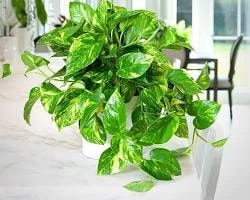
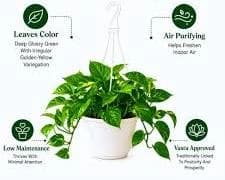
Money plant is one of the most popular indoor plants for homes and workspaces. The name is commonly used for pothos, also known as Epipremnum aureum. Its trailing stems and attractive foliage make it suitable for shelves, desks, hanging planters, and suitable indoor corners.
Money plants are particularly useful for people looking for low-maintenance indoor plants because they can adapt to a range of indoor conditions. However, suitable light, watering, drainage, and growing conditions are still important for healthy growth.
If your home has limited natural light, explore our low-light indoor plants guide and compare money plant with other plants that can tolerate lower-light environments.
Money plant can also work well in office spaces and bedrooms when available light, temperature, space, and watering requirements are suitable.
Quick facts
Money Plant at a Glance
Use these basic characteristics as a starting point when choosing and caring for a money plant indoors.
Common name
Money Plant
Botanical name
Epipremnum aureum
Also known as
Pothos / Devil's Ivy
Light
Bright indirect to lower light
Watering
Allow topsoil to dry between watering
Maintenance
Low
Growth
Fast trailing / climbing vines
Propagation
Stem cuttings in water or soil
About the plant
What Is a Money Plant?
Money plant is a common name used for ornamental plants grown indoors. In many homes and gardening contexts, the term refers to pothos, scientifically known as Epipremnum aureum.
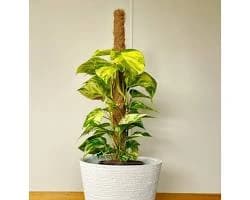
Pothos is valued for its trailing vines and attractive leaves. Depending on the variety, the foliage may be green, yellow, cream, white, or strongly variegated.
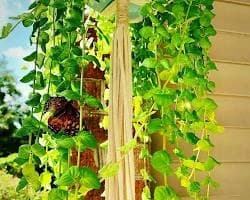
Its flexible growth habit makes it useful for shelves, tabletop planters, hanging containers, and other indoor displays. The right placement should always be selected according to light, space, drainage, and care requirements.
Care guide
How to Care for a Money Plant
Good money plant care starts with suitable light, controlled watering, well-draining soil, and regular observation.
Money Plant Light Requirements
Money plants adapt to different indoor light levels. Bright indirect light produces the fastest growth and richest leaf variegation, while lower-light spots are also well-tolerated.
If you are specifically looking for plants for darker indoor areas, see our low-light indoor plants guide.
Money Plant Watering
Water according to soil moisture rather than a strict calendar. Allow the top 1–2 inches of potting mix to dry out before watering again.
Always empty drainage saucers to prevent waterlogging. For broader guidance, explore our indoor plant collection and compare care requirements between different houseplants.
Best Soil for Money Plants
Use a loose, aerated potting mix containing peat moss or coco coir and perlite that drains freely while retaining balanced moisture.
Temperature
Money plants thrive in comfortable indoor temperatures between 18°C and 30°C (65°F–86°F). Protect them from cold air conditioning drafts and chilly winter windows.
Humidity
They adapt easily to normal household humidity (40–60%). Moderate humidity supports faster growth and vibrant leaf gloss.
Fertilizer
Feed with a balanced liquid houseplant fertilizer once a month during active growth in spring and summer. Withhold feeding in winter.
Repotting
Repot every 1–2 years in spring when roots fill the pot or emerge from drainage holes, stepping up to a container 1–2 inches larger.
Pruning & Leaf Cleaning
Prune vines regularly to control length and stimulate denser growth. Wipe leaves with a damp cloth periodically to keep them shiny and dust-free.
Choose the right space
Money Plant for Different Indoor Spaces
The trailing growth of money plant makes it flexible for several indoor locations when light, space, and care requirements are suitable.
Office Plants
Explore plants suitable for desks, cabins, reception areas, and workspaces.
Explore office plants →Bedroom Plants
Find indoor plants that can work well in bedrooms with suitable light and available space.
Explore bedroom plants →Low-Light Plants
Explore indoor plants that can tolerate lower-light environments.
Explore low-light plants →Low-Maintenance Plants
Discover easy-care indoor plants for busy homes and workspaces.
Explore easy-care plants →
Continue learning
Read our Money Plant Care Guide
Want more practical guidance on growing money plants indoors? Read our detailed Money Plant care article covering light, watering, soil, propagation, pruning, varieties, and common care mistakes.

Popular varieties
Money Plant Varieties
Money plant varieties differ mainly in leaf colour, variegation, pattern, and growth appearance.
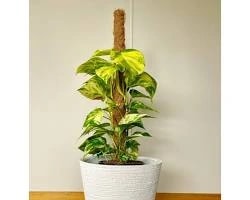
Golden Pothos
The classic money plant with heart-shaped green leaves splashed with golden-yellow variegation.
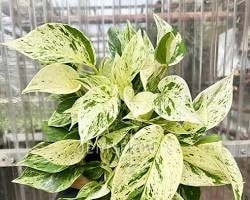
Marble Queen
Features rich cream and white marbling across deep green foliage, preferring brighter indirect light.
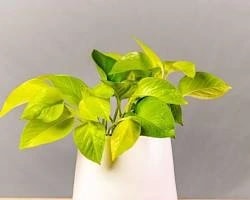
Neon Pothos
Recognised for striking, solid chartreuse-green leaves that add bright energy to indoor spaces.
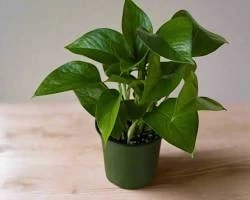
Jade Pothos
Features solid deep emerald green leaves and exceptional tolerance for lower indoor light conditions.
Why choose a money plant?
Money Plant Benefits
- • Attractive cascading vines that enhance shelves and corners.
- • Extremely adaptable to varied indoor conditions.
- • Can be grown in soil pots, hanging baskets, or water vases.
- • Available in multiple striking leaf variegation patterns.
- • Readily propagates from simple stem cuttings.
Indoor placement
Where to Keep a Money Plant
Choose a location based on light, temperature, available space, drainage, and how easy it is to maintain the plant.
Living Room
Money plants add lush trailing greenery to living room shelves, side tables, and TV consoles with bright indirect light.
Bedroom
A great choice for nightstands and dressers, bringing calming greenery and air-purifying qualities to sleeping spaces.
Office
Thriving under fluorescent office lighting with minimal fuss, money plants are staples for desks, cabins, and reception areas.
Small Spaces
Hanging planters and vertical moss poles make clever use of vertical space where floor and tabletop area is limited.
Propagation
How to Propagate a Money Plant
Money plants are among the easiest houseplants to propagate using simple stem cuttings.
Propagation in Water
Take a 4–6 inch cutting just below a leaf node. Place the node in clean water in bright indirect light. Roots will sprout within 1–2 weeks.
Propagation in Soil
Insert fresh stem cuttings directly into moist potting mix with at least one node buried. Keep soil consistently damp until new shoots appear.
Troubleshooting
Common Money Plant Problems
Changes in leaves and growth can provide clues that light, watering, drainage, roots, or the growing environment needs attention.
Yellow Money Plant Leaves
Yellowing leaves are usually caused by overwatering, poor pot drainage, or natural ageing of older lower leaves.
Brown or Dry Leaf Tips
Crispy brown edges often indicate dry indoor air, underwatering, or excessive direct sunlight scorching the foliage.
Drooping Vines
Vines droop when the plant is thirsty, but persistent drooping in wet soil is a symptom of root damage.
Money Plant Root Rot
Persistently saturated soil suffocates roots, leading to mushy dark roots and sudden leaf loss.
Slow or Stalled Growth
Insufficient light, low nutrients, or cramped root-bound pots can significantly slow down vine development.
Leggy or Sparse Stems
Long stems with few leaves indicate low light. Prune vines back and provide more indirect light for bushier growth.
For Indian homes
Money Plant Care in India
Indoor conditions in India can vary considerably between cities, seasons, room orientations, building types, and ventilation. Avoid following a fixed watering schedule simply because it worked in another home.
During warmer periods, check the growing medium regularly, but do not automatically increase watering if the soil is still damp. During cooler or lower-light periods, the plant may use water more slowly.
Good drainage, suitable indirect light, airflow, appropriate temperature, and careful observation are more reliable than watering according to a calendar.

Quick checklist
Simple Money Plant Care Checklist
- • Check the soil before watering.
- • Provide suitable indirect or filtered light.
- • Use a pot with drainage holes.
- • Avoid constantly saturated soil.
- • Prune excessively long or leggy vines.
- • Repot when the plant outgrows its container.
Plant care principle
Observe the plant, not just the calendar
Money plant care requirements can change with light, temperature, season, pot size, soil, humidity, and indoor conditions. A consistent observation-based routine is more useful than treating every money plant exactly the same way.
Related reading
More Indoor Plant Guides
Explore related Blooming Den guides for choosing and caring for indoor plants.
Snake Plant
Snake Plant Care Guide
Learn practical snake plant care for indoor homes and workspaces.
Read guide →ZZ Plant
ZZ Plant Care Guide
Discover how to care for drought-tolerant ZZ plants indoors.
Read guide →Peace Lily
Peace Lily Care Guide
Explore peace lily light, watering, blooms, and common care tips.
Read guide →Office Plants
Best Plants for Office in India
Compare popular indoor plants for desks, offices, and workspaces.
Read guide →Bedroom Plants
Best Plants for Bedroom in India
Explore popular plants for bedrooms according to indoor conditions.
Read guide →Air-Purifying Plants
Indoor Plants That Purify Air Naturally
Explore money plant and other popular indoor plants for greener interiors.
Read guide →Frequently asked questions
Money Plant FAQs
Answers to common questions about money plant care, watering, light, propagation, placement, varieties, and common problems.
How often should you water a money plant?
Money plants should generally be watered when the top 1 to 2 inches of soil feel dry. Watering frequency depends on light, temperature, humidity, pot size, soil, and season. Avoid keeping the soil constantly waterlogged because excess moisture can lead to root problems.
Can money plants grow in low light?
Money plants can tolerate lower-light indoor conditions, although growth is slower and leaf variegation may become less pronounced. Bright indirect light is ideal for healthy, vigorous trailing growth.
Are money plants easy to care for?
Yes. Money plants are widely considered very easy to maintain and forgiving for beginners. They adapt readily to various indoor environments and recover well from occasional underwatering.
Where should I place a money plant?
A money plant can be placed on shelves, desks, tabletops, or in hanging planters where its trailing vines can drape freely with access to bright indirect light.
Why are my money plant leaves turning yellow?
Yellow leaves can have several causes, but overwatering and poor drainage are the most common. Check the soil moisture, drainage holes, potting mix, and light before changing your watering routine.
Can a money plant grow in water?
Yes. Money plant cuttings root and grow easily in clean water. Replace the water every 7 to 10 days and provide bright indirect light to maintain healthy growth.
How do you propagate a money plant?
Money plants are simple to propagate from stem cuttings. Cut a healthy vine just below a leaf node and place it in water or moist soil until roots develop.
Is Epipremnum aureum the botanical name for money plant?
In India and many regions, money plant commonly refers to Epipremnum aureum (also known as pothos or devil's ivy). It belongs to the Araceae family.
Blooming Den
Create a healthier indoor plant space
Explore indoor plants and practical plant care support for your home or workspace.