
Rain-Thriving Botanical Paradise
Monsoon Season Plants in India — Best Rainy Season Flowers & Tropicals
Monsoon brings revitalizing rain, natural nitrogen, and high humidity that transform gardens into lush jungles. Learn which plants thrive in rainy weather and how to protect them from waterlogging and fungus.
Comprehensive Monsoon Season Plants Guide
How to Grow & Care for Monsoon Season Plants Successfully
The arrival of the Indian monsoon brings a dramatic rejuvenation to plant life. Rainwater is naturally soft, slightly acidic, and packed with dissolved atmospheric nitrogen—giving plants an instant growth spurt that no tap water can ever replicate. High humidity creates the ideal environment for exotic tropicals, bulbous flowers, and lush foliage plants.
However, monsoon gardening also comes with distinct challenges: stagnant water in pots causes rapid root rot, soil pests thrive, and fungal leaf spot spreads swiftly in humid air. By ensuring impeccable container drainage, elevating pots on stands, and practicing organic fungal prevention, your garden will thrive magnificently through the rains.
Top Varieties & Blooms
Best Monsoon Season Plants for Home, Balcony & Gardens
Explore the most popular and resilient species suited for Indian climate zones, balconies, and pots.
Rain Lily (Zephyranthes)
रेन लिली
Zephyranthes grandiflora / candida
The quintessential monsoon flower. Rain lilies stay dormant until the first monsoon raindrops touch their potting soil, prompting hundreds of pink, white, and golden-yellow star blooms to burst forth within 48 hours.
Balsam (Gulmehendi)
गुलमेंहदी / बालसम
Impatiens balsamina
A fast-growing traditional monsoon annual loaded with ruffled, rose-like blossoms along succulent stems in purple, pink, scarlet, white, and spotted patterns. Leaves were traditionally used for natural dye.
Tropical Hibiscus (Gudhal)
गुड़हल (Gudhal)
Hibiscus rosa-sinensis
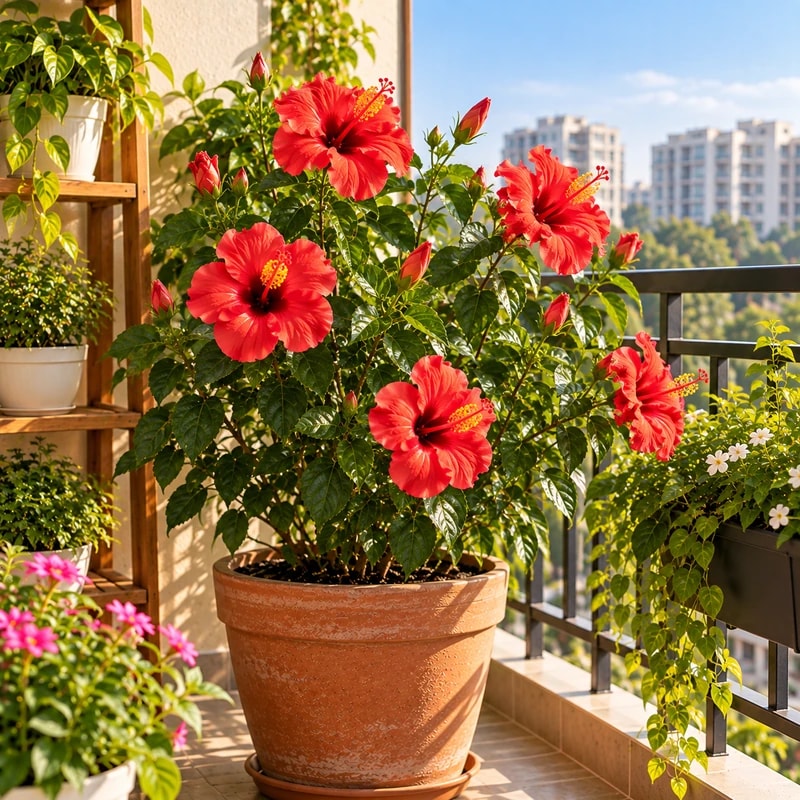
Hibiscus loves warm monsoon humidity and rewards plant parents with gigantic red, coral, yellow, and double-layered blooms. Rain washes away summer dust, stimulating glossy deep green foliage.
Lotus & Water Lily
कमल (Kamal) / कुमुदिनी
Nelumbo nucifera / Nymphaea
Sacred aquatic bloomers that reach peak flowering grandeur during monsoon. A wide, non-draining tub filled with clay soil and water creates a miniature aquatic ecosystem complete with mosquito-eating guppy fish.
Crotons
क्रोटन
Codiaeum variegatum
Celebrated for exotic multicolored leathery leaves splashed with fiery red, amber yellow, lime green, and deep bronze. High monsoon humidity prevents leaf drop and brings out maximum foliage brilliance.
Boston Fern & Nephrolepis
बोस्टन फर्न
Nephrolepis exaltata
Monsoon is fern heaven! Boston ferns, Sword ferns, and Maidenhair ferns flourish with feather-like arching fronds when ambient humidity is high, filtering the air and adding deep forest serenity.
Caladium (Elephant Ear / Heart of Jesus)
कैलेडियम
Caladium bicolor
Grown from bulbs for spectacular translucent, paper-thin heart-shaped leaves painted in neon pink, white veining, and emerald borders. Flourishes effortlessly during rainy months.
Ixora (Rukmini)
रुक्मिणी / रुक्मणी
Ixora coccinea
Dense round clusters composed of dozens of fiery red, orange, and coral star-shaped florets that withstand heavy downpours with ease.
Care & Maintenance Strategy
Essential Care Requirements for Monsoon Season Plants
Porous Drainage & Pot Elevation
Zero Water StagnationHarnessing Pure Rainwater
Natural Growth BoosterOrganic Fungicide Spray
Saaf / Neem Oil / TrichodermaPrime Season for Propagation
Stem Cuttings & RepottingSuccess Checklist
What to Do & What to Avoid in Monsoon Season Plants
Recommended Best Practices
- •Check bottom drainage holes weekly to ensure roots or soil mud haven't clogged the water outlet.
- •Prune yellowing, decayed, or fungus-spotted bottom leaves immediately to improve air circulation.
- •Apply bio-fungicide like Trichoderma viride powder mixed with vermicompost to protect root systems.
- •Bring delicate succulents, Cacti, and Adeniums under a covered roof to prevent stem rot from heavy downpours.
Common Mistakes to Avoid
- •Do NOT water plants on a fixed daily schedule; always touch the top 2 inches of soil first.
- •Do NOT leave water standing in pot saucers; it breeds fungal root rot and dengue mosquitoes.
- •Do NOT apply heavy chemical nitrogen fertilizers during prolonged rainy spells.
- •Do NOT repot plants into excessively large, deep plastic pots with dense, non-draining clay.
Plant Nutrition
Best Monsoon Plant Nutrition Strategy
Rain provides ample nitrogen, so focus on slow-release phosphorus and bio-fungicides to strengthen roots.
Bio-Enriched Vermicompost + Trichoderma
⏱️ Frequency: Once a month (top dressed)
Supplies gentle balanced nutrition while inoculating soil with beneficial anti-fungal microbes.
Steamed Bone Meal
⏱️ Frequency: Once every 6 weeks
Slowly releases phosphorus and calcium even in heavy rain, strengthening cell walls and bud stems.
Neem Cake Powder (Neem Khali)
⏱️ Frequency: Monthly (2 tbsp per 10-inch pot)
A natural organic pest repellant and soil-borne nematode barrier.
Epsom Salt Foliar Spray
⏱️ Frequency: Every 20 days
Prevents yellowing (chlorosis) caused by nutrient leaching in heavy continuous rain.
Plan Ahead
Explore Other Seasonal Plant Categories
Autumn Flowering Plants
Discover festive post-monsoon blooms like Shevanti and Marigolds.
View guide →
All-Season 365 Days Plants
Explore perennial flowers that bloom continuously from monsoon through winter.
View guide →
Summer Flowering Plants
Learn about heat-hardy flowers like Bougainvillea and Desert Rose.
View guide →
Monsoon Season Plants FAQs
Frequently Asked Questions About Monsoon Season Plants
How do I protect my potted plants from fungal infection in the rainy season?
Fungus thrives in stagnant moisture and poor air circulation. To protect plants, ensure 100% free drainage, prune lower leaves touching wet soil, elevate pots on stands, and spray a broad-spectrum organic fungicide (like Trichoderma or Saaf) once every 12–15 days.
Can I leave Adeniums and succulents in monsoon rain?
Adeniums and desert succulents should only receive 1–2 light monsoon showers to clean their foliage. Prolonged continuous rain and waterlogged soil will quickly cause caudex root rot. Keep them under a covered balcony or porch during heavy monsoon spells.
Why do Rain Lilies only flower after it rains?
Rain lily bulbs contain hormone receptors that respond to sudden atmospheric pressure drops and dissolved nitrogen in fresh rainwater. This natural stimulus triggers rapid flowering within 24 to 48 hours of rain.
Is monsoon a good time to repot my indoor and outdoor plants?
Yes! Monsoon is the absolute safest and most effective time of the year for repotting in India. High atmospheric humidity prevents transplant shock, and plants establish vigorous root systems in days.
Blooming Den
Transform Your Garden for Monsoon Season Plants
Whether you need help selecting seasonal flowering plants, preparing nutrient-rich potting soil, or booking a professional urban gardener, Blooming Den is here to help.