
Indoor Plants / Plant Guide
Fiddle Leaf Fig: Complete Care Guide, Benefits & Varieties
Learn how to grow and care for Fiddle Leaf Fig indoors with practical guidance on light, watering, soil, propagation, varieties, common problems, and indoor placement.
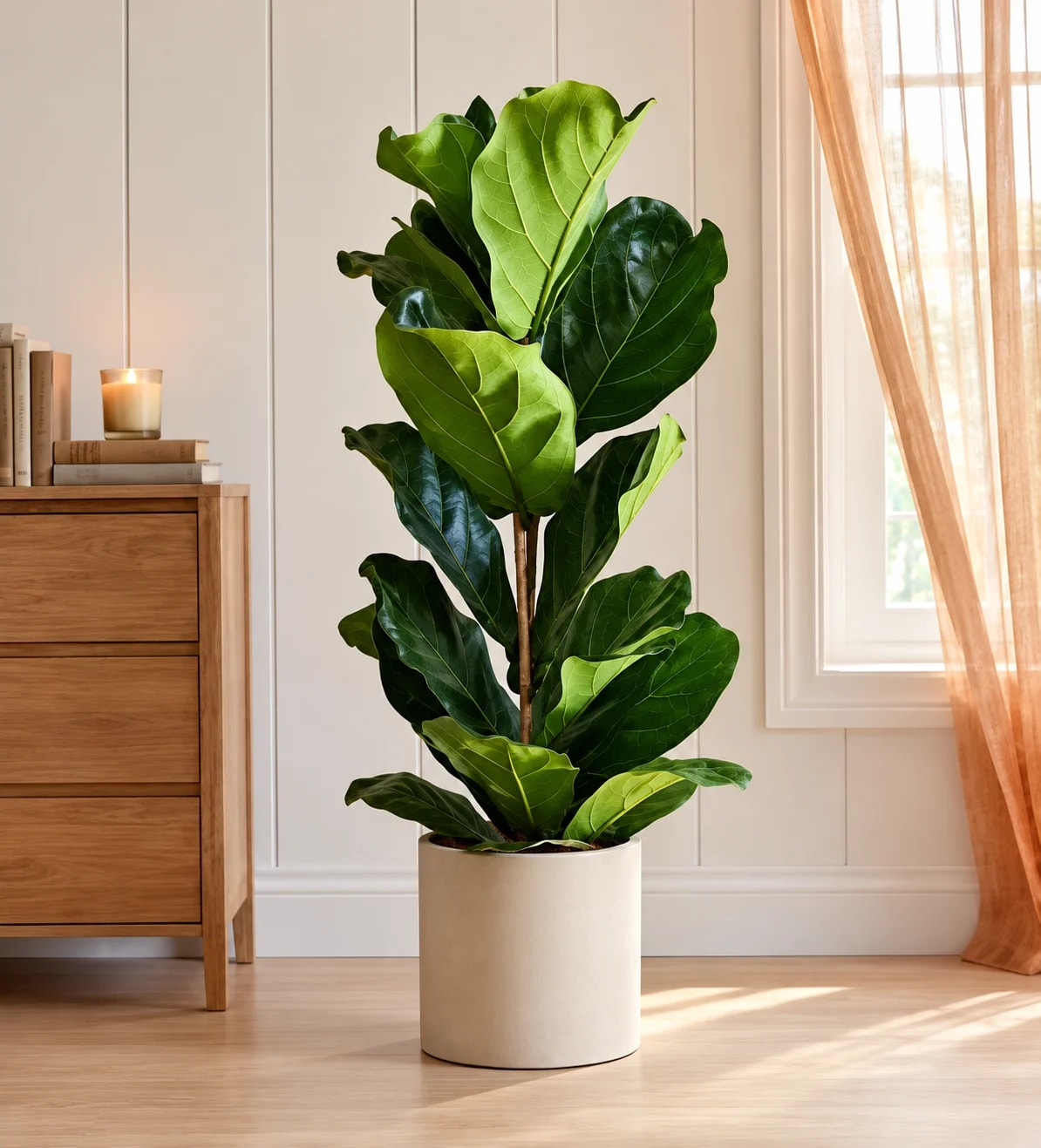
Fiddle Leaf Fig Guide
Everything you need to know about Fiddle Leaf Fig
Fiddle Leaf Fig, botanically known as Ficus lyrata, is one of the most iconic indoor plants for modern interiors. Its large, violin-shaped leaves and upright tree form provide a dramatic architectural focal point in homes, apartments, and executive offices.
Unlike many low-maintenance indoor plants, Fiddle Leaf Fig requires consistent attention to bright indirect light, thorough watering, and environmental stability.
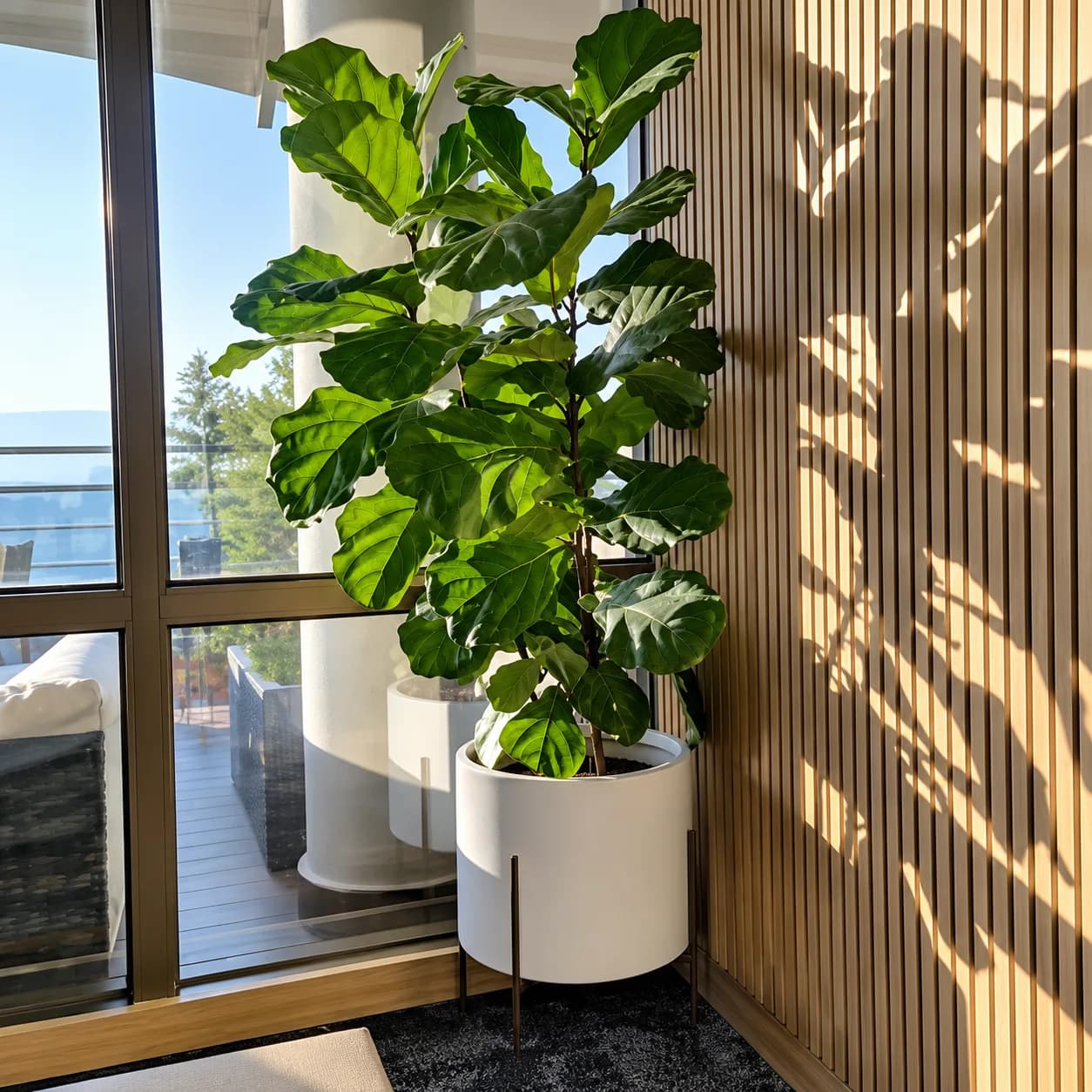
Fiddle Leaf Fig is particularly prized when you want a large indoor statement plant. It performs beautifully in office spaces and living rooms with generous natural light and vertical room.
Quick facts
Fiddle Leaf Fig at a Glance
Use these basic characteristics as a starting point when choosing and caring for a Fiddle Leaf Fig.
Common name
Fiddle Leaf Fig
Botanical name
Ficus lyrata
Plant type
Tropical evergreen tree
Light
Bright indirect to filtered sun
Watering
Allow top 2–3 inches to dry
Maintenance
Moderate to high
Growth
Upright architectural tree
Propagation
Stem cuttings and air layering
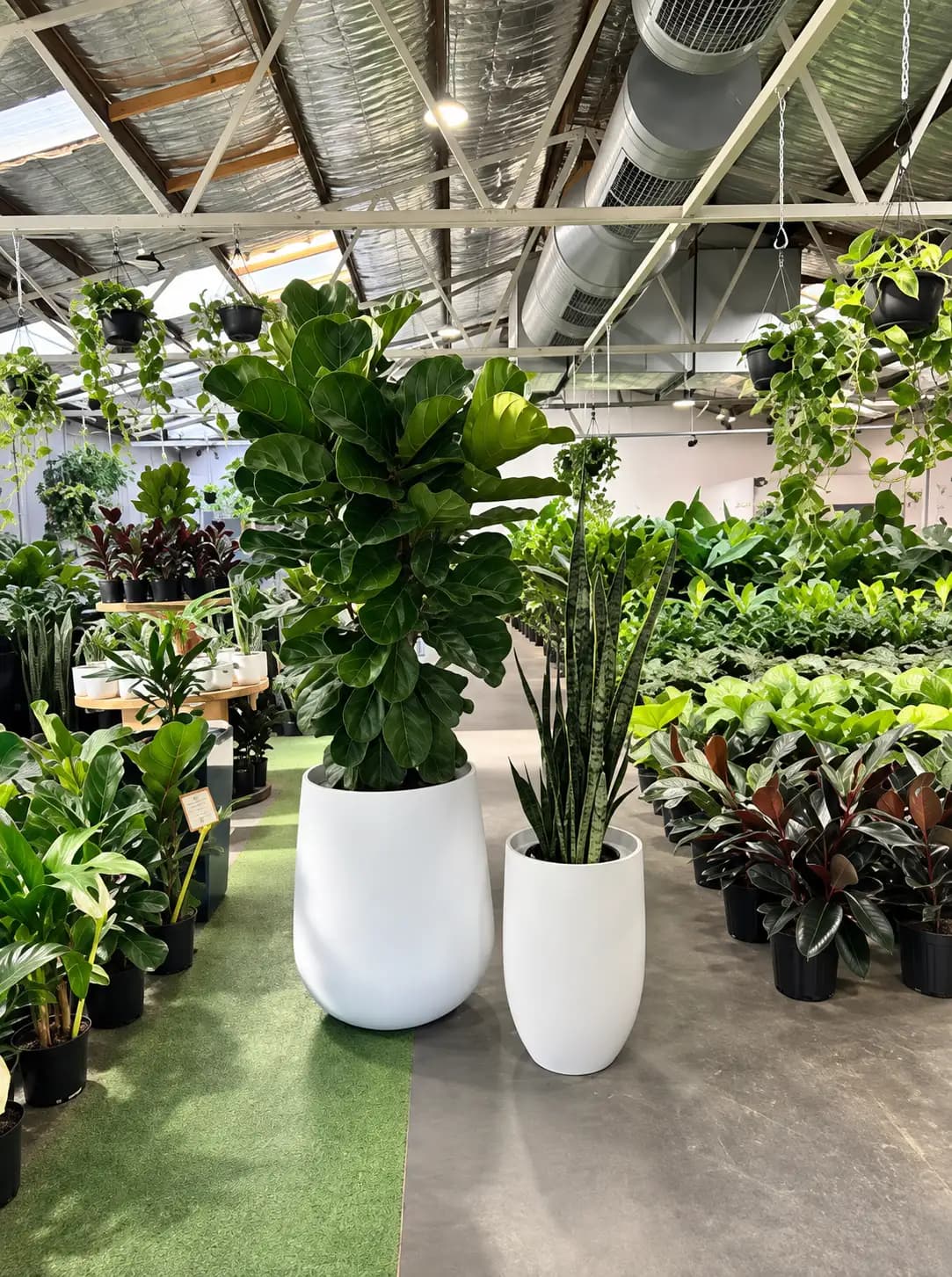
About the plant
What Is a Fiddle Leaf Fig?
The Fiddle Leaf Fig (Ficus lyrata) is a tropical evergreen tree famous for its enormous, violin-shaped leaves with prominent leathery veining and an upright growth habit.
Native to the lowland tropical rainforests of West Africa, it can grow into a massive tree outdoors, but indoors it is cultivated as a stunning 6-to-10-foot indoor ornamental tree.
Because it thrives best with consistent bright indirect light and dislikes sudden relocation, selecting the right permanent location is key to keeping it lush and vibrant.
Care guide
How to Care for a Fiddle Leaf Fig
Good Fiddle Leaf Fig care starts with suitable bright light, controlled watering, well-draining soil, stable conditions, and regular observation.
Fiddle Leaf Fig Light Requirements
Fiddle Leaf Figs need generous amounts of bright indirect or filtered sunlight. Place them close to an east-facing window or a shaded south- or west-facing window.
Rotate the pot a quarter-turn each month so all sides receive balanced light and grow evenly. For darker rooms, explore our low-light indoor plants guide.
Fiddle Leaf Fig Watering
Water thoroughly when the top 2–3 inches of soil feel dry to the touch. Pour water evenly until it drains freely out of the drainage holes.
Always dump out water collected in the drip tray. Never let the roots sit in standing water. For broader care advice, explore our indoor plant collection.
Best Soil for Fiddle Leaf Fig
Use a rich, fast-draining potting soil formulated with peat moss or coco coir, perlite, and pine bark to allow rapid drainage and healthy root aeration.
Temperature
Maintain stable temperatures between 18°C and 28°C (65°F–82°F). Avoid placing the tree near air conditioning vents, drafty entryways, or heating radiators.
Humidity
Fiddle Leaf Figs appreciate moderate to high humidity (50%+). Use a room humidifier or mist foliage occasionally in dry or air-conditioned rooms to prevent crispy edges.
Fertilizer
Feed with a high-nitrogen liquid houseplant fertilizer once a month during spring and summer. Stop fertilizing during the dormant autumn and winter months.
Repotting
Repot every 1–2 years in spring into a container 2–3 inches larger with ample drainage holes. For very large trees, replace the top 2–3 inches of soil annually instead.
Pruning & Leaf Cleaning
Wipe the large leaves with a damp microfiber cloth every few weeks to remove dust. Prune the top canopy to stimulate lateral branching and a fuller tree shape.
Choose the right space
Fiddle Leaf Fig for Different Indoor Spaces
Fiddle Leaf Fig can suit several indoor environments when its bright-light requirement and substantial growth are matched to the available space.
Large Living Rooms
Bright living rooms provide the ceiling height and floor space needed for an impressive statement tree.
Explore living room plants →Home Offices
Add vertical greenery and architectural elegance to executive desks and bright workspaces.
Explore office plants →Bright Window Areas
Place near large picture windows with filtered morning or afternoon light for optimal growth.
Explore indoor plants →Statement Plant Spaces
Create high-impact focal points in spacious entryways, hallways, and open floorplans.
Explore large indoor plants →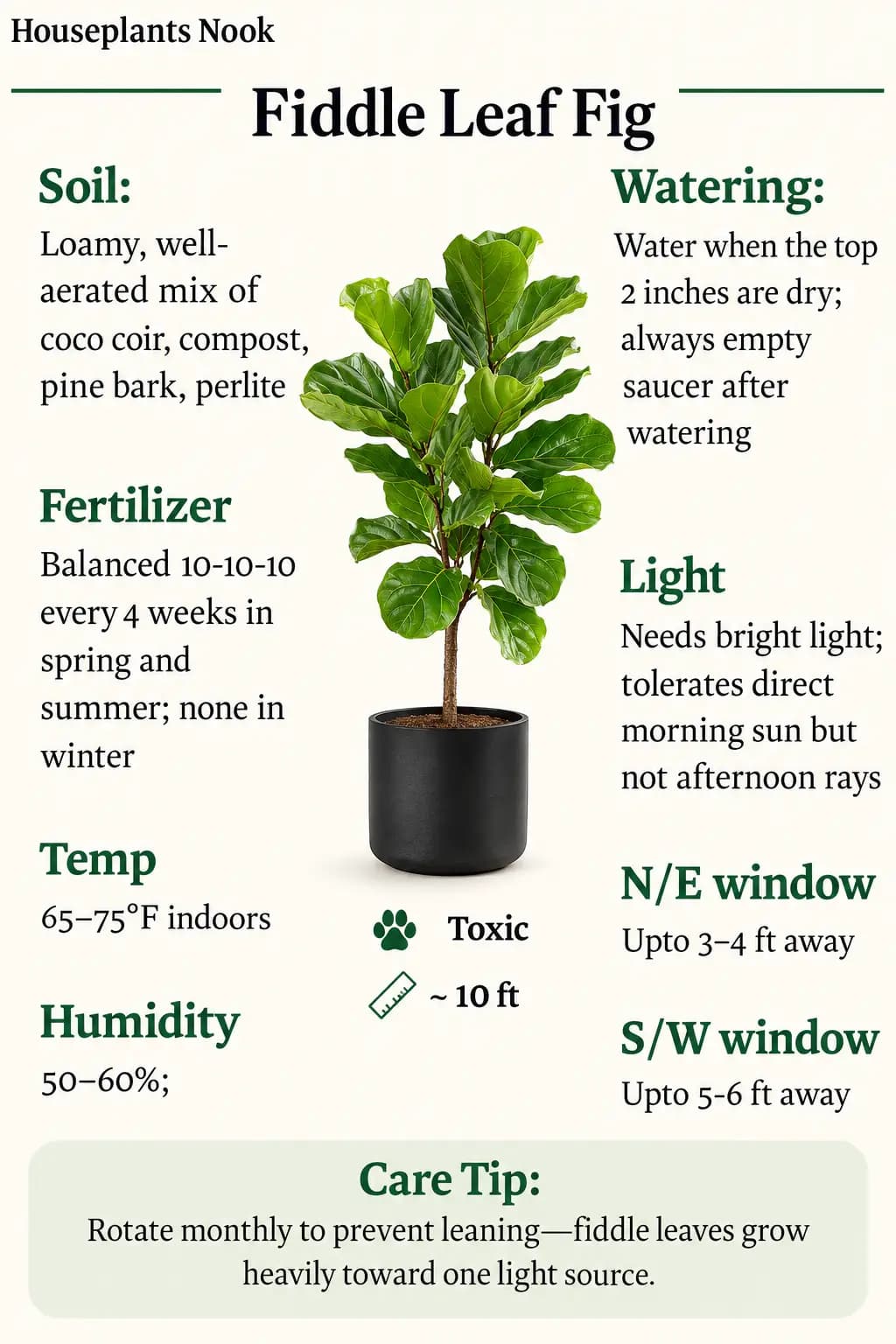
Continue learning
Read our Fiddle Leaf Fig Care Guide
Want more practical guidance on growing Fiddle Leaf Fig indoors? Read our detailed Fiddle Leaf Fig care article covering light, watering, soil, humidity, temperature, propagation, varieties, and common care mistakes.
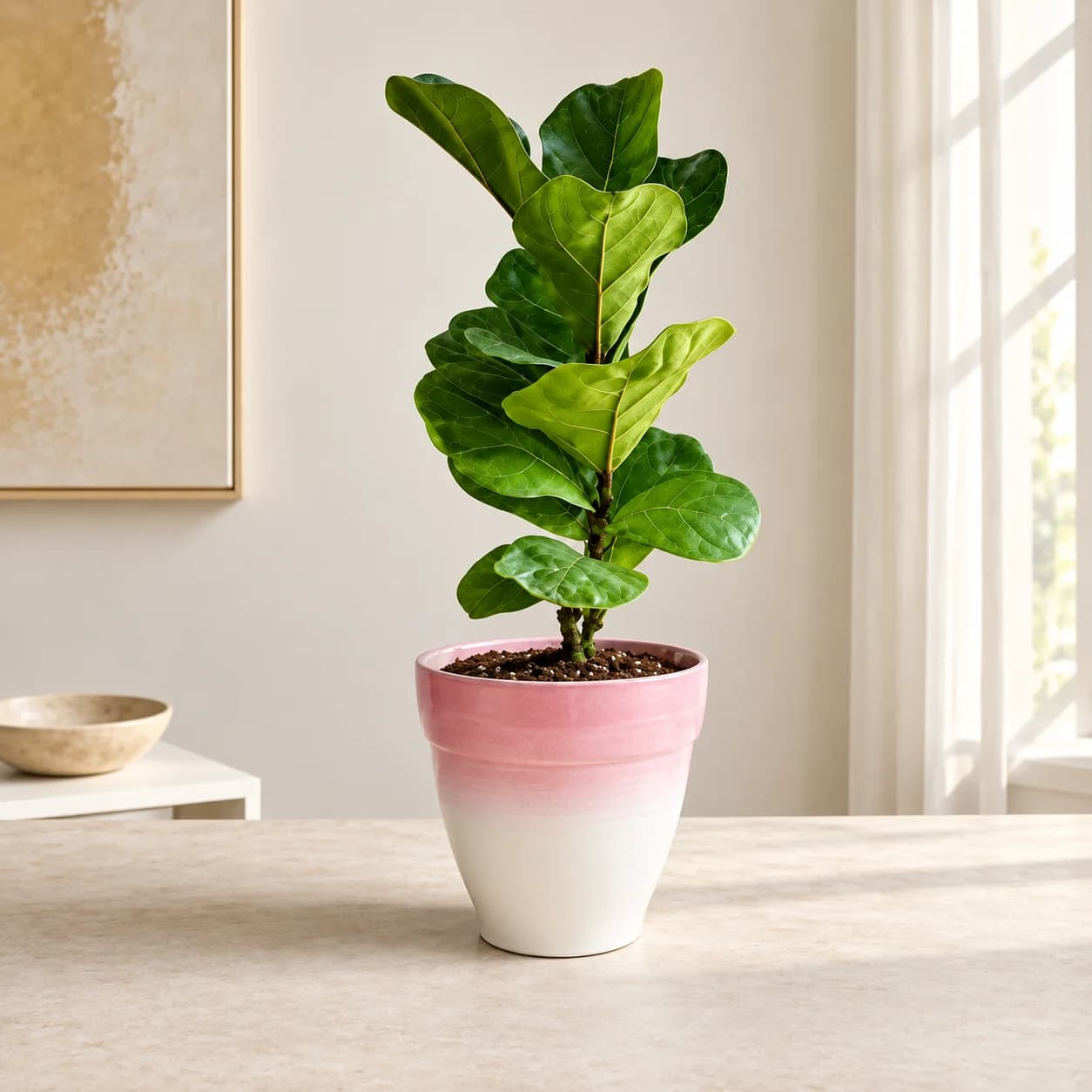

Popular varieties
Fiddle Leaf Fig Varieties
Fiddle Leaf Fig plants are available in different forms and cultivated selections that vary in size, foliage density, and growth habit.
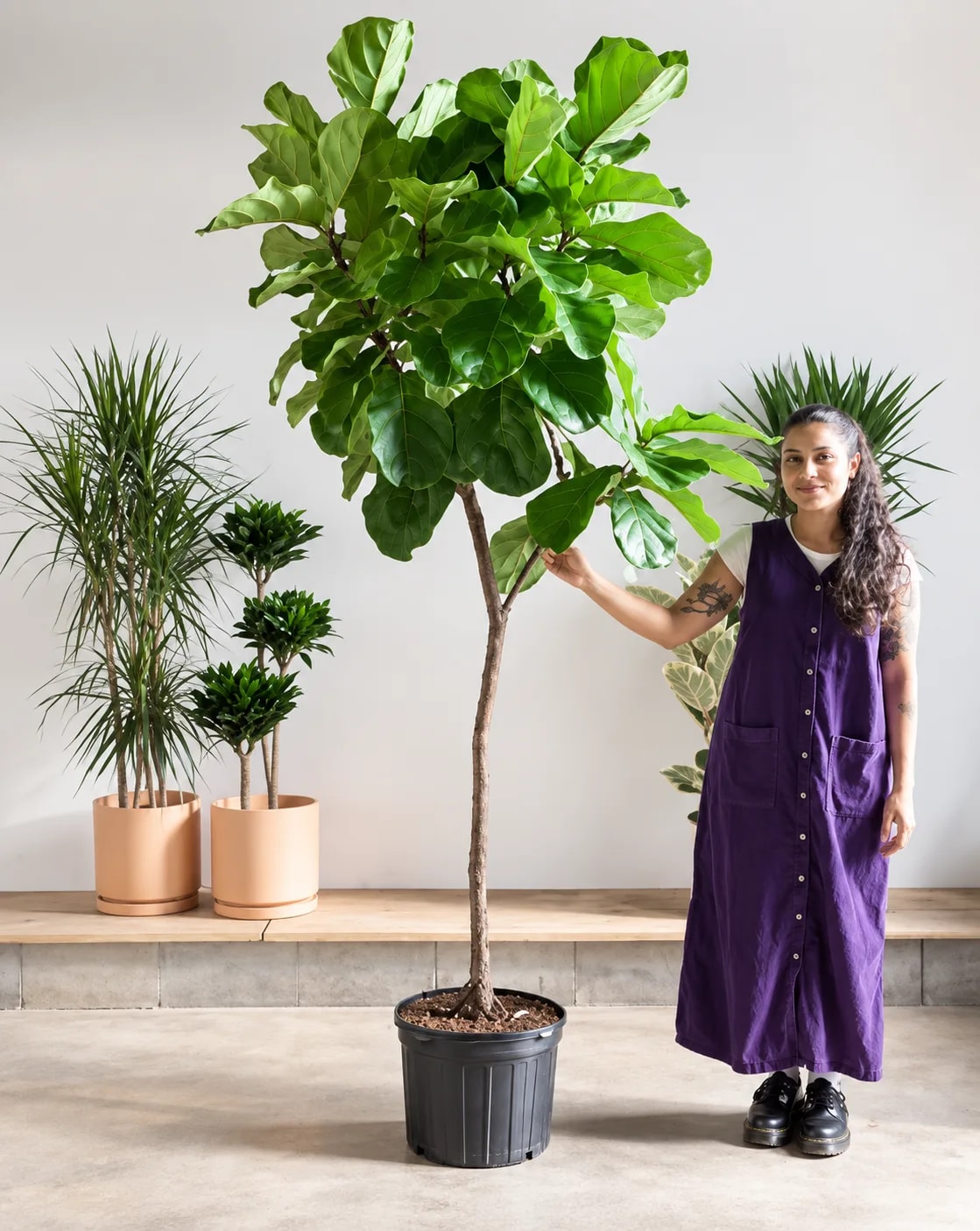
Ficus lyrata
The classic standard tree form with large, violin-shaped scalloped leaves and strong upright architectural structure.
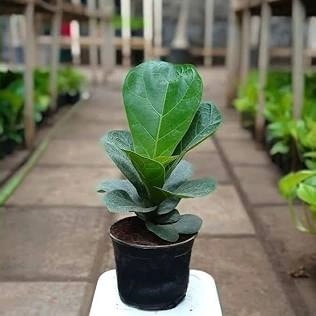
Fiddle Leaf Fig Bambino
A dwarf cultivar with thicker, more compact leaves and denser growth, ideal for smaller rooms and tabletops.
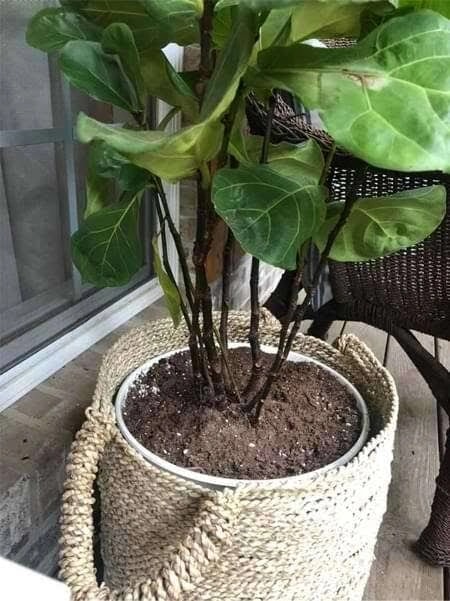
Fiddle Leaf Fig Bush
A multi-stemmed shrub form featuring dense foliage from the base to the top, creating a lush green privacy screen.
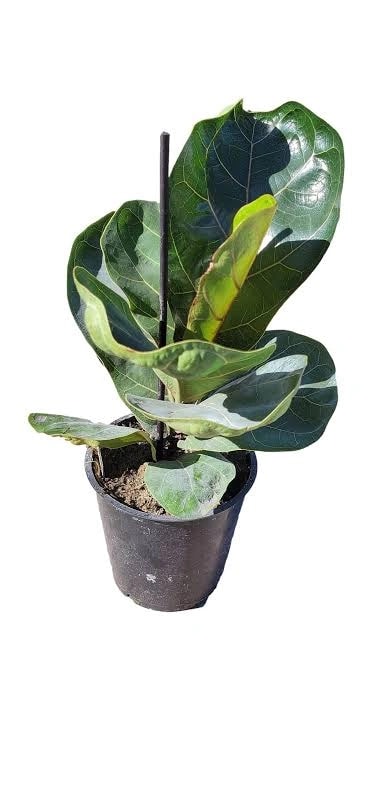
Fiddle Leaf Fig Compacta
Features slightly smaller, closely spaced leaves on sturdy upright stems, perfect for medium-sized spaces.
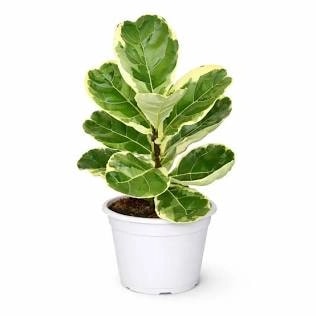
Variegated Fiddle Leaf Fig
A rare, sought-after cultivar showcasing creamy white and lime variegation along the margins of its violin-shaped leaves.
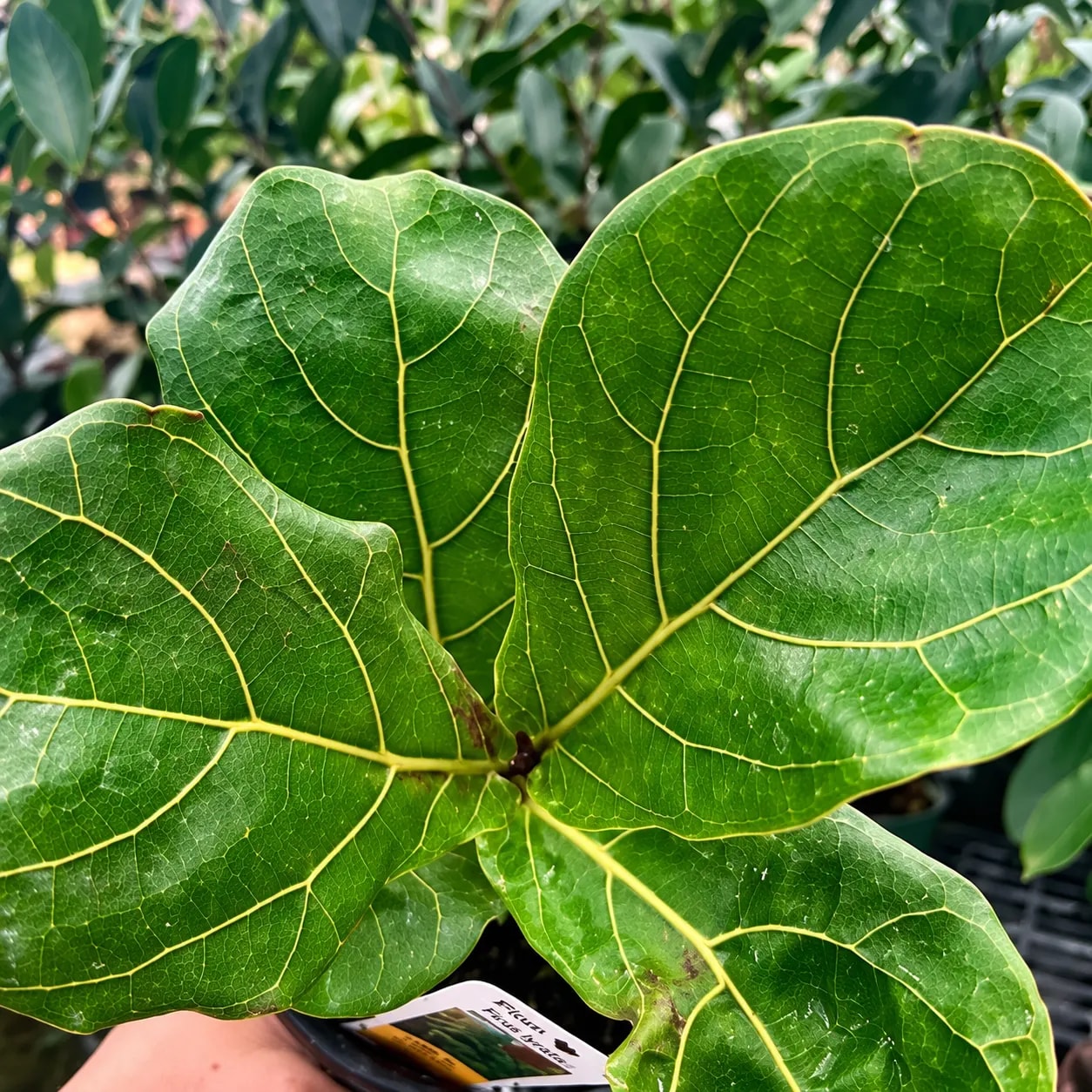
Fiddle Leaf Fig Suncoast
A vigorous cultivated selection known for robust root systems and exceptional upright vigour in bright spaces.
Why choose a Fiddle Leaf Fig?
Fiddle Leaf Fig Benefits
- • Enormous, distinctive violin-shaped leathery leaves.
- • Instant architectural focal point for modern interiors.
- • Adds height and luxury to high-ceiling spaces.
- • Thrives in bright, sunny living rooms and lobbies.
- • Available in standard tree, compact, and bush forms.
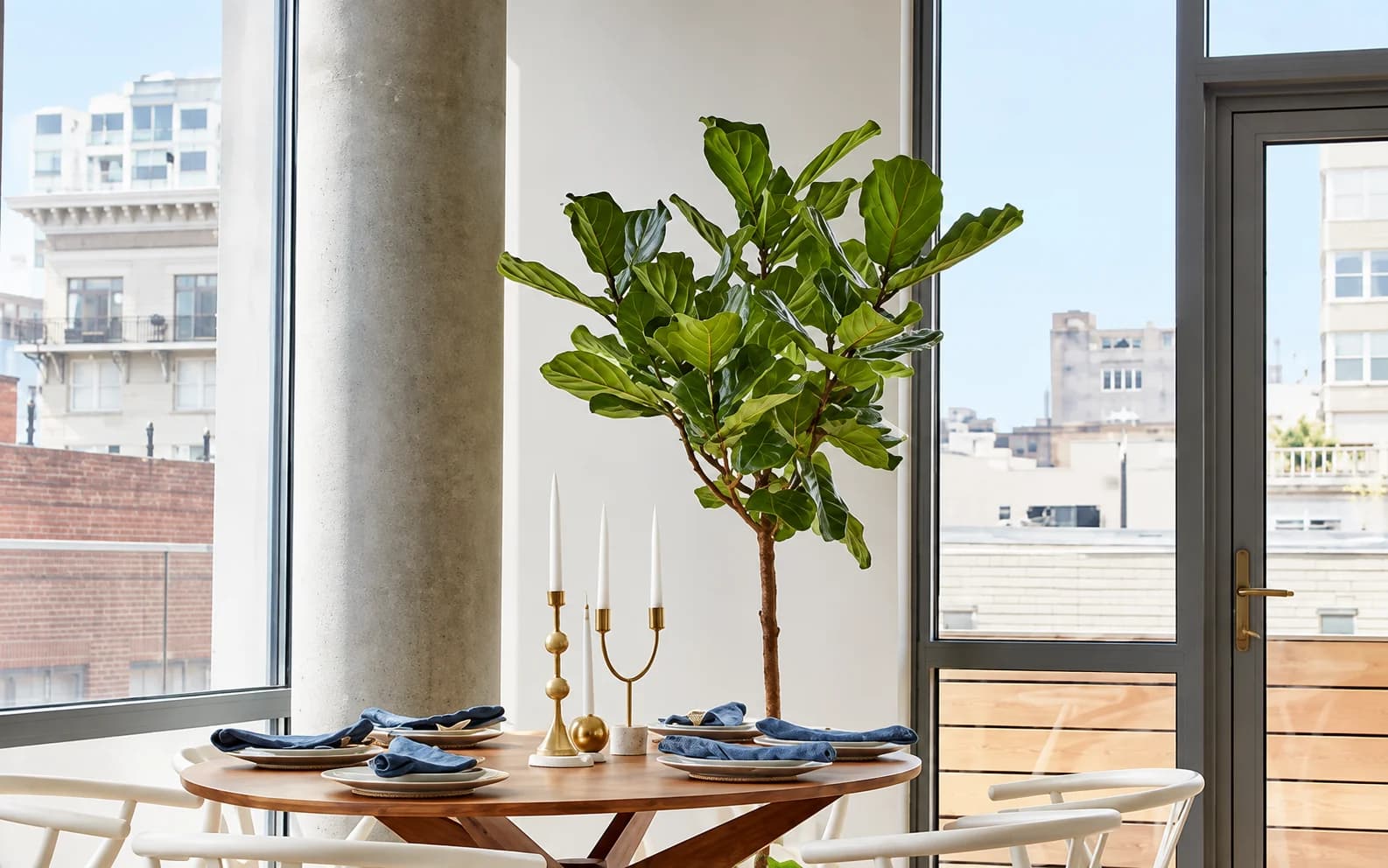
Indoor placement
Where to Keep a Fiddle Leaf Fig
Choose a location based on bright light, temperature, available space, drainage, and how easy it is to maintain the plant.
Living Room
A bright living room corner provides the height and space needed for a Fiddle Leaf Fig to become a stunning focal point.
Home Office
Position near a bright window to add height, architectural structure, and greenery without cluttering desk workspace.
Spacious Corners
Its upright tree form makes Fiddle Leaf Fig ideal for brightening empty corners in open-plan interiors with good natural light.
Bright Windows
A large window with sheer curtains provides the continuous filtered sunlight necessary for rapid leaf development.
Propagation
How to Propagate a Fiddle Leaf Fig
Fiddle Leaf Fig can be propagated from healthy stem cuttings or air layering when suitable warm, bright conditions are provided.
Stem Cuttings in Water or Soil
Take a 6-inch tip cutting with 1–2 leaves just below a node. Dip in rooting hormone and place in clean water or moist potting mix in bright, warm indirect light.
Air Layering on Mature Stems
Make a small upward cut on a mature woody stem, pack with moist sphagnum moss, and wrap securely in plastic wrap until roots form directly on the branch.
Troubleshooting
Common Fiddle Leaf Fig Problems
Changes in Fiddle Leaf Fig leaves can provide clues that the plant's light, watering, drainage, roots, or environment needs attention.
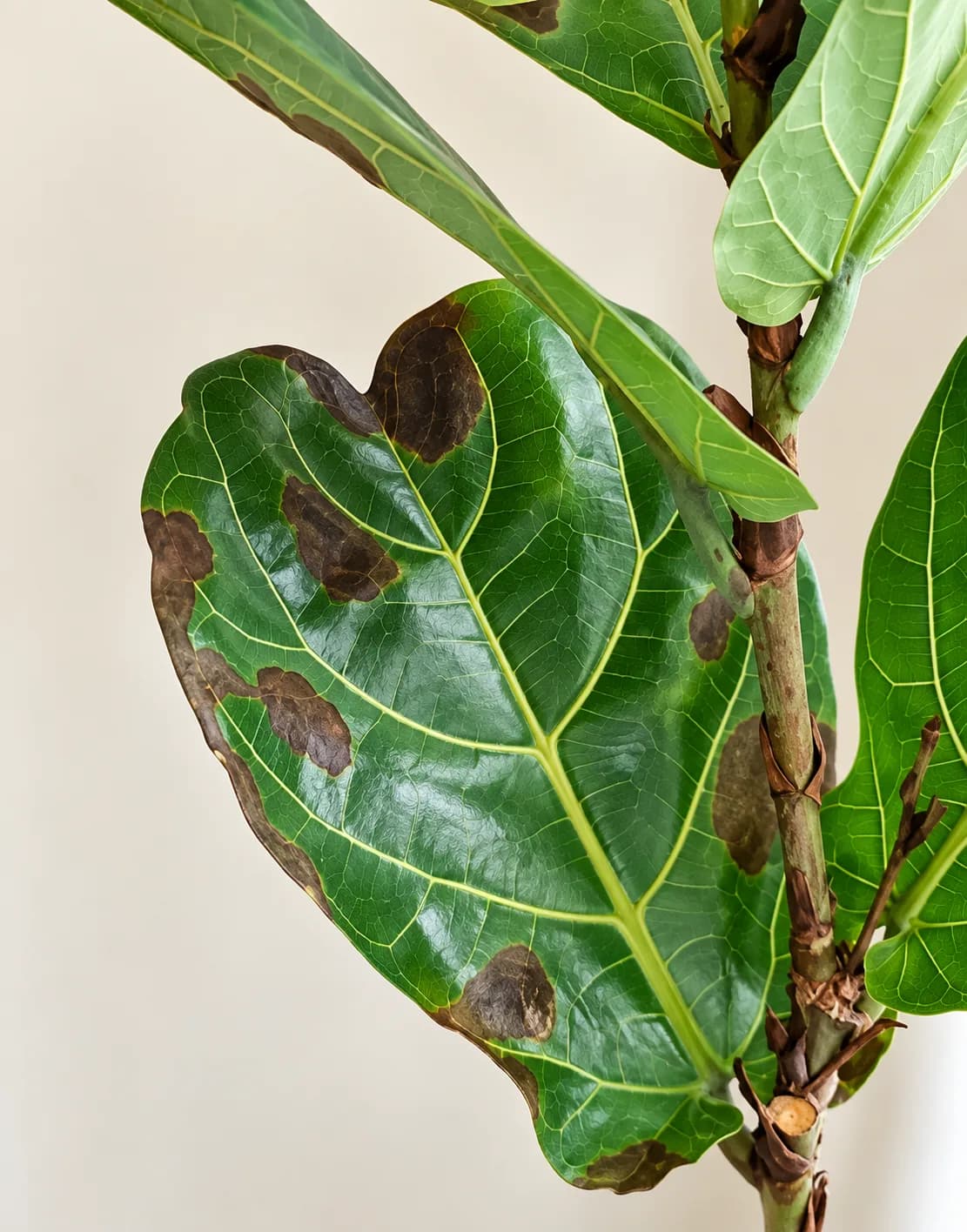
Brown Leaf Spots or Edges
Dark brown spots in the center of leaves indicate root rot from overwatering, while crispy brown edges suggest low humidity or underwatering.
Yellowing Leaves
Yellow leaves near the bottom of the tree usually signal overwatering, poor drainage, or sudden exposure to cold drafts.
Sudden Leaf Drop
Dropping green leaves is a classic reaction to shock—moving the tree, sudden light changes, dry heating vents, or inconsistent watering.
Root Rot & Saturated Soil
Heavy, non-draining soil suffocates roots, causing mushy root systems, foul odor, and rapid decline of the entire plant.
Stalled Growth
Lack of new leaves during spring and summer is almost always due to insufficient bright light, root-bound conditions, or nutrient deficiency.
Red Speckling on New Leaves (Edema)
Tiny red or reddish-brown spots on brand new baby leaves are caused by irregular watering moisture bursts as cells develop.
For Indian homes
Fiddle Leaf Fig Care in India
Indoor conditions in India can vary significantly between cities, seasons, room orientations, windows, and building types. Avoid following a fixed watering schedule simply because it worked in another home.
During warmer summer periods, check the growing medium regularly, but do not automatically increase watering if the soil is still damp. During cooler or monsoon periods, the plant uses water more slowly.
Bright filtered light, good drainage, suitable airflow, stable temperatures, and careful observation are more reliable than caring for every Fiddle Leaf Fig according to a fixed calendar.
Quick checklist
Simple Fiddle Leaf Fig Care Checklist
- • Provide bright filtered or indirect light.
- • Check soil moisture before watering.
- • Use a pot with proper drainage holes.
- • Avoid keeping the soil constantly saturated.
- • Keep the plant in a stable, draft-free location.
- • Wipe broad leaves regularly to remove dust.
Plant care principle
Observe the plant, not just the calendar
Fiddle Leaf Fig care requirements can change with light, temperature, season, pot size, soil, and indoor conditions. An observation-based routine is more useful than treating every Fiddle Leaf Fig exactly the same way.
Related reading
More Indoor Plant Guides
Explore related Blooming Den guides for choosing and caring for indoor plants.
Fiddle Leaf Fig
Fiddle Leaf Fig Care Guide
Learn practical Fiddle Leaf Fig care for indoor homes and workspaces.
Read guide →Large Indoor Plants
Best Large Indoor Plants for Home
Compare Fiddle Leaf Fig with other large indoor plants for spacious interiors.
Read guide →Snake Plant
Snake Plant Care Guide
Explore snake plant care, low-light tolerance, propagation, and placement.
Read guide →Peace Lily
Peace Lily Care Guide
Discover peace lily light, watering, flowering, and indoor care tips.
Read guide →Office Plants
Best Plants for Office in India
Compare popular indoor plants for desks, executive cabins, and workspaces.
Read guide →Indoor Gardening
Benefits of Indoor Plants
Learn more about choosing statement indoor plants for modern interior designs.
Read guide →Frequently asked questions
Fiddle Leaf Fig FAQs
Answers to common questions about Fiddle Leaf Fig care, watering, light, soil, propagation, varieties, placement, and common problems.
How often should you water a Fiddle Leaf Fig?
Water your Fiddle Leaf Fig when the top 2 to 3 inches of soil feel dry to the touch. Water thoroughly until water drains out of the bottom, and empty the drip tray. Avoid letting the plant sit in standing water or keeping the soil continuously soggy.
How much light does a Fiddle Leaf Fig need?
Fiddle Leaf Figs require consistent, bright indirect or filtered sunlight for at least 6 hours a day. An east-facing or shaded south/west-facing window is ideal. Avoid harsh, unfiltered direct midday sun which can scorch the broad leaves.
Why are my Fiddle Leaf Fig leaves turning brown?
Brown leaf spots or edges are usually caused by overwatering (dark brown/black spots starting in the middle of leaves), underwatering (crispy brown edges), or dry indoor air. Check soil moisture and drainage first.
Why is my Fiddle Leaf Fig dropping leaves?
Leaf drop is a common stress reaction to sudden changes in light, temperature, drafts, or moving the plant to a new location. Keep the plant in a stable environment and maintain consistent watering.
Can Fiddle Leaf Fig grow in low light?
No. Fiddle Leaf Figs are not suitable for low-light spaces. Without sufficient bright indirect light, growth will stall, leaves will turn pale, and the plant will eventually drop foliage.
How big can a Fiddle Leaf Fig grow indoors?
Indoors, Fiddle Leaf Figs can grow between 6 to 10 feet tall with proper care and adequate ceiling height. Compact varieties like 'Bambino' stay smaller, typically under 4 to 5 feet.
How do you propagate a Fiddle Leaf Fig?
Fiddle Leaf Figs can be propagated using tip cuttings with 1–2 leaves and a node rooted in water or moist potting mix with rooting hormone, or via air layering on mature trees.
Is Ficus lyrata the botanical name for Fiddle Leaf Fig?
Yes. Ficus lyrata is the botanical name for the Fiddle Leaf Fig. It belongs to the Moraceae (mulberry/fig) family and is native to the lowland rainforests of Western Africa.
Blooming Den
Create a healthier indoor plant space
Explore indoor plants and practical plant care support for your home or workspace.