
Small Apartment Gardening Guide: Grow a Beautiful Garden in Limited Space
Living in a small apartment doesn't mean you have to give up your dream of having a lush green garden. With smart planning, creative space-saving ideas, and the right selection of plants, you can transform balconies, windowsills, shelves, and even empty corners into thriving green spaces. Apartment gardening is becoming increasingly popular among urban homeowners because it combines the beauty of nature with the convenience of modern city living.
Whether you want to grow decorative indoor plants, fresh herbs, leafy vegetables, or colorful flowering plants, a well-designed apartment garden improves your home's appearance while providing numerous physical and mental health benefits. Even a few carefully placed pots can create a calming environment and make your living space feel more vibrant.
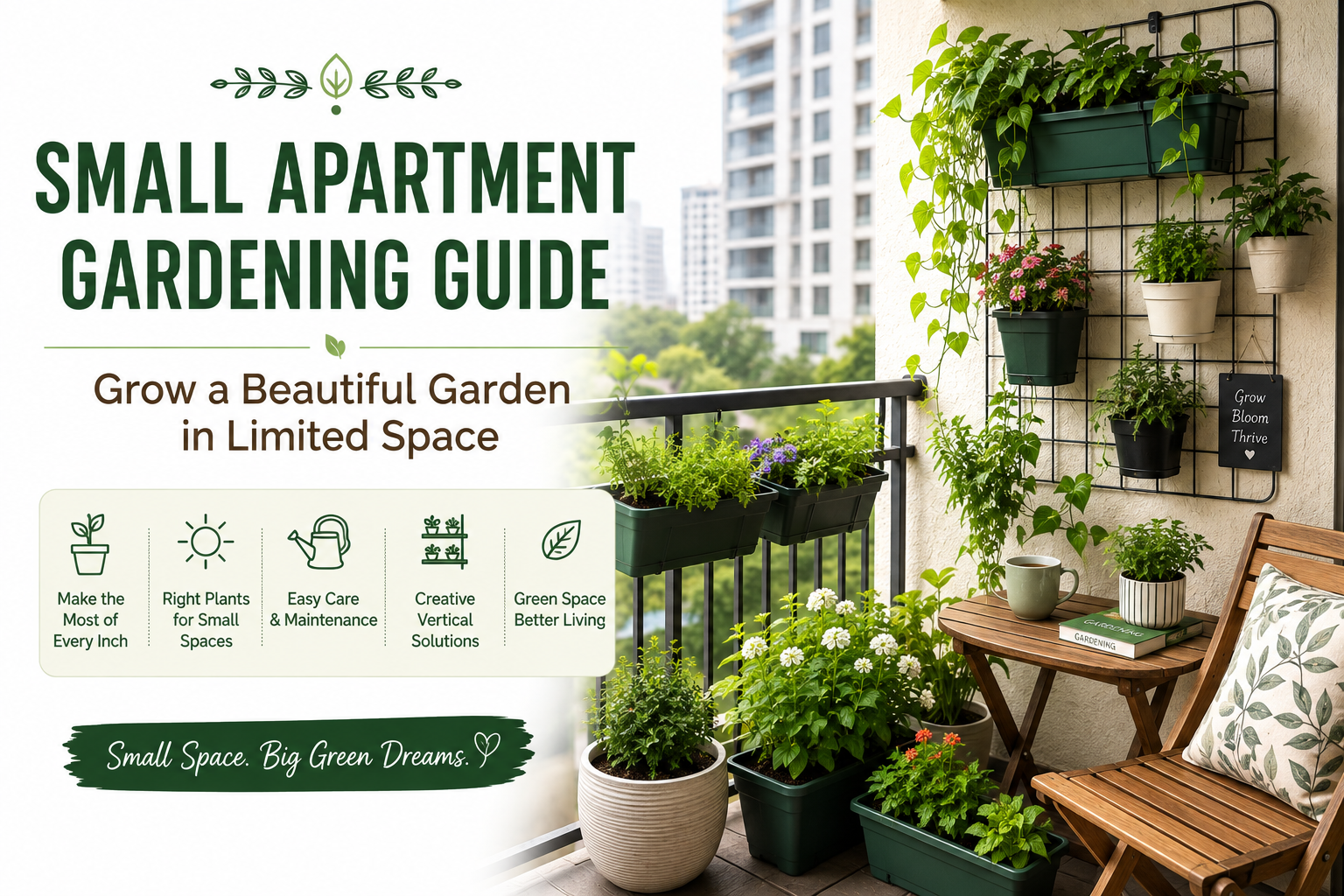
"You don't need a large backyard to enjoy gardening—every windowsill, balcony, and corner has the potential to become a thriving green space."
Why Start an Apartment Garden?
Apartment gardening allows people living in compact homes to enjoy the benefits of plants without needing a traditional outdoor garden. Indoor plants improve air quality, reduce stress, increase humidity, and create a refreshing atmosphere. Growing herbs and vegetables also provides fresh ingredients right at your fingertips while reducing trips to the grocery store.
- Maximizes unused indoor and balcony spaces.
- Improves indoor air quality.
- Creates a relaxing and healthier living environment.
- Adds natural beauty to modern apartments.
- Allows you to grow fresh herbs and vegetables.
- Supports sustainable urban living.
- Reduces stress and improves mental well-being.
- Provides an enjoyable hobby for all age groups.
Benefits of Small Apartment Gardening
Even a compact apartment garden offers numerous advantages beyond decoration. Plants contribute to better indoor environments, encourage mindfulness, and help create a stronger connection with nature despite living in a busy urban setting.
| Benefit | How It Helps |
|---|---|
| Cleaner Air | Plants help improve indoor air quality. |
| Stress Reduction | Green spaces promote relaxation and improve mood. |
| Fresh Herbs | Grow basil, mint, coriander, and other herbs at home. |
| Improved Home Decor | Plants add color, texture, and life to interior spaces. |
| Sustainability | Supports eco-friendly and greener urban lifestyles. |
| Better Humidity | Many indoor plants naturally increase indoor moisture. |
Common Challenges of Apartment Gardening
Apartment gardening presents unique challenges compared to traditional gardens. Limited sunlight, compact spaces, airflow restrictions, and watering management require thoughtful planning. Fortunately, these challenges can be overcome with proper plant selection and efficient use of available space.
- Limited floor space.
- Insufficient natural sunlight.
- Restricted ventilation.
- Overwatering due to indoor conditions.
- Choosing plants unsuitable for apartment environments.
- Managing humidity and temperature fluctuations.
Can You Grow Food in an Apartment?
Absolutely. Many herbs, leafy vegetables, and compact fruiting plants thrive in apartments when provided with sufficient sunlight and proper care. Windows, balconies, and well-lit corners can easily support edible gardening throughout much of the year.
- Mint
- Basil
- Coriander
- Spinach
- Lettuce
- Cherry Tomatoes
- Green Chilies
- Microgreens
What You'll Learn in This Guide
This comprehensive guide covers everything you need to know to successfully build and maintain a thriving apartment garden, regardless of your available space or gardening experience.
- Planning Your Apartment Garden
- Understanding Light Requirements
- Choosing the Right Containers
- Selecting the Best Indoor Plants
- Growing Herbs and Vegetables Indoors
- Vertical Gardening Ideas
- Watering and Fertilizing
- Plant Maintenance and Pruning
- Pest and Disease Management
- Seasonal Plant Care
- Common Apartment Gardening Mistakes
- Frequently Asked Questions
Who Is This Guide For?
Whether you're living in a studio apartment, a compact flat, or a modern urban home, this guide will help you create a productive and beautiful indoor garden using the space you already have.
- Apartment owners
- Urban gardeners
- Beginners starting their first garden
- Indoor plant enthusiasts
- People with limited outdoor space
- Home decorators who love greenery
- Families interested in growing fresh herbs and vegetables
Planning Your Apartment Garden
A successful apartment garden begins with thoughtful planning rather than buying plants on impulse. Evaluate your available space, sunlight, ventilation, and daily routine before selecting plants and containers. Planning ahead helps you choose plants that thrive in your environment while making your garden easier to maintain.
Walk through your apartment and identify every potential growing space. Windowsills, balconies, kitchen counters, bookshelves, wall-mounted shelves, hanging planters, and unused corners can all become productive gardening areas when used creatively.
Understanding Light Conditions
Light is the most important factor affecting plant growth. Before choosing plants, observe how much natural light different areas of your apartment receive throughout the day. Matching plants to available light significantly increases their chances of thriving.
| Light Condition | Daily Sunlight | Suitable Plants |
|---|---|---|
| Bright Direct Light | 6–8 Hours | Succulents, Cactus, Herbs, Tomatoes |
| Bright Indirect Light | 4–6 Hours | Monstera, Rubber Plant, Peace Lily |
| Medium Light | 2–4 Hours | Pothos, Philodendron, Spider Plant |
| Low Light | Less than 2 Hours | Snake Plant, ZZ Plant, Cast Iron Plant |
"Choosing the right plant for the available light is easier than trying to change the light for the plant."
Making the Most of Every Space
Limited floor space should never limit your gardening ambitions. Vertical gardening and creative storage solutions allow you to grow dozens of plants without making your apartment feel crowded.
- Use wall-mounted shelves for smaller pots.
- Install hanging planters near bright windows.
- Place tall plants in unused corners.
- Create a windowsill herb garden.
- Use ladder shelves for multiple plant levels.
- Install vertical planters on balconies.
- Hang trailing plants from ceilings or curtain rods.
Choosing the Right Containers
Containers influence plant health, watering frequency, and overall maintenance. Select pots that provide enough room for root development while fitting comfortably within your available space. Every container should include proper drainage holes to prevent root rot.
| Container Type | Best For | Main Benefits |
|---|---|---|
| Ceramic Pots | Decorative indoor plants | Elegant appearance and durability |
| Plastic Pots | Most houseplants | Lightweight and affordable |
| Self-Watering Pots | Busy homeowners | Reduces watering frequency |
| Hanging Planters | Trailing plants | Saves valuable floor space |
| Window Boxes | Herbs and flowers | Excellent use of windowsills |
Preparing the Ideal Potting Mix
Indoor plants require lightweight, well-draining potting soil that provides moisture without becoming waterlogged. Avoid using heavy garden soil because it compacts quickly and restricts healthy root growth.
| Ingredient | Purpose | Recommended Ratio |
|---|---|---|
| Coco Peat | Retains moisture | 40% |
| Compost | Provides nutrients | 30% |
| Potting Soil | Supports root growth | 20% |
| Perlite | Improves drainage | 10% |
Organizing Plants by Care Requirements
Grouping plants with similar care needs makes apartment gardening much more manageable. Plants requiring frequent watering should be kept together, while drought-tolerant plants such as succulents should have their own dedicated area. This approach simplifies watering schedules and reduces maintenance mistakes.
- Keep herbs near the kitchen for easy harvesting.
- Place humidity-loving plants together.
- Group succulents in the brightest window.
- Keep larger floor plants away from narrow walkways.
- Leave enough space between pots for airflow.
- Rotate plants every few weeks for even growth.
"A well-organized apartment garden is easier to maintain, healthier for plants, and far more enjoyable to live with."
Choosing the Best Plants for Your Apartment
One of the biggest advantages of apartment gardening is the wide variety of plants that thrive indoors. By selecting plants that match your available light and living conditions, you can create a healthy, low-maintenance garden that remains beautiful throughout the year. Mixing foliage plants, flowering varieties, herbs, and edible plants creates a balanced indoor ecosystem.
Best Indoor Plants for Apartments
These plants are popular because they adapt well to indoor environments and require relatively little maintenance while adding beauty and improving indoor air quality.
| Plant | Light Requirement | Difficulty |
|---|---|---|
| Snake Plant | Low to Bright Indirect Light | Easy |
| Pothos (Money Plant) | Medium to Bright Indirect Light | Easy |
| Spider Plant | Bright Indirect Light | Easy |
| Peace Lily | Medium Light | Easy |
| ZZ Plant | Low Light | Very Easy |
| Rubber Plant | Bright Indirect Light | Medium |
| Monstera | Bright Indirect Light | Medium |
| Areca Palm | Bright Filtered Light | Medium |
Best Plants for Sunny Windows
South-facing and west-facing windows receive the most sunlight, making them ideal for plants that enjoy bright conditions. Position these plants close to windows while protecting them from excessive afternoon heat during peak summer.
- Succulents
- Cactus
- Aloe Vera
- Jade Plant
- Lavender
- Rosemary
- Basil
- Cherry Tomatoes
Growing Herbs and Vegetables Indoors
Fresh herbs and compact vegetables are excellent choices for apartment gardening. They require little space, grow well in containers, and provide fresh ingredients for everyday cooking. A bright kitchen window or sunny balcony is often enough to support a productive edible garden.
| Plant | Recommended Location | Harvest Time |
|---|---|---|
| Mint | Bright Window | 4–6 Weeks |
| Coriander | Sunny Balcony | 3–5 Weeks |
| Basil | Kitchen Window | 5–6 Weeks |
| Lettuce | Bright Balcony | 30–45 Days |
| Spinach | Sunny Balcony | 30–40 Days |
| Cherry Tomatoes | Balcony | 70–90 Days |
Vertical Gardening for Small Apartments
Vertical gardening is one of the most effective ways to maximize greenery without sacrificing valuable floor space. Walls, shelves, railings, and hanging systems allow you to grow many more plants while maintaining a clean and organized apartment.
- Wall-mounted planters
- Floating shelves
- Hanging baskets
- Tiered plant stands
- Ladder shelves
- Window-mounted planters
- Macramé hanging pots
- Magnetic planters for metal surfaces
Watering Indoor Plants Correctly
Overwatering is the most common reason apartment plants fail. Indoor plants usually require less water than outdoor plants because evaporation is slower. Always check the soil before watering instead of following a fixed schedule.
| Plant Type | Typical Watering Frequency |
|---|---|
| Succulents & Cactus | Every 2–3 Weeks |
| Tropical Houseplants | Once Every 5–7 Days |
| Herbs | When the top soil becomes dry |
| Flowering Plants | Keep soil consistently moist |
Fertilizing Apartment Plants
Indoor plants gradually use up the nutrients available in their containers. Regular feeding encourages healthy foliage, stronger roots, and continuous growth. Organic fertilizers are generally preferred for apartment gardens because they improve soil quality while minimizing odors and chemical buildup.
- Vermicompost
- Compost
- Seaweed fertilizer
- Liquid organic fertilizer
- Neem cake
- Balanced NPK fertilizer for flowering plants
"Healthy soil, proper watering, and the right amount of sunlight are the three pillars of every successful apartment garden."
Maintaining a Healthy Apartment Garden
Consistent maintenance is the key to keeping apartment plants healthy and attractive throughout the year. Unlike outdoor gardens, indoor plants rely entirely on you for water, nutrients, pruning, and proper growing conditions. Spending just a few minutes each week observing your plants can help identify problems before they become serious.
Weekly Apartment Plant Care Checklist
A simple weekly maintenance routine keeps your apartment garden organized and ensures every plant receives the care it needs.
- Inspect leaves for pests and discoloration.
- Remove yellow, dry, or damaged leaves.
- Check soil moisture before watering.
- Rotate pots for even sunlight exposure.
- Clean dust from broad leaves using a soft cloth.
- Trim overgrown stems to encourage bushier growth.
- Inspect drainage trays and empty excess water.
- Monitor plant growth and repot root-bound plants when necessary.
Managing Indoor Pests and Diseases
Although indoor gardens experience fewer pest problems than outdoor gardens, insects such as mealybugs, aphids, fungus gnats, and spider mites can still appear. Early detection and prompt treatment help prevent infestations from spreading to other plants.
| Problem | Common Symptoms | Recommended Solution |
|---|---|---|
| Mealybugs | White cotton-like clusters | Remove manually and spray neem oil. |
| Spider Mites | Fine webbing and yellow leaves | Increase humidity and rinse foliage. |
| Aphids | Sticky leaves and curled growth | Use insecticidal soap or neem oil. |
| Fungus Gnats | Small flying insects near soil | Allow soil to dry slightly between watering. |
| Root Rot | Wilting despite wet soil | Improve drainage and reduce watering. |
Maintaining Proper Humidity and Temperature
Most indoor plants prefer stable temperatures and moderate humidity. Air conditioners, heaters, and dry indoor air can affect plant health if not managed properly. Understanding your plants' environmental needs helps them grow stronger and produce healthier foliage.
| Condition | Recommended Range |
|---|---|
| Temperature | 18°C–30°C |
| Humidity | 40%–70% |
| Air Circulation | Good natural airflow without strong drafts |
| Light Duration | 6–8 hours for most indoor plants |
Grouping humidity-loving plants together, using pebble trays, or occasionally running a humidifier can create a healthier environment for tropical houseplants.
Seasonal Care for Apartment Plants
Indoor plants experience seasonal changes just like outdoor plants. Adjusting watering, fertilization, and placement throughout the year keeps them healthy regardless of changing weather conditions.
| Season | Care Recommendations |
|---|---|
| Spring | Repot plants, refresh potting mix, and begin regular fertilization. |
| Summer | Water more frequently and protect plants from harsh afternoon sunlight. |
| Monsoon | Improve ventilation and reduce watering to prevent fungal diseases. |
| Winter | Reduce watering and keep plants away from cold drafts. |
Common Apartment Gardening Mistakes
Many indoor gardening problems are caused by a few common mistakes. Understanding these issues will help your plants remain healthy and reduce unnecessary maintenance.
- Overwatering plants without checking soil moisture.
- Choosing plants that don't match available light.
- Using containers without drainage holes.
- Ignoring humidity requirements for tropical plants.
- Applying excessive fertilizer.
- Keeping plants too close together and restricting airflow.
- Skipping regular pruning and cleaning.
- Ignoring early signs of pests and diseases.
- Frequently moving plants between locations.
- Using heavy garden soil instead of quality potting mix.
Essential Gardening Tools for Apartment Gardeners
Apartment gardening requires only a small collection of tools, but having the right equipment makes maintenance easier and keeps your plants healthier.
| Tool | Primary Use |
|---|---|
| Hand Trowel | Planting and repotting. |
| Pruning Shears | Pruning stems and harvesting herbs. |
| Watering Can | Gentle watering of indoor plants. |
| Spray Bottle | Misting leaves and applying treatments. |
| Gardening Gloves | Protecting hands during maintenance. |
| Moisture Meter | Checking soil moisture accurately. |
| Plant Mister | Increasing humidity for tropical plants. |
| Small Brush or Cloth | Cleaning dust from leaves. |
"A thriving apartment garden isn't built by having more plants—it's built by consistently caring for the plants you already have."
Frequently Asked Questions
1. Can I grow plants in an apartment without a balcony?
Yes. Many indoor plants thrive near bright windows, on shelves, hanging planters, and windowsills. Low-light plants such as Snake Plant, ZZ Plant, Peace Lily, and Pothos can grow successfully even without a balcony.
2. Which plants are best for beginners living in apartments?
Snake Plant, Pothos (Money Plant), Spider Plant, ZZ Plant, Peace Lily, Aloe Vera, Philodendron, and Rubber Plant are excellent beginner-friendly choices because they require minimal maintenance.
3. How often should I water apartment plants?
Watering depends on the plant species, season, humidity, and available light. Always check the top 2–3 cm of soil before watering instead of following a fixed schedule. Most indoor plants prefer the soil to dry slightly between watering sessions.
4. Can I grow vegetables inside an apartment?
Absolutely. Herbs such as basil, mint, coriander, parsley, and vegetables like lettuce, spinach, microgreens, and cherry tomatoes can be grown successfully with sufficient sunlight or quality grow lights.
5. Do apartment plants improve indoor air quality?
Healthy indoor plants contribute to a more pleasant indoor environment and can support overall indoor air quality when combined with good ventilation and regular home maintenance.
6. What is the biggest mistake apartment gardeners make?
Overwatering is the most common problem. Excess moisture can cause root rot, fungal diseases, and attract pests. Always ensure containers have drainage holes and only water when the soil requires it.
7. How can I grow more plants in a small apartment?
Make use of vertical space with wall-mounted shelves, hanging planters, ladder stands, window boxes, and multi-tier plant racks. Growing upward helps maximize greenery without reducing living space.
8. Should I use artificial grow lights?
If your apartment receives very little natural sunlight, full-spectrum LED grow lights are an excellent solution for supporting healthy plant growth, especially for herbs and edible plants.
Final Thoughts
Apartment gardening proves that you don't need a large backyard to enjoy the beauty and benefits of plants. By choosing suitable plant varieties, making efficient use of available space, and following proper watering and maintenance practices, even the smallest apartment can become a thriving green oasis.
Start with a few low-maintenance plants, observe how they respond to your home's conditions, and expand your collection gradually. With patience and consistent care, your apartment garden can improve your living environment, enhance your well-being, and bring nature into your everyday life.
"Every apartment has enough space for nature—it's simply a matter of using that space creatively."
Start Your Apartment Gardening Journey with BloomingDen
Whether you're looking for easy-care indoor plants, stylish planters, premium potting mixes, organic fertilizers, or expert gardening advice, BloomingDen has everything you need to create a healthy indoor garden. From compact apartments to spacious homes, we're here to help you grow with confidence.
Bring More Green Into Your Home
Explore our collection of indoor plants, balcony plants, decorative pots, gardening essentials, and professional gardener services to build a beautiful apartment garden that fits your lifestyle.
Shop Indoor Plants Book a GardenerRelated Gardening Guides
Continue learning with these expert gardening resources from BloomingDen:
Key Takeaways
- Choose plants that match the available light in your apartment.
- Use vertical gardening techniques to maximize limited space.
- Select containers with proper drainage to prevent root rot.
- Water plants only when the soil begins to dry.
- Feed plants regularly using compost or balanced fertilizers.
- Rotate pots occasionally to encourage even growth.
- Inspect plants weekly for pests and diseases.
- Repot growing plants before they become root-bound.
- Expand your plant collection gradually as your experience grows.
- Create a gardening routine that fits your lifestyle for long-term success.